NASA Extends SpaceX Crew Contract With $946M for Three More ISS Missions
NASA awarded SpaceX $946 million on September 18, 2026 to add Crew-15, Crew-16 and Crew-17 to its CCtCap contract, lifting the total value to $5.92 billion.

On this page
Key takeaways
- NASA awarded SpaceX a $946 million CCtCap contract modification on September 18, 2026 for three additional ISS crew missions: Crew-15, Crew-16 and Crew-17.
- The award raises SpaceX's total CCtCap mission count to 17 and the total contract value to $5.92 billion, with performance running through 2030 and mission readiness dates in 2027 and 2028.
- The modification is firm fixed-price and indefinite-delivery, indefinite-quantity, and covers ground, launch, in-orbit, return and recovery operations, cargo transport and the lifeboat capability while Dragon is docked.
- SpaceX is currently NASA's only certified commercial crew provider; Boeing's Starliner is not certified, and NASA's inspector general expects certification no earlier than 2027.
- Crew-13 is targeting early October 2026 after an oxidizer leak in Dragon's propulsion system pushed it from a September 12 target; the four-person crew entered quarantine on September 17.
NASA moved to secure more astronaut rides to the International Space Station on Friday, awarding SpaceX a $946 million modification to its Commercial Crew Transportation Capability (CCtCap) contract for three additional missions: Crew-15, Crew-16 and Crew-17. The agency's announcement says the change raises SpaceX's total CCtCap mission count to 17 and brings the contract's total value to $5.92 billion.
Related reading: SpaceX Launches CRS-35 With the Final Pair of ISS Roll-Out Solar Arrays · NASA Asks Industry Whether Commercial Spacecraft Could Boost or Retire Hubble.
The award lands while NASA's second crew provider, Boeing, remains grounded. SpaceX is the only company whose crew transportation system the agency has certified, and the new flights extend its position as the sole operational way to launch people to the station from U.S. soil. That reliance is the subtext of an otherwise routine procurement.
What the $946 million covers
The modification is a firm fixed-price, indefinite-delivery, indefinite-quantity change, the same contracting structure NASA has used since it began buying crew transportation as a service rather than owning the hardware. According to the federal award notice, the total CCtCap value with SpaceX is now $5,919,831,297.
The scope spans a full mission: ground and launch operations, in-orbit work, return and recovery, cargo transportation on each flight, and the lifeboat capability Dragon provides while docked, meaning it can serve as an emergency return vehicle for the station crew. NASA says the period of performance runs through 2030, with mission readiness dates in 2027 and 2028.
Post-certification missions are the routine crew rotations flown after a vehicle earns its human rating, as opposed to the test flights that prove the design. Under an indefinite-delivery, indefinite-quantity contract, NASA is not obliged to order every mission it has contemplated. It commits to the framework, then places task orders as the station's schedule requires. That structure explains how the agency could describe six possible additions in May and buy only three in September.
Divided across the three missions, the modification works out to roughly $315 million per flight. For comparison, NASA's 2022 modification for Crew-10 through Crew-14 paid $1.44 billion for five missions, about $287 million each. The per-flight figure has edged up, though the packages are not identical and the totals include program-wide work that a single mission price does not capture.
A contract that has grown with the station's needs
CCtCap dates to 2014, when NASA awarded fixed-price contracts to SpaceX and Boeing through a public-private partnership. The NASA Office of Inspector General puts the original awards at $2.6 billion for SpaceX and $4.2 billion for Boeing, with the two contracts since growing past $8 billion combined as NASA bought extra missions to keep the station crewed through 2030.
Fixed-price contracts put the cost of overruns on the contractor rather than the taxpayer, a deliberate break from the cost-plus model NASA used for earlier human spaceflight programs. The tradeoff is that the agency has less day-to-day control over design decisions, and when a provider falls behind, as Boeing has, NASA cannot spend its way to a faster schedule. It has to buy capacity elsewhere.
SpaceX's additions have come in waves. A 2022 modification added five flights and took the company to 14 contracted missions. The Friday award takes it to 17. NASA certified SpaceX for crew transportation in November 2020, and the agency says Crew-12, the twelfth rotation mission, is currently docked to the station.
The sole-source path, teed up in May
The new missions were not competitively bid. NASA issued a notice of intent in May 2026 to add as many as six post-certification missions to SpaceX's contract and to order up to three of them, citing authority for sole-source awards. SpaceNews reported at the time that the move was meant to protect the agency against the possibility that Starliner is never certified.
The notice spelled out the reasoning: SpaceX is the only Crew Transportation System certified by NASA, and additional missions were necessary given shortened station mission durations, Boeing's technical problems and schedule delays, the allocation of missions between the two companies, and uncertainty about when an alternative vehicle might be ready. NASA says the current modification does not preclude it from seeking more flights later.
Federal acquisition rules allow an agency to skip competition when only one source can meet the requirement, and NASA cited that authority in the notice. The practical effect is that Boeing could not bid for these flights even if it wanted to, because it does not have a certified vehicle to offer. The award is sole-source in the narrow, procedural sense, not a competitive win for SpaceX over a ready rival.
The second provider problem
NASA's release frames the award as a way to maintain access to the station with two commercial crew industry partners. Only one of them is currently certified to fly astronauts.
Boeing has not obtained human-rating certification for Starliner or its Atlas V rocket. In February 2026 the agency formally classified Starliner's June 2024 crewed test flight as a Type A mishap, its most serious category, after thruster problems nearly led to the loss of the crew. The OIG's June 2026 audit found that helium leaks and propulsion failures remained unresolved as of March 2026 and that certification is likely to slip to 2027, three years before the station's planned retirement. The report described NASA as solely reliant on SpaceX for U.S.-based crew transportation.
The OIG also questioned $127.9 million in payments to Boeing and warned that the loss of a second provider concentrates risk. If Dragon were grounded by an accident or a technical problem, NASA would have no certified American vehicle to fall back on, and its only other ride to orbit would be Russia's Soyuz. The audit estimated that replacing the services Starliner-1 would have provided will cost roughly $300 million.
NASA has already trimmed Boeing's expected workload, cutting its post-certification missions from six to four in November 2025, and the next Starliner flight, Starliner-1, will fly uncrewed as a cargo mission rather than carry astronauts. Spaceflight Now reported that the timing of that flight is still under review.
On September 17, Ars Technica reported, citing sources, that NASA plans to order two additional crewed Starliner missions, help fund fixes to the spacecraft's thrusters and support certifying a new launch vehicle once the Atlas V retires. None of that has been confirmed by NASA.
Crew-13 shows the schedule pressure
The award also arrives as NASA works through a delay on the next flight. Crew-13 had been targeting September 12, but NASA announced on August 29 that it was adjusting the launch date after an oxidizer leak was found in the propulsion system of the Dragon capsule, named Grace, during standard prelaunch processing.
Oxidizer leaks are treated as serious on a crewed vehicle because the propellant is hypergolic, meaning it ignites on contact with fuel, and it is toxic. The same class of oxidizer was involved in a 2019 ground-test failure that destroyed a Crew Dragon capsule, an accident that led SpaceX to redesign part of the spacecraft's pressurization system. The Grace leak was caught during processing rather than close to flight, and the repair came down to replacing a valve, which is why the schedule moved by weeks instead of months.
Teams replaced an oxidizer valve, and the mission is now targeting early October, though no exact date has been set. The four-person crew entered prelaunch quarantine at Johnson Space Center in Houston on September 17. NASA astronauts Jessica Watkins and Luke Delaney are commander and pilot, joined by Canadian Space Agency astronaut Joshua Kutryk and Roscosmos cosmonaut Sergey Teteryatnikov. Once aboard, they will join Expedition 75.
The Crew-13 slip is measured in weeks, not months, and NASA has not linked it to the contract decision. Even so, it illustrates why the agency wants a buffer of contracted flights. A single provider with a capsule under repair and a second vehicle still uncertified leaves little margin in a rotation schedule that has to keep the station staffed continuously until it is retired.
What to watch
Two numbers will shape the endgame. The first is whether Starliner reaches human-rating certification, which the OIG now places no earlier than 2027. The second is 2030, the station's planned decommissioning date, which some in Congress have pushed to extend to 2032.
NASA has signaled it may buy still more flights from SpaceX, since the May notice contemplated as many as six new missions and only three have been ordered. The agency has also left the door open to buying from Boeing again if Starliner returns to service. Until then, the only way NASA astronauts reach the station from Florida is aboard a Dragon, and the contract just signed keeps that arrangement in place for at least three more flights.
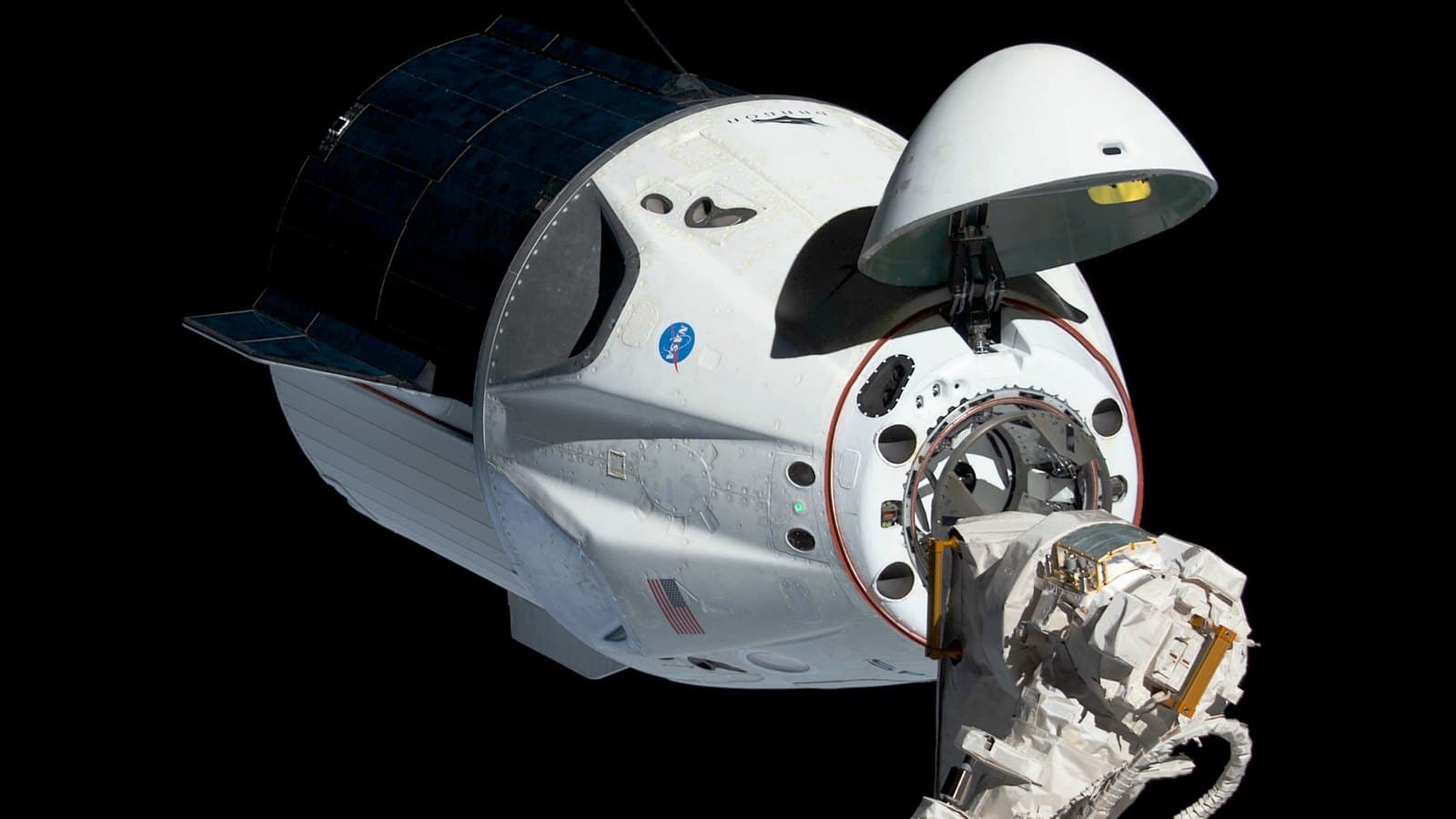
Cover: NASA's Crew Dragon docked to the International Space Station during the Demo-1 mission, by NASA (public domain).
Tags
Frequently asked questions
- How much did NASA pay SpaceX for the new crew missions?
- NASA awarded SpaceX $946 million for three additional missions, Crew-15, Crew-16 and Crew-17, under a modification announced on September 18, 2026. The amount covers the flights plus related mission services.
- How many missions does SpaceX have under the CCtCap contract?
- The new award brings SpaceX to 17 contracted missions under the Commercial Crew Transportation Capability contract. NASA says the total contract value with the company is now $5.92 billion, with performance running through 2030.
- Is Boeing's Starliner flying NASA crews yet?
- No. Boeing has not obtained human-rating certification for Starliner, and NASA's Office of Inspector General expects certification no earlier than 2027. The next Starliner flight, Starliner-1, is planned as an uncrewed cargo mission rather than a crew rotation.
- When will SpaceX Crew-13 launch?
- NASA and SpaceX are targeting early October 2026, after teams replaced an oxidizer valve on the Dragon capsule following a leak found during prelaunch processing. The crew entered quarantine on September 17, and no exact launch date has been announced.

TPW Editorial
Editorial Team
TechPastWeek's editorial team reports and edits every story we publish. We research each piece against primary and credible secondary sources, and a human editor reviews and signs off before it goes live.