SpaceX Launches CRS-35 With the Final Pair of ISS Roll-Out Solar Arrays
SpaceX launched NASA's CRS-35 cargo mission on October 13, 2026, carrying the fourth and final pair of ISS roll-out solar arrays and 6,300 pounds of supplies.

On this page
Key takeaways
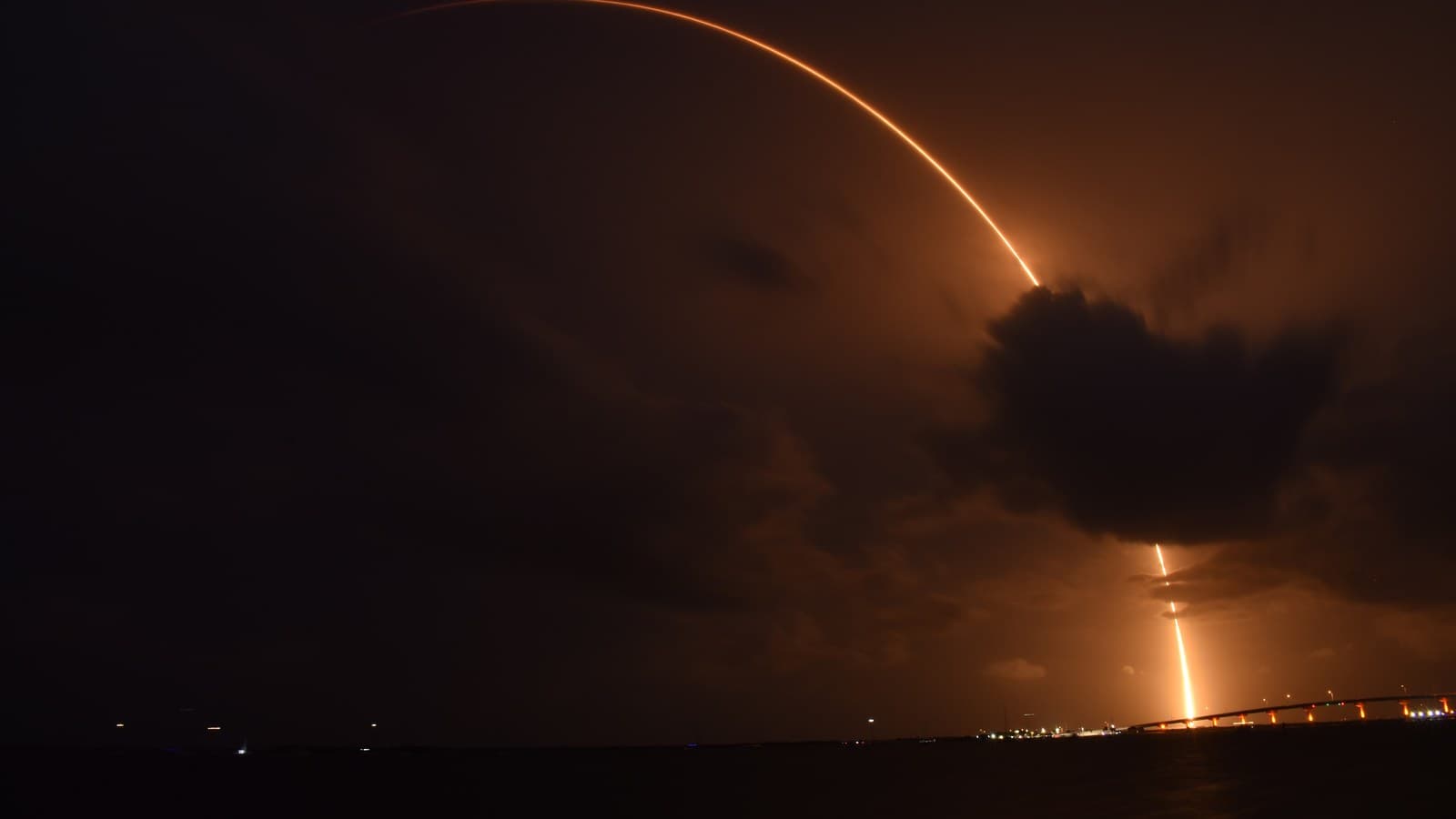
- SpaceX launched NASA's CRS-35 cargo mission on October 13, 2026 at 6:33 a.m. EDT (1033 UTC) from pad 40 at Cape Canaveral Space Force Station on a Falcon 9.
- The Dragon carried more than 6,300 pounds (about 2,860 kilograms) of science and supplies, including the fourth and final pair of ISS Roll-Out Solar Arrays, built by Redwire Space.
- Each iROSA can provide more than 20 kilowatts of power for more than 10 years, and this pair completes the augmentation of the station's power system alongside the eight original, larger arrays.
- The first-stage booster B1096 landed at Landing Zone 40 fewer than 7.5 minutes after liftoff on its eighth flight; Dragon C211 was scheduled to dock at Harmony's space-facing port on October 15.
- A version of the ROSA technology will help power NASA's Space Reactor 1 Freedom when it launches in 2028, and the Dragon also carried equipment for more than 40 scientific studies.
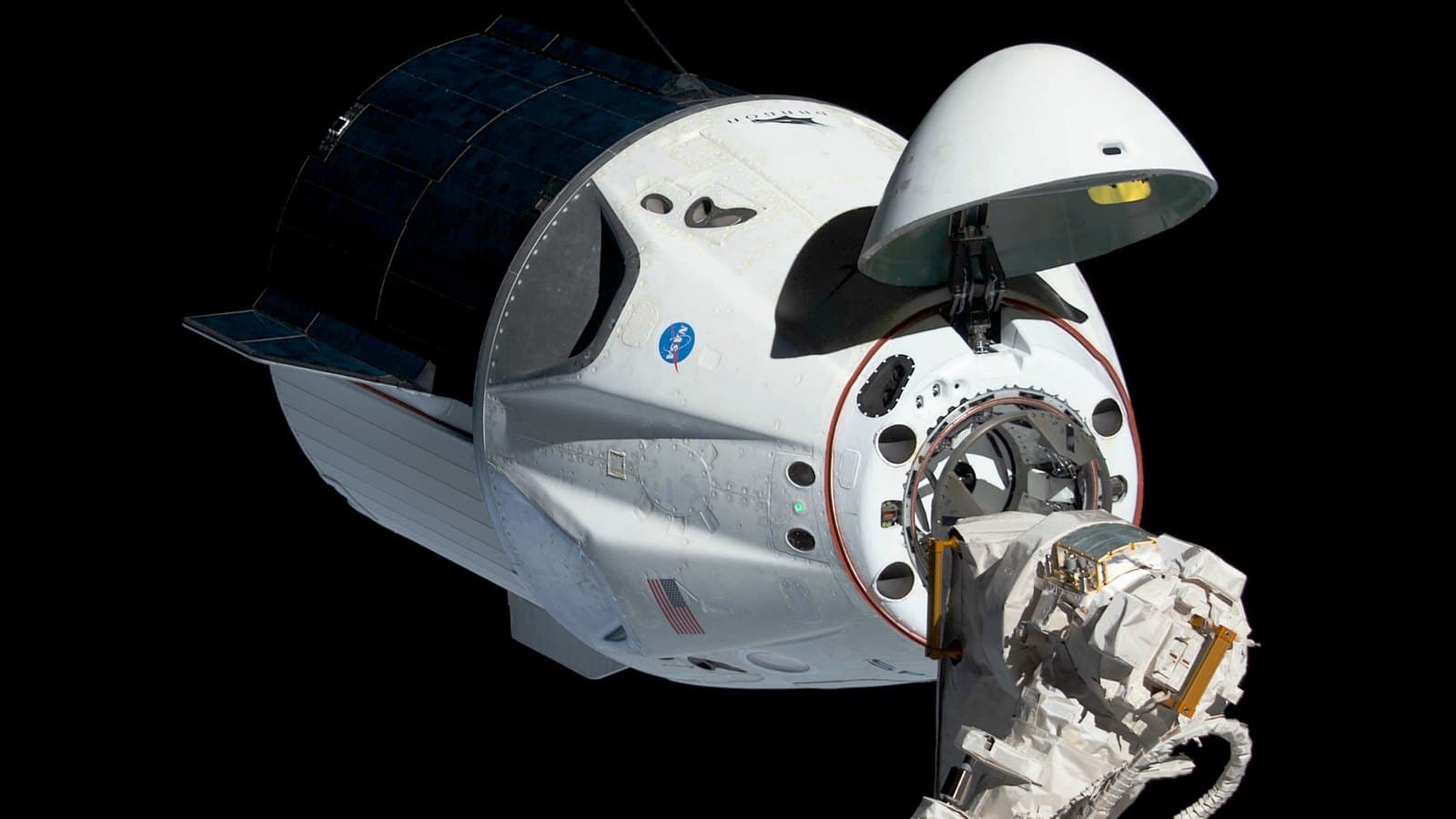
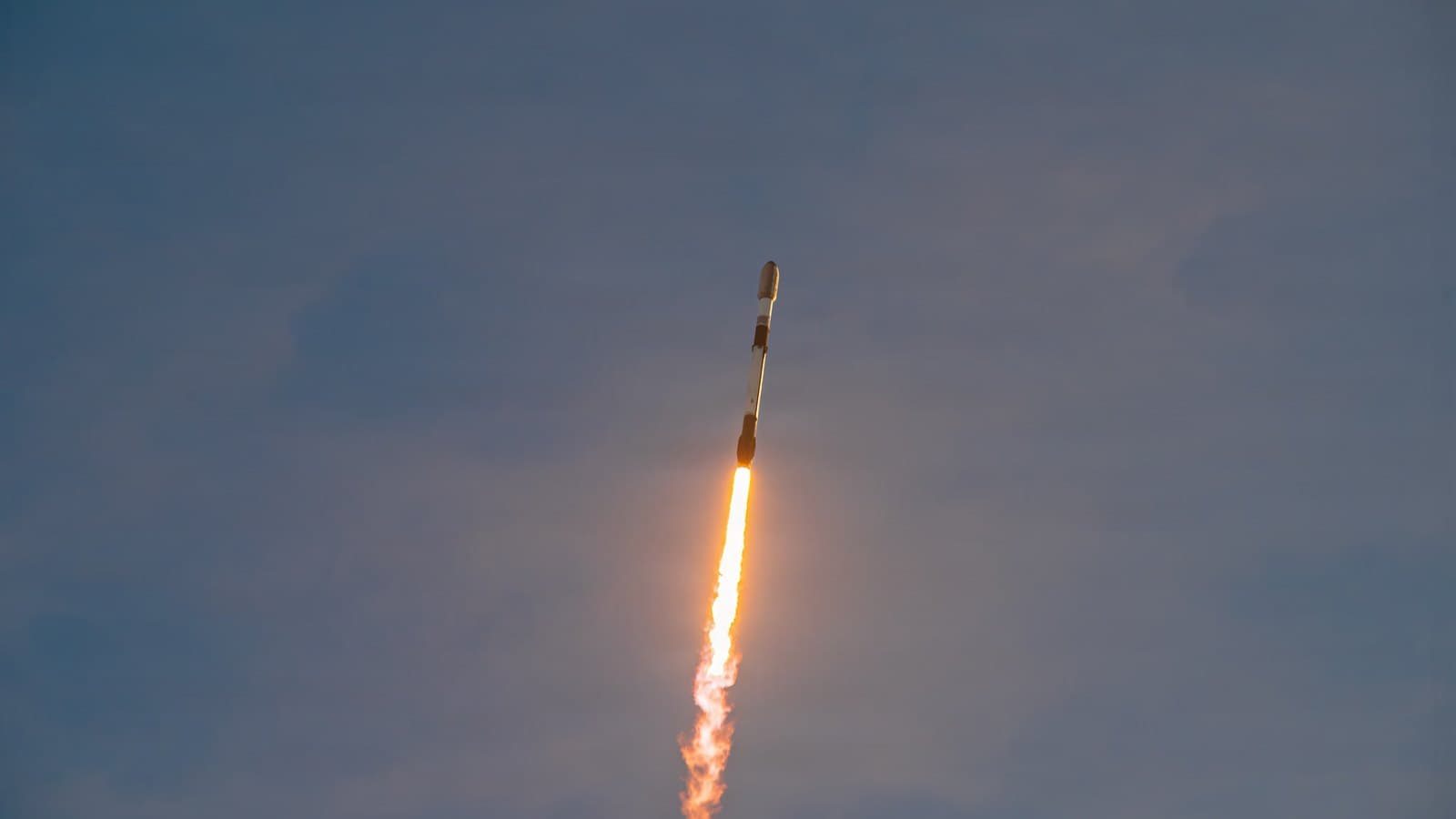
SpaceX launched NASA's 35th Commercial Resupply Services mission to the International Space Station on October 13, 2026, sending a Falcon 9 off pad 40 at Cape Canaveral Space Force Station in Florida at 6:33 a.m. EDT (1033 UTC). According to Spaceflight Now's launch report, the Cargo Dragon carried more than 6,300 pounds (about 2,860 kilograms) of science and supplies, including the fourth and final pair of the station's roll-out solar arrays. The flight is the last piece of a power upgrade NASA has assembled over several years, and it arrives at a station the agency intends to retire.
Related reading: NASA Extends SpaceX Crew Contract With $946M for Three More ISS Missions · SpaceX Flies 700th Falcon Mission, Completing SES's O3b mPOWER Constellation.
The launch, in sequence
- Liftoff. The Falcon 9 rose from pad 40 at 6:33 a.m. EDT (1033 UTC) on October 13.
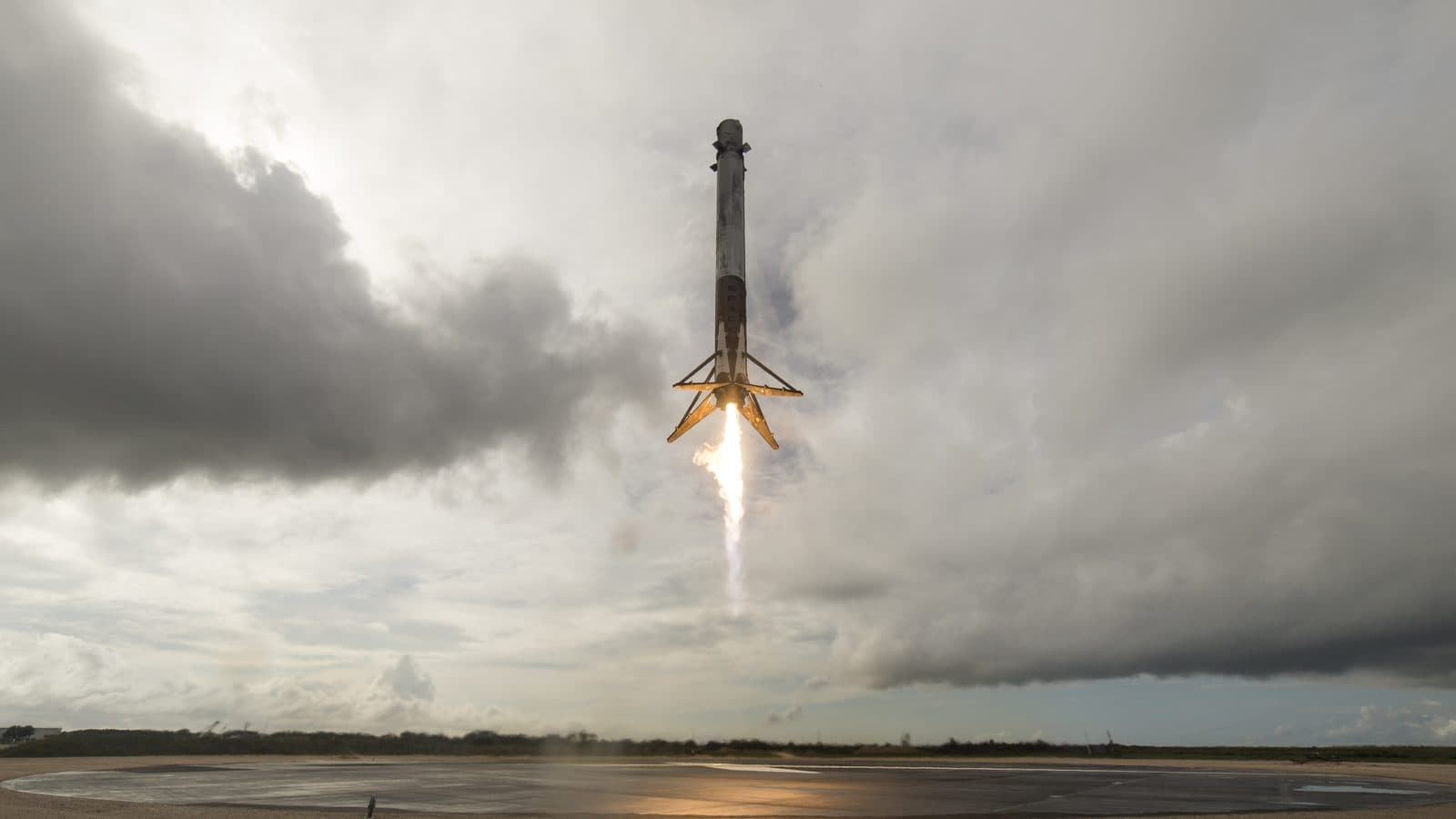
- Booster return. The first-stage booster, tail number B1096, made its eighth trip to space and landed at Landing Zone 40 fewer than 7.5 minutes after liftoff, producing a sonic boom across the spaceport.
- Spacecraft separation. Cargo Dragon C211 separated from the upper stage about two minutes later and began a two-day journey to the station.
- Docking. The capsule was scheduled to dock at the space-facing port of the Harmony module on the morning of Thursday, October 15. NASA astronaut Anil Menon and Canadian Space Agency astronaut Joshua Kutryk will monitor its arrival, per the NASA Space Station blog.
- Stay. The Dragon is expected to spend about a month docked to the station.
A booster on its eighth flight is routine in 2026, but the details still describe the system. B1096 launched and landed inside a window a throwaway rocket would have spent far longer preparing for, and the return to a land pad rather than a droneship at sea is what sent the sonic boom across the spaceport. Reuse is the reason a resupply run now reads as a normal piece of logistics.
The mission was the 35th flight under NASA's Commercial Resupply Services program with SpaceX, and the launch preview published by Spaceflight Now framed it around the hardware in the trunk rather than the cargo hold. That hardware is the point of the flight. The program carries two kinds of freight: the experiments and crew supplies that pass through the station's hatches inside the pressurized cabin, and the oversized hardware that rides in the unpressurized trunk, open to space for the whole trip. A pair of solar arrays needs that room, which is why they flew in the trunk rather than strapped down inside.
The last pair of roll-out arrays
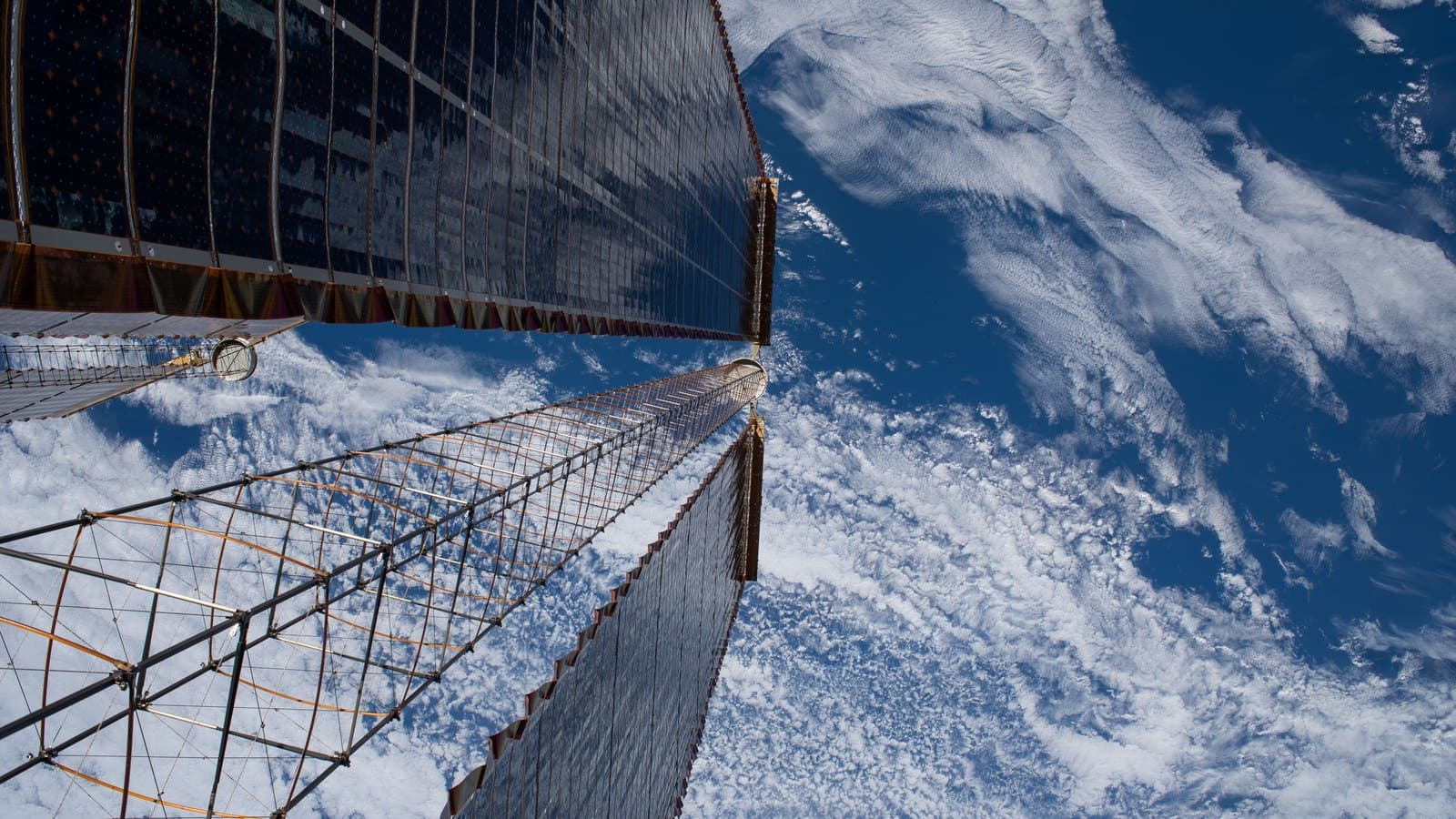
Inside the Dragon's unpressurized trunk rode two ISS Roll-Out Solar Arrays (iROSAs) built by Redwire Space. Each can provide more than 20 kilowatts of power for more than 10 years, and this is the fourth and final pair. Together with the eight original, larger solar arrays, the new panels complete the augmentation of the station's power system. Redwire built the hardware, and this pair is the last of the augmentation NASA plans to launch.
What an iROSA actually is
The iROSA is a roll-out design that unspools from a compact canister rather than unfolding from large rigid panels. NASA first demonstrated the approach on CRS-11 in 2017, and it has since become the standard way the agency adds power to the station.
NASA did not send the panels up with a spacewalk already booked to install them. Instead, the agency prepared for the work with a series of earlier spacewalks, and the new arrays will go onto the station on future spacewalks once their condition after launch has been checked.
“It's been quite the journey. Folks may remember back in 2017 when we launched the ROSA on CRS-11 and that's really where we demonstrated this innovative approach to deploying a solar array.” — Gaurang Patel, NASA's operations integration manager for its Low Earth Orbit Program, October 13, 2026
Speaking after launch, Patel placed CRS-35 at the end of a line that began with a single test article. What flew in 2017 proved the deployment concept. What arrived in the trunk this week is production hardware, the last increment of a program that started as a demonstration.
Why a station headed for retirement still needs new arrays
The obvious question is why NASA keeps adding capacity to a laboratory it plans to decommission. Power is a fixed constraint on a space station, and building up the arrays has been a project of years. The phrasing NASA uses is precise: this pair completes the augmentation of the power system rather than replacing it. The eight original, larger arrays stay where they are. The station ends its service with more generating capacity than it started with.
On a station, electrical capacity is the resource every other system draws against. More of it means more experiments can run at once and more margin for the hardware that keeps the outpost alive until retirement day. The station's systems, its science racks and its life-support hardware all draw on the same supply, so extra kilowatts show up as headroom across the whole outpost. That is the case for finishing the array program even as the agency plans the station's end.
The second reason shows up in where the technology goes next. A version of the ROSA design will help power NASA's Space Reactor 1 Freedom, called SR-1 Freedom, when it launches in 2028. That is a nuclear-powered spacecraft, not a solar one, and the same roll-out architecture is being adapted for it, which carries the design well beyond the station. A deployment mechanism already demonstrated on the station is a lower-risk starting point for a new vehicle than a clean-sheet approach.
Reading the two programs together, the station has served as the proving ground. NASA is moving a roll-out architecture it has already flown onto a new vehicle with a different power source and a different destination, rather than starting over.
A glass experiment and a stowed arm joint
The trunk is only part of what CRS-35 delivered. The Dragon also carried equipment for more than 40 scientific studies, including biological and plant-science experiments and tests of a new type of glass made from heavier elements. Dr. Liz Warren, NASA's deputy chief scientist within its ISS Office, described the material in remarks about the experiment: “Unconventional glass is made from heavier elements that aren't traditionally used to form glass. These unconventional glasses could have remarkable properties, including refractive indices higher than diamond, greater resistance to breaking, and even the ability to contract rather than expand when heated.”
Those are potential properties under investigation, not results. Warren described what the researchers hope to find rather than what they have found, and the experiment's outcome will follow later. Read against her list, the candidate uses run from optical components, where a high refractive index and resistance to breaking would matter, to parts that have to hold their shape through temperature swings, which is where the contraction behavior comes in.
The flight also carried a clamshell apparatus built to house the failed Canadarm2 joint that was removed during a spacewalk on June 30, 2026. Returning the joint to the ground lets engineers examine what failed on a robotic arm the station still depends on for maintenance and for capturing visiting vehicles. The clamshell keeps the hardware contained and protects the joint on the ride home.
Caveats
Several things about CRS-35 are stated rather than demonstrated. The power figures, more than 20 kilowatts per array and a service life of more than 10 years, are specifications from Redwire and NASA, not measurements from orbit. The arrays will not produce power until they are installed, and no installation spacewalk has been scheduled, because the plan depends on a condition check first.
The docking time was the schedule as of launch, and Dragon arrivals can shift. The mission totals, including the 6,300 pounds of cargo and the count of more than 40 studies, come from the launch reporting from Spaceflight Now and Space.com. The glass experiment's outcome is unknown; Warren described the properties the researchers hope to see. And the SR-1 Freedom link is a stated NASA plan for a 2028 launch, not a completed transfer of hardware.
What to watch
Three dates and one result matter from here. The first is the docking, set for the morning of October 15, when Menon and Kutryk will watch the Dragon arrive. The second is the condition check on the arrays and the spacewalks that follow, since the panels do nothing until astronauts bolt them to the station's power truss. The third is 2028, when SR-1 Freedom is slated to fly and the ROSA lineage moves to a nuclear-powered spacecraft. The one result is the glass: whether heavier elements produce a material with the properties Warren described, or simply another data point.
For now the milestone is narrower than the strategy around it. A Falcon 9 flew for the eighth time on one booster, a Dragon began a two-day trip, and the last two roll-out arrays that will ever be added to the International Space Station left the ground.
Cover image: a view down a pair of the International Space Station's roll-out solar arrays, photographed during a March 18, 2026 spacewalk. Credit: NASA/Jessica Meir, public domain, via Wikimedia Commons.
Tags
Frequently asked questions
- What did SpaceX's CRS-35 mission carry to the space station?
- CRS-35 carried more than 6,300 pounds (about 2,860 kilograms) of science and supplies. In the unpressurized trunk were the fourth and final pair of ISS Roll-Out Solar Arrays, plus equipment for more than 40 scientific studies.
- When did CRS-35 launch and when will it dock?
- The Falcon 9 lifted off on October 13, 2026 at 6:33 a.m. EDT (1033 UTC) from pad 40 at Cape Canaveral Space Force Station. The Dragon was scheduled to dock at the space-facing port of the Harmony module on the morning of Thursday, October 15.
- What are the ISS Roll-Out Solar Arrays?
- The iROSAs are roll-out arrays built by Redwire Space. NASA flew the technology on CRS-11 in 2017, and each iROSA can provide more than 20 kilowatts of power for more than 10 years. The CRS-35 pair is the fourth and final set, completing the augmentation of the station's power system.
- Will the roll-out technology be used anywhere besides the space station?
- Yes. A version of the ROSA technology will help power NASA's Space Reactor 1 Freedom, known as SR-1 Freedom, when it launches in 2028.

TPW Editorial
Editorial Team
TechPastWeek's editorial team reports and edits every story we publish. We research each piece against primary and credible secondary sources, and a human editor reviews and signs off before it goes live.