Japan Launches MMX to Bring Back a Piece of Phobos
JAXA launched MMX on 20 October 2026 on a mission to orbit Phobos, land a rover and bring at least 10 grams of the Martian moon back to Australia in 2031.


On this page
Key takeaways
- JAXA launched the Martian Moons eXploration (MMX) spacecraft on an H3 rocket from Tanegashima at 04:41 JST on 20 October 2026.
- MMX is due to arrive at Mars in August 2027, land on Phobos no earlier than December 2028 and return a capsule to Australia in 2031.
- The mission aims to collect at least 10 grams of Phobos material, which would be the first sample from a moon other than Earth's.
- Its main science goal is to establish whether Phobos and Deimos are captured asteroids or debris thrown up by a giant impact on Mars.
- The 25 kg Idefix rover, built by CNES and DLR, will scout landing sites for up to 100 hours before the main spacecraft touches down.
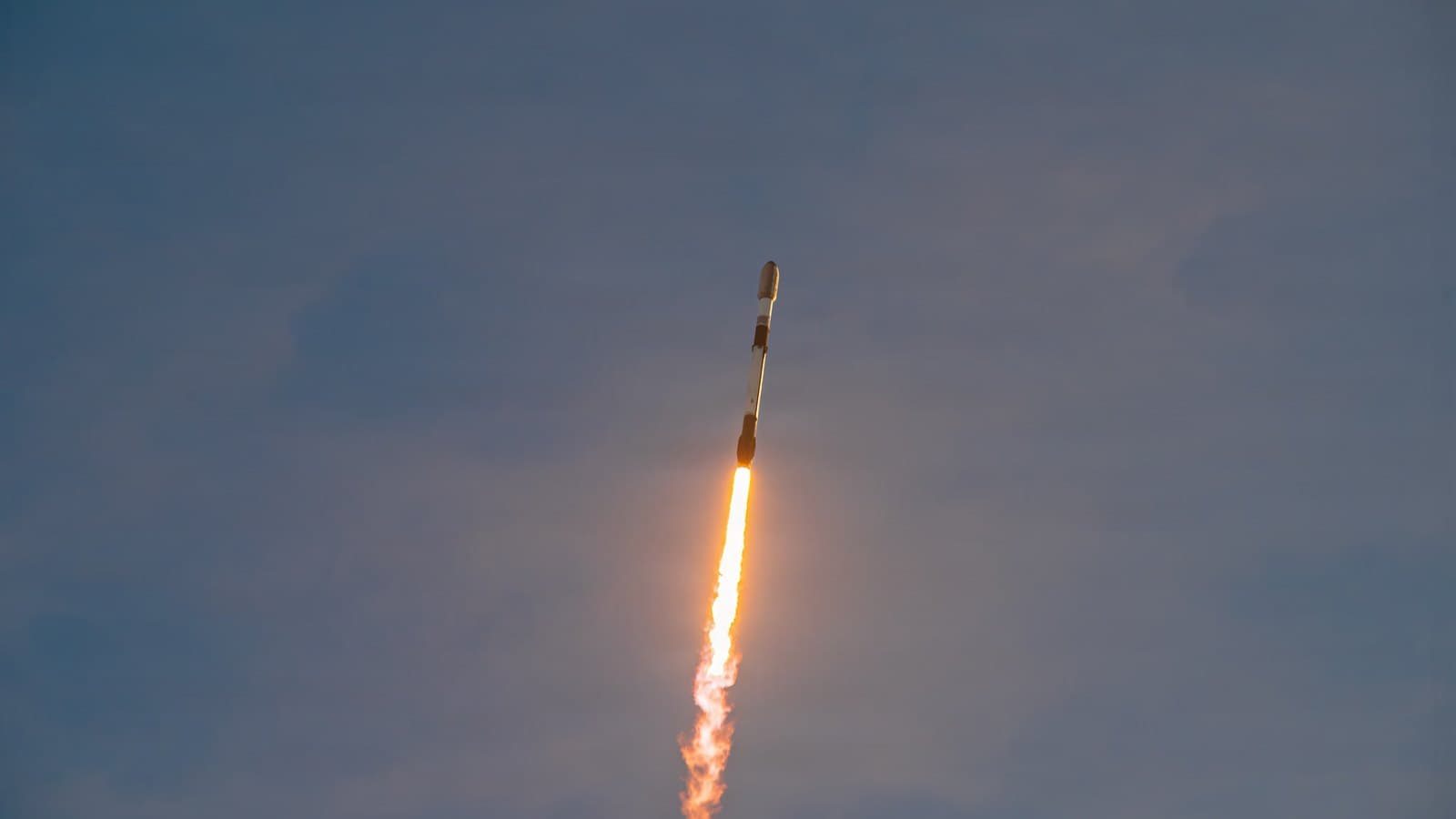
JAXA launched its Martian Moons eXploration (MMX) spacecraft on an H3 rocket from the Yoshinobu Launch Complex at Tanegashima Space Center at 04:41 JST on 20 October 2026. In the United States the liftoff fell at 3:41 pm EDT on 19 October, which was 20:41 BST and 21:41 CEST that evening in Europe. JAXA streamed the flight, and ESA published a clip credited to the Japanese agency.
Related reading: ESA to Build Its Own Radar for the EnVision Venus Mission as NASA Steps Back · IBM and NASA Open-Source a Foundation Model for the Moon.
The destination is Phobos, the larger of Mars's two moons. No spacecraft has orbited it, none has landed on it, and none has brought anything back from the Martian system. MMX is designed to do all three: arrive in 2027, put a rover and then a lander on the surface, and return at least 10 grams of the moon to Australia in 2031. If it works, it will be the first sample ever returned from a moon other than Earth's, a point Ars Technica made at launch.
What launched on 20 October is the spacecraft and its departure sequence. Everything that makes the mission unusual is still ahead.
What the spacecraft has to do
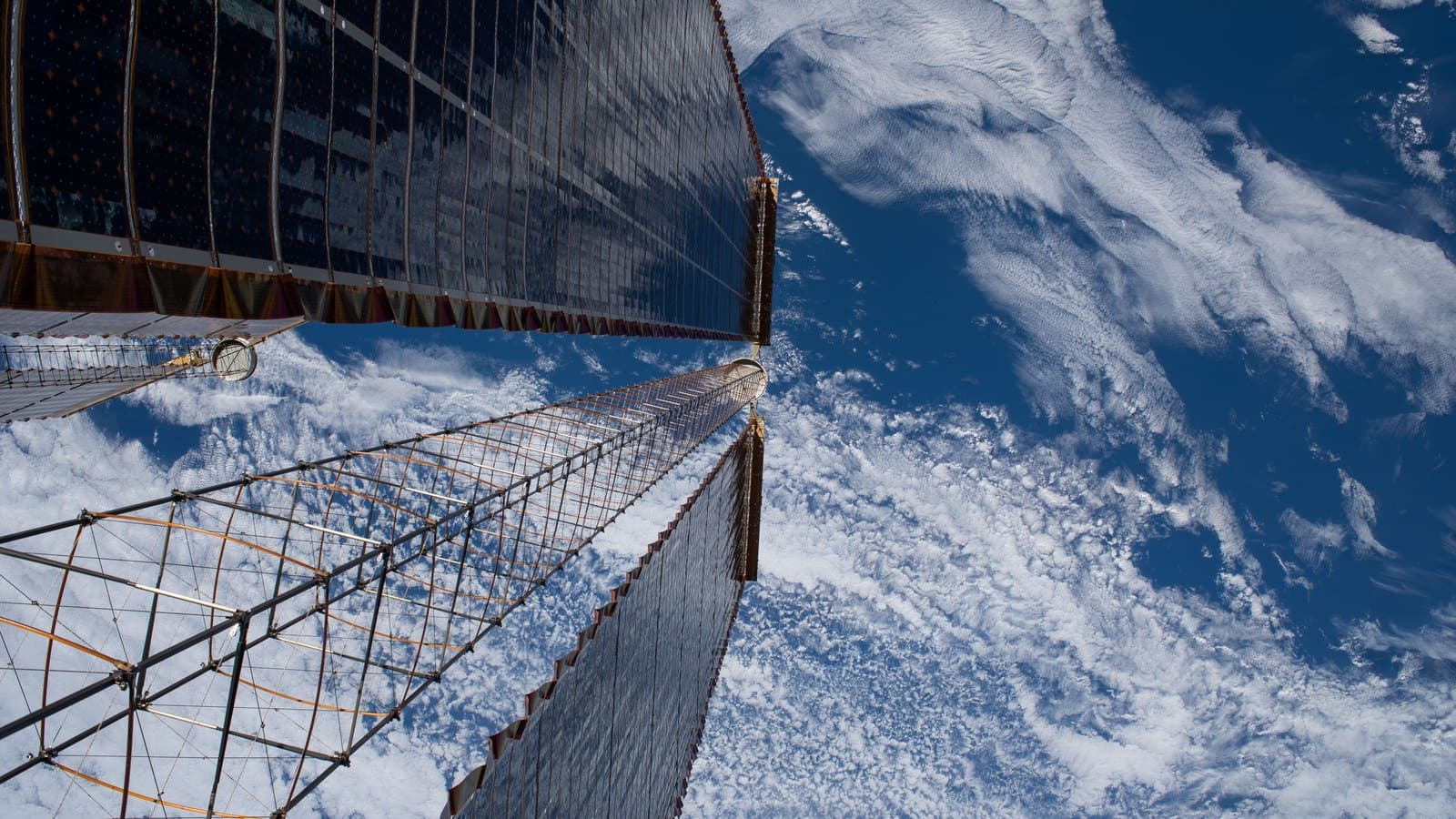
MMX weighs about 4,200 kg with fuel and is built in three modules: propulsion, return and exploration. Two solar array wings supply power, and the high-gain antenna for the trip home sits on the return module. The spacecraft carries 11 scientific instruments, with more on the rover.
The trajectory is a slow one. JAXA's mission plan has the spacecraft arriving at Mars in August 2027, roughly a year after launch. It then enters a quasi-satellite orbit around Phobos before anything descends. The 25 kg Idefix rover goes down first. Only after that does the main spacecraft land, collect its sample and climb back off the moon.
The landing is scheduled for no earlier than December 2028, more than a year after arrival. That gap is not padding. Choosing a landing site on a body 22 km across, with almost no gravity and a surface of loose material, is the part of the mission with the least precedent. Japan has returned samples from two asteroids. It has never landed on a moon of another planet.
The return leg ends with a capsule about 60 cm across, fitted with a heat shield, coming down in the Woomera Prohibited Area in Australia in 2031. From there it goes to JAXA's Institute of Space and Astronautical Science in Sagamihara, near Tokyo, where the sample will be opened, catalogued and divided among scientists.
A launch is not a mission
The H3 put MMX on its way, which validates the rocket and the departure sequence. It says nothing yet about the arrival at Mars in August 2027, the landing no earlier than December 2028, or the capsule recovery in 2031. Those are plans, and each one depends on the previous step working.
ESA's director of science, Carole Mundell, marked the launch with a short statement: "I would like to congratulate JAXA and the entire MMX team for this successful launch."
Why go to a moon 22 km across
The science question is origin. Phobos and Deimos could be asteroids that Mars captured, or they could be debris thrown into orbit by a giant impact on the planet. MMX is led by JAXA with NASA, CNES, DLR and ESA as partners. Phobos is about 22 km across; Deimos is about 12 km. Both circle Mars in near-circular orbits close to the equator, a geometry that fits the impact idea better than a random capture. It is not settled, and the two hypotheses predict different materials.
A sample can tell them apart in a way that remote sensing cannot. If Phobos formed from impact debris, it may hold material from young Mars, and it may record how water and organic molecules moved through the early Solar System. If it is a captured asteroid, it belongs to a different family of objects altogether, and its chemistry will say so.
That is the reason to go to the trouble of touching the surface. Remote instruments measure only the surface they can see. A returned sample can be weighed, heated and dated in a laboratory, then kept for the next generation of instruments. JAXA describes MMX as the world's first sample-return mission from the Martian sphere.
Deimos, at about 12 km, is not a landing target, though MMX will observe it from a distance and attempt a flyby. What is learned at the larger moon will shape any later plan to visit the smaller one. The two share the same orbital geometry, so an answer about how Phobos formed would probably settle most of the same question for Deimos.
The rover is light enough to be a problem
Idefix is 25 kg, jointly developed by CNES in France and DLR in Germany. It has four wheels, solar panels and a rechargeable battery, and it is designed to spend up to 100 hours on Phobos scouting landing sites for the main spacecraft.
On Phobos, 25 kg weighs the equivalent of about 15 grams. That changes what driving means. A rover on a body with so little gravity cannot rely on friction in the way a Mars rover does; the wheels are there to push against a surface that may be closer to a gravel pile than a road. Idefix carries a wheel-deployment system that lets it right itself if it ends up on its side.
The rover inspects the regolith where the main spacecraft intends to land, and it tests how the surface responds to a wheel. JAXA has not landed on Phobos before, so Idefix is also a way of finding out whether the assumptions in the landing design survive contact.
Two samplers, two jobs
MMX carries two sampling systems, and they work on different principles. The C-Sampler is a corer that drives into the surface and extracts cores from about 2 cm depth, material that has been shielded from space weathering. The P-Sampler uses pressurised gas to lift surface material into a container in seconds, a technique that captures the loose top layer without a drill.
The instrument set is international. NASA's contribution is MEGANE, a gamma-ray and neutron spectrometer built at Johns Hopkins Applied Physics Laboratory, which measures the elemental composition of the surface from orbit. The P-Sampler comes from Honeybee Robotics, part of Blue Origin. ESA supplied deep-space communication equipment, a transponder and a power amplifier, along with ground-station support through its Estrack network. France's MIRS near-infrared spectrometer was developed at the LESIA-Paris Observatory with CNES and other laboratories, and European scientists sit on the science team.
A core keeps the layering of the surface intact, so the sequence of material can be read in the laboratory. A gas-driven collection of loose grains samples a wider patch, including material that may have arrived from elsewhere on Phobos or from space. Having both gives the curation team two kinds of sample to compare, and a fallback if one mechanism struggles.
After recovery, JAXA will open and catalogue the capsule at Sagamihara and distribute portions to scientists. Some of those teams will have had no hand in building the spacecraft.
"The launch was spectacular, and JAXA's H3 launcher performed fantastically to send MMX onward to Mars." — Elliot Sefton-Nash, ESA, October 2026
Nobody has landed on Phobos before
Japan's record in sample return is the strongest argument that MMX can be done. Hayabusa brought back material from the asteroid Itokawa in 2010, and Hayabusa2 returned samples from Ryugu in 2020. For scale, NASA's OSIRIS-REx brought back 121.6 g from Bennu in 2023, and the Apollo crews returned 382 kg of lunar material.
MMX is harder than any of those. The target sits in Mars's gravity well, and the return leg has to climb out of it. The mission also carries a rover and a lander rather than touching an asteroid for seconds. MMX has to set down, stay long enough to drill, and take off again.
The 10-gram target is modest next to Apollo's 382 kg and OSIRIS-REx's 121.6 g. Every gram has to be lifted off Phobos, carried across interplanetary space and brought through re-entry. JAXA has set the figure as a minimum.
What could still go wrong
The dates are the first thing to treat as provisional. The August 2027 arrival and the 2031 return are the agencies' current plans, as SpacePolicyOnline reported at launch, and planetary missions rarely hold a date without some movement. The gap between arrival and the earliest landing date is about 16 months, which suggests JAXA expects to need some of it.
The sample mass is not guaranteed either. "At least 10 grams" is a target and a requirement, not a promise. If the surface turns out to be harder than expected, or the corer meets a buried rock, the P-Sampler's loose material may make up more of the returned mass than planned. That would still be a sample, but it would change what can be measured.
Then there is the science. MMX may come back with material that fits neither origin story cleanly, or with evidence that both processes contributed. A mission built to answer a binary question can end up complicating it.
What to watch
The first real test comes in August 2027, when the spacecraft has to enter its quasi-satellite orbit around Phobos. Arrival is where navigation, propulsion and the moon's actual gravity field meet.
After that, watch the landing site selection and the Idefix deployment. The rover's 100 hours on the surface will produce the first close-up look at the regolith, and the choice of where the main spacecraft comes down will depend on what it finds. The landing itself is scheduled for no earlier than December 2028.
Then comes the long wait. The sample capsule is due in Australia in 2031, and the mission's scientific value will not be clear until it is opened in Sagamihara. A successful launch is a good week for JAXA. The answer to what Phobos is will take another five years.
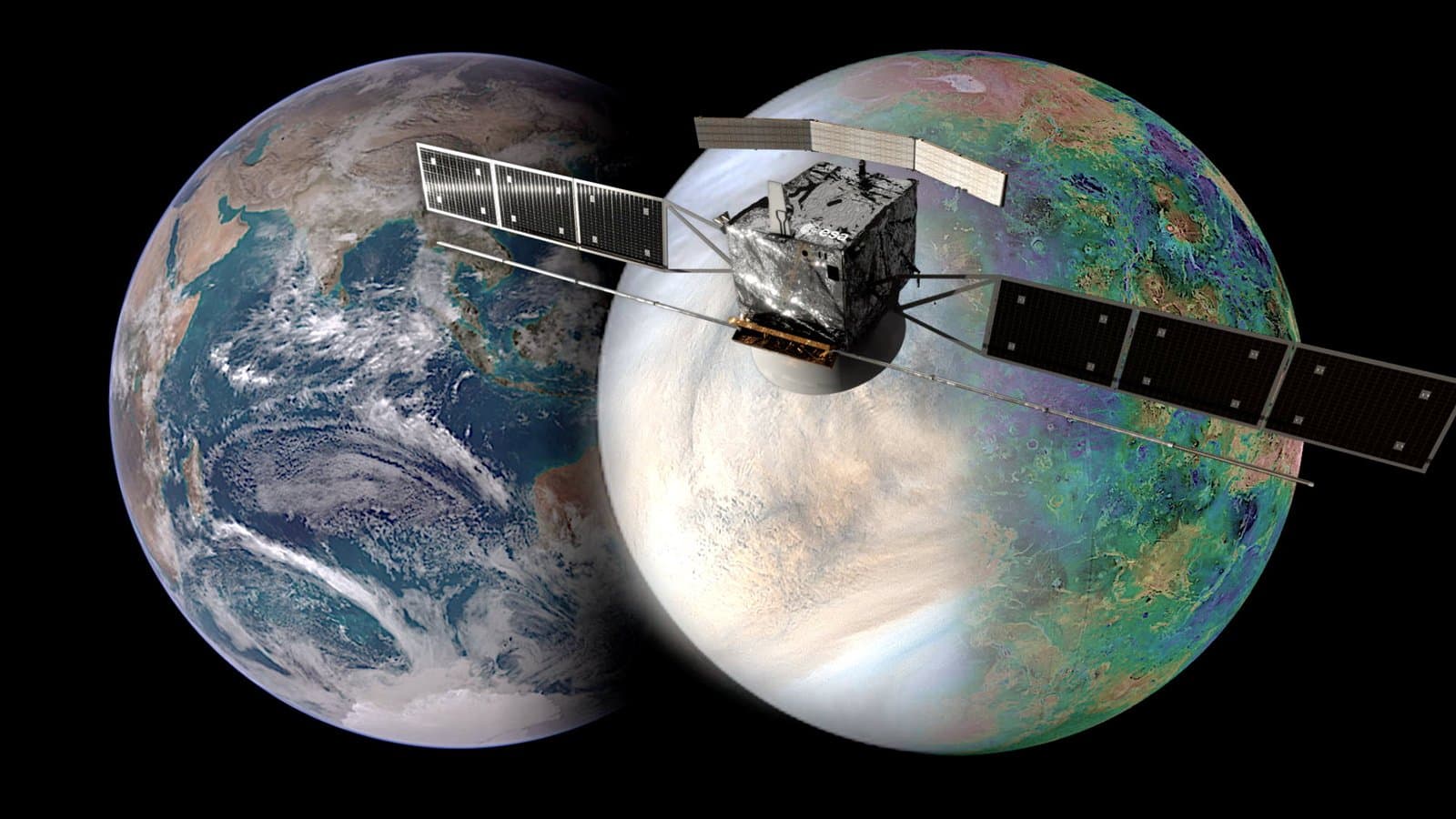
Cover image: JAXA computer-generated image of the MMX spacecraft (2019), CC BY 4.0, via JAXA/ISAS gallery.
Tags
Frequently asked questions
- When did JAXA launch the MMX mission?
- MMX lifted off on an H3 rocket from the Yoshinobu Launch Complex at Tanegashima Space Center at 04:41 JST on 20 October 2026. That was 3:41 pm EDT on 19 October in the United States and 20:41 BST in Britain.
- When will MMX reach Phobos and return to Earth?
- JAXA plans to arrive at Mars in August 2027, about a year after launch. The landing on Phobos is scheduled for no earlier than December 2028, and the sample capsule is due to land in Australia in 2031.
- How much of Phobos will MMX bring back?
- The target is at least 10 grams of material, collected by a coring tool and a pneumatic sampler. That is a minimum goal rather than a guarantee, and the final mass will not be known until the capsule is opened.
- Is Phobos a captured asteroid or a piece of Mars?
- Nobody knows yet, and that is the question MMX was built to answer. Phobos and Deimos have near-circular, equatorial orbits that fit an origin in debris from a giant impact on Mars, but a captured-asteroid origin has not been ruled out.

TPW Editorial
Editorial Team
TechPastWeek's editorial team reports and edits every story we publish. We research each piece against primary and credible secondary sources, and a human editor reviews and signs off before it goes live.