IBM and NASA Open-Source a Foundation Model for the Moon
The NASA-IBM Lunar Foundation Model turns decades of lunar observations into an open model and dataset, beating prior methods on key surface features by up to 23%.

On this page
NASA and IBM released the NASA‑IBM Lunar Foundation Model on September 10, an open-source AI system trained to make sense of the Moon's surface at a scale no single instrument has managed. The model is available now on Hugging Face, with its codebase on GitHub under an Apache‑2.0 license and a companion paper published alongside it.
Related reading: ESA to Build Its Own Radar for the EnVision Venus Mission as NASA Steps Back · NASA Asks Industry Whether Commercial Spacecraft Could Boost or Retire Hubble.
It is one of the first publicly available foundation models built specifically for lunar science, and it joins IBM and NASA's existing Prithvi family of open models for Earth observation, weather and heliophysics, the same playbook, applied to a different world: instead of building a bespoke algorithm for every scientific question, researchers start from a shared model and adapt it.
One model, many instruments
The Moon has been mapped for decades, by US and Japanese missions, in many wavelengths and at many resolutions. What has been missing is a way to bring all of that into one representation. The NASA‑IBM model is the first to integrate observations across modalities, viewing angles and spatial scales, consolidating data collected over decades.
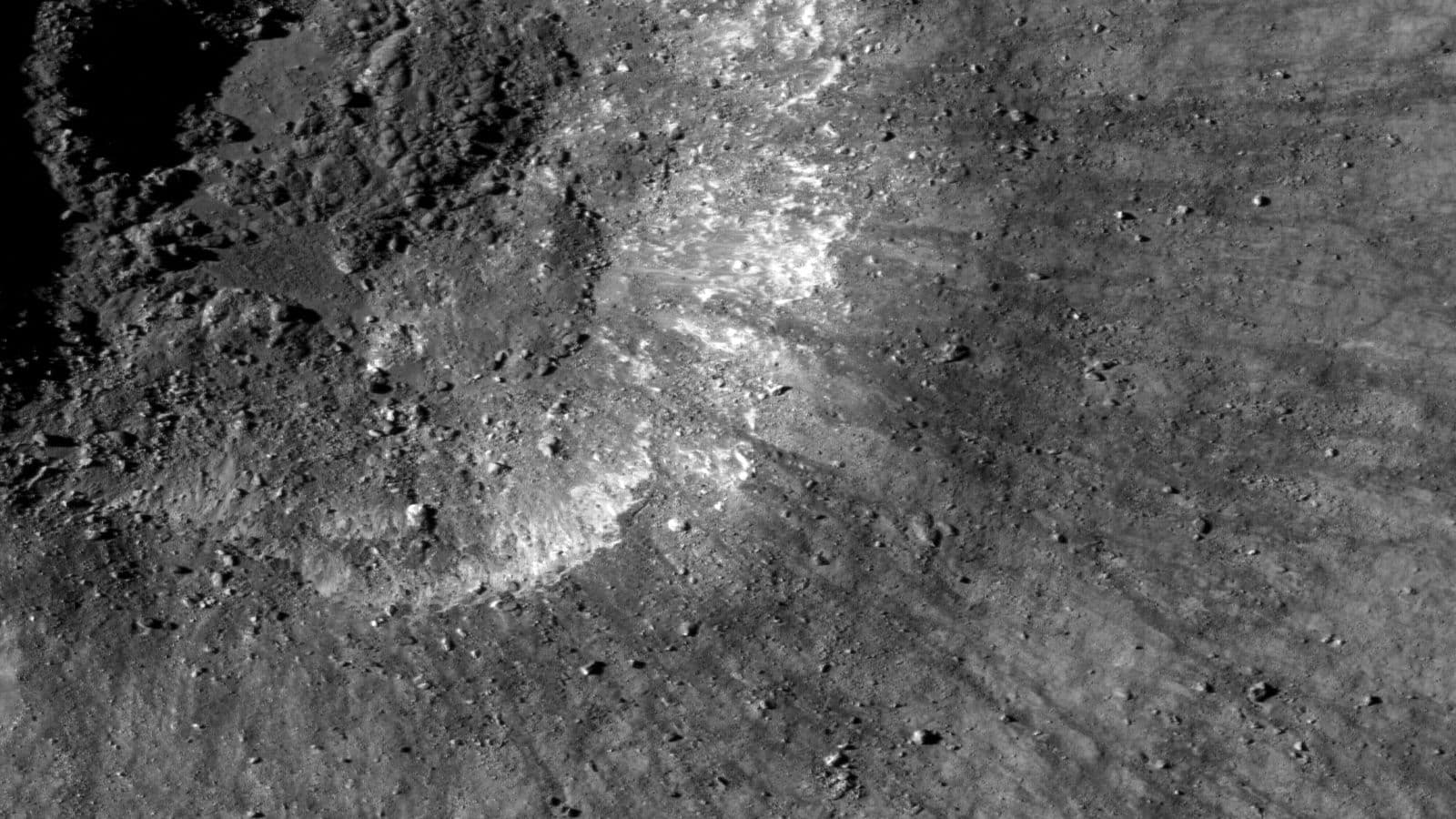
According to IBM and NASA, the model exceeds widely used methods by up to 23% at identifying key geographic features on the lunar surface, including potential ice deposits, craters and volcanic formations. That ice matters: locating water ice is central to plans for a sustained human presence on the Moon, both as a resource and as a scientific target.
The dataset may outlast the model
Alongside the model, the team released the first open-source lunar dataset of its kind: over 30 spatially aligned layers from nine instruments across four missions. It combines tens of thousands of images and maps from NASA's Lunar Reconnaissance Orbiter and GRAIL missions with complementary data from JAXA's SELENE/Kaguya. That shared, machine-learning-ready dataset could prove more consequential than any single model trained on it.
The training data came primarily from NASA's Lunar Reconnaissance Orbiter. On the technical side, the model is multimodal and multi-resolution, with a ViT‑B encoder and a 12-layer decoder, pretrained on 16 H100 GPUs for roughly 1,100 GPU-hours. IBM and NASA say they fine-tuned it with lightweight LoRA adapters that left 90% of the base model's weights frozen, a deliberately light touch that nonetheless matched or beat traditional machine-learning models across tasks.
The release is integrated into the open-source TerraTorch toolkit and ships with pre-training datasets and benchmark collections so researchers can reproduce results and build on them.
Open science, applied
The collaboration brought together NASA's Impact AI team at Marshall Space Flight Center, scientists in the agency's Planetary Science Division, and researchers at Goddard and Ames, alongside IBM Research and academic partners. The result is intended less as a finished product than as a common starting point. The problem it addresses is not a shortage of data but a shortage of ways to search it: too much material, too few people to comb through it by hand. A shared foundation model gives every scientist the same powerful lens.
The timing is not accidental. NASA is preparing for further Artemis missions after this spring's crewed lunar flyby, and the agency has framed the model as part of a broader effort to turn raw data into a resource for lunar discovery. The model and datasets are free to download, which means the work of finding the Moon's water, safe landing sites and geologic history no longer depends on who can afford to train a model, only on who has a question worth asking.
What to watch
Whether the community adopts SomBench, the released lunar benchmark, as a standard. Shared benchmarks are what turn a one-off model release into an actual research field.
Tags

TPW Editorial
Editorial Team
TechPastWeek's editorial team reports and edits every story we publish. We research each piece against primary and credible secondary sources, and a human editor reviews and signs off before it goes live.