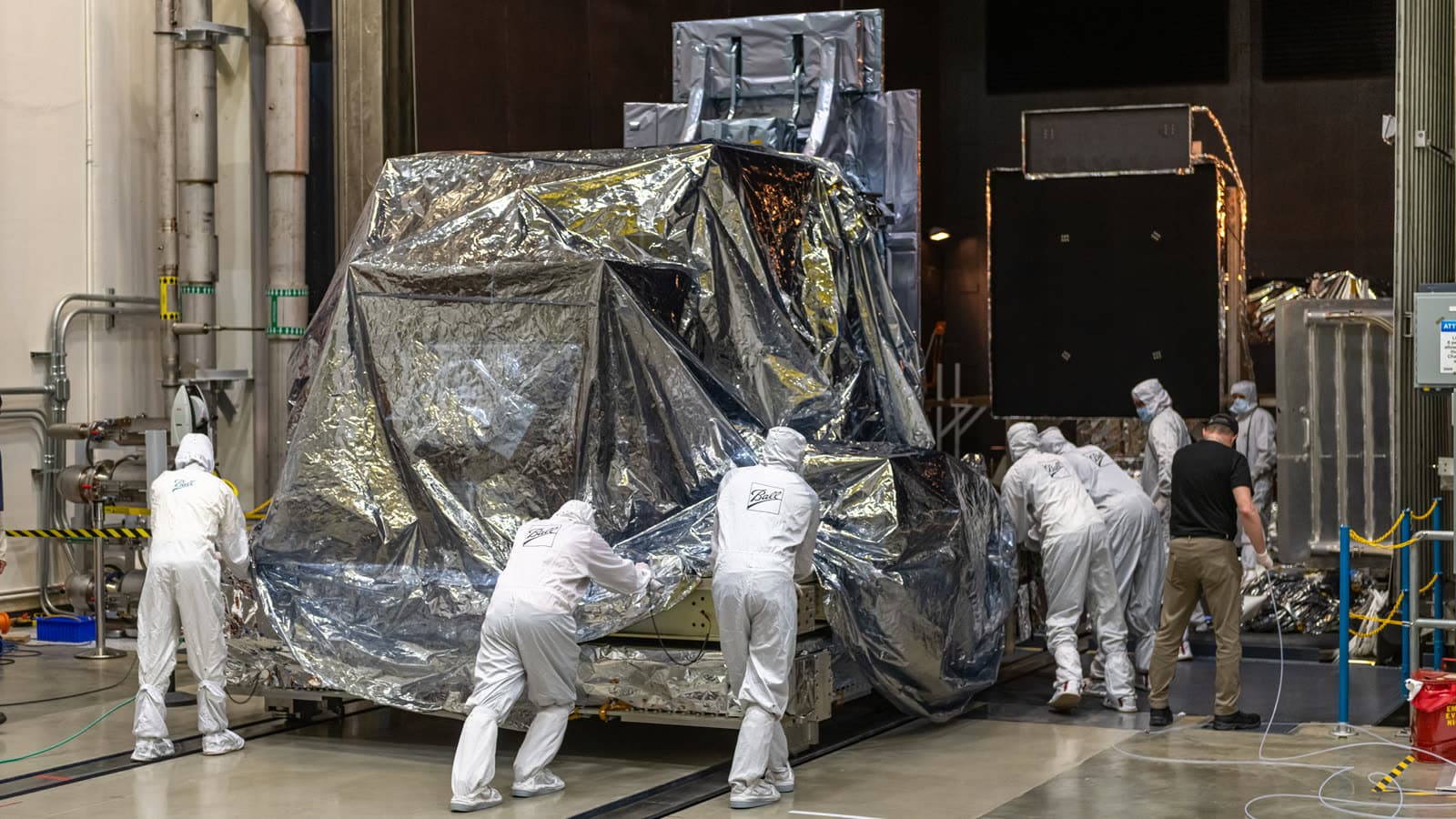
ESA to Build Its Own Radar for the EnVision Venus Mission as NASA Steps Back
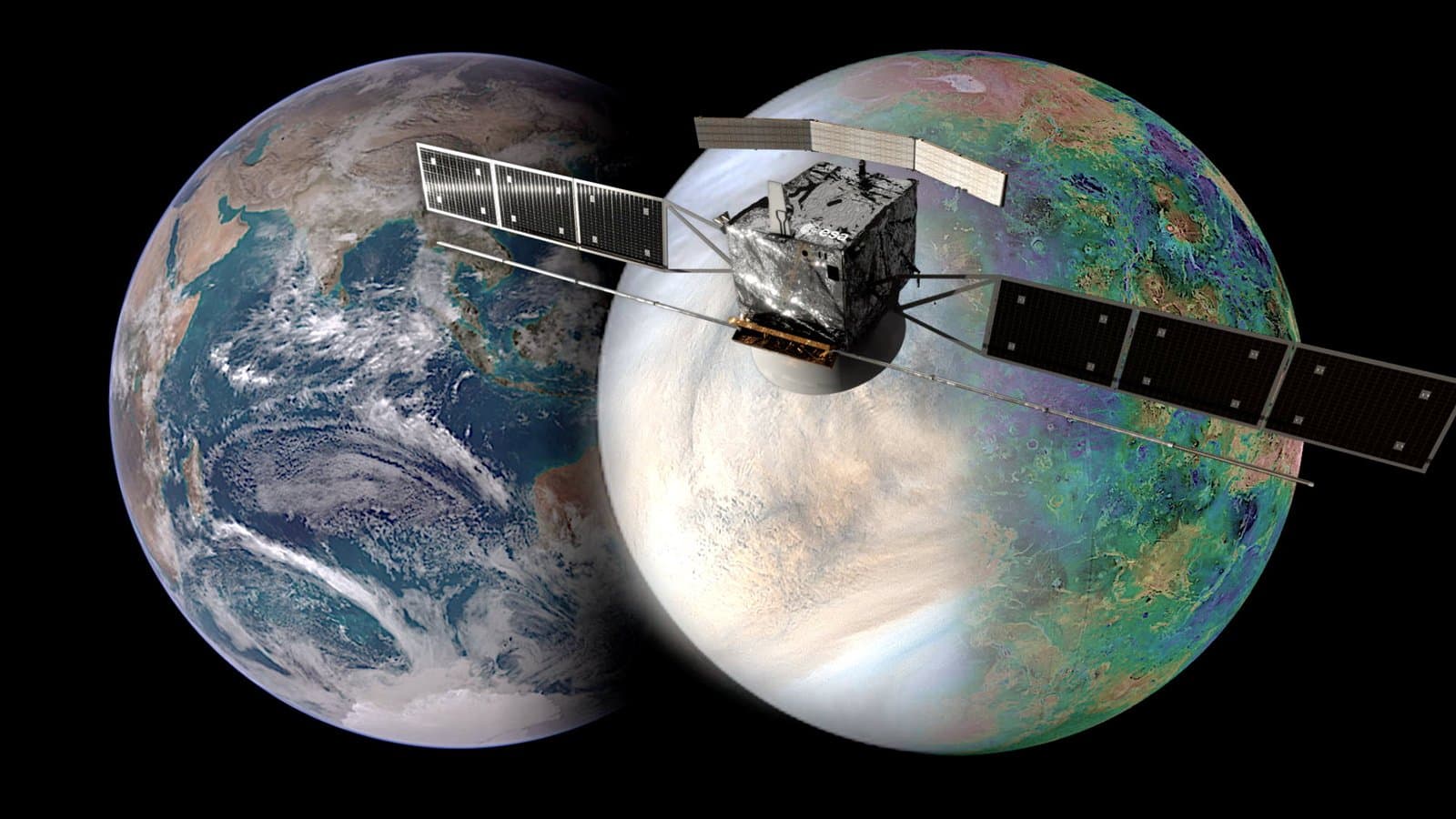
ESA is pressing ahead with a European radar for its EnVision Venus orbiter after NASA signalled it is unlikely to deliver the US-built VenSAR instrument.

On this page
At the Europlanet Science Congress in The Hague this week, the European Space Agency's project scientist for its next Venus mission delivered a message that quietly reorders a long-standing transatlantic partnership. ESA is going "full steam ahead" with a European-built radar for EnVision because NASA now appears unlikely to provide the US synthetic aperture radar the two agencies agreed on, Anne Grete Straume-Lindner said.
Related reading: IBM and NASA Open-Source a Foundation Model for the Moon · NASA Asks Industry Whether Commercial Spacecraft Could Boost or Retire Hubble.
"At the moment, we are finalizing our agreement with NASA, but it is looking like they are not able to provide the radar," Straume-Lindner said at the congress, which ran from 6 to 11 September, in response to a question from Ars Technica. "So that is why we are going full steam ahead with the European solution."
The decision, first reported in detail by eeNews Europe, is about more than one instrument. It carries Europe's flagship Venus mission past a funding crisis in Washington, adds cost, schedule pressure and engineering risk to a spacecraft already under construction, and it has already cost a year of schedule: EnVision's launch has slipped from 2031 to 2032.
Why radar is the whole mission
Venus is wrapped in dense clouds of sulfuric acid, and optical cameras in orbit cannot see the surface below. Radar can. That makes an imaging radar the single most important instrument on any modern Venus orbiter, and it is why the fight over VenSAR is a fight over whether EnVision can deliver its core science at all.
The last time humanity mapped Venus's surface in detail was NASA's Magellan orbiter, which operated from 1989 to 1994. EnVision is designed to go far beyond it. Its radar was specified to image broad regions at 30 metres per pixel and targeted areas at 10 metres per pixel, roughly an order of magnitude finer than Magellan, as ESA's own mission material puts it. It would also work as an altimeter and microwave radiometer, measure stereo topography at two incidence angles, and (for the first time at Venus) perform polarimetric imaging.
Those capabilities matter because they turn radar from a camera into a geology tool. Repeat observations let scientists compare the same terrain across years and look for signs of active volcanism or tectonic change. Altimetry quantifies how the surface is shaped. Polarimetry and radiometry infer roughness and composition. The mission's science goals (whether Venus is geologically active today, how it loses heat, where its water went) all lean on the radar returning that data.
What NASA was supposed to deliver
EnVision is an ESA-led mission. Europe is building the spacecraft, contributing most of the instruments and launching it on an Ariane 6 rocket. Under a memorandum of understanding signed in early 2024, NASA was to supply VenSAR, built at the Jet Propulsion Laboratory, along with Deep Space Network tracking and communications support and help with the aerobraking phase that lowers the orbiter into its final polar orbit.
In exchange, US researchers would join the mission's science team. The arrangement was a model of the kind of transatlantic division of labour that has defined planetary science for decades: Europe brings a spacecraft and a launch, the United States brings a specialist instrument it has unique heritage in. NASA had spent more than $50 million on its EnVision contribution by 2025, when the White House first proposed cancelling it.
NASA's budget squeeze
The context is a broad retrenchment in US science spending. The Trump administration proposed cutting NASA's science funding nearly in half in fiscal years 2026 and 2027. Congress rejected most of those cuts in 2026, passing a budget that gave NASA's planetary science division $2.54 billion, well above the White House request, but still about $220 million below the previous year's level.
That shortfall has forced NASA managers to make hard choices, and the agency's stated priorities for cuts are operating missions that have outlived their design lives and support for partnerships on international missions. EnVision sits squarely in the second category. So do two other high-profile European-led observatories: NASA was to build lasers and ultra-stable telescopes for LISA, the space-based gravitational-wave observatory, and X-ray sensor hardware, a cryocooler and a vibration isolation system for the New Athena X-ray telescope. ESA is now assessing how much of that hardware it could replace within Europe.
NASA has not formally withdrawn from EnVision. "NASA conversations with ESA regarding Envision are ongoing," a NASA spokesperson told Ars, and Straume-Lindner framed the situation as an agreement still being finalised rather than a rupture. But the practical signal from The Hague was unambiguous: Europe cannot wait for a decision it does not control.
Europe's replacement takes shape
ESA began a competitive Phase B1 development process for a European synthetic aperture radar in the summer of 2026. Industrial teams in the United Kingdom and Italy are studying designs, and a European SAR instrument science team is being appointed to work alongside the mission's existing science working team. The procurement is deliberately aimed at preserving the original requirements rather than inventing a new instrument.
"We don't know what the final design will be, but we have the same requirements, so we're expecting that we can do exactly the same science," Straume-Lindner said. "We'll have the same modes, but in detail, of course, there can be differences."
ESA's mission pages already refer to the likely replacement as VeraSAR (a Venus radiometer, altimeter and SAR) and describe the same measurement set: regional mapping at 30 metres per pixel and 10 metres over targeted areas, stereo imaging, quasi-global altimetry with a vertical resolution of about 2.5 metres, polarimetry and passive radiometry. The EPSC abstract confirming the plan describes the NASA S-band contribution as "highly uncertain" and notes that ESA is investigating "alternative European S-band SAR technologies" as work on the rest of the payload continues.
A radar is hard to build
A spaceborne synthetic aperture radar is one of the more demanding instruments in planetary science: a large antenna that must survive launch folded, a power budget it competes for with the rest of the spacecraft, and a downlink that has to move enormous volumes of raw data across the inner Solar System. Rebuilding one in Europe is not a simple substitution.
The wider transatlantic picture
The radar change is the most visible symptom of a broader shift. A complementary NASA mission, the VERITAS radar orbiter, was meant to launch in the late 2020s but funding problems at NASA and JPL pushed it to no earlier than 2031, and its development remains in limbo. The joint NASA-ESA Venus Science Coordination group has suspended its work, Straume-Lindner said, because of "changes to the budgetary situation in the US."
ESA's public posture has stayed diplomatic. "ESA is a very reliable partner, and we always deliver on our commitments and our promises, and we appreciate the difficulty that they're in right now," ESA science director Carole Mundell said of NASA. Behind that, the agency is widening its options. Its first 50-50 joint science mission with China, SMILE, launched this year on a European Vega rocket, and an ESA instrument reached the lunar surface in 2024 aboard China's Chang'e 6 lander. Mundell said China has invited ESA to join more Chinese-led science missions, and that ESA is exploring the idea.
Not every partnership has been lost. The White House also sought to cancel NASA's role in ESA's Rosalind Franklin Mars rover, which was to launch on a US rocket. Congress restored funding, and NASA contracted SpaceX to launch the rover in 2028.
The launch window problem
EnVision's schedule was already tight before the radar question was settled. The mission's baseline was a November 2031 launch, with back-up opportunities in 2032 and 2033. Delaying to 2032 uses up the first fallback, and further slippage would push the mission toward the edge of the near-term window. The spacecraft must then cruise for about 15 months, aerobrake for roughly 11 months, and only then begin a science phase planned to last about four Earth years.
None of that is cheap or easy for Europe. ESA's science budget averages roughly €750 million a year (a fraction of NASA's), though member states agreed to increase it by 3.5 percent annually through 2028, plus inflation. ESA awarded Thales Alenia Space the contract to build the EnVision spacecraft in early 2025, and OHB Space UK began work in 2026 on assembly, integration and testing. Adding a European radar means new industrial contracts, a new instrument team and a revised schedule, all on a public budget.
What this means
For planetary science, the immediate loss is a decade of shared infrastructure and expertise. Radio and radar engineering for deep space is a small, specialised field, and the JPL team behind VenSAR carries heritage that stretches back to Magellan. Building a European equivalent preserves the science but does not replace that experience overnight, and ESA is candid that the new instrument's detailed modes may differ from the original.
For Europe, the episode is another argument for autonomy. The continent has been steadily expanding what it can build and launch on its own (the Ariane 6 rocket, the SMILE mission with China, instruments on international landers) and the EnVision radar now becomes a test of whether that ambition can extend to a flagship planetary sensor. The mission remains on track and fully funded within ESA's programme; what has changed is who supplies its most important instrument.
The near-term irony is that Venus may be better understood in the 2030s than it is today, even as the two agencies that promised to study it together drift apart. EnVision will still launch, and it will still map the surface at a resolution Magellan never achieved. It will simply do so with a radar built in Europe, on a timeline Europe now controls.
That is a meaningful outcome for a mission conceived as a partnership. The question analysts and scientists will keep asking is whether it is a one-off repair, or the template for the next decade of European space science.
What to watch
Three things will show how this resolves: whether NASA sends ESA a formal decision on its EnVision contribution; which industrial team wins the Phase B1 study and what design it commits to; and whether the 2032 launch date holds. A fourth, slower signal is whether Washington's fiscal 2027 budget request repeats the attempt to cut international science contributions, the answer will shape how many more partnerships Europe decides to bring in-house.
Tags

TPW Editorial
Editorial Team
TechPastWeek's editorial team reports and edits every story we publish. We research each piece against primary and credible secondary sources, and a human editor reviews and signs off before it goes live.