Isar Aerospace Reaches Orbit, Giving Europe Its First Private Launch
On only its second flight, Germany's Isar Aerospace reached orbit from Norway, the first commercial European company to launch satellites itself.

On this page
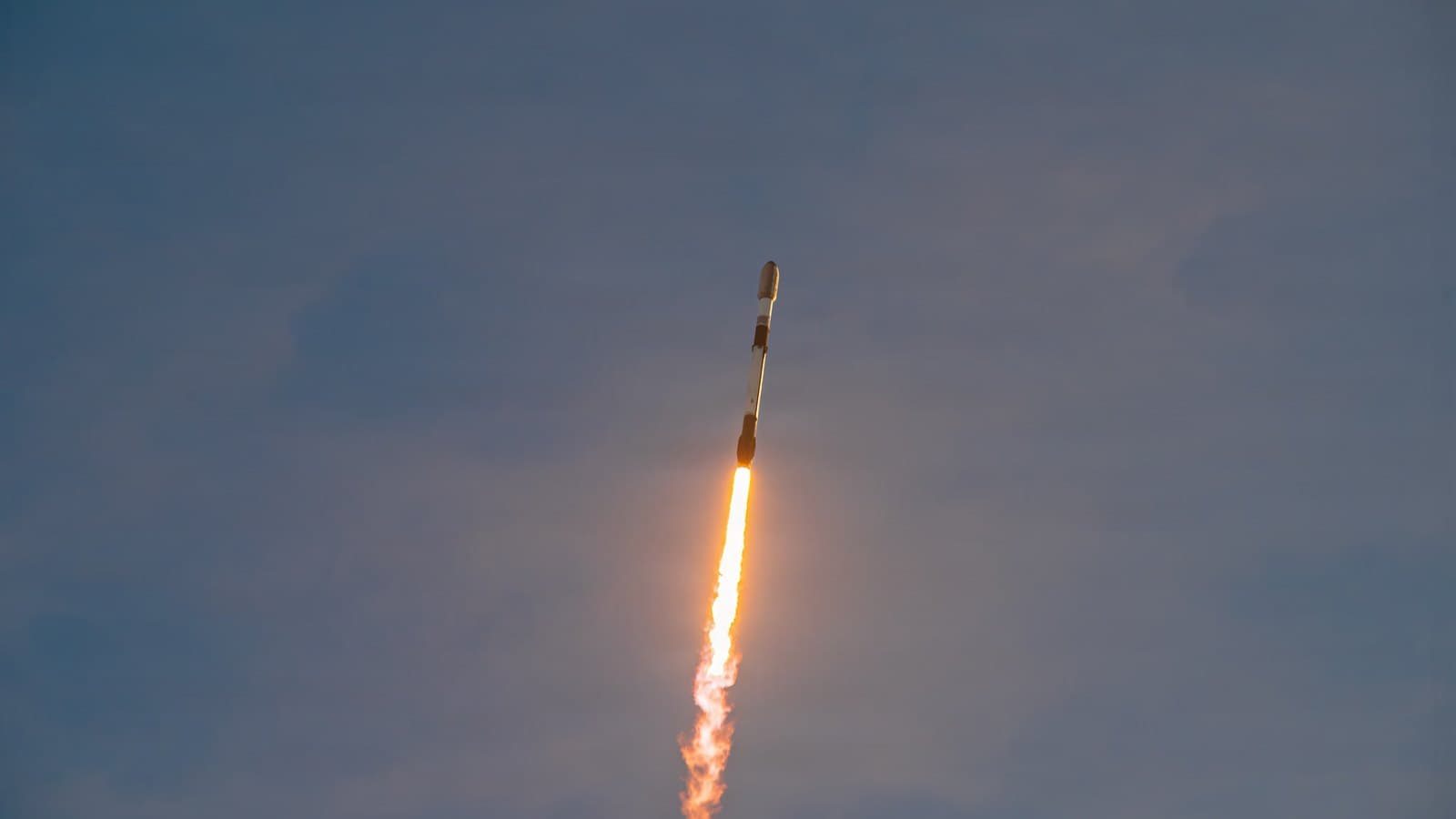
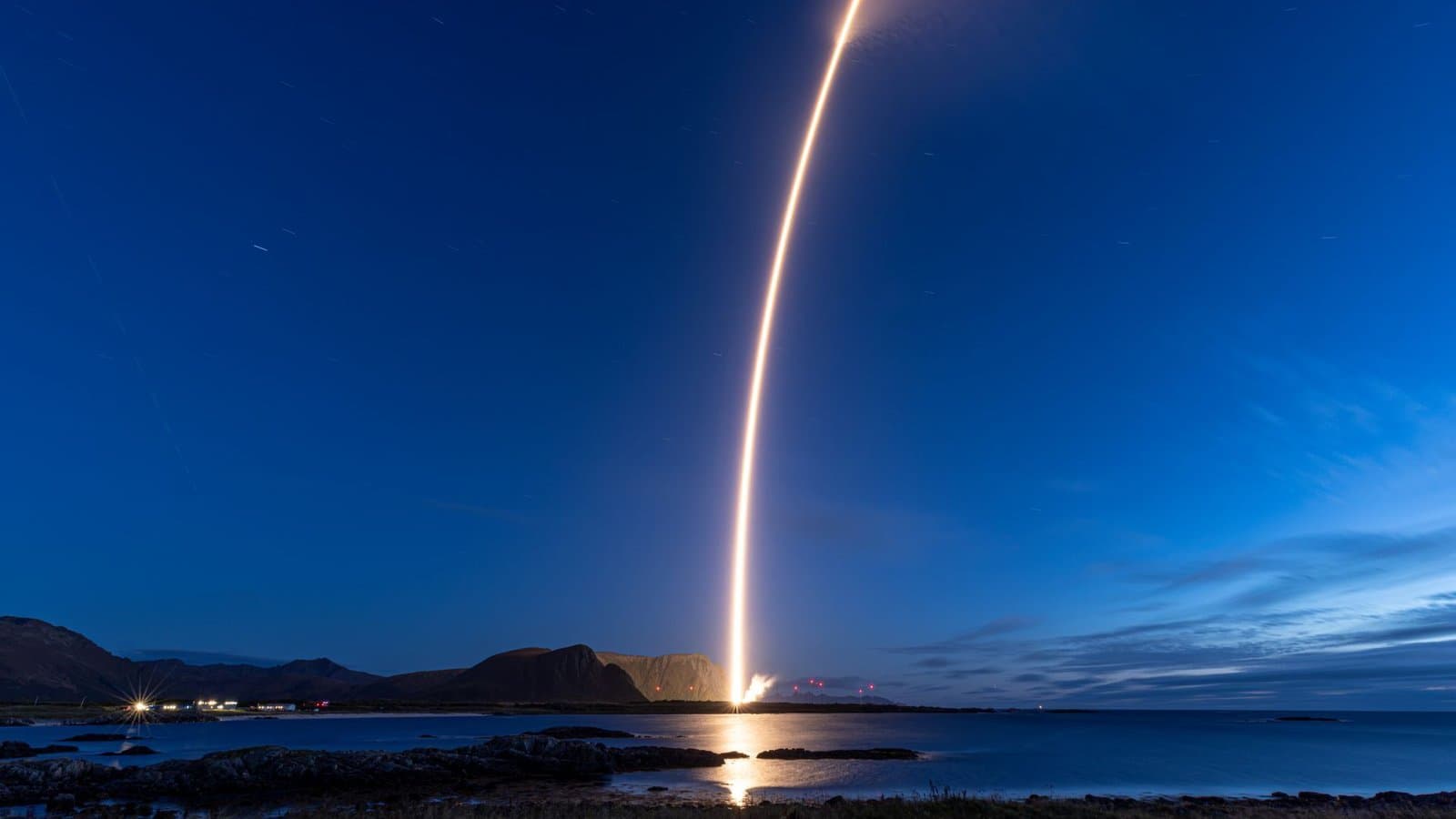
At 10:12 pm local time on September 5, 2026, a 28-metre rocket called Spectrum lifted off from Andøya Space in northern Norway and, for the first time, a commercial European company put satellites into orbit. Germany's Isar Aerospace reached orbit on just its second flight, 17 months after its debut ended in a fireball over the Norwegian Sea. The company called the mission "Onward and Upward." Its payloads separated successfully.
Related reading: SpaceX Wants 80,000 Cell Sites, the Ground Half of a Fourth US Carrier · NASA Asks Industry Whether Commercial Spacecraft Could Boost or Retire Hubble.
"The first commercial space company from Europe to successfully deliver satellites into orbit" is how Isar described the flight. "Today, Isar Aerospace opened space from Continental Europe. Launch continues to be the largest bottleneck for the global space industry and from today on, there is a true alternative for commercial and institutional customers," said chief executive and co-founder Daniel Metzler.
The milestone matters because Europe has long lacked a private route to orbit. For decades, institutional payloads flew on Arianespace's state-backed rockets, and after Russia's full-scale invasion of Ukraine cut off access to Soyuz, European operators leaned heavily on SpaceX and other foreign providers. A domestic commercial launcher changes the calculus for small satellites in particular, where rideshare schedules are set by whoever owns the rocket. Singularity Hub framed the flight as the moment Europe stopped having to choose between a single state provider and a handful of foreign alternatives.
From fireball to orbit
The contrast with Spectrum's first attempt is stark. On March 30, 2025, the rocket lost attitude control seconds after liftoff and crashed into the sea, as Founder News recounted. Investigators traced the failure to a malfunctioning pressure relief valve and to bending modes that confused the flight-control system. The fix was not a redesign but a set of corrections to a young vehicle, and the second flight executed the full sequence: maximum dynamic pressure, main-engine cutoff, stage separation, second-stage ignition, crossing the Kármán line at 100 kilometres, fairing jettison, orbital insertion and a circularisation burn before the satellites separated.
The payloads were chosen through the Microlauncher Competition run by the German Space Agency at DLR, which gives educational institutions and startups low-cost access to orbit; the programme is funded through ESA's Boost! initiative. The company is still working with the customers to confirm the health of the five small satellites, a normal part of a qualification flight.
For Isar, the operational story is as important as the technical one. The company has raised roughly €870 million, including a €270 million Series D in June, and holds a €198 million contract from ESA's European Launcher Challenge that required an orbital launch by 2027, a deadline it has now beaten. It employs more than 400 people across five locations and is headquartered near Munich. It says Spectrum vehicles three through seven are already in production and that a new 40,000-square-metre factory will eventually allow it to manufacture up to 40 launch vehicles a year. A second launch complex is under construction in Nova Scotia, Canada, aimed at mid- to high-inclination orbits for Earth observation and communications customers.
Why Andøya
The launch site sits about 300 kilometres above the Arctic Circle, which makes high-inclination and sun-synchronous orbits (the workhorses of Earth observation) reachable without the dogleg manoeuvres that lower-latitude sites require. That geographic advantage is central to Europe's pitch for small-satellite launch.
The gap Isar is trying to fill
Europe's launch problem is structural, not technical. The continent has world-class satellite manufacturers and a large institutional demand for Earth observation, navigation and secure communications, but it has relied on a small number of launchers whose schedules are set by institutional priorities. Arianespace's Ariane 6 and the smaller Vega-C serve those needs, but both are state-anchored programmes with long lead times and high costs per kilogram. When Europe lost access to Russian Soyuz rockets after the 2022 invasion of Ukraine, it discovered how dependent parts of its space industry had become on foreign launch, and several European payloads flew on SpaceX as a stopgap.
That dependency is uncomfortable for governments, because launch is a chokepoint: whoever controls the rocket controls when a satellite reaches orbit and, in a crisis, whether it launches at all. Space is increasingly a domain of military competition, and Europe's armed forces are investing in surveillance and communications constellations that need responsive, sovereign access to space. Isar's claim to be a "genuine alternative" is aimed squarely at that demand. The fact that the company says defence-related work is about 60 percent of its pipeline is not incidental; it is the business model.
The challenge is that small-launch economics are brutal. Rideshare on a larger rocket spreads the cost across many payloads and can be cheaper per kilogram than a dedicated small launcher, so microlaunchers must win on responsiveness, orbit precision and schedule control rather than price alone. Reaching orbit proves the technology; building a factory that can turn out dozens of vehicles a year, and a launch range that can fly them often enough to be reliable, is the harder commercial problem. Isar's answer is vertical integration (building engines, structures and avionics largely in-house) and a new factory designed for high-rate production. Whether that produces a cost structure competitive with rideshare is the question its order book will eventually answer.
A crowded field is forming behind it
Isar is first, but not alone. Two other European startups hold European Launcher Challenge awards: Rocket Factory Augsburg, also German, and Spain's PLD Space, both working toward their own orbital attempts. Sweden's Esrange facility and the SaxaVord Spaceport in the Shetland Islands are competing for Arctic launch traffic, and Andøya itself has hosted more than 1,200 suborbital launches since 1962. The near-term competitive pressure is as much about launch sites and regulatory approvals as about rocket engineering.
The economics will decide whether first-mover status converts into a durable business. Small-launch is a notoriously difficult market: customers are price-sensitive, launch cadences are hard to sustain, and rideshare on larger rockets remains a cheaper option for many payloads. Isar says defence-related demand now accounts for roughly 60 percent of its pipeline, a figure that reflects both Europe's rearmament and the growing appetite for sovereign, government-controlled access to orbit. That is a more reliable demand base than the commercial small-satellite market alone, but it also ties the company's fortunes to procurement cycles and politics.
There is also a strategic argument that Europe is buying, both a service and insurance. Reliance on a single foreign provider for national-security and civil-satellite launches is a vulnerability that European governments have become more willing to pay to reduce. A working commercial launcher gives Europe leverage even if it never reaches SpaceX-like cadence: the option to launch domestically changes the terms of every negotiation.
The caveats are familiar from every inaugural orbital flight. One success is not a production cadence, and the second flight of a rocket can benefit from a bespoke level of attention that the tenth does not. Isar's stated road map (many vehicles per year from a new factory, plus an overseas launch site) is a manufacturing and operations challenge of a different order from reaching orbit once. The satellites' final operating status is still being confirmed. And the cost per kilogram will determine whether Isar is a genuine alternative or a premium option for those who need to launch on their own terms.
What to watch
Three signals will show whether the flight translates into a business. The first is cadence: how quickly Isar can fly again, and whether it can do so without the intensive engineering attention that surrounds a qualification mission. The second is the order book, specifically, whether institutional customers convert options into firm, repeated launches, which is what a factory built for 40 vehicles a year needs to stay loaded. The third is competition: Rocket Factory Augsburg and PLD Space are close behind, and a crowded European microlauncher market could mean more capability, or a race to the bottom on price before any of them reaches scale.
A fourth, quieter signal is regulatory and range capacity. Launch cadence depends as much on range availability and licences as on rockets, and Europe's northern spaceports are still building the infrastructure and approval processes for frequent orbital flights. Isar's early lead is real; holding it will depend on logistics that have nothing to do with propulsion.
Still, the milestone is real. As ESA's director of space transportation, Géraldine Naja, put it in the company's release, "what Isar Aerospace achieved today is historic: the first European company to reach orbit with their own launch vehicle." Metzler's own summary was blunter: "We achieved within a few years what had taken the European space industry decades before. Europe now has sovereign access to space."
Tags

TPW Editorial
Editorial Team
TechPastWeek's editorial team reports and edits every story we publish. We research each piece against primary and credible secondary sources, and a human editor reviews and signs off before it goes live.