NASA Activates Roman's 300-Megapixel Wide Field Instrument and Checks Out the Coronagraph
NASA powered up the Roman Space Telescope's 300-megapixel Wide Field Instrument in September 2026 and ran early checks on its planet-imaging coronagraph.

On this page
Key takeaways
- NASA activated the Roman Space Telescope's Wide Field Instrument, a 300-megapixel infrared camera, on Sept. 11, 2026, after 10 days of drying out and decontamination.
- The instrument's 18 infrared detectors together have a light-sensitive area about the size of a laptop screen, and they are still cooling toward a final temperature near minus 300 F (minus 183 C).
- Engineers tested the element wheel, which holds the filters and prisms, without gravity for the first time, then checked the WFI's focusing mechanism.
- Roman's Coronagraph Instrument completed an early checkout of its digital, electronic and mechanical systems and operates near room temperature, about 72 F (22 C), apart from its detectors.
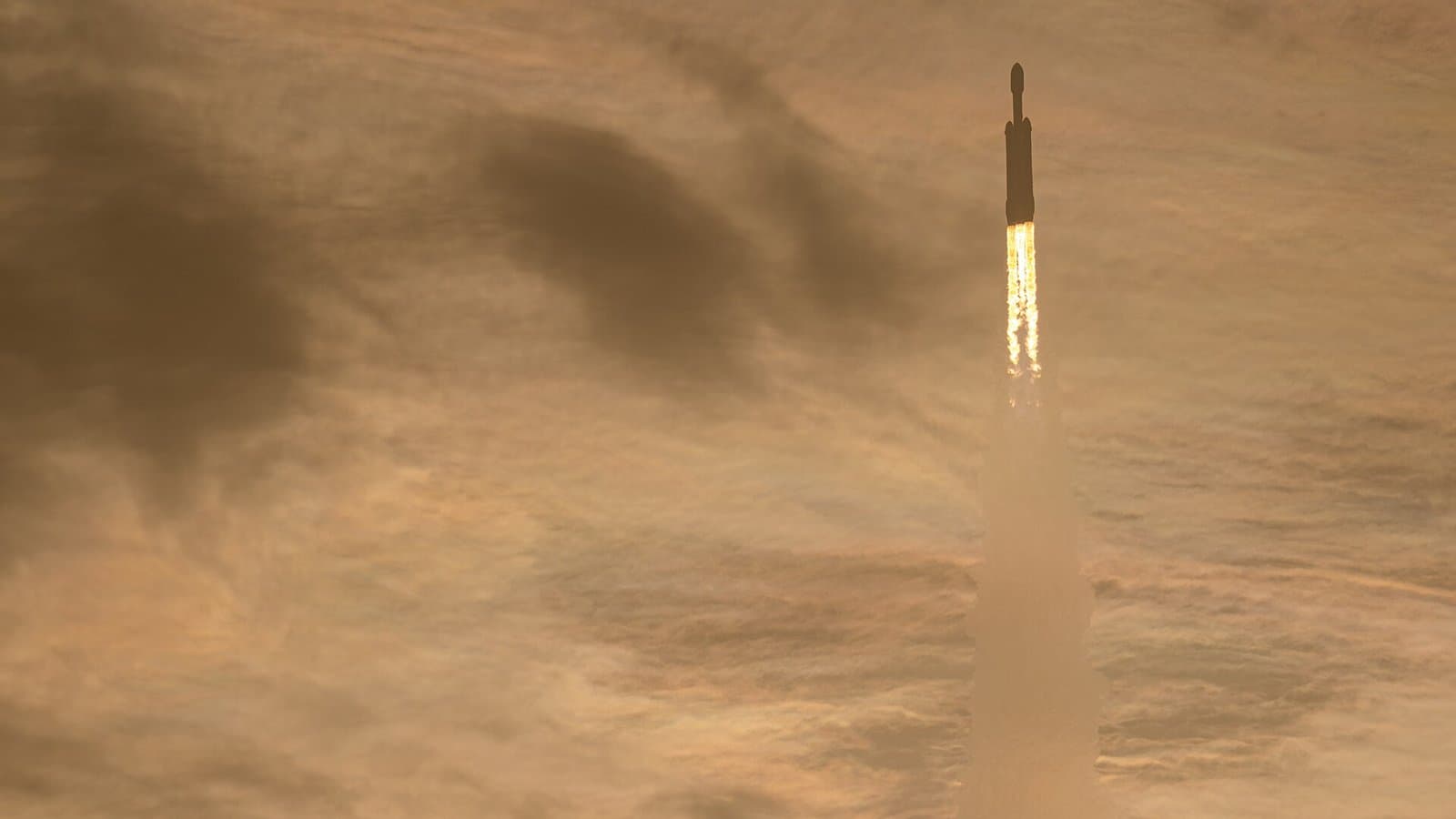
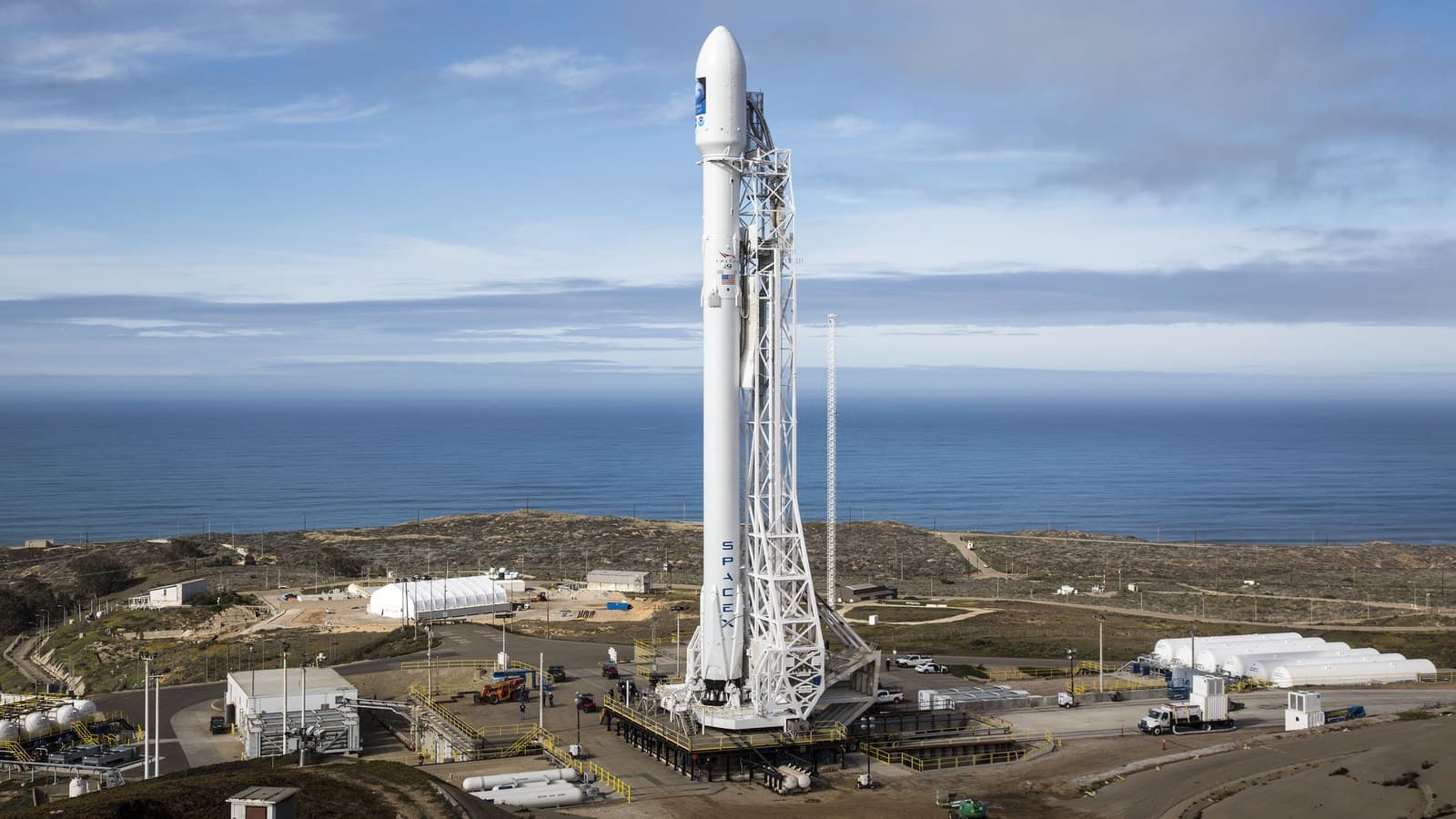
- Roman launched Aug. 30, 2026, on a SpaceX Falcon Heavy and is traveling about one million miles to the second Lagrange point, L2; first science images are expected by early 2027.
On the morning of Sept. 11, 2026, engineers working on NASA's Nancy Grace Roman Space Telescope switched off a heater and let the observatory's main camera cool toward the deep chill it needs to see the infrared sky. Hours later, 18 detectors came to life.
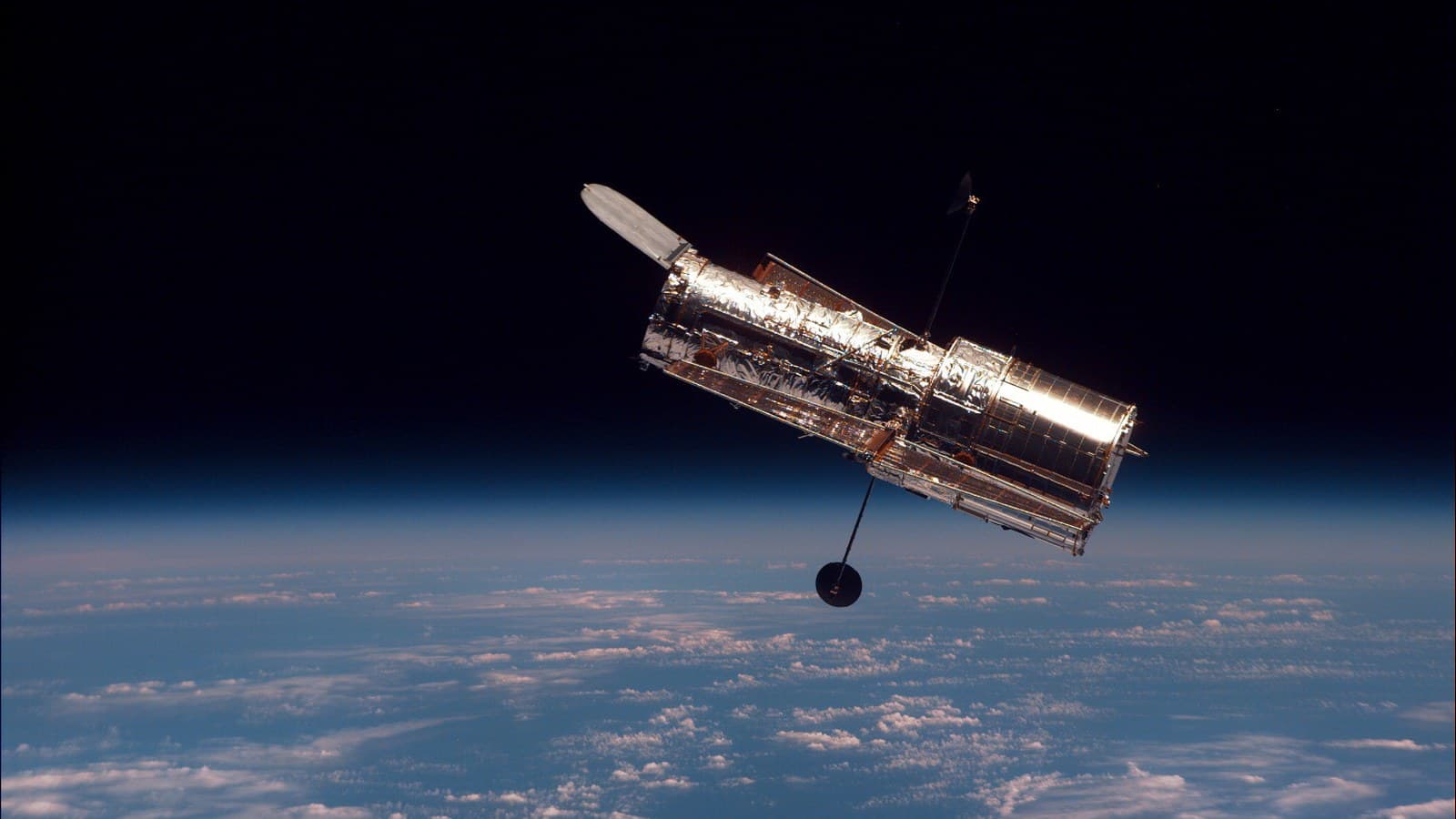
Related reading: NASA Asks Industry Whether Commercial Spacecraft Could Boost or Retire Hubble · NASA's Roman Space Telescope Launches on a Million-Mile Hunt for Dark Energy.
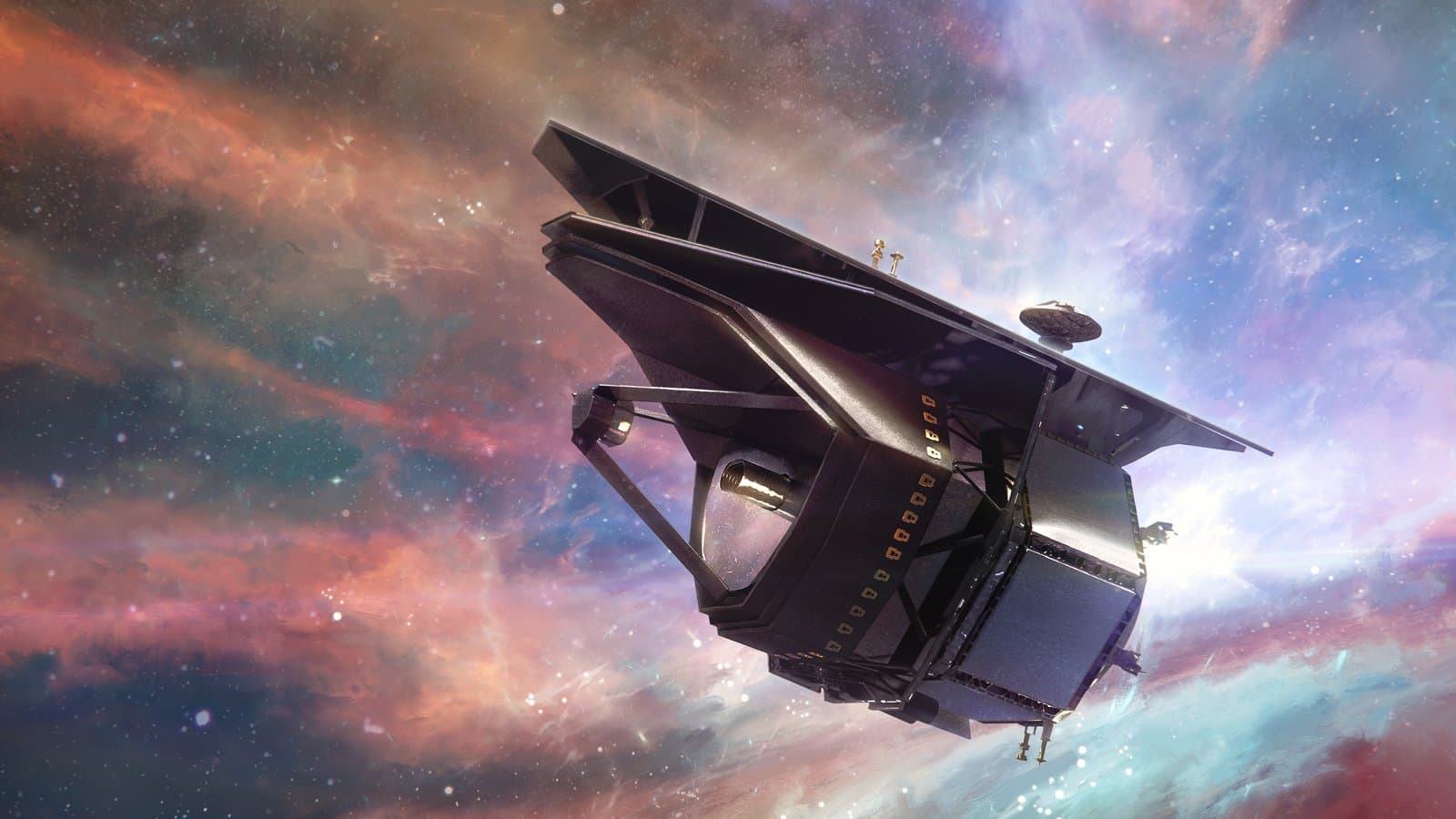
The Wide Field Instrument (WFI) is a 300-megapixel camera, and its activation marked the point where the telescope stopped being a stack of hardware in transit and became an instrument capable of taking data. NASA detailed the milestone on Sept. 15, 2026. The same update confirmed that Roman's planet-imaging coronagraph had passed an early checkout of its digital, electronic and mechanical systems.
The short version
NASA powered up Roman's 300-megapixel Wide Field Instrument on Sept. 11, 2026, after 10 days of decontamination, then tested its element wheel and focus mechanism without gravity. The mission's coronagraph passed its own early checkout. First science images are expected by early 2027.
Josh Schlieder, the WFI scientist at NASA's Goddard Space Flight Center in Greenbelt, Maryland, called it a milestone for the teams that built and tested the hardware.
"After years of effort to build and test the instrument on the ground, we now have confirmation that it is operational in space. This is a huge milestone for the team at Goddard, our industry teams at BAE Systems, Inc. and Teledyne, and our science centers." — Josh Schlieder, Wide Field Instrument scientist, NASA Goddard Space Flight Center
The work belongs to a commissioning phase that will run for months while Roman travels roughly one million miles to the second Lagrange point, L2. NASA expects the first science images by early 2027.
A survey camera, not a portrait camera
Roman's case for being built rests on scale. A single WFI image will cover a patch of sky larger than the apparent size of a full moon, while resolving detail at the level of space telescopes such as Hubble. The instrument's 18 infrared detectors together have a light-sensitive area about the size of a laptop screen, which is how a 300-megapixel figure fits into a camera that had to survive a rocket launch and then operate in a vacuum.
That pairing of broad coverage with sharp resolution is what separates a survey telescope from a pointed observatory. Hubble studies small targets in extraordinary detail; Roman is built to photograph enormous stretches of sky quickly and let astronomers find the rare objects inside. The mission's program page describes a survey meant to produce a reusable map of the cosmos rather than a set of one-off pictures. Field of view is the number that explains the ambition. Hubble captures a tiny fraction of that area in a single exposure, which is why assembling a census of galaxies with a pointed telescope takes decades. Roman is built to spend its time on breadth instead, gathering enough galaxies in its surveys to measure the geometry of the universe as a statistical pattern.
The science runs in three broad directions. Dark energy, the unknown pressure thought to be accelerating the universe's expansion, appears only as a statistical pattern across huge samples of galaxies and supernovae. Planets beyond the solar system turn up in bulk when the telescope watches millions of stars for the telltale brightening of a gravitational microlensing event. And the large-scale structure of the universe, the web of matter stretching between galaxies, becomes visible when a survey is wide enough to show the pattern rather than a single thread of it.
Ten days of drying out, then a cold switch
Activation was less a single command than the end of a deliberate thermal sequence. Before the team could power the detectors, the instrument spent 10 days drying out and decontaminating, with the detectors held at about minus 85 degrees Fahrenheit (minus 65 Celsius). That is warm by the standards of an infrared camera, and the warmth served a purpose: water and trace chemicals stuck to the surfaces would tend to leave on their own.
The cold matters for a second reason. Infrared detectors generate their own heat, and a warm sensor would swamp the faint infrared light arriving from distant galaxies with its own glow. Cooling the WFI suppresses that background so the instrument can register signals dimmer than the hardware around them.
On the morning of Sept. 11, the team shut off the instrument heater and let the WFI fall to minus 225 F (minus 143 C). At that temperature, the detectors could be switched on. Later that evening, engineers activated the calibration system. The following morning, they sent test data through the instrument and down to teams on Earth.
The weekend brought two more firsts. On Saturday evening, the team exercised the element wheel, the assembly of filters, prisms and other optics that selects which wavelengths reach the detectors and spreads cosmic light into its component colors. It was the first time the mechanism had been moved without gravity. On Sunday morning, engineers verified the focusing mechanism, the system that will keep hundreds of thousands of planned images sharp.
Throughout, the detectors kept cooling toward a final operating temperature near minus 300 F (minus 183 C).
Why the element wheel matters
An infrared survey telescope slices light into many narrow bands to measure how galaxies and supernovae change with distance. The element wheel does the slicing, so moving it without gravity checks a mechanism Roman will depend on for its entire survey.
The coronagraph checks its limbs
Roman carries a second instrument, the Coronagraph Instrument, built to demonstrate technology for directly imaging planets around other stars by suppressing a star's overwhelming glare. It is a technology demonstration rather than a guaranteed science instrument, but its early checkout matters for the missions that could follow.
Teams at the Coronagraph Commanding Center at Caltech/IPAC in Pasadena, California, confirmed they can communicate with every major part of the instrument: its software, thermal control, mechanisms, cameras and the avionics that drive them. In practice, that means operators verified they can remotely command the movable mechanisms that hold its masks, color filters, lenses and prisms.
The coronagraph operates near room temperature, about 72 F (22 C), apart from its detectors. That design makes the hardware easier to test and matches the material properties of its deformable mirrors. Engineers also confirmed the thermal system can warm the instrument to its operating temperature.
"Now that this test is complete, we've been decontaminating: sitting idle with our detectors warm so anything that's stuck to the surface, such as water or trace chemicals, will tend to leave it," said Eric Cady, an optical engineer leading coronagraph commissioning at NASA's Jet Propulsion Laboratory in Southern California. "This will continue for 30 days, with occasional stops to do other early calibration activities."
A test image is not a science image
The first photons to reach the WFI produced a deliberately rough frame, with stars smeared across thousands of pixels because the detector array was still in its launch configuration and far from focus. NASA describes that image as a baseline for alignment, not a preview of what Roman will deliver.
Where Roman is, and what comes next
Roman launched on Aug. 30, 2026, aboard a SpaceX Falcon Heavy from NASA's Kennedy Space Center in Florida, beginning a journey of about one million miles to L2, a gravitationally stable point beyond the Moon. The observatory is in no hurry to arrive before it is ready. Commissioning is a sequence of deployments, activations, calibrations and tests, and the mission's five-year primary survey clock starts only after that work is finished.
The early returns are encouraging. NASA said the WFI assessments confirmed the instrument is working as expected, and the coronagraph's thermal control performed as designed. A separate mission update on Sept. 14, 2026, reported that fuel savings from the launch and early trajectory would roughly double the observatory's potential lifetime, a sign that planners are thinking in decades rather than years.
For astronomers, the value of the activation is less about any single test than about the fact that Roman's largest instrument survived launch and responds to commands. A survey telescope that cannot be commanded is inert hardware. One that powers up, cools and returns test data has entered the long, methodical stretch that ends with a working observatory.
What the tests do not show
Activation confirms function, not performance. Roman's detectors are still cooling toward their operating temperature, its optics are not yet aligned, and its fine-guidance system has not been switched on. Until those steps are complete, no one can say how close the mission will come to its design sensitivity, or how quickly the survey will reach its planned depth.
There are no science results yet, either. The mission remains on track to release its first science images by early 2027, and the cosmology measurements that justify the telescope's cost will take years of accumulated sky. The activation is a checkpoint on a schedule, not a discovery.
What to watch
Three markers will show how commissioning is going over the coming months. The next is alignment and focusing: NASA will report when Roman can lock onto targets and shrink starlight into crisp points. After that come the first calibrated images, the earliest sign of the survey's image quality. The decisive test arrives with the first science images, expected by early 2027, when Roman's wide field either delivers the sharpness its design promises or shows where the hardware falls short.
For now, the immediate fact is simpler. A camera built to stare at billions of galaxies opened its eyes, and the team that spent years assembling it learned that it works.
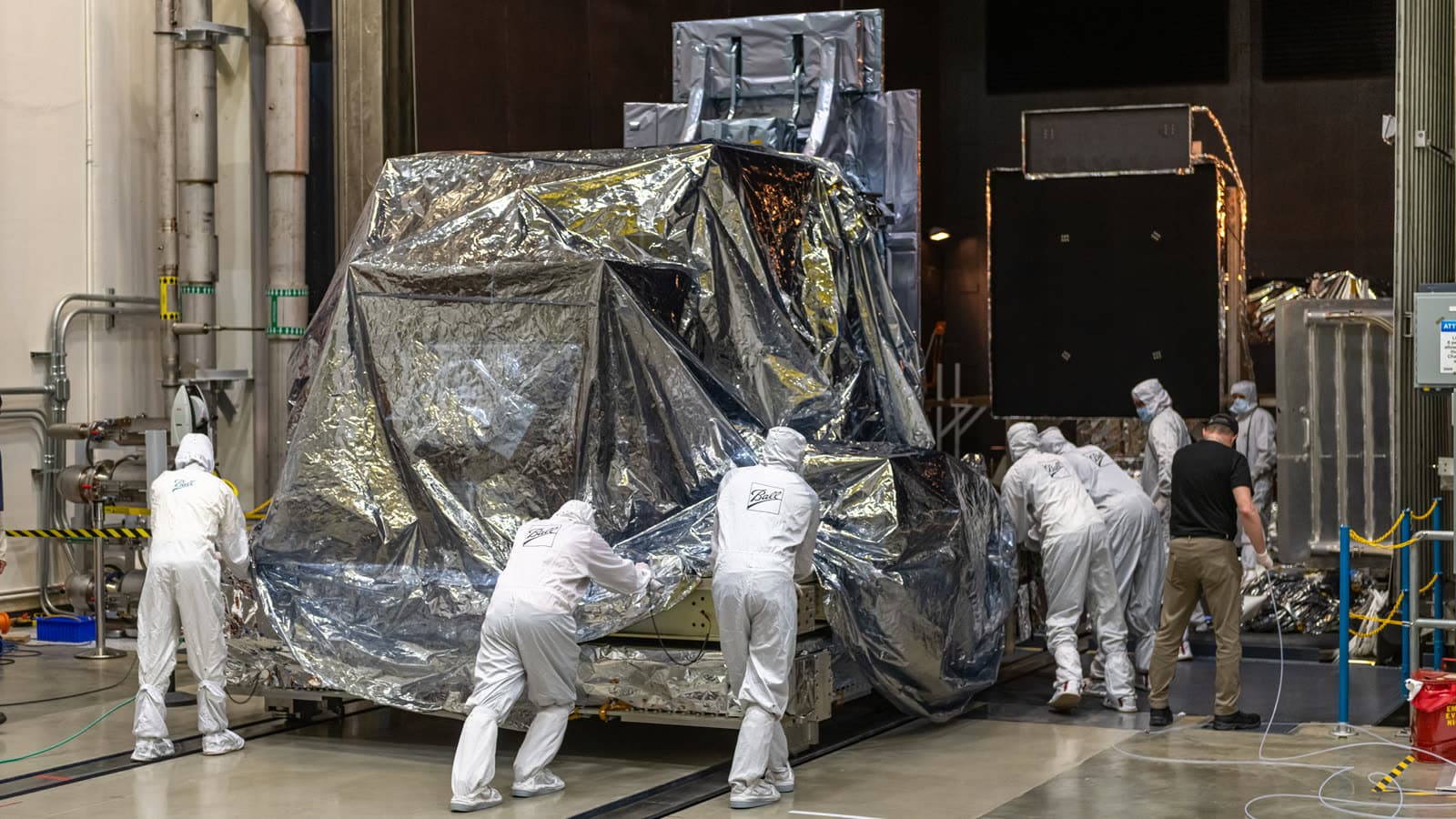
Credit: Cover image, "Roman Wide Field Instrument Fully Integrated at Ball Aerospace," by NASA's Scientific Visualization Studio (Courtney A. Lee, Scott Wiessinger). Public domain; no credit required. NASA imagery is generally not subject to copyright in the United States.
Tags
Frequently asked questions
- What is Roman's Wide Field Instrument?
- The Wide Field Instrument is the Nancy Grace Roman Space Telescope's primary camera, a 300-megapixel infrared instrument. Its 18 detectors together have a light-sensitive area about the size of a laptop screen, and a single image will cover a patch of sky larger than the apparent size of a full moon.
- When did NASA switch on Roman's camera?
- NASA activated the Wide Field Instrument on Sept. 11, 2026, after letting the instrument dry out and decontaminate for 10 days. The detectors were switched on once the instrument had cooled to about minus 225 F (minus 143 C), and test data reached engineers the following morning.
- What does the Roman Coronagraph Instrument do?
- The Coronagraph Instrument is a technology demonstration designed to block a star's glare so that faint light from orbiting planets can be imaged directly. It is not a guaranteed science instrument, but it completed an early checkout of its software, thermal control, mechanisms, cameras and avionics in September 2026.
- When will Roman send back its first science images?
- NASA expects the first science images by early 2027, after commissioning is complete. The activation and checkout in September 2026 were early steps in that months-long process, and Roman's five-year primary survey begins only after commissioning ends.

TPW Editorial
Editorial Team
TechPastWeek's editorial team reports and edits every story we publish. We research each piece against primary and credible secondary sources, and a human editor reviews and signs off before it goes live.