NASA's Roman Space Telescope Launches on a Million-Mile Hunt for Dark Energy
NASA's Nancy Grace Roman Space Telescope launched Aug. 30 on a Falcon Heavy, beginning a five-year survey with a field of view more than 100 times Hubble's.

On this page
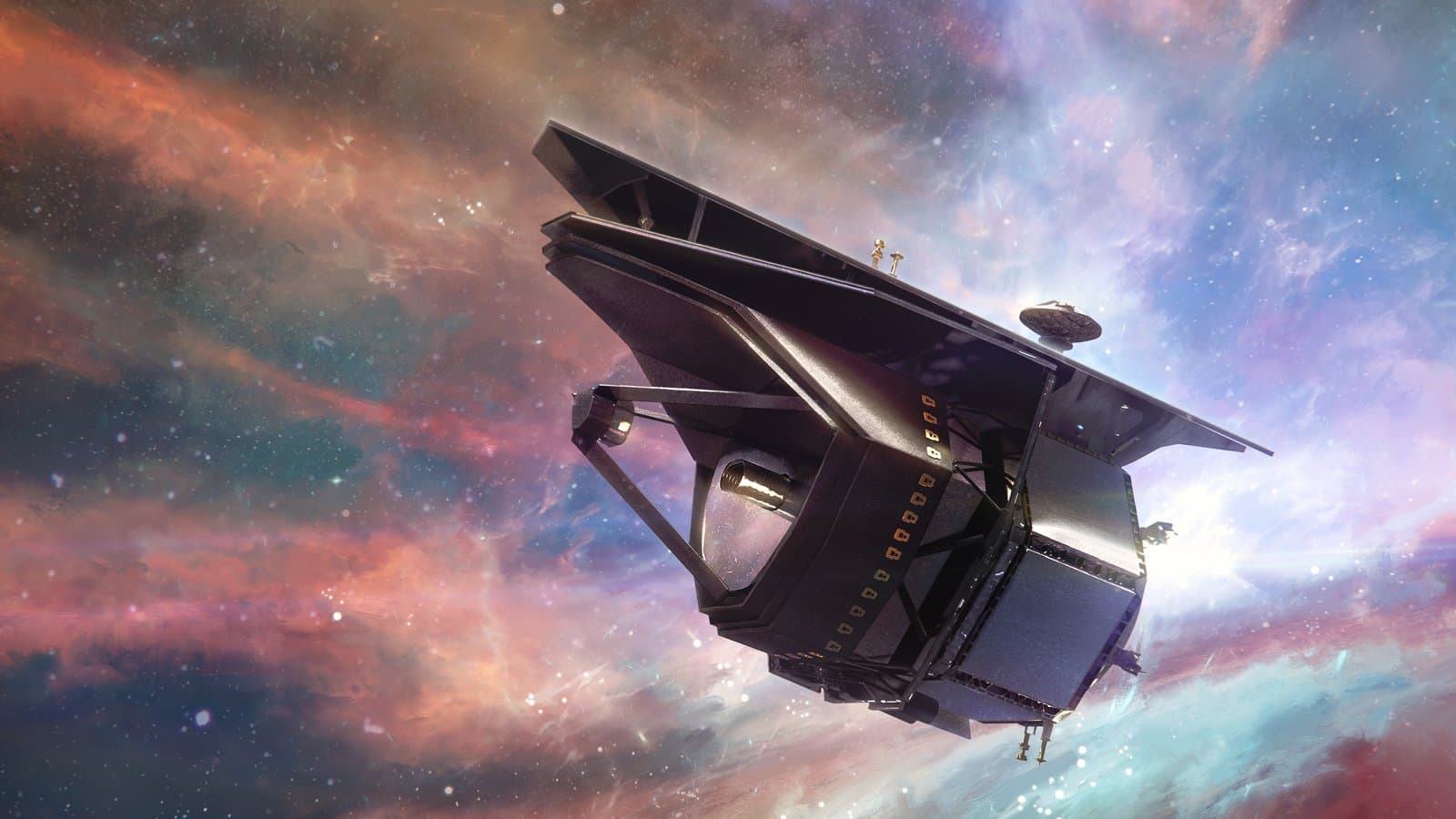
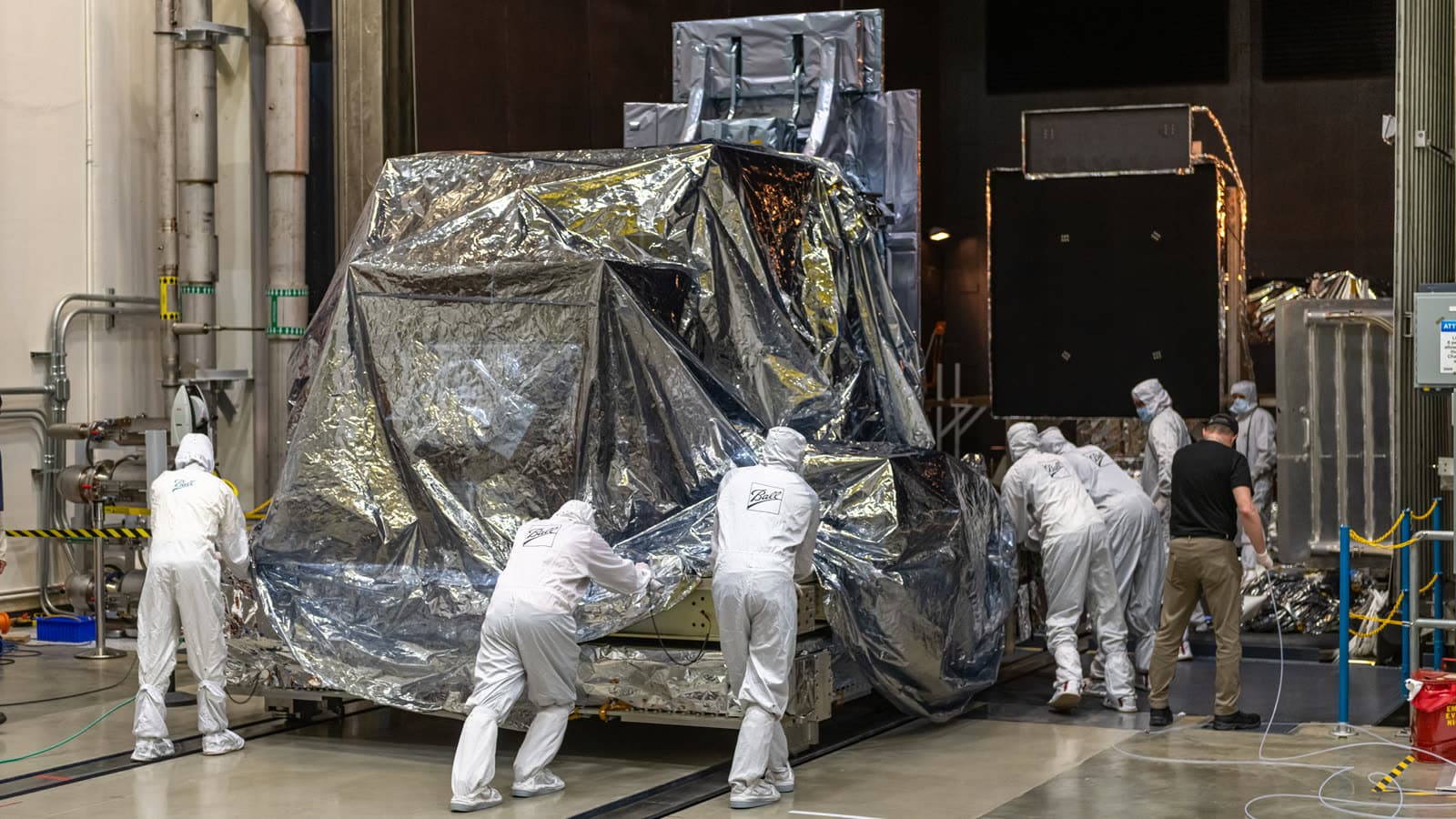
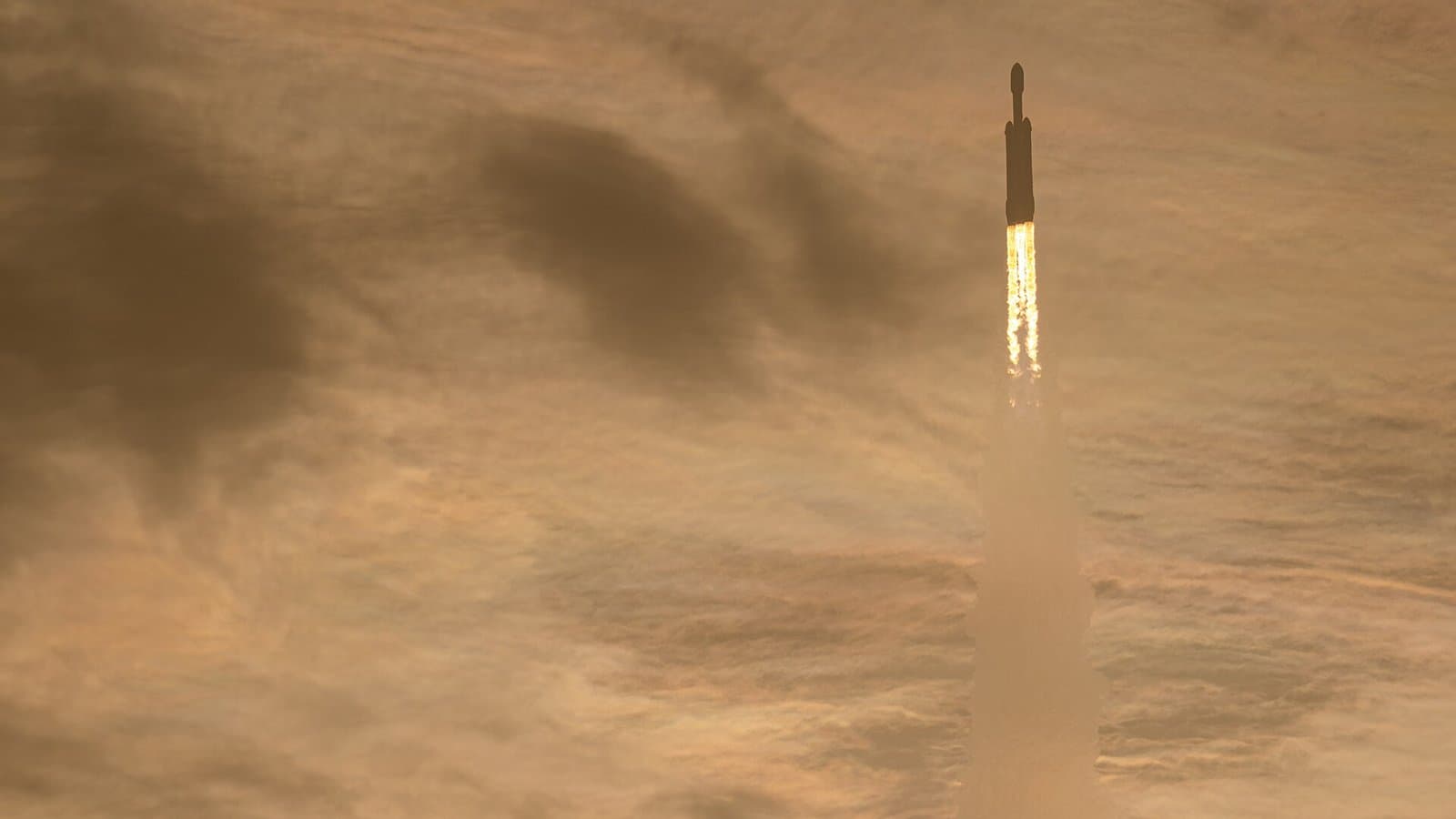
At 7:26 a.m. EDT on Sunday, Aug. 30, a SpaceX Falcon Heavy lifted off from Launch Complex 39A at NASA's Kennedy Space Center in Florida, carrying an observatory astronomers have been waiting on for most of a decade. NASA's Nancy Grace Roman Space Telescope is now on a roughly three-month, million-mile journey to the second Sun-Earth Lagrange point, L2, where it will begin the widest and fastest survey of the infrared sky ever attempted.
Related reading: NASA Asks Industry Whether Commercial Spacecraft Could Boost or Retire Hubble · NASA Picks PRIMA, a Billion-Dollar Far-Infrared Telescope, for a 2033 Launch.
The launch itself was a milestone for reasons beyond the hardware. NASA says Roman's 1.4-terabyte-per-day data stream will be the largest of any astrophysics mission the agency has flown, and the mission reached the pad roughly nine months ahead of its original schedule. The agency's launch release describes a flight that went to plan: ground controllers at Goddard Space Flight Center began receiving telemetry seven minutes after liftoff, the Falcon Heavy's second stage separated from the observatory 31 minutes into the flight, and both side boosters returned to the launch site for refurbishment.
A Hubble-sized mirror with a radically bigger eye
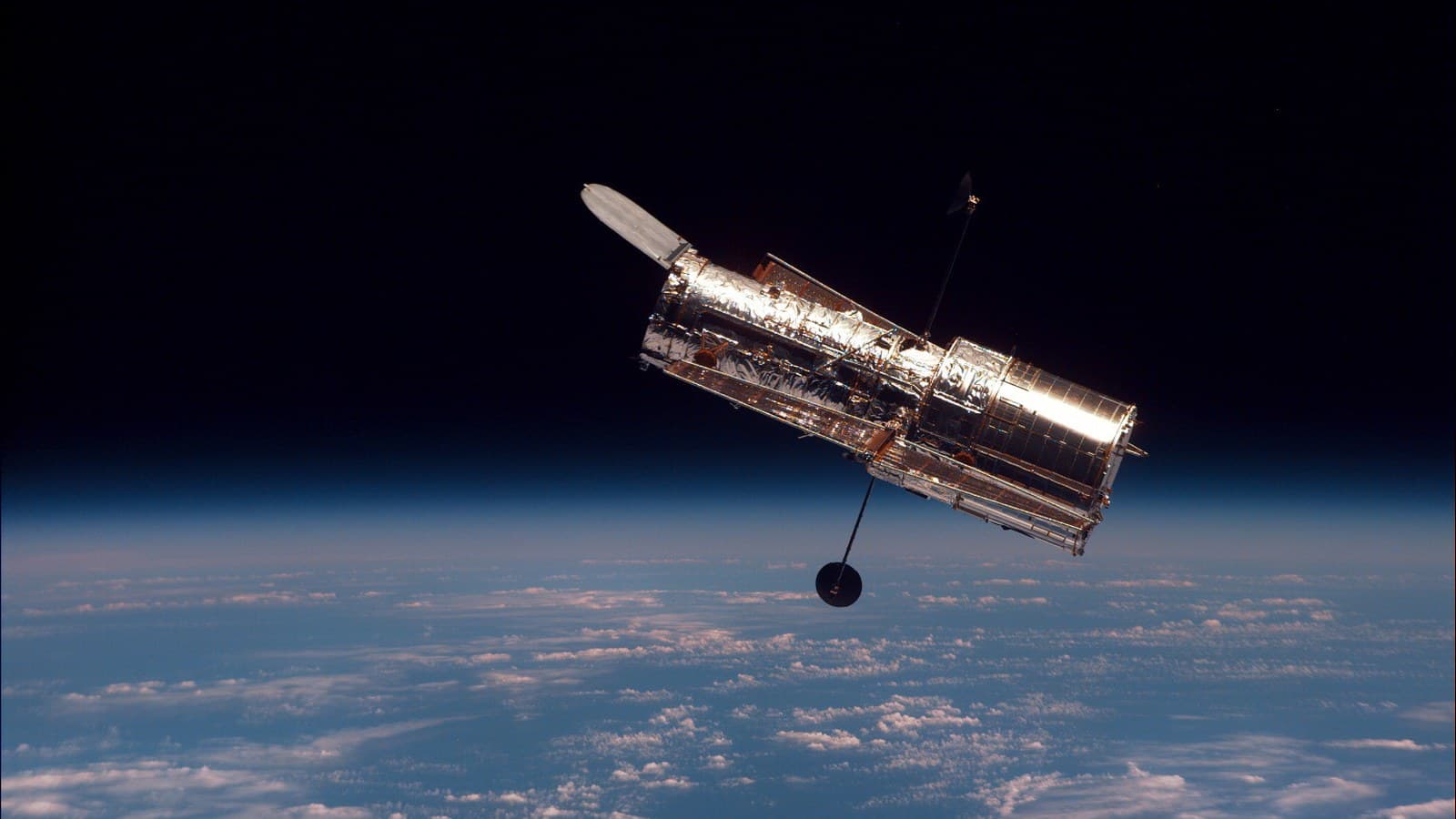
Roman is often introduced as "Hubble's wide-eyed cousin," and the comparison is the whole point. Its primary mirror is 2.4 meters across (the same size as Hubble's) and its images have comparable sharp resolution. The difference is the field of view. Roman's Wide Field Instrument, a 300-megapixel infrared camera, captures a patch of sky at least 100 times larger than Hubble can in a single exposure. A single Roman image will hold the equivalent detail of about 100 Hubble pictures, and it will capture an area bigger than the apparent size of the full Moon.
That trade (same sharpness, vastly more sky per shot) is what turns astronomy from a series of pointed observations into a statistical enterprise. Dark energy, the mysterious pressure thought to be accelerating the universe's expansion, reveals itself only in the aggregate: the shapes and distances of hundreds of millions of galaxies, the brightness of thousands of distant supernovae, the subtle warping of spacetime around foreground mass. Measuring those things precisely requires enormous, uniform datasets, and that is exactly what a wide-field survey telescope is built to produce.
NASA's mission page says Roman will measure light from a billion galaxies over its lifetime; the agency expects the mission to catalogue billions of cosmic objects and to image more than 50 times as much sky in five years as Hubble covered in 30. The three core community surveys are already defined through a peer-reviewed process: a wide-area extragalactic imaging and spectroscopy survey covering about 2,000 square degrees, a time-domain survey that repeatedly scans the same fields, and a Galactic Bulge survey that uses microlensing to catch planets.
Why dark energy needs a survey machine
Dark energy is only visible as a pattern across huge samples. Roman is designed to tighten the dark-energy equation of state dramatically by combining supernova distances, galaxy clustering, and weak gravitational lensing, a trio of measurements that is far more powerful together than any one alone.
The exoplanet haul is a side effect
Roman's exoplanet science is, in a sense, a byproduct of the same wide survey. By staring at the crowded centre of the Milky Way, the telescope will watch for the brief brightening caused when a planet's gravity magnifies a background star, a technique called microlensing that is especially good at finding worlds far from their stars, and worlds that orbit in the cold outer reaches of their systems. NASA expects Roman to find more than 1,000 exoplanets this way, and it will also pick up an estimated 100,000 more via the transit method as planets cross in front of their parent stars.
The telescope also carries a Coronagraph Instrument, a technology demonstration designed to block a star's glare so that faint, close-orbiting planets can be imaged directly. It is explicitly a testbed rather than a guaranteed science instrument, but if it works, it becomes the blueprint for future missions that could eventually search for signs of life in exoplanet atmospheres.
Astronomy has always advanced on new eyes. Roman's contribution is not that it sees fainter than Hubble. It is that it sees far more at once.
The survey engine, in numbers
The design choices behind Roman's three core surveys are worth spelling out, because they explain why the mission is being described as a survey machine rather than a camera. The High-Latitude Wide-Area Survey is planned to cover roughly 2,000 square degrees (a slice of extragalactic sky about 40 times the area of the full Moon) with both imaging and slitless spectroscopy, using a set of near-infrared filters and a grism. The high-latitude time-domain survey repeatedly revisits the same fields, building light curves that catch exploding and flickering objects; the mission's planning documents project a cadence of about five days and a yield of more than 500 Type Ia supernovae per month. The Galactic Bulge time-domain survey points the telescope at a low-extinction window near the centre of the Milky Way.
Those supernovae are the workhorse for dark energy. Because a Type Ia supernova has a predictable intrinsic brightness, its observed dimness tells astronomers how far away it is and, combined with its redshift, how fast the universe was expanding when the light left it. Stacking thousands of them across cosmic time lets scientists reconstruct the expansion history, and look for the changes in it that a simple cosmological constant cannot explain. Roman's planners have said the combination of imaging and spectroscopy should let the mission reduce the uncertainty in the dark-energy equation of state by around 70 percent and probe whether the recent expansion rate has varied.
Not a replacement for Webb
Roman is complementary, not a successor. Webb is the sharp, sensitive, pointed instrument for detailed study of individual objects; Roman is the wide, fast mapper that finds the objects and places them in context. When Hubble or Webb spots something strange, Roman can quickly provide the big-picture view around it.
Where Roman fits in the new survey era
Roman is arriving into an unusually crowded field. On the ground, the Vera C. Rubin Observatory is already sweeping the visible sky night after night. In space, the European Space Agency's Euclid is mapping the geometry of dark matter and dark energy in the visible and near-infrared. Roman's niche is depth, resolution, and infrared reach: it will deliver Hubble-quality imaging and spectroscopy at a scale none of the others can match, and its data will be layered on top of theirs.
That overlap is the point. Different surveys see different objects, at different distances, with different systematics. Combining a ground-based optical census with a space-based infrared survey is how astronomers catch and correct for the biases that would otherwise masquerade as a cosmological signal. Roman's decision to release all data without a proprietary period is an explicit bet that the fastest way to exploit 20 petabytes is to let the entire community attack it at once.
The data problem is the real engineering story
The headline number that will define Roman's operational life is 1.4 terabytes per day. According to NASA's mission press kit, that is the highest daily data volume of any NASA astrophysics mission so far, and it will add up to about 20 petabytes over the five-year primary mission. By comparison, Hubble has produced a little over 400 terabytes in more than three decades of operation.
That volume forces a different way of working. The Space Telescope Science Institute (STScI) has stood up a cloud-hosted analysis platform, the Roman Research Nexus, precisely because downloading the full archive to a laptop (or even to a departmental cluster) is impractical. Instead, researchers stream and analyse data where it lives, pulling only the products they need. All Roman data will be non-proprietary, released rapidly to the Barbara A. Mikulski Archive for Space Telescopes, which runs on AWS.
This is a genuine cultural shift for a field built around downloading files and running pipelines locally. It is also a preview of where big-science infrastructure is heading: the biggest constraint is no longer the telescope but the software, bandwidth, and human attention needed to extract meaning from what it sends home.
Commissioning is not science
Roman is now in about three months of deployments, activations, calibrations, and tests before its surveys begin. The mission's five-year primary clock starts after that, and NASA builds in the possibility of a five-year extension. First science results will not arrive quickly, and the most important cosmology constraints will take years of accumulated sky.
A program built to avoid the usual traps
Roman's path to the launch pad is itself notable. The mission was renamed in 2020 for Nancy Grace Roman, NASA's first chief of astronomy and the force behind the agency's Great Observatories program. It survived repeated budget pressure in earlier years, when it was known as WFIRST, and it arrived at the pad ahead of schedule, a rarity in flagship space science.
The industrial team reflects that large-scale ambition: BAE Systems, L3Harris in Rochester, New York, and Teledyne Scientific & Imaging in Thousand Oaks, California, are the primary partners. The cost, at roughly $4 billion, is substantial but well below the largest observatories, a reflection of a design that reuses a mirror the National Reconnaissance Office had already built.
The open question is not whether Roman will produce science (it will) but whether the field can absorb its output. A mission that generates 20 petabytes and publishes everything immediately is a gift and a burden at once. It will reward teams that build analysis capacity early and punish the assumption that a single graduate student with a laptop can do the reduction.
What to watch
Three things will tell us how Roman is faring over the next year. First, the commissioning report: NASA will confirm the Wide Field Instrument and coronagraph survived launch and are operating as designed. Second, the first survey data releases: watch how quickly the archive becomes usable, and whether the cloud-first model actually lowers the barrier for smaller institutions. Third, the first cosmology results: an early dark-energy measurement is the mission's calling card, and it will set expectations for the next decade.
For now, the immediate fact is simpler. A telescope named for the person who built NASA's astronomy program is on its way to the dark, quiet point beyond the Moon, and the long wait for its first survey is underway.
Tags

TPW Editorial
Editorial Team
TechPastWeek's editorial team reports and edits every story we publish. We research each piece against primary and credible secondary sources, and a human editor reviews and signs off before it goes live.