Vega-C Launches Europe's FLEX and Sentinel-3C to Watch Plants and Oceans
A single Vega-C launch has put two European Earth-observation satellites in orbit, one to track ocean and climate change, the other to measure plant health.

On this page
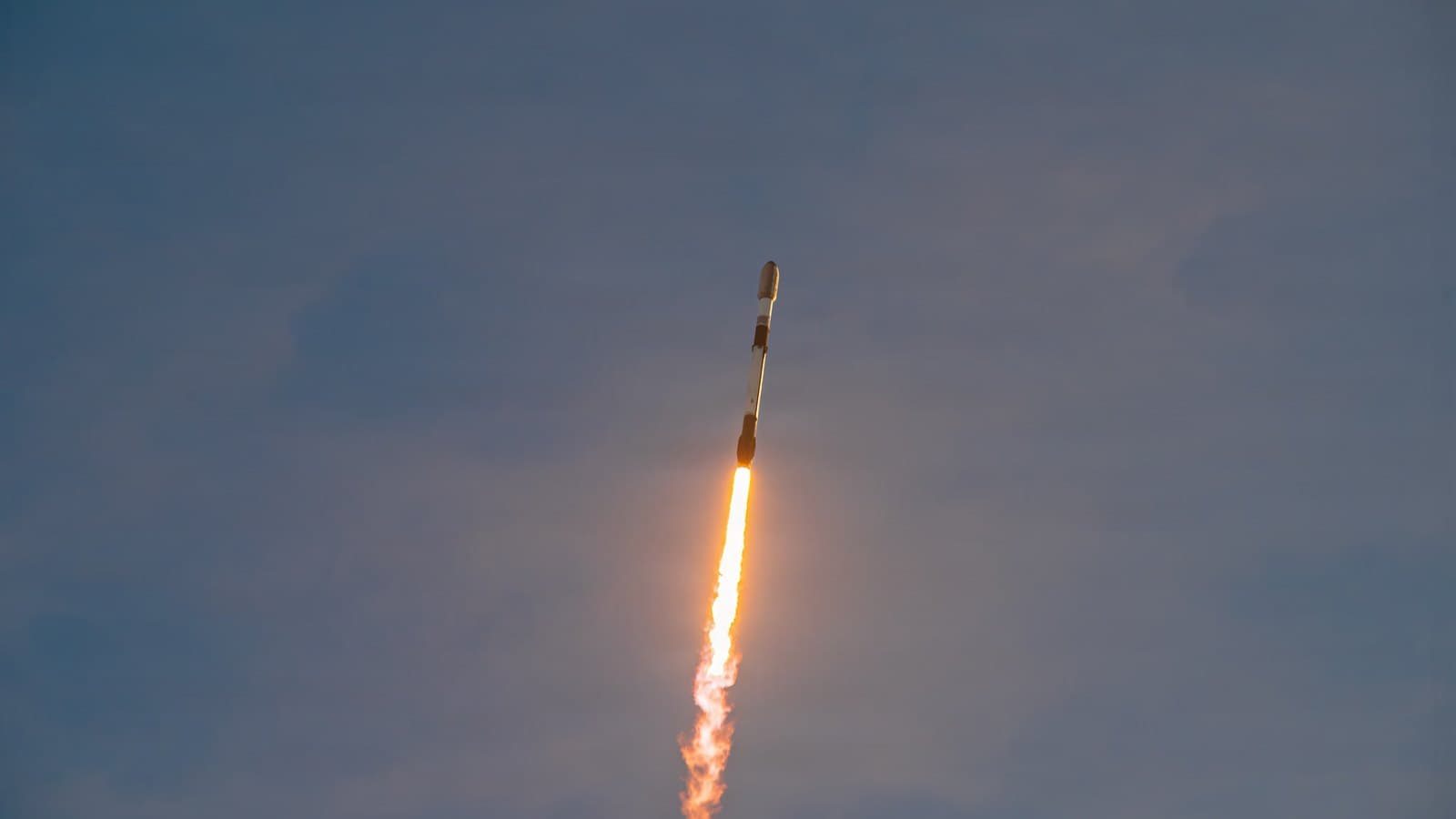
An Avio Vega-C rocket lifted off from Europe's Spaceport in French Guiana late on September 14 local time, carrying two European Earth-observation satellites into a Sun-synchronous orbit roughly 820 kilometres up. The mission, designated VV30, deployed the Copernicus Sentinel-3C spacecraft first and the European Space Agency's FLEX satellite about an hour later. Both signalled that they were healthy, according to Spaceflight Now and ESA.
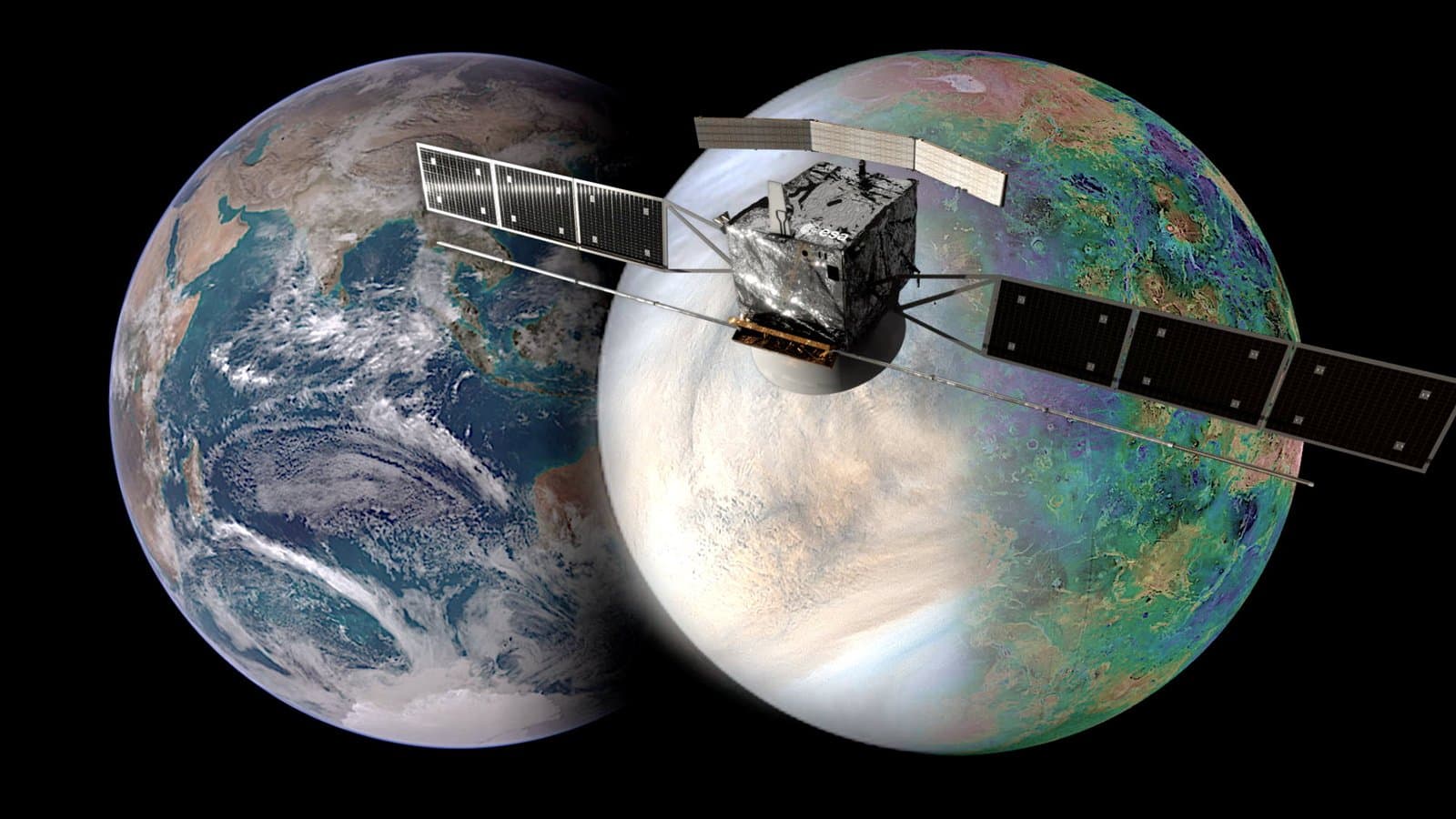
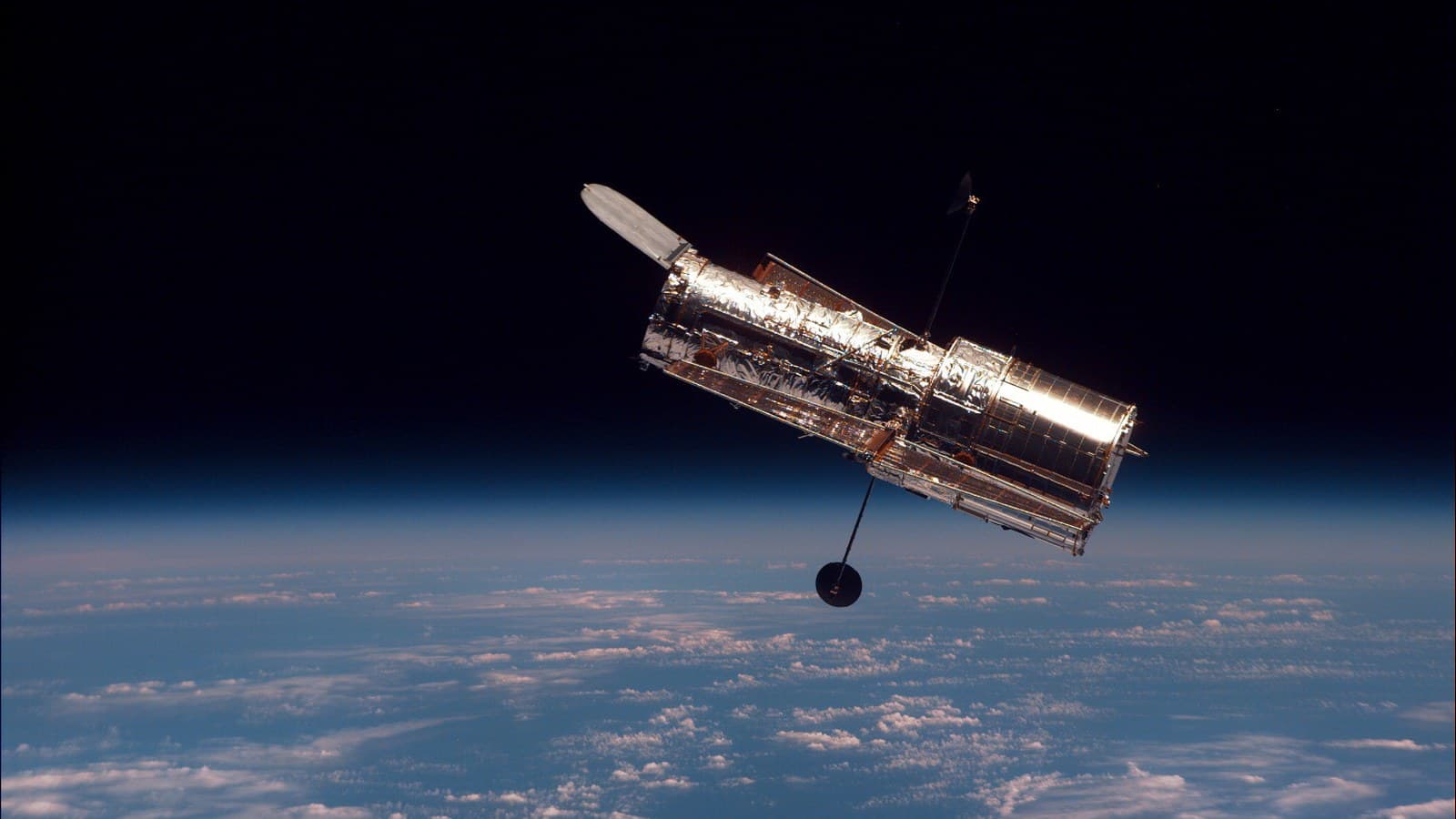
Related reading: ESA to Build Its Own Radar for the EnVision Venus Mission as NASA Steps Back · NASA Asks Industry Whether Commercial Spacecraft Could Boost or Retire Hubble.
Liftoff from the Vega launch complex came at 22:21 local time on September 14, or 03:21 CEST on September 15. The flight was the eighth for Vega-C, the second of 2026, and the second that Avio operated on its own rather than jointly with Arianespace. Avio's mission note put the pair into orbit at about 820 kilometres and 98.6 degrees of inclination, with the full deployment sequence running 116 minutes from liftoff to the release of the last satellite.
Eyes on the ocean
Sentinel-3C is the heavier payload at 1,143 kilograms and the third satellite in the Sentinel-3 series. It is built to measure sea-surface height and temperature, ocean colour, land-surface temperature and atmospheric aerosols, and to detect wildfires by their radiative power in near real time. The European Commission owns the mission, EUMETSAT operates the spacecraft, and ESA and Thales Alenia Space delivered the hardware.
Sentinel-3C carries the same instrument set as its siblings: a sea and land surface temperature radiometer, an ocean and land colour instrument, a dual-frequency radar altimeter, a microwave radiometer, a laser retroreflector and a DORIS orbit-determination package. Between them they cover sea-surface topography, sea and land temperature, ocean colour and aerosols, which is why one spacecraft feeds weather forecasting, marine safety, agriculture, water management and disaster response rather than a single scientific question.
Its two predecessors, Sentinel-3A and Sentinel-3B, launched in 2016 and 2018 on Russian Rokot rockets. Both have now passed their 7.5-year design lives, and Sentinel-3C is intended to take over from Sentinel-3A once it finishes commissioning. Sentinel-3D is due to replace Sentinel-3B in 2029, which is what keeps the Sentinel-3 record continuous into the next decade.
"This launch will assure this essential service and related datasets can continue well into the 2030s, and particularly when you're assessing climate impacts, this long continuity of data is really important," EUMETSAT Director-General Phil Evans said at a prelaunch briefing. He noted that about 30 million Europeans live in coastal floodplains exposed to sea-level rise, which he described as accelerating.
The one-line version
One Vega-C launch carried a satellite that monitors the oceans and atmosphere and a satellite that measures photosynthesis, and ESA intends to fly them almost a kilometre apart so the two datasets can be read together.
Measuring the glow of plants
FLEX, short for Fluorescence Explorer, is the lighter satellite at 397 kilograms and the eighth mission in ESA's Earth Explorer series. Its single instrument is a spectrometer called FLORIS, which works in the 500 to 780 nanometre range and detects the faint fluorescence that plants emit during photosynthesis. That glow is invisible to the eye but tracks how actively vegetation is working, which is why ESA frames the mission as a way to assess plant health and to follow how carbon and water move between plants and the atmosphere.
The signal is faint, which is why the mission needed a dedicated spectrometer rather than a general-purpose imager, and why FLEX carries only one instrument. Thales Alenia Space built both satellites as prime contractor, with a group of European companies supplying the instruments. FLEX is the eighth Earth Explorer, a line of ESA missions chosen for scientific novelty rather than operational continuity, and it is the first of them to measure photosynthesis directly from orbit.
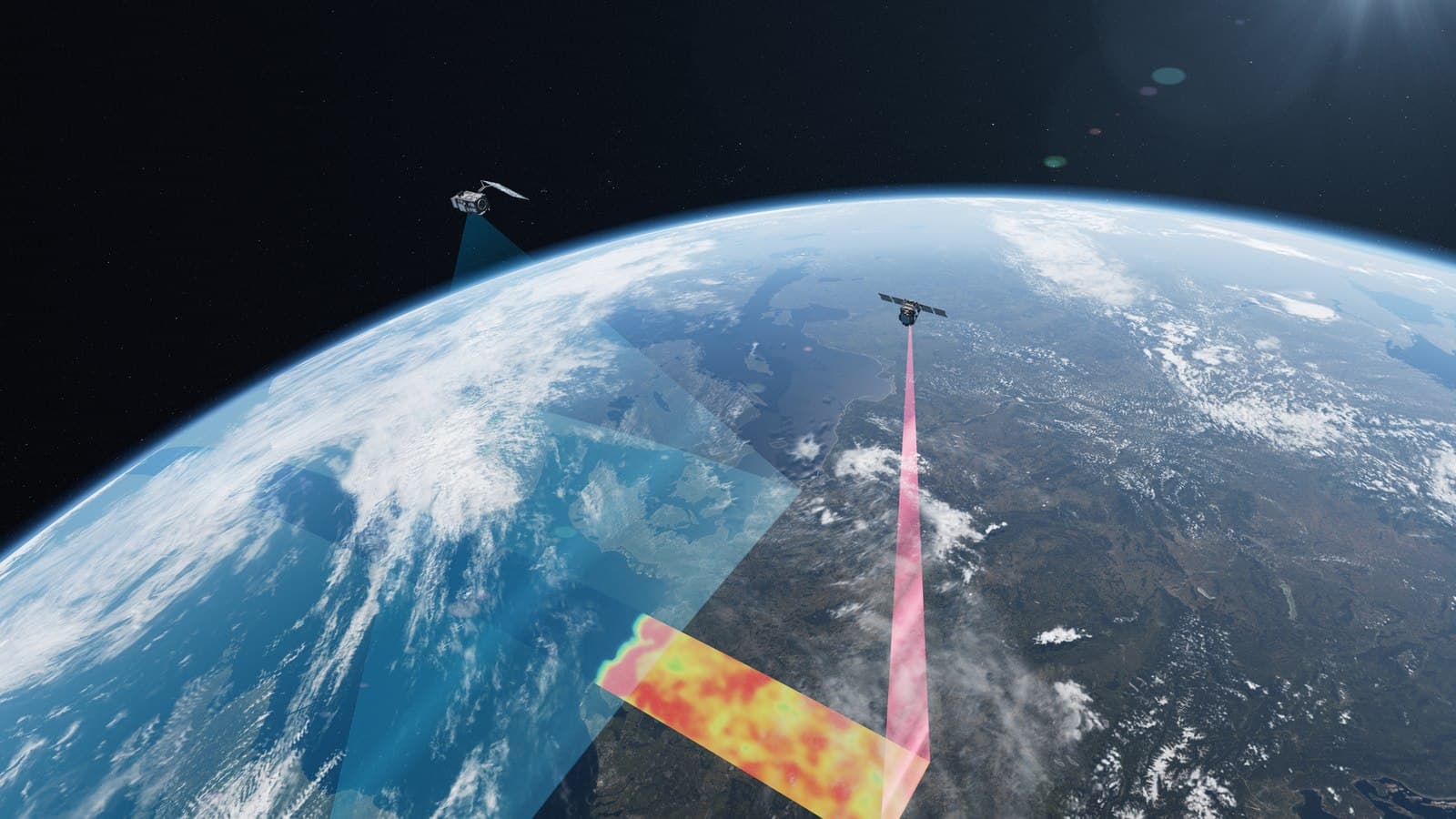
FLEX is designed to fly about one kilometre from Sentinel-3C, close enough that the plant signal and the atmospheric context can be read together. Simonetta Cheli, ESA's Director of Earth Observation Programmes, said that pairing was the reason the two satellites launched on the same rocket. "They will fly one kilometer apart from one of the other with a few minutes, I would say seconds apart," she said, adding that FLEX has a 27-day revisit period and a planned life of three and a half years.
A shared ride and a nudged budget
Putting two satellites on one rocket is a deliberate shift for Europe's Earth-observation programme. Rather than reserving a launcher for a single spacecraft, Sentinel-3C sat above FLEX on a secondary payload adapter called Vespa, with Sentinel-3C released first and FLEX following once the upper stage had moved. Avio has now placed five Sentinel satellites in orbit with the Vega family and three ESA science missions with Vega-C. Copernicus data is free and open to public and private users, which is part of why the programme has survived several budget cycles; the European Commission owns the Sentinels and presents them as infrastructure for civil protection and climate policy as much as for research.
The launch is also a modest step for Europe's launch autonomy. Vega-C is 34.8 metres tall, can place about 2,300 kilograms into a reference polar orbit, up from roughly 1,500 kilograms for the original Vega, and shares its first-stage P120C motor with the boosters of the Ariane 6 heavy-lift rocket. It returned to flight in December 2024 after a two-year grounding that followed a 2022 failure, and it has now flown twice in 2026. The first of those flights carried the Smile mission in May.
Europe has spent the past decade trying to secure independent access to space after depending on Russian launchers for some missions. Vega-C and Ariane 6 are the two pillars of that effort, and both have had difficult introductions. The value of a flight like VV30 is less the individual satellites than the evidence that the smaller vehicle can carry institutional payloads on a predictable cadence, which is what customers planning constellations and science missions need before they commit.
"For us a key step is also the preparation of the next multi-annual financial framework, meaning that will be the budget of the European Union from 2028 on," said Mauro Facchini, head of the European Commission's Earth Observation Unit. He said six Copernicus expansion missions are in development and due to launch from 2027, with the CO2M carbon-monitoring satellites a priority.
What the launch does not settle
Neither satellite is operational yet. Both will spend months in commissioning and calibration before their data enters routine service, so the launch confirms the hardware is in orbit, not that the data is flowing. FLEX has about 30 kilograms of propellant on board and must hold back roughly half of it for a de-orbit burn at the end of its life, which gives mission managers an incentive to be sparing with the rest.
The practical stakes are easy to understate. Harmful algal blooms, sea-level rise, drought and wildfire all show up first in the kind of data Sentinel-3 has produced for a decade, and public authorities, researchers and insurers have built services on top of it. A gap in the record would not stop those services, but it would make the trends they track harder to read, which is why a replacement satellite counts as an operational event as much as a scientific one.
The results that will matter most are still ahead. For Sentinel-3C, the test is an unbroken handover from Sentinel-3A at the quality the climate and weather services depend on. For FLEX, the test is whether FLORIS produces the fluorescence maps at the resolution the mission was sold on. If it does, Europe will have a new and independent line of evidence on how the land carbon sink is behaving as the climate warms.
What to watch
Watch the commissioning reports and the first Sentinel-3C products to enter the Copernicus stream, because the value of the mission is continuity rather than any single image. For FLEX, the milestone is the first global maps of vegetation fluorescence, which will take months of calibration to trust. And watch the budget line: the funding decision Facchini pointed to will shape whether the expansion missions now in development actually reach the launch pad.
Why the tandem matters
Satellites that measure ocean temperature and satellites that measure plant fluorescence answer different questions. Flying them a kilometre apart lets researchers line up the two records in time and space, so a change in vegetation can be read against the weather and water conditions around it.
Image: FLEX and Sentinel-3 in orbit, an ESA illustration via Wikimedia Commons, licensed under CC BY-SA 3.0 IGO.
Tags

TPW Editorial
Editorial Team
TechPastWeek's editorial team reports and edits every story we publish. We research each piece against primary and credible secondary sources, and a human editor reviews and signs off before it goes live.