Open Cosmos Raises €300 Million to Industrialize Europe's Satellite Supply
Open Cosmos raised €300 million on 14 September to expand satellite manufacturing and sovereign connectivity, the latest round in a European space funding wave.

On this page
British satellite manufacturer Open Cosmos has raised €300 million, roughly $346 million to $348 million, in a round the company says will expand its factory capacity and grow the connectivity and data businesses built on top of its own spacecraft. Open Cosmos announced the funding on 14 September 2026, with a parallel release on GlobeNewswire.
Related reading: Google Is Sending Four TPUs to Orbit in Its First Suncatcher Test · Impulse Space Adds $308 Million to Series D, Taking the Round to $808 Million.
The round was led by European investors, with Lightrock and ETF Partners at the front. Participants included the Institut Català de Finances, the public development bank of Catalonia, Entrepreneurs First, and two international pension funds. Tech.eu identified one of those funds as British Columbia Investment Management Corporation. Other backers listed by the company include Convex Group, the UK's National Security Strategic Investment Fund, Phoenix Court, and Claret Capital Partners, which Payload Space reported supplied a venture debt tranche.
CNBC reported that the round was oversubscribed and that Jordà said Open Cosmos prioritized European investors whose aims aligned with the company's. That framing is a deliberate contrast with the cross-Atlantic investor lists that dominate large rounds in the United States, and it fits the company's positioning as a vendor to European governments.
A valuation the company won't confirm
Open Cosmos did not disclose what the round values it at. Dealroom reported that the company has now raised more than $390 million to date and that the deal gives it a valuation of about $2 billion, citing two people with knowledge of the transaction. Trade outlets including SatNews and Outer Space Today instead described the round as pushing the company past $1 billion and making it Europe's newest space unicorn.
The two framings are not strictly contradictory, since $2 billion is also more than $1 billion, but they are different claims. Only the roughly $2 billion figure rests on named sourcing, and both should be treated as reported rather than confirmed. The company itself has stayed silent on valuation.
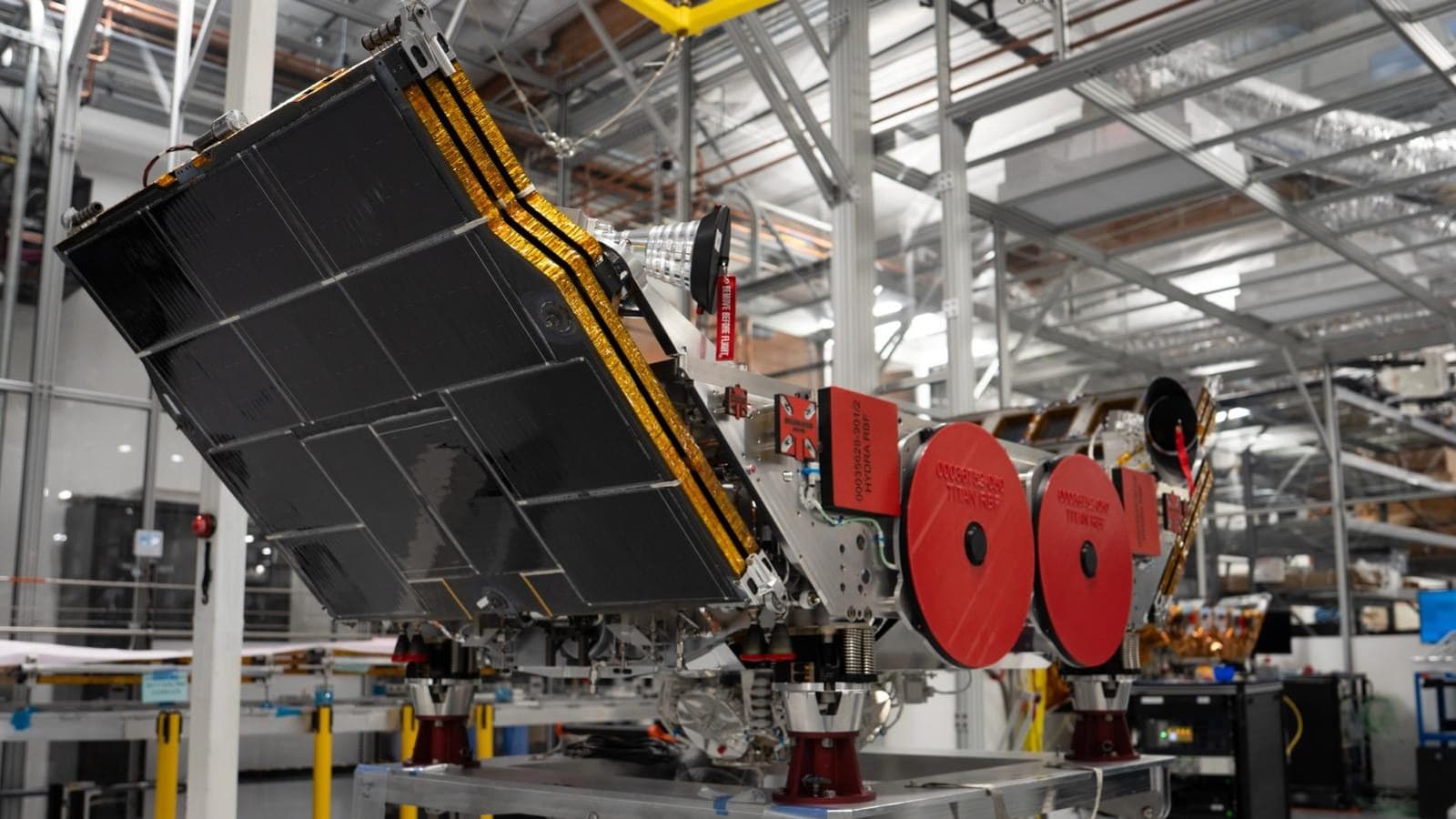
The money is earmarked for two things. The first is manufacturing: more throughput from the company's four European factories, plus growth in its engineering, manufacturing, and software teams. The second is services, through the expansion of ConnectedCosmos, its low Earth orbit communications network; OpenConstellation, a shared Earth-observation constellation; and DataCosmos, which turns satellite imagery and sensor readings into operational products. The company also sells mission design and operations under the OpenOrbit banner. SatNews reported that part of the proceeds will go toward deploying initial test satellites for the ConnectedCosmos Ka-band network, the hardware layer that has to work before any of the connectivity services can be sold at scale.
What Open Cosmos actually is
Open Cosmos was founded in 2015 and is headquartered at Harwell in Oxfordshire. Chief executive Rafel Jordà Siquier, an aerospace engineer who previously worked at Airbus Defence and Space, started the company with Aleix Megias Homar and Jordi Barrera Ars, according to Tech Funding News. It designs, builds, and operates missions end to end, and now runs facilities in the UK, Spain, Portugal, and Greece, where it employs close to 400 people.
The company made its name early by building and launching an Earth-observation satellite on a shoestring budget, and it completed its first mission just eight months after it was founded, according to Tech Funding News. Eleven years later, the pitch has shifted from proving that small satellites can be cheap to proving that they can be built and operated at industrial scale.
The company's pitch to investors leans on its industrial claims. It says its four factories can manufacture one satellite per day and that it has achieved a 100% mission success rate across every satellite launched to date. It also says it has signed more than $370 million in new contracts over the past three and a half years and has posted five consecutive years of profitable growth.
Those numbers deserve context. The one-per-day figure describes capacity, not output, and the company has not published how many satellites it actually builds in a year. The 100% success rate is likewise a company statistic without a public denominator, a point The Next Web noted when it described the ratio as "a ratio without a denominator." The profitability claim is unusual among European space startups, most of which burn cash for years, but Open Cosmos has not released revenue or profit figures, so the streak is a company assertion rather than an independently audited result. The $370 million contract figure covers bookings over three and a half years, and bookings are not the same as revenue.
Open Cosmos has one clear precedent for whether the services strategy can pay off: its first Balearic satellite, Posidònia, launched in July 2026 and is part of the initial deployment of OpenConstellation 1.0. The company says the network will cut Earth-observation data delivery from as long as 48 hours to as little as 30 minutes in emergencies, with standard tasking under four hours.
Posidònia reached orbit on 7 July 2026 aboard a SpaceX Falcon 9 flying the Transporter-17 rideshare from Vandenberg Space Force Base in California, alongside the Greek satellite Hyperion GR-1, according to the Mallorca Daily Bulletin and Forbes España. It is a useful reminder that the company's business spans two sides: it sells spacecraft to governments, and it operates its own shared constellation on top.
The sovereign demand signal
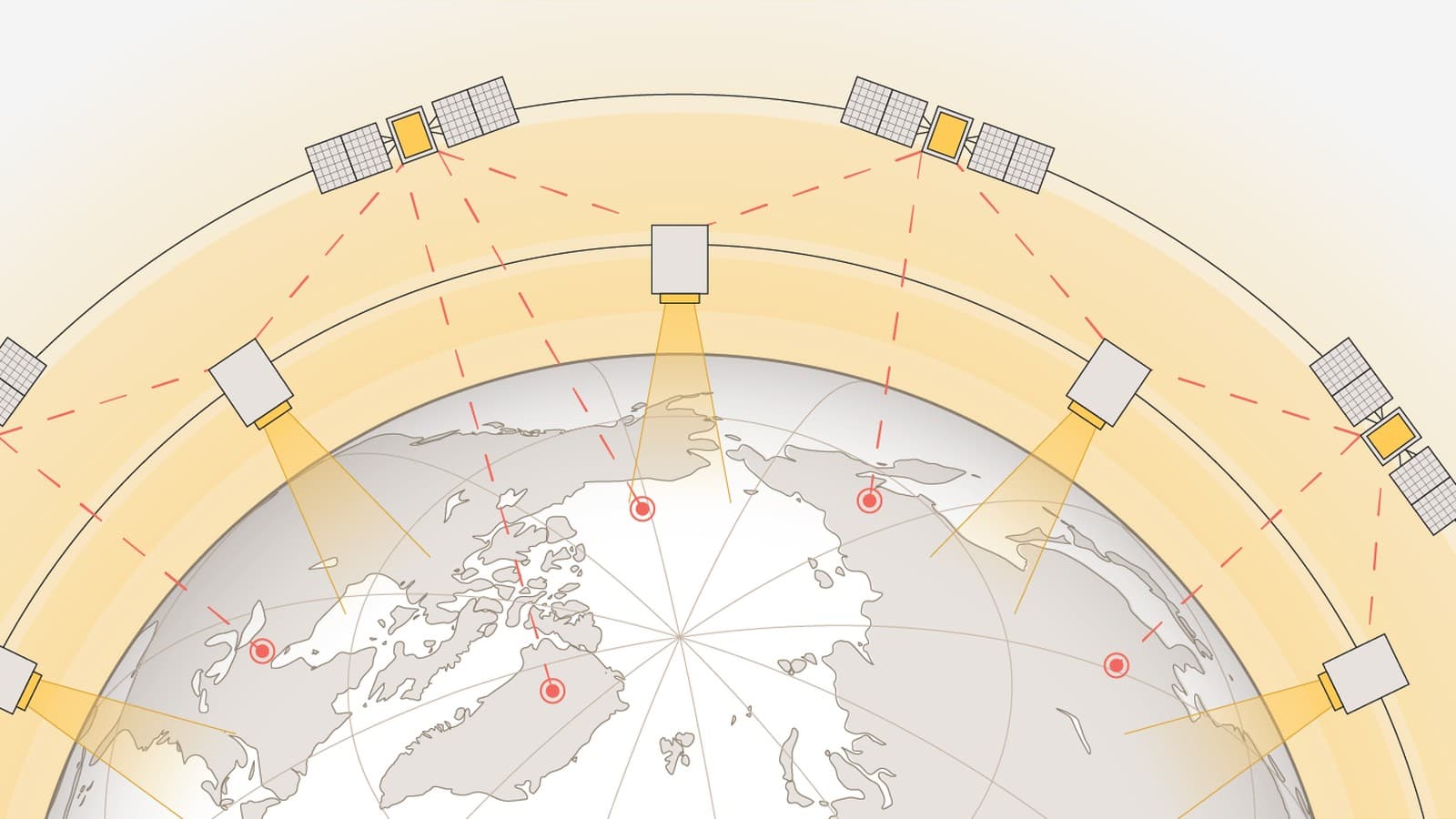
Two weeks before the funding, on 2 September, Open Cosmos was selected as an officially vetted supplier on the UK Ministry of Defence's Tactical Communication System framework, known as RM6393. Open Cosmos framed it as a stamp of approval for its ConnectedCosmos low Earth orbit architecture, which the company says combines broadband and direct-to-device IoT links with optical inter-satellite connections.
The framework is valued at up to £8 billion, but that is the aggregate potential value the government expects to route through the vehicle, not a contract awarded to Open Cosmos. As Business News Today explained, the listing gives the company a route to compete for future call-offs; it guarantees no orders. The distinction matters for anyone reading the £8 billion headline as a win.
Yet the framework appointment points to the real driver behind the round: governments want communications and Earth-observation capacity they control rather than rent from foreign operators. That demand is what is pulling capital into European space companies at a rate the sector has not seen before.
The recent numbers back that up. On 8 September, The Exploration Company raised a $450 million Series C, which it called the largest Series C ever announced by a European space company, bringing its total to roughly $680 million. In early September, Spain's PLD Space closed a €108 million Series C extension, and Germany's HyImpulse closed a €50 million-plus Series A extension. In June, Finland's ICEYE raised a €450 million primary Series F at a valuation above €10 billion, with the total transaction including a secondary placement exceeding €1 billion.
Policy is reinforcing the trend. The European Commission's €5 billion Scaleup Europe Fund, managed by EQT, co-led The Exploration Company's Series C and has backed companies including Mistral, which means the EU is now an indirect shareholder in some of the continent's most valuable technology startups. For space companies, that public capital comes with an expectation that the capacity stays in Europe.
European space funding is rising fast, but CNBC reported on 14 September that the continent still trails the United States on private investment, public spending, and launch capacity. The wave is real; the gap it is closing is also still real.
Manufacturing is not the only bottleneck
Open Cosmos can build spacecraft faster only if it can get them into orbit, and Europe's launch supply remains constrained. The company has launched on SpaceX, Rocket Lab, and Arianespace, and Jordà told CNBC it has agreements with Indian and Japanese launch providers. Relying on rideshare slots bought from others is workable, but it puts the company's delivery schedule at the mercy of launch providers and their manifests.
Europe is trying to change that. Isar Aerospace reached orbit in September 2026, giving the continent a first private launch success, and the European Launcher Challenge is seeding domestic rocket capacity. Until that capacity arrives in volume, satellite makers like Open Cosmos are effectively betting that manufacturing and service demand will outrun the launch bottleneck.
There is also competitive pressure at home. ICEYE has moved from climate monitoring into defence intelligence, delivering a sovereign satellite constellation to Poland and reaching profitability at scale. Loft Orbital has raised about $326 million, and Spire Global is pushing annual satellite production toward 300 to 400 units. Open Cosmos is betting that owning the whole chain, from factory to data product, is a stronger position than specializing in one layer.
What to watch
Three things will show whether the €300 million buys a durable business. The first is whether Open Cosmos converts its TacSys eligibility into actual UK defence call-off contracts, which is the difference between market access and revenue. The second is how quickly OpenConstellation 1.0 reaches its planned 15-satellite deployment and whether the near-real-time latency claims hold in normal operation, not just emergency tasking. The third is the industrial ramp itself: the gap between one satellite per day of stated capacity and whatever number the company reports as real output.
For now, the round makes Open Cosmos one of the best-capitalized privately held satellite manufacturers in Europe, with a growing list of government customers and a vertical model that few peers attempt. Whether it becomes Europe's defining space infrastructure company, as ETF Partners' Patrick Sheehan predicted, will be settled in factories, on manifests, and in procurement offices rather than in the funding announcement.
Tags

TPW Editorial
Editorial Team
TechPastWeek's editorial team reports and edits every story we publish. We research each piece against primary and credible secondary sources, and a human editor reviews and signs off before it goes live.