Cisco's Email Gateway Zero-Day Hands Attackers Root From a Single Message
Cisco disclosed CVE-2026-76461, a 9.8 SQL injection in Secure Email Gateway that is already exploited; CISA set a September 17 patch deadline.

On this page
Cisco published a security advisory on September 14, 2026 for a critical vulnerability in its Secure Email Gateway that is already being exploited in the wild. The flaw, tracked as CVE-2026-76461, carries a CVSS score of 9.8 and lets an unauthenticated, remote attacker execute commands with root privileges on the underlying appliance by sending a specially crafted email.
Related reading: Cisco's Identity Engine Has Nine New Flaws, and One Scores a Perfect 10 · Cisco's SD-WAN Manager Zero-Day Lets Attackers In as Admin.
The U.S. Cybersecurity and Infrastructure Security Agency added the flaw to its Known Exploited Vulnerabilities catalog the same day and gave federal civilian agencies until September 17 to apply mitigations. Independent advisories, including one from Rapid7, confirm active exploitation and stress that there is no practical workaround.
The flaw, and why it is severe
CVE-2026-76461 is a SQL injection in the email parsing logic of Cisco AsyncOS, the operating system that runs Secure Email Gateway appliances. Cisco says the parsing code fails to neutralize malicious SQL statements embedded in an inbound message. A successful exploit lets an attacker run arbitrary SQL, which then escalates to command execution with root privileges.
The combination of properties is what makes this urgent:
- Unauthenticated and remote. No credentials are needed. The attack surface is the mail channel itself, which every gateway must expose to do its job.
- Root-level impact. Command execution as root on the appliance gives an attacker full control of the system, not a limited foothold.
- Both physical and virtual deployments are affected, regardless of configuration, according to Cisco.
- No workaround exists. Cisco's guidance is to patch rather than to mitigate.
An email gateway sits in a privileged position. It sees mail before anyone else, it can read and rewrite messages, it can redirect or silently drop them, and it often holds credentials for downstream systems. An attacker with root on that appliance can harvest content, tamper with communications, or use the box as a stable pivot into the rest of a network while leaving few traces in the mailboxes the security team normally reviews.
Exploited before it was disclosed
Cisco's advisory states that its Product Security Incident Response Team became aware of active exploitation in September 2026, which means the flaw was used as a zero-day before a fix existed. Reporting indicates the issue surfaced during an internal support case handled by Cisco's Technical Assistance Center, which uncovered malicious activity on customer appliances and on instances hosted in Cisco Secure Email Cloud.
That detail is significant for defenders. Zero-day exploitation that is discovered through a vendor support case often means the intruder already achieved persistence before anyone noticed, and Cisco has directly contacted customers where it detected malicious activity. Cisco says it remediated the affected cloud instances itself, so Secure Email Cloud customers do not need to act. On-premises customers do.
Fixed releases are available. Cisco recommends migrating to AsyncOS 16.5.0-780, with patches also published for the 16.0.4-3021 and 15.5.5-0141 branches so organizations on older trains do not have to make a full version jump to close the hole.
The fact that Cisco learned about the flaw from a support case, rather than from its own monitoring or a bug bounty report, says something about how zero-days surface in practice. Perimeter appliances rarely generate the kind of endpoint telemetry that security operations centers are built to watch, so their compromise is often discovered when something downstream breaks or when a customer calls the vendor about odd behavior. By that point, an attacker who wanted persistence has had time to establish it.
Why email security appliances keep getting hit
Email security appliances are a favorite target for reasons that have little to do with this specific bug. They sit on the network edge, they must parse hostile input by design, and they are frequently deployed as a single chokepoint through which all mail flows. A flaw in the parsing path can be reached by anyone who can send an email, which is everyone, and the appliance itself is trusted, so compromising it grants a position inside the perimeter rather than outside it. That combination of broad reach, unauthenticated access, and high privilege is rare, and it explains why edge appliances from a range of vendors have produced some of the most consequential vulnerabilities of the past several years.
The AsyncOS case also illustrates how much of the risk lives in the parsing layer. A gateway must decode attachments, handle unusual encodings, follow routing headers, and apply policy to messages that are sometimes deliberately malformed. The more formats and edge cases a system supports, the larger the surface for a parser to mishandle something. A SQL injection is an unusual class of bug to find in a mail pipeline, because it implies the appliance hands some portion of message data to a backend data store rather than handling it entirely in memory, and that the boundary between parsing and query execution was not enforced. Any input that reaches a database without parameterization is a potential injection point, and mail is nothing if not untrusted input.
Assume compromise, not just exposure
A zero-day that grants root and was used before disclosure cannot be treated as a patching-only event. Cisco's advisory points administrators to the appliance's mail log, where a statement matching the pattern COPY.*TO PROGRAM can indicate malicious activity. On clustered deployments, check every node, and treat an unpatched, internet-reachable appliance as a high-priority investigation target rather than waiting for the patch window.
A rough stretch for Cisco customers
The disclosure is the second serious Cisco security event in a week. Earlier in September, attackers exploited a flaw in Cisco's firewall management product, and Cisco faced the same dynamic: rapid exploitation, a short federal deadline, and customers scrambling to patch exposed management interfaces. Two different products, two different bugs, but the same structural problem. Cisco gear occupies the network edge in a huge number of organizations, and edge devices are the quiet favorite of attackers because they run continuously, speak to the internet, and are rarely rebuilt.
It is part of a broader pattern in 2026. ConnectWise, Check Point, and MikroTik have all dealt with edge-device flaws used in the wild, several of which were added to the CISA catalog. The common thread is that the devices sit outside the identity perimeter, so multi-factor authentication and endpoint controls do not stop the initial exploitation. The only reliable defense is patching speed and, failing that, monitoring for the telltale signs of a compromised appliance.
What defenders should do now
Cisco's remediation steps are unusually simple to state, even if they are not simple to execute at scale.
- Inventory every Secure Email Gateway appliance, physical and virtual, including systems that administrators may have forgotten because they are behind another control.
- Patch to a fixed AsyncOS release, ideally 16.5.0-780. For branches that cannot move that far, 16.0.4-3021 and 15.5.5-0141 carry the fix.
- Hunt for indicators of compromise in the mail logs, especially activity matching the
COPY.*TO PROGRAMpattern, and review cluster nodes individually. - Treat root-level access as a full breach if evidence of exploitation is found, not as a contained incident, because the attacker's access to a perimeter system can outlast the appliance.
- Check downstream trust. If the gateway holds credentials or relays mail into internal systems, rotate what it can reach and review the logs of those systems too.
A spokesperson-level response is not enough. Because the vulnerability can grant root without authentication, a compressed perimeter-to-core path exists on any network where a compromised gateway has broad internal reach, which is most of them.
Caveats and what to watch
- Attribution is open. As of the advisory, there was no public proof-of-concept exploit and no attribution for the activity. Cisco did not name a threat actor or describe the scale of exploitation.
- The KEV deadline is a floor, not a ceiling. The September 17 date applies to federal civilian agencies. Private organizations face the same risk without the reporting requirement, and a three-day window is tight for large estates.
- Cloud customers are handled, with a caveat. Cisco says it remediated Secure Email Cloud instances, but customers who also run on-premises appliances still need to patch those.
- Expect scanning to follow disclosure. Once a vulnerability is in the KEV catalog, mass scanning for exposed appliances historically follows within days. Reducing the number of internet-reachable management or appliance interfaces is worth doing regardless of the patch.
The useful takeaway is not that Cisco had a bad week. It is that perimeter appliances are a durable attack category with a short window between a patch and its exploitation. The organizations that come through incidents like this intact are usually the ones that already knew what they had, and could patch it before anyone published a scanner.
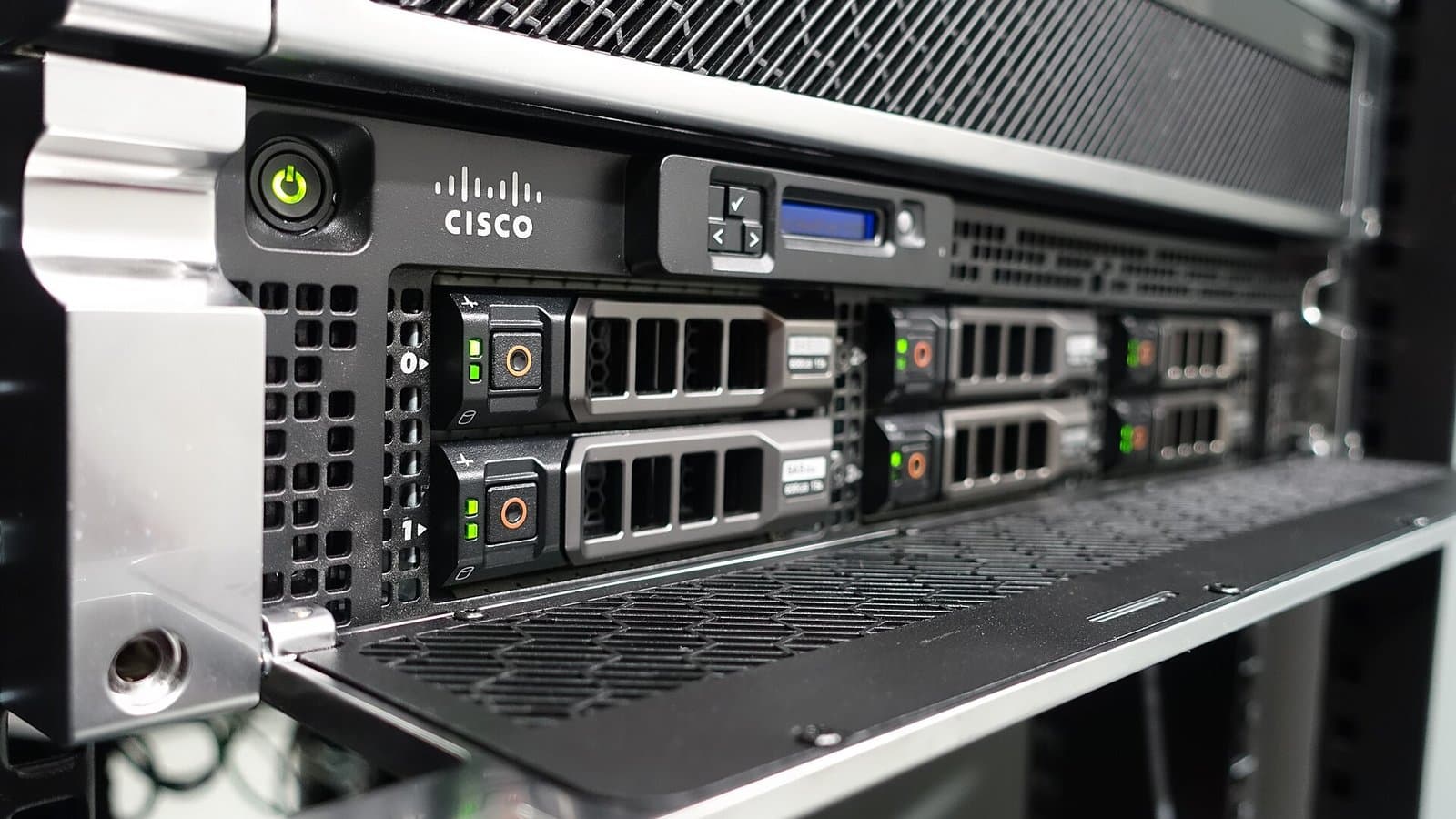
Cover: Cisco Secure Email Gateway (ESA IronPort C670), by Johannes Weber (CC BY 2.0) via Wikimedia Commons.
Tags

TPW Editorial
Editorial Team
TechPastWeek's editorial team reports and edits every story we publish. We research each piece against primary and credible secondary sources, and a human editor reviews and signs off before it goes live.