Google and Constellation Add 890 MW of Nuclear Power Through Reactor Uprates
Google and Constellation signed a 20-year deal on October 6, 2026 to add 890 MW of new nuclear capacity to PJM through uprates at 11 existing reactors.

On this page
Key takeaways
- Google and Constellation Energy signed a 20-year power purchase agreement on October 6, 2026 to add 890 MW of new nuclear capacity to the PJM grid.
- The capacity comes from efficiency uprates at 11 existing Constellation reactors in Illinois, Pennsylvania and New Jersey, not from new plants, with the first uprate expected by 2028.
- Constellation is investing more than $4.3 billion in the upgrades, which the company says sustain about 4,400 existing jobs and create roughly 7,200 construction jobs.
- A separate 15-year agreement covers an additional 2,700 MW of Constellation's existing PJM fleet, a market that serves about 67 million people.
- Constellation also selected Google Cloud and Gemini Enterprise under an expanded five-year alliance to build an 'AI for energy' blueprint.
Google and Constellation Energy signed a 20-year power purchase agreement on October 6, 2026 to add 890 megawatts of new nuclear capacity to the PJM Interconnection grid, the largest power market in the United States. The capacity does not come from a new reactor. It comes from raising the output of 11 existing Constellation units in Illinois, Pennsylvania and New Jersey, an engineering exercise the industry calls an uprate, and the companies say the first uprate should be delivered by 2028.
Related reading: Anthropic Agreed to Buy $3.4 Billion of Gas Generators for Its Data Centers · Tesla Is Ending Cybertruck Production to Make Room for the Cybercab.
Constellation and Google describe the 890 MW as entirely new capacity for PJM, equivalent to a full new reactor or to several small modular reactors. The scale is what separates this agreement from the smaller nuclear deals Big Tech has signed over the past year, and it is the first to lean on uprates at this size. Constellation is investing more than $4.3 billion in the work, a figure Axios and Bloomberg both reported.
The agreement lands in the middle of an electricity crunch that AI is driving. Data centers are among the fastest-growing sources of new power demand in the United States, and the companies building them have spent the past two years signing contracts for whatever firm, carbon-free generation they can find. Nuclear is the option that fits their constraints: it runs around the clock, it does not depend on the weather, and much of it already sits near the eastern load centers where the servers are going.
What the agreement actually covers
The 20-year power purchase agreement is the financing structure. Google acts as the anchor customer, which gives Constellation the long-term revenue certainty to spend on upgrades, and Constellation carries out the work. Those upgrades are new equipment and technology at the 11 units that raise their thermal and electrical efficiency, the route by which a plant that already exists produces more electricity without a second containment building. The Wall Street Journal described the agreement as a sweeping 20-year nuclear deal that would boost output at 11 existing reactors.
A separate 15-year energy supply agreement runs alongside the first, covering an additional 2,700 MW of Constellation's existing PJM fleet. That one does not create new capacity. It provides revenue certainty so those plants keep running and stay on the grid rather than retiring early. The two agreements together touch a large share of Constellation's PJM portfolio.
Constellation is the largest nuclear operator in the United States and the largest private-sector power producer, with a fleet of roughly 55 gigawatts spanning nuclear, gas, oil, geothermal, hydro, wind and solar. It is headquartered in Baltimore and trades on Nasdaq as CEG. Google is a subsidiary of Alphabet.
The job figures attached to the deal come from Constellation. The company says the upgrades sustain about 4,400 existing jobs and create roughly 7,200 construction jobs. Those are projections tied to the investment, and the construction roles are not permanent.
An uprate, not a new plant
An uprate raises output at a reactor that is already licensed and running by upgrading turbines, generators, instrumentation and related systems. It sidesteps the decade-long permitting and construction cycle of a new plant. The trade-off is that the capacity available this way is bounded by the design of the existing site, so uprates can add hundreds of megawatts but not an unlimited amount.
Why the uprate model is winning
For most of the past decade, the case for new nuclear ran into the same wall. A reactor takes 10 to 15 years and a very large capital budget to build, and the projects that do get built have a record of running late and over budget. Data centers do not have 10 years. They need power in the next few years, which is the window in which AI capacity is being committed.
Uprates change that timeline. They work inside an existing license and an existing site, and the work can be staged across a fleet rather than concentrated in one megaproject. Constellation is spreading it across 11 units in three states, which also spreads the execution risk.
The approach has limits worth naming. Uprates are capped by what the original plant was designed to tolerate, and the supply chain for reactor components is thin. The 890 MW here is real, but it cannot be repeated indefinitely across the same fleet. The deal also aligns with a Department of Energy program on incremental reactor scaling, the Utility Power Reactor Incremental Scaling Effort.
The scale stands out against the earlier, smaller agreements in the same corner of the market. Constellation's 20-year deal with Amazon, signed in late September 2026, adds 190 MW at the Calvert Cliffs plant, and Google has also signed a power purchase agreement tied to Finland's Loviisa plant. Canary Media put the 890 MW in perspective against a 30 MW Constellation-Meta deal and a 96 MW Georgia Power and Google project, and noted that the new agreement lands in the country's most capacity-constrained market.
The ratepayer question
PJM serves roughly 67 million people, stretching from Illinois to New Jersey, and it has become the busiest battleground over who pays for the grid upgrades that data centers require. The worry is straightforward. If AI load drives up demand and the cost of new transmission, utilities could recover that cost from every customer on the system, including households that never asked for a data center.
Both parties framed the deal as an answer to that. Google pointed to the White House Ratepayer Protection Pledge it signed, under which it commits to paying for the power and grid costs it causes rather than shifting them onto residential customers. Constellation positioned the uprates as capacity added without drawing on the same pool of ratepayer money that funds utility generation. PJM has also floated its own “Bring Your Own Power” proposal, which would ask large customers to supply the generation they need, and the Constellation deal looks like a template for what that could produce.
Amanda Peterson Corio, Google's global head of energy and power, tied the deal to the grid's reach and to keeping power affordable for the people it serves.
“Our agreement with Constellation to fund nuclear reactor uprates will strengthen the PJM grid, which serves 67 million people, all while protecting energy affordability and supporting local union jobs.” — Amanda Peterson Corio, Google's global head of energy and power
Whether the structure delivers on that claim is not yet knowable. A private agreement between two companies can keep costs off ratepayers for the capacity it covers, and still leave a grid whose shared transmission and reliability costs grow with the load.
The AI-for-energy twist
The agreement has a second layer that points back at Google's own business. Constellation selected Google Cloud and Gemini Enterprise under an expanded five-year alliance to build what the two companies call an “AI for energy” blueprint. The stated work spans agentic workflows for site selection, power-flow modeling and permitting, optimization of generation, and protection of operational technology networks. Google Cloud's regulated-industry platforms, which the companies describe as defense-grade, are part of the pitch.
That makes the deal circular in a way worth watching. A power company is buying AI tools from the same customer it supplies power to, and the tools are aimed at the parts of the energy business that decide how fast new supply can be built and connected. If the software shortens permitting and interconnection work, it compounds the value of the power deal. If it does not, Google still holds a 20-year contract for clean electricity. The software alliance runs for five years, shorter than the power deal, so the two sides will revisit those terms well before the electricity contract ends.
Constellation's chairman, president and chief executive, Joe Dominguez, framed the collaboration as a model. “This long-term clean energy collaboration with Google can serve as a model for how technology companies and the energy industry can work together,” he said in the announcement.
Caveats
The numbers in this story come from Constellation and Google and from press coverage of their announcement. They are not audited, and no independent body has verified the 890 MW, the $4.3 billion or the job counts. Google's own blog post notes that the company has enabled more than 1.5 GW of new nuclear capacity to date, a cumulative figure that folds in earlier deals.
There is a distinction the headline can blur. The 890 MW is additional output at plants that already operate, so “new capacity” here means more electricity from the existing fleet, not a new site. The United States has 94 reactors that supply about 20 percent of its electricity, and the uprate model works by squeezing more from that base.
Timing is the other caveat. This is an agreement, not operating output. The first uprate is expected by 2028, and the full 890 MW will take longer to arrive. Between now and then, the capacity the deal promises does not exist on the grid, while PJM's demand from data centers is growing now.
What to watch
- The first uprate, by 2028. Constellation's ability to deliver the first unit on schedule is the first real test of whether the uprate model can run at fleet scale.
- Google's ratepayer pledge in practice. Watch whether the deal's cost structure is cited in PJM proceedings as evidence that large customers can pay their own way, or whether regulators ask for terms the companies have not disclosed.
- The “AI for energy” buildout. Whether agentic tools meaningfully shorten permitting and interconnection is measurable, and Constellation has now put its name on the claim.
- Constellation's next deals. If uprates are as attractive as this agreement suggests, the company has more of them to sell, and other operators will face the question of why they are not doing the same.
The agreement gives Google a 20-year supply of carbon-free power and gives Constellation a customer that pays for upgrades the grid needed anyway. What it does not yet give PJM is the 890 megawatts themselves.
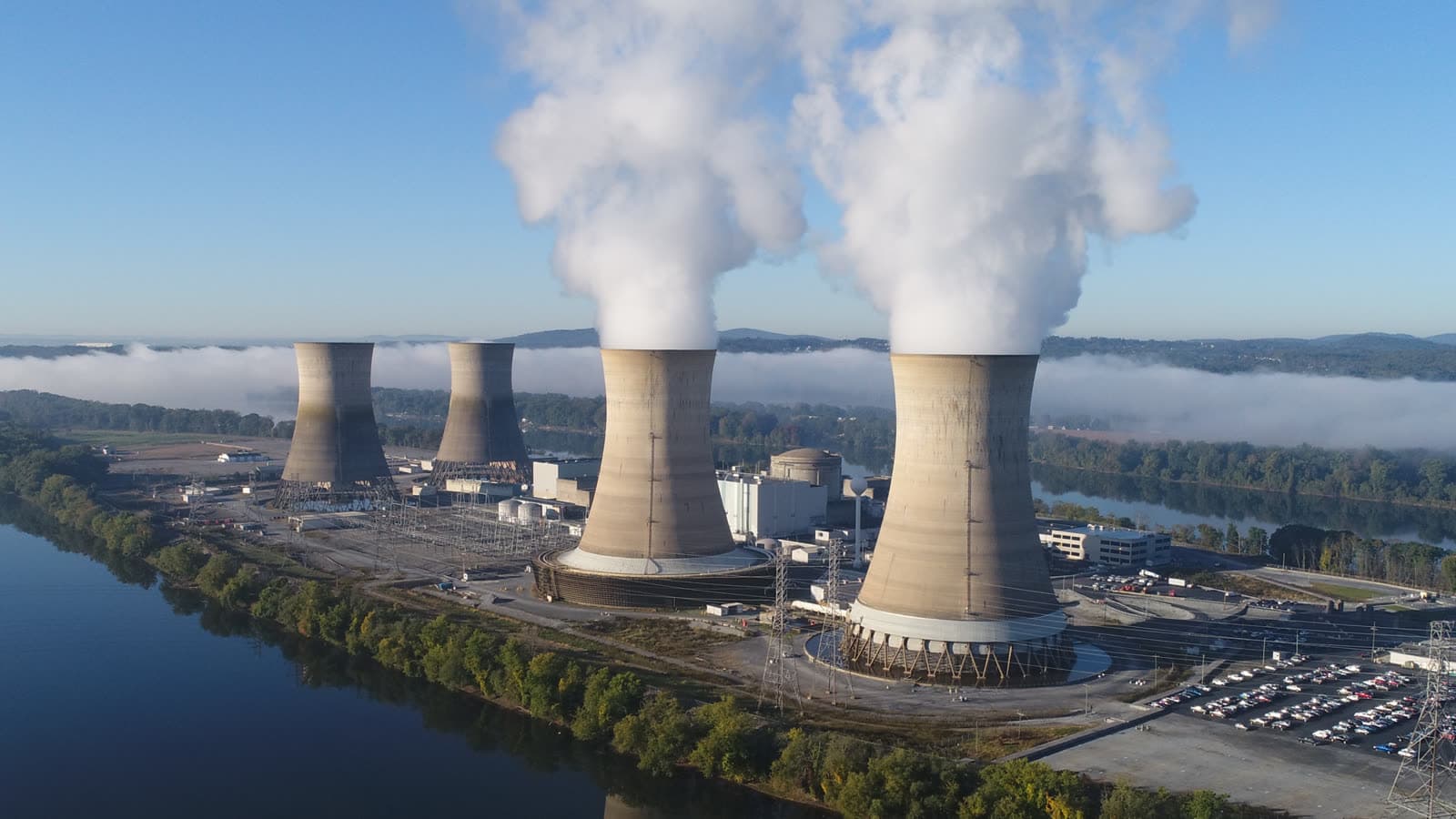
Feature image: Constellation Energy's nuclear plant at Three Mile Island, Pennsylvania, via Wikimedia Commons, CC BY-SA 4.0.
Tags
Frequently asked questions
- How much nuclear capacity is the Google and Constellation deal adding?
- The agreement funds 890 megawatts of new capacity across the PJM grid, delivered by raising the output of 11 existing Constellation reactors in Illinois, Pennsylvania and New Jersey. It is additional output from operating plants, not new reactors.
- When will the new nuclear capacity come online?
- Constellation expects the first uprate to be delivered by 2028. The 20-year power purchase agreement was announced on October 6, 2026, so none of the capacity is operating yet.
- How much is Constellation investing in the nuclear uprates?
- More than $4.3 billion, according to Axios. Constellation says the work sustains about 4,400 existing jobs and creates roughly 7,200 construction jobs.
- What is a nuclear uprate?
- An uprate raises a reactor's thermal or electrical output by upgrading equipment such as turbines, generators and instrumentation without building a new plant. This agreement applies uprates to 11 existing units.

TPW Editorial
Editorial Team
TechPastWeek's editorial team reports and edits every story we publish. We research each piece against primary and credible secondary sources, and a human editor reviews and signs off before it goes live.