Google and Nvidia Want Data Centers to Give the Grid a Break
Emerald AI, Google and Nvidia launched the AI Energy Management Alliance on September 16 to trade flexible power use for faster grid connections.

On this page
Data centers have become the hungriest new customers on the American electricity grid, and the grid was not built for them. On September 16, 2026, a group of technology and energy companies launched the AI Energy Management Alliance (AEMA), a coalition that wants those facilities to cut their power draw when the grid is under strain, and to receive faster interconnection in return. The founding members are the data center software company Emerald AI, Google and Nvidia, and they are joined by 18 launch partners including Anthropic, National Grid, AES, RWE, Constellation and NRG.
Related reading: Google and Constellation Add 890 MW of Nuclear Power Through Reactor Uprates · LG Energy Solution's JF2 AC Link Qualifies as an NVIDIA DSX Ready BESS.
The pitch is direct. AEMA argues that power, not capital and not chips, is now the main constraint on building AI infrastructure in the United States. Grid connection processes were designed for facilities with flat, predictable demand, and they leave new AI campuses waiting years in a queue. A facility that can reduce its load on command is, in the alliance's framing, a different kind of customer, one worth connecting sooner.
Power is the constraint
The mismatch is easy to state and hard to fix. An AI data center typically wants to draw a very large amount of power around the clock, and the transmission system has to be able to serve its peak on the worst day of the year. Flexibility changes the equation. If a campus can shift or pause computing work, discharge on-site batteries, or bring up its own generation when the grid is stressed, it can behave more like a controllable resource than an inflexible load. Grid operators get a tool for managing peak demand, and the developer gets a shorter path to power.
That trade is the core of AEMA's argument. The alliance describes itself as technology-neutral, judging members on measurable performance rather than on the specific hardware or software they use. Its principles call for several things:
- Defining ride-through, curtailment and contingency-response obligations before a facility connects, so both sides know what happens during a brief disturbance or an emergency.
- Standardizing technical requirements, performance metrics and operational data sharing, so a flexibility promise can be compared across projects.
- Creating faster, risk-adjusted pathways for customers that make credible, verifiable commitments.
- Allocating interconnection costs according to a facility's real impact on the system, including upgrades it helps avoid.
"The most effective way to accelerate American AI is to make every data center a good citizen of the grid," Varun Sivaram, chief executive of Emerald AI, said in the launch announcement, as reported by The Next Web. Nvidia's head of sustainability, Josh Parker, said the group wants "technology-neutral, performance-based standards" that judge a data center by measurable grid reliability rather than by its preferred equipment.
The numbers behind the pitch
The alliance's central claim is scale. On its website, AEMA says flexible AI could unlock an extra 100 gigawatts from the existing grid, on top of the capacity already planned. That figure is worth reading carefully. It is not 100 GW of new generation and it is not 100 GW of new data center demand. It is a claim about how much more useful the current system could be if large loads could be trimmed when the grid is tight.
Sivaram, in a Fortune commentary published the same day, wrote that the American grid runs at only about half its capacity on average, and cited a Brattle Group estimate that every 10% gain in utilization lowers electricity rates by roughly 3.4%. The arithmetic is intuitive: a transmission line sized for a worst-case peak is underused most of the time, and demand that can move away from the peak lets the same wires carry more useful energy over a year.
There are concrete projects behind the rhetoric. Google has committed about 1 gigawatt of demand it can reduce through utility agreements across the United States, according to Tyler Norris, its head of advanced energy market innovation, as reported by Axios. Later this year, Nvidia, Digital Realty and Emerald AI plan to switch on a nearly 100-megawatt power-flexible AI factory in Virginia that is meant to demonstrate the model at commercial scale. Emerald AI raised $150 million in August and is valued at just over $1 billion.
A public backlash over power bills
The alliance is launching into a political environment that has soured on data centers as neighbors. New polling from AP-NORC and the University of Chicago's Energy Policy Institute, released the same week, found that 84% of Americans worry about data centers' effect on local electricity prices. About 79% of Democrats and 76% of Republicans backed requiring developers to pay for the grid upgrades they need. The concern is not abstract: earlier this year, reporting documented data centers helping push up power bills for factories in the Rust Belt.
Capacity in the queue, not on the wires
Texas alone has roughly 474 gigawatts of data center requests in its interconnection queue, a multiple of what the state could realistically serve. That gap between requested and deliverable power is the backdrop for every flexibility proposal now circulating.
Regulators have started to move. In June, the Federal Energy Regulatory Commission directed the regional grid operators it oversees to look at ways to connect large customers willing to limit their draw. Texas is finalizing rules that would let controllable data centers connect sooner, and Silicon Valley Power, a California municipal utility, has launched a flexible-load interconnection program. Some local governments have gone the other way, with at least one city pausing new AI data centers amid water and power concerns.
AEMA is a relaunch rather than a new invention. The Advanced Energy Management Alliance was founded in 2014 to work on demand flexibility and electricity policy, and had become largely inactive before being reconstituted with technology companies at the center. Frank Lacey, an energy industry executive, will serve as its executive director. GridUnity, a grid planning software company, will sit on the board; its chief executive, Brian Fitzsimons, said the goal is to make the coalition's ambitions "actionable."
Where the skepticism belongs
Flexibility is not free, and the alliance's own language gives away where the hard questions sit. Sivaram told reporters that data centers should receive faster connections only if their ability to cut demand is "verifiable and enforceable." That is the entire difficulty in one sentence. A utility can only treat a data center as reliable capacity if it can measure, in real time, that the facility actually reduced its draw when asked, and if there are consequences when it does not.
There is also a question of who benefits. A developer that gets a faster connection and cheaper costs captures most of the upside, while the reliability benefit is shared across every ratepayer. If large AI customers are allowed to curtail only the workloads that are easy to move, and keep running the ones that matter, the grid may see less relief than a headline capacity number suggests. Audience measurement, not marketing, will decide whether the 100 GW figure means anything.
None of that makes the direction wrong. Demand response has been a standard tool in electricity markets for decades, and the FERC directive plus the Texas and Silicon Valley programs show that regulators are willing to test it at data center scale. The open question is whether a voluntary alliance can set common standards faster than a patchwork of state rules, or whether it mainly gives its members a seat at the table where those rules are written.
What to watch
- The Virginia demonstration. The ~100 MW power-flexible AI factory from Nvidia, Digital Realty and Emerald AI is the closest thing to a proof point. Its measured curtailment performance will be the number that matters.
- Whether "verifiable" gets defined. The difference between a flexibility pledge and a flexible resource is metering, contractual penalties and independent verification. Watch for AEMA members to publish a standard for all three.
- State proceedings. Texas and Silicon Valley Power are the early testbeds. How they price flexible interconnections will shape what developers commit to elsewhere.
- Ratepayer politics. With 84% of the public worried about power bills, any policy that shifts grid upgrade costs away from developers will face pushback. The alliance is betting that flexibility is the argument that survives that scrutiny.
The bet AEMA is making is that AI infrastructure and the electricity system do not have to be adversaries, and that the way to prove it is to let the grid push back. Whether that becomes a standard or stays a slogan depends on numbers that have not been measured yet.
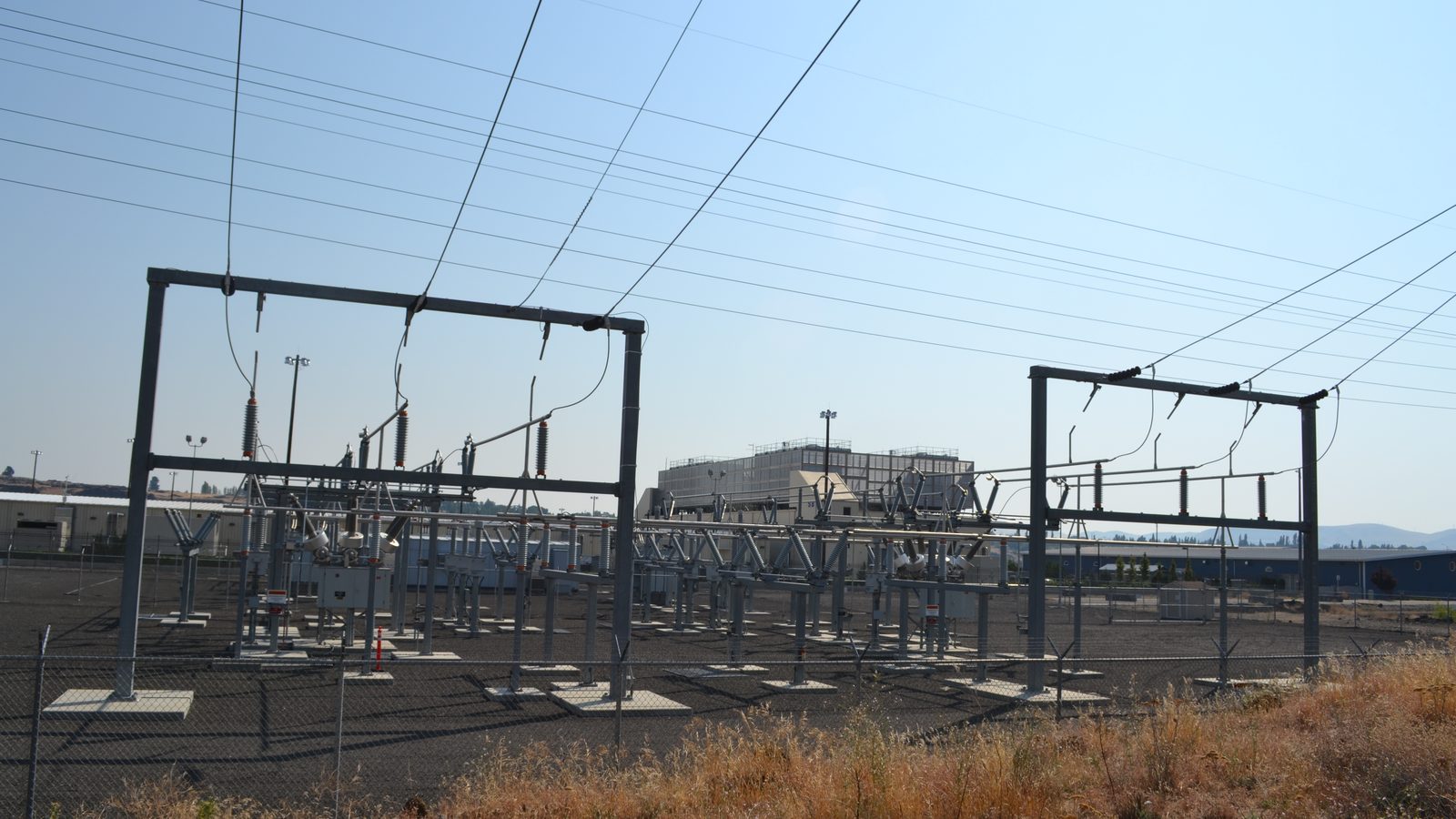
Cover: Google Data Center, The Dalles, by Visitor7 (CC BY-SA 3.0) via Wikimedia Commons.
Tags

TPW Editorial
Editorial Team
TechPastWeek's editorial team reports and edits every story we publish. We research each piece against primary and credible secondary sources, and a human editor reviews and signs off before it goes live.