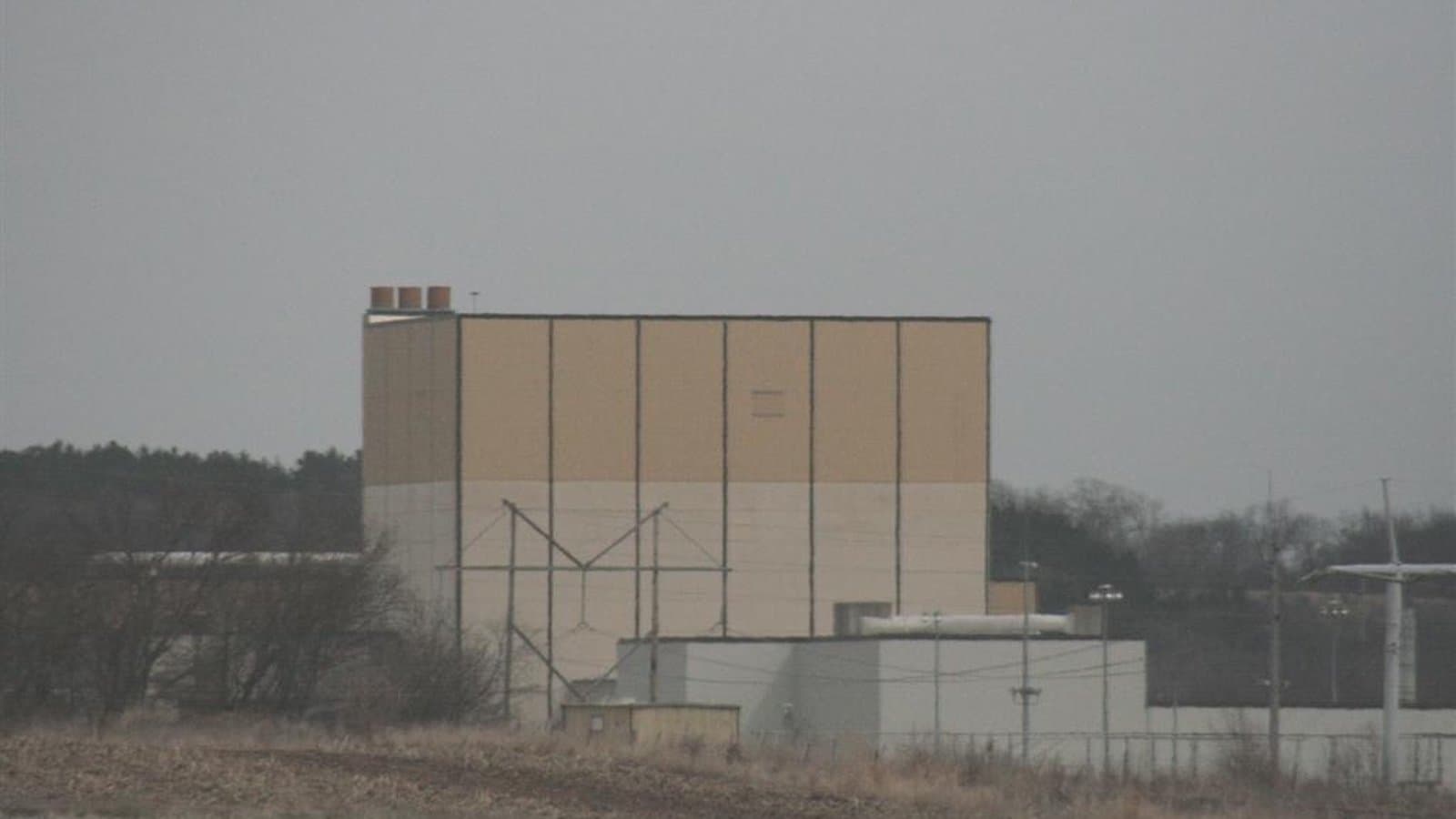
Mazama Energy Raises $135 Million to Push Superhot Geothermal Toward Power Markets
Mazama Energy raised $135 million, led by Centaurus and Doerr Capital, to scale superhot rock geothermal after a 331°C record and an 80% drilling gain.

On this page
Key takeaways
- Mazama Energy announced $135 million in new capital on September 17, 2026, an oversubscribed Series B led by Centaurus Capital and Doerr Capital, with ConocoPhillips and Shell Ventures joining.
- Mazama holds the record for the hottest engineered geothermal system, 629°F (331°C) at Newberry, Oregon, set in 2025.
- Mazama's second well, Project Athena, reached 10,350 feet in 15 drilling days, about 80% faster than the 2025 well, and is drilling toward 750°F (400°C).
- The funding supports Project Ceres, a U.S. Department of Energy-backed horizontal well program targeting 15 MWe per well and power generation in 2027.
- Clean Air Task Force modelling puts mature superhot rock at $20-$35 per MWh, while Mazama targets less than $50 per MWh and models $52-$59 per MWh.
Mazama Energy said on September 17 that it raised $135 million in new capital, an oversubscribed Series B plus grants that the geothermal developer will use to move its superhot rock technology from a record-setting well in central Oregon toward commercial electricity.
Related reading: Google and Constellation Add 890 MW of Nuclear Power Through Reactor Uprates · LG Energy Solution's JF2 AC Link Qualifies as an NVIDIA DSX Ready BESS.
The round was led by Centaurus Capital, the firm founded by John Arnold, and by Doerr Capital. ConocoPhillips and Shell Ventures joined as strategic investors, while Khosla Ventures and Gates Frontier returned. SiteGround Capital, H. Barton Asset Management, and the Jeffrey and Marieke Rothschild Foundation also took part. Mazama said part of the total is grant funding rather than equity, and ThinkGeoEnergy reported that the money will support commercial development of the Newberry project in Oregon.
A round led by Centaurus and Doerr
The composition of the round is as notable as its size. Two investors tied to the oil and gas industry, ConocoPhillips and Shell Ventures, put money into a company whose pitch is replacing fossil-fuel generation. Centaurus, founded by the former Enron trader John Arnold, and Doerr Capital, chaired by Kleiner Perkins chairman John Doerr, anchored the round. Doerr framed the bet around power demand: "The world needs vastly more electricity, and we need to produce it cleanly and affordably."
Arnold described superhot geothermal as offering firm, carbon-free power with a small footprint, and said Mazama had made "impressive progress." Vinod Khosla, whose firm incubated Mazama, argued that scaling to 400°C means ten times the heat from a fifth of the wells and a fraction of the water.
A 331°C record in the Cascade Range
Mazama's standing rests on a single measurement. In 2025, at its pilot site near Newberry Volcano, the company created an engineered geothermal system with a bottomhole temperature of 629°F (331°C), which it says is the hottest ever built. The U.S. Department of Energy's Geothermal Technologies Office notes that it is funding Mazama to apply the company's MUSE technology at Newberry and demonstrate that a commercially viable reservoir can be created in superhot conditions.
The 2025 campaign converted a legacy well into an injector and drilled a new deviated producer to 10,200 feet, placing it within six feet of its planned path. Circulation tests confirmed the two wells were connected and that heat could be recovered. Other developers have pursued hotter rock, but none has reported a higher measured temperature in an engineered system.
Drilling speed is the number to watch
Temperature proves the physics. Cost will decide the business, and cost tracks how fast and reliably a company can drill. On September 1, Mazama said its second well, Project Athena, reached 10,350 feet in 15 drilling days, the same depth the 2025 well reached in about 80% more days. Athena is continuing toward a total depth of roughly 15,500 feet, where the company expects rock above 750°F (400°C).
That is the difference between a demonstration and a repeatable process. Mazama says it expects its first commercial project at Newberry to cost $4,500 to $4,950 per kilowatt to build, with a pathway to $3,200 per kilowatt as the technology scales. The rate of learning, not the headline temperature, is what those numbers depend on.
What MUSE actually is
Mazama bundles its approach under the name MUSE, for Modular Unconventional Superhot Energy, and divides it into three parts: Mazama Drill, for horizontal wells and well construction that survives extreme heat; Thermal Lattice, a stimulation method that engineers a fracture network in hot, impermeable rock; and HeatHarvester, which models how a reservoir and its wells will perform over years so output can be contracted rather than estimated. The company says the platform is covered by 24 granted patents.
The claims attached to it are large. Mazama says superhot rock can deliver up to ten times the power per well of a conventional engineered system running near 390°F (200°C), while using 75% less water and drilling 80% fewer wells. The mechanism is the critical point of water, roughly 705°F (374°C), above which the fluid circulating through the rock becomes supercritical and carries far more energy per unit of flow. The company puts its modelled cost of energy at $52 to $59 per MWh and cites the DOE target of $45 per MWh.
Superhot, defined
The U.S. Department of Energy treats superhot rock as resources above 375°C. Clean Air Task Force, which runs a superhot rock initiative, argues for targets of at least 400°C. Either way, the resource is hotter than conventional enhanced geothermal systems, which typically run near 200°C. Independent modelling suggests superhot systems could produce five to ten times the energy of a typical commercial geothermal well.
Why superhot rock matters for the grid
Solar and wind are cheap but variable, and grids increasingly need power that is available on demand. Batteries can shift a few hours of energy, but not weeks. Geothermal draws on the Earth's heat and runs continuously, which is why it is classed as firm, dispatchable power. The catch has always been geography and cost: conventional plants need naturally hot, permeable rock close to the surface, a combination found in a handful of places.
Superhot rock is meant to break that constraint. Drill deep enough, and hot rock exists almost everywhere. Clean Air Task Force estimates that tapping just 1% of the U.S. resource could generate 4.3 terawatts of firm power, several times the country's total installed generating capacity, and that mature superhot plants could be competitive at $20 to $35 per MWh. The same group puts the global opportunity at roughly 63 terawatts from 1% of the resource.
What the $135 million pays for
The near-term target is Project Ceres, which Mazama describes as the first commercial-scale superhot rock horizontal wells. Ceres is supported by the Department of Energy and is designed to drill in the fourth quarter of 2026, targeting 15 MWe of capacity per well with power generation demonstrated in 2027. Some of the company's earlier materials described a 15 MW pilot; the current program frames 15 MWe as the output of a well pair that becomes the module for larger plants.
Beyond Ceres, Mazama has outlined a 200 MW development at Newberry, assembled from those modules, with drilling and construction across 2027 and 2028, first power targeted for 2029, and full output in 2030. The company says the site could host at least 5 gigawatts and is seeking independent certification of more than 10 GWe of resource potential. It is also evaluating other sites in the western United States and abroad.
None of that capacity exists yet. The company has not generated commercial electricity from superhot rock, and its 200 MW figure is a target, not a contract. The Department of Energy's GTO classifies Newberry as a pilot demonstration.
The cost claim, and the independent estimate
Mazama's cost language has shifted as the technology has developed. Its 2025 announcement targeted less than 5 cents per kWh, or under $50 per MWh. Its current website models $52 to $59 per MWh for a 500 MW project over 30 years, placing it inside the band it assigns to natural gas and well below new nuclear. Those are company projections based on its own engineering assumptions, and they have not been validated in a built, operating plant.
Independent analysis is more optimistic at maturity and more cautious about timing. Clean Air Task Force commissioned modelling that puts nth-of-a-kind superhot rock at $20 to $35 per MWh, contingent on engineering advances in deep drilling, reservoir creation, well construction, and downhole tools. That is a projection for mature, repeated builds, not for a first-of-a-kind project.
Current market signals point the other way. The International Energy Agency notes that next-generation geothermal developers have secured contract prices reaching about $130 per MWh in some cases, a premium that reflects scarcity of firm clean power and the risk of early projects. The gap between $130 today and $20 to $35 at maturity is the central commercial question for the sector.
The AI demand backdrop
The timing reflects electricity demand that is rising after two decades of flat U.S. consumption. Data centres are a large part of it, and the IEA ties the surge in next-generation geothermal financing directly to that growth. Technology companies want firm, carbon-free power that is not weather-dependent, and they are willing to sign long contracts to get it.
That demand is why superhot rock has moved from a research curiosity to a funded race. The IEA's State of Energy Innovation 2026 report featured the technology, and Clean Air Task Force noted that the report cited Mazama's 331°C record at Newberry, backed by $20 million in U.S. government funding, with plans to reach 400°C and 15 MW of output. When an incumbent energy agency profiles a technology in its flagship innovation assessment, the question shifts from whether it works to whether it can scale and be financed.
What to watch
Three milestones will test Mazama's story over the next year or two. The first is whether Project Ceres drills the first horizontal superhot wells on schedule in late 2026 and whether it can show sustained circulation over months rather than days. The second is whether the company converts its 10 GWe resource ambition into an independently verified figure, since certification by a third party carries more weight with utilities and lenders than a company estimate.
The third, and the one that ultimately matters, is the cost per megawatt-hour at a working plant. A record temperature and a faster well are necessary steps. Neither proves that superhot rock can be built at the scale and price that would make a meaningful dent in grid demand. Mazama's $135 million buys it the chance to find out.
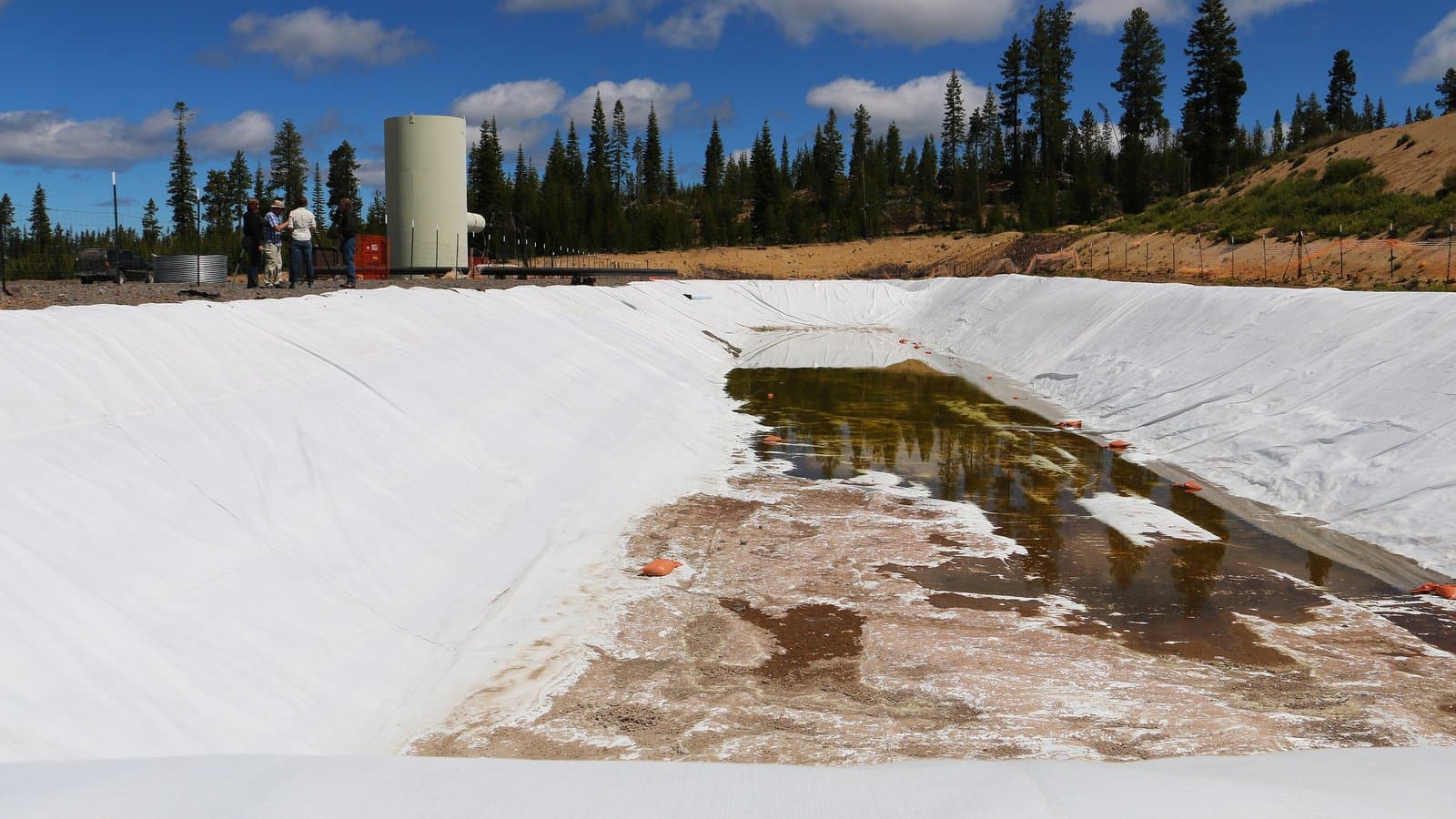
Cover: Exploration infrastructure at the Newberry geothermal site in Oregon. Photo by the Bureau of Land Management via Wikimedia Commons (public domain).
Tags
Frequently asked questions
- How much did Mazama Energy raise?
- Mazama Energy announced $135 million in new capital on September 17, 2026. The oversubscribed Series B was led by Centaurus Capital and Doerr Capital, with part of the total coming from grants.
- What is superhot rock geothermal?
- It is a form of engineered geothermal energy that drills several kilometres down to rock hotter than 374°C (about 705°F), the point at which water becomes supercritical and carries far more energy per unit of flow. The U.S. Department of Energy defines superhot as above 375°C, while Clean Air Task Force targets 400°C and above.
- What temperature record does Mazama hold?
- Mazama created the world's hottest engineered geothermal system at its Newberry, Oregon pilot in 2025, reaching a bottomhole temperature of 629°F (331°C).
- When will Mazama generate commercial power?
- The company aims to demonstrate power generation in 2027 under Project Ceres, then build a 200 MW development at Newberry with first power targeted for 2029 and full output in 2030.

TPW Editorial
Editorial Team
TechPastWeek's editorial team reports and edits every story we publish. We research each piece against primary and credible secondary sources, and a human editor reviews and signs off before it goes live.