Kakao Games Buys Control of Me2on for $72 Million to Push Overseas
Kakao Games will take a 39.56% stake in the social-casino and casual developer Me2on for about 98 billion won, its first major deal under new leadership.


On this page
Key takeaways
- Kakao Games' board approved the purchase of a 39.56% stake in Me2on for about 98 billion won, or roughly $70.5 million, on September 15, 2026.
- The deal makes Kakao Games Me2on's largest shareholder and gives it management control, with completion scheduled for November 16, 2026.
- Me2on is a South Korean social-casino and casual-game developer founded in 2010, with more than 80% of its revenue coming from overseas.
- Me2on reported 120.9 billion won in revenue and 12.6 billion won in operating profit in its most recent full year.
- It is Kakao Games' first large acquisition under its co-CEO structure, which puts CEO Lee Si-woo in charge of an overseas growth strategy.
Kakao Games' board approved the acquisition of a 39.56% stake in Me2on, a South Korean social-casino and casual-game developer, for approximately 98 billion won, or about $70.5 million, at a meeting on September 15. Once the transaction closes, Kakao Games will become Me2on's largest shareholder and secure management control of the company. Korean regulatory coverage and subsequent trade reporting put the completion date at November 16.
Related reading: Anthropic Told Investors It Reached $16.8 Billion in Quarterly Revenue Ahead of a November IPO · Q3 2026 Venture Funding Fell to $159B as Billion-Dollar Rounds Set a Record.
The deal is the first large merger or acquisition Kakao Games has undertaken since moving to a co-CEO structure led by Kim Tae-hwan and Lee Si-woo. It is also a statement about where the company thinks its growth will come from. Kakao Games is best known in its home market for publishing and for its stake in studios behind hits such as Odin: Valhalla Rising, but its domestic business has been under pressure. Buying a company that earns most of its money abroad is an attempt to change the mix.
What Kakao is buying
Me2on, listed on the KOSDAQ under the ticker 201490, was founded in 2010 and focuses on social-casino and casual games. It operates across Asia, North America and Europe, and more than 80% of its revenue comes from outside South Korea. In its most recent full year it reported revenue of 120.9 billion won and operating profit of 12.6 billion won, a margin that makes it one of the more profitable independent mobile developers in the region.
That overseas share is the core of the strategic case. At a transaction price of roughly 98 billion won for 39.56%, the deal values Me2on at about 248 billion won, or roughly $181 million. For that, Kakao Games is buying a portfolio it describes as spanning social casino, casual games and mind sports, plus a global publishing operation that has already established distribution in markets where Kakao Games is weak.
The company has said it plans to use Me2on's publishing network as a springboard to launch its own titles overseas, to develop jointly with studios in China, and to extend Me2on's intellectual property into other content. It also expects Me2on's financial structure to provide a steadier earnings base while it works toward what it calls a mid-to-long-term turnaround.
The turnaround context
The phrase matters, because Kakao Games is not buying a fast-growing asset at a premium. Me2on is a profitable but mature mobile developer in a genre, social casino, that is lucrative but increasingly expensive to market and sensitive to platform policy changes. Social casino games sit in a legal grey area in some jurisdictions and are subject to strict rules in others, which is a persistent risk for any company built around them.
Kakao Games, meanwhile, has had a difficult stretch. Its revenue fell sharply in the first quarter of 2026 compared with the prior year, and the company has been working through a broader restructuring of its portfolio and leadership. In that context, a deal that adds profit and overseas revenue without requiring a new hit is attractive. It is the kind of acquisition that improves the financial profile immediately rather than betting on a future launch.
The co-CEO structure is central to how the deal has been framed. Lee Si-woo has described it as the first step in deploying an M&A strategy built around proven business viability and profitability, and said the company will continue to pursue acquisitions for future growth. That language will be read by investors as a signal that more deals are coming, likely in the same mould: cash-generating businesses that can be integrated rather than speculative bets.
How to read the valuation: At roughly $181 million for the whole company, the transaction prices Me2on at about twice its most recent annual revenue and on the order of twenty times its operating profit. The revenue multiple is undemanding for a profitable publisher, which reflects the risks of the social-casino category, including platform dependence and regulatory uncertainty, rather than any dispute about the company's current earnings. Acquirers in mobile gaming have generally been paying for cash flow, not growth, since the post-2021 correction.
A wider consolidation wave
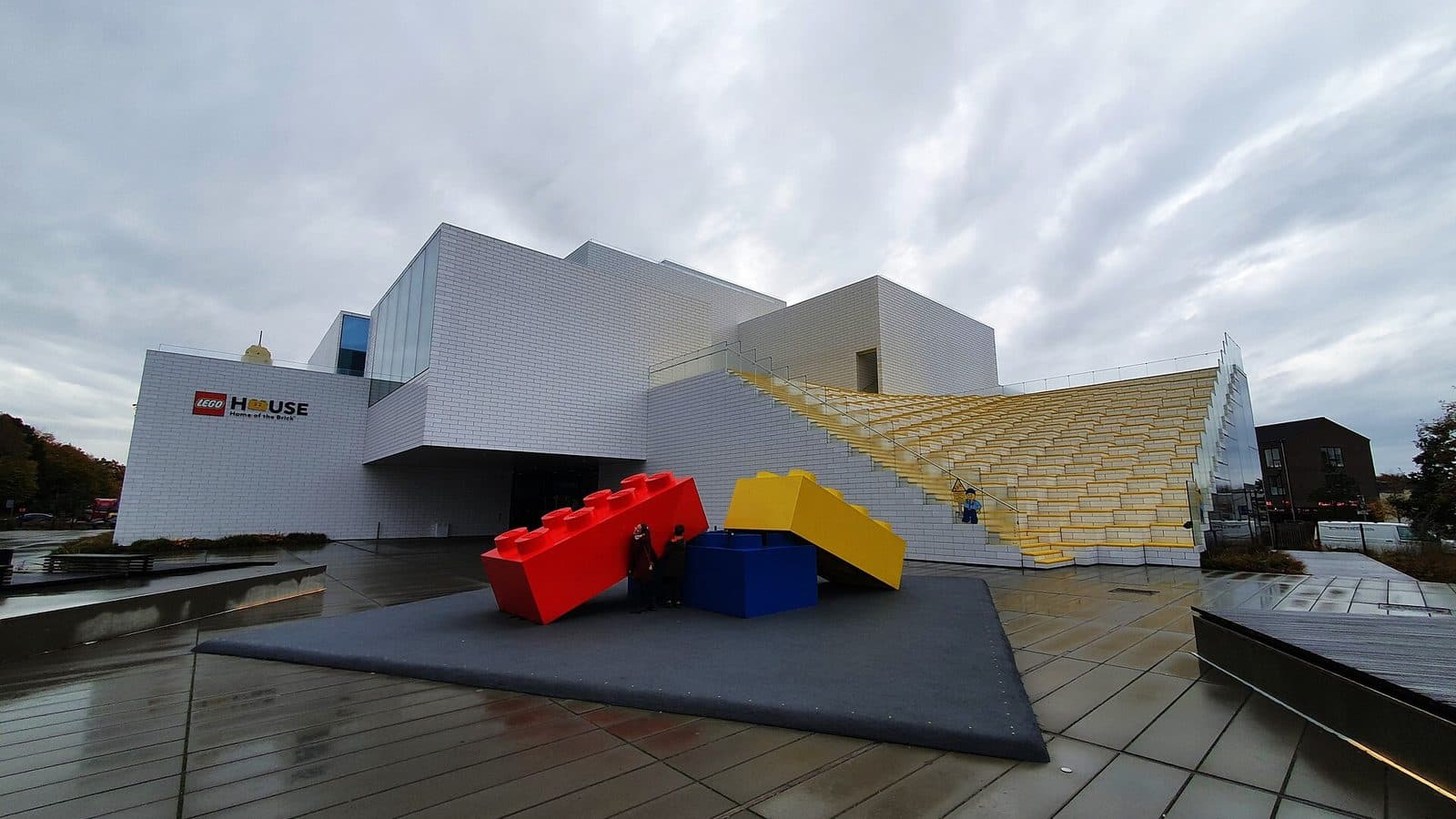
The Me2on deal is part of a broader wave of consolidation in gaming that has accelerated through 2026. In the same week, Bohemia Interactive, the Czech developer behind Arma and DayZ, acquired a minority stake in Poland's Enjoy Studio. Earlier in September, LEGO's digital games division bought the mobile studio Offroad Games. Supercell's acquisition of Metacore, the maker of Merge Mansion, is expected to complete by the end of September. At the larger end, Alibaba agreed in August to sell its game developer Lingxi Games to Trustar Capital for a reported $1.5 billion to $2 billion as it refocuses on AI and cloud.
The common thread is not growth for its own sake. It is portfolio management. Larger companies are shedding non-core studios to fund their priority businesses, while cash-rich publishers are buying profitable, established mobile developers at prices well below the peaks of the last decade. For sellers, the mobile market has become harder: user acquisition costs have risen, platform rules have tightened, and new hits are rarer and more expensive to sustain.
Korea is a particularly active market in this cycle. Its publishers built large mobile businesses during the smartphone boom, and many are now looking for overseas growth because the domestic market is saturated and heavily competitive. A company like Me2on, with proven distribution in Western markets, is exactly the kind of asset a Korean publisher with global ambitions wants, and the price reflects that it is available rather than exceptional.
The risks
The clearest risk is category concentration. Social casino is profitable but politically and legally sensitive. Regulatory changes in a major market, or a shift in how app stores treat the genre, could reduce Me2on's earnings quickly. Kakao Games is also buying a controlling stake in a public company, which brings disclosure obligations, minority-shareholder interests and the challenge of integrating two different corporate cultures.
There is an integration risk as well. Me2on's management is expected to stay in place, and Kakao Games has said it wants to preserve what makes the studio work. That is the right instinct, but it also limits how much the acquirer can change. The promised synergies, joint development and cross-publishing, depend on cooperation between teams that have never worked together and on Kakao Games' ability to add value in markets where it is the junior partner.
Finally, there is the question of price discipline. If this deal is the template for a string of acquisitions, Kakao Games will be judged on whether it can buy earnings at reasonable multiples without overpaying for the promise of a turnaround. The Me2on valuation looks undemanding, which is a point in the deal's favour. The next deal will set the pattern.
The Korean mobile market behind the deal
Korea is one of the world's most mature mobile gaming markets, and that maturity cuts both ways. The country has high smartphone penetration, fast networks and a culture that embraced mobile games early, which built large businesses for publishers such as Kakao Games, NCSoft, Netmarble and Krafton. It also means the domestic audience is close to saturated, and competition for attention is intense. Growth for a Korean publisher now depends heavily on exporting games and acquiring revenue from players outside the country.
That is the backdrop for this deal. Kakao Games derives most of its business from Korea and from a handful of large titles, which makes its earnings sensitive to the performance of those games. Me2on offers the opposite profile: a broad casual portfolio, diversified across regions, with a majority of revenue from overseas. Buying that profile is faster and less risky than trying to build it internally, particularly in Western markets where distribution and user acquisition are expensive and heavily contested.
The transaction also reflects a shift in how Korean publishers think about scale. During the boom years, the strategy was to develop blockbuster titles with global appeal. That approach produced hits, but it also produced expensive misses and long development cycles. The current preference is for acquiring studios and businesses that already generate cash, then using the parent company's resources to grow them. It is a more financial, less romantic way to run a games company, and it is increasingly common across the industry.
What to watch
Three things will indicate whether this works. The completion of the transaction on the expected November date, and any conditions attached to it. The first set of combined results, which will show whether Me2on's earnings are as stable as advertised inside a larger group. And the next acquisition Kakao Games pursues, which will reveal whether the strategy is disciplined or simply opportunistic.
For now, the deal is a rational, unglamorous transaction of the kind that increasingly defines the mobile games business. Kakao Games is buying profit and reach rather than a hit, and it is paying a price that reflects the risks. In a market that has learned to distrust growth stories, that restraint may be the most useful signal of all.
Cover: the Pangyo Techno Valley business district in Seongnam, South Korea, where Kakao Games is headquartered, by Imtotallykorean (CC BY-SA 4.0) via Wikimedia Commons, cropped 16:9.
Tags
Frequently asked questions
- How much is Kakao Games paying for Me2on?
- Kakao Games is paying approximately 98 billion Korean won, or roughly $70.5 million to $72 million depending on the exchange rate, for a 39.56% stake. The deal values Me2on at about $181 million based on the transaction price.
- When will the Me2on acquisition close?
- Kakao Games announced board approval on September 15, 2026. According to Korean regulatory filings and subsequent coverage, the transaction is scheduled to close on November 16, 2026, subject to the usual conditions.
- What does Me2on do?
- Me2on is a South Korean developer and publisher focused on social-casino and casual mobile games. It was founded in 2010, operates across Asia, North America and Europe, and earns more than 80% of its revenue outside South Korea.
- Who runs Kakao Games?
- Kakao Games operates under a co-CEO structure led by Kim Tae-hwan and Lee Si-woo. Lee has framed the Me2on deal as the first step in an acquisition strategy under the new management system, focused on business viability and profitability.

TPW Editorial
Editorial Team
TechPastWeek's editorial team reports and edits every story we publish. We research each piece against primary and credible secondary sources, and a human editor reviews and signs off before it goes live.