New Naruto Manga 'Shadow Rising' Puts Kishimoto Back on the Pen, With a NINKŪ Anime Crossover
At New York Comic Con, Naruto announced a new Kishimoto-drawn manga, Shadow Rising, alongside a four-episode anime crossover with the 1990s manga NINKŪ.

On this page
Key takeaways
- Masashi Kishimoto will write and draw a new Naruto manga, Naruto: Shadow Rising, announced at the 'NARUTO: What's Next?' panel at New York Comic Con on October 10, 2026.
- Shadow Rising is set after Naruto Shippuden and before Boruto; the panel said more details will come at Jump Festa 2027 in December.
- A second project, NARUTO×NINKŪ, is a limited anime crossover supervised by Kishimoto and NINKŪ creator Koji Kiriyama, described by Kotaku as four episodes.
- Both titles sit inside a wider 'Naruto Project Rasengan' initiative, alongside a live-action film still in production.
- Live-action Naruto director Destin Daniel Cretton sent a message to the panel saying the film team is 'hard at work' and will have more to share soon.
Masashi Kishimoto is going back to the series that made him. At a New York Comic Con panel on Saturday, October 10, 2026, the Naruto franchise announced a new manga, Naruto: Shadow Rising, written and drawn by Kishimoto himself, and a crossover anime with the 1990s manga NINKŪ that Kotaku reported will run four episodes. The two reveals anchored a wider slate the franchise is calling "Naruto Project Rasengan." Variety reported both the same day.
Related reading: Cyberpunk: Edgerunners 2 Reviews Praise the Craft and Split on Its Four Leads · It: Welcome to Derry Surprise-Releases a 30-Minute Halloween Special Set Centuries Before Pennywise.
The manga came last. Closing a panel billed as "NARUTO: What's Next?", a teaser trailer put Kishimoto's name against Shadow Rising, then told the room that more details would follow at Jump Festa 2027 in December. Kotaku singled out the trailer's most telling shot: Sasuke's daughter, Sarada, appears as a baby.
That one frame does most of the dating work fans will care about.
What the panel actually announced
Three items arrived in a single sitting.
- A new manga, Naruto: Shadow Rising, written and drawn by Masashi Kishimoto.
- A new anime, NARUTO×NINKŪ, a crossover with Koji Kiriyama's NINKŪ, supervised by both Kishimoto and Kiriyama.
- A message from Naruto live-action film director Destin Daniel Cretton.
Crunchyroll News carried the same set of announcements. IGN described the manga details as light, with only Kishimoto's involvement and the Shadow Rising title confirmed. The panel named a creator and a direction. It did not give a schedule.
Order carried meaning. The manga was held back until the end, after the anime reveal and Cretton's message, so the last thing the room saw was Kishimoto's name on a new Naruto title. The trailer also included a shot of Naruto and Sasuke trading blows, which Kotaku flagged because the franchise left the two characters on good terms when the original manga ended. What that fight means for the story is not explained, and the panel did not try to explain it.
Where 'Shadow Rising' sits in the timeline
Shadow Rising takes place after the end of Naruto Shippuden and before Boruto, in the stretch fans call the blank period, the years following the Fourth Great Ninja War. Kotaku worked out the placement from the trailer itself: Sarada is an infant in the new footage, and she is eleven when Boruto begins, which puts the new manga roughly a decade before the sequel.
That gap has not been a major setting for a Kishimoto-drawn Naruto story. The original manga ran in Weekly Shonen Jump from 1999 to 2014, and Boruto continued the next generation with Mikio Ikemoto drawing and Kishimoto supervising. A new mainline series from the original artist, set in the years between the two, is a rarer thing than another Boruto chapter.
The blank period is also the stretch fans have asked about most. It covers the aftermath of the Fourth Great Ninja War, the rebuilding of the Hidden Leaf Village, and the years in which the main cast grew from teenagers into the adults they are in Boruto. Naruto's own rise toward the Hokage role sits somewhere inside it. A manga can fill that in directly, which neither the sequel nor the earlier films did at any length.
Kishimoto writing and drawing a Naruto manga matters because he largely stopped doing both on the sequel. He wrote the original, and for Boruto he mostly supervised while Ikemoto handled the art. The distinction is technical but it is the whole reason the announcement landed the way it did.
Why the NINKŪ crossover fits
NINKŪ is Koji Kiriyama's manga, and Kishimoto has named it as a direct influence on his most famous work. Kotaku quoted him on the connection: "I created Naruto because I personally wanted to see the continuation of Ninkū. I think many of you have already noticed, but Naruto was immensely influenced by Ninkū. Without Ninkū, Naruto would not exist."
The new Naruto projects at a glance
Naruto: Shadow Rising is a manga written and drawn by Masashi Kishimoto, set between Naruto Shippuden and Boruto. NARUTO×NINKŪ is an anime crossover with Koji Kiriyama's NINKŪ, supervised by both creators. Both were announced at New York Comic Con on October 10, 2026, and both fall under "Naruto Project Rasengan." The only forward date given was Jump Festa 2027, in December.
Variety published the official synopsis for the anime: Team 7 members Naruto, Sasuke and Sakura are given a mission by Kakashi. Because Kakashi cannot participate himself, Naruto is appointed acting leader. On the way, the team finds itself lost in another world, where it meets a frog-faced boy named Fūsuke.
The pairing makes more sense once you know the history. NINKŪ is a well-known property in Japan but has never landed with Western audiences. Kotaku noted that the English dub of the original 1995 NINKŪ anime is treated as lost media, which is part of why the announcement trailer drew more confusion than recognition from the Western Naruto fandom. The panel answered that with Kishimoto's own explanation of the link between the two series rather than with a plot summary.
The episode count is the part to handle carefully. Kotaku described the anime as a four-part spin-off, and that is where the four-episode figure comes from. Neither Variety nor Crunchyroll attached a number to the run, so treat the length as reported rather than confirmed by the franchise. A four-episode run is a small commitment from the production side, which fits a crossover built on a property most Western viewers have not seen.
"I created Naruto because I personally wanted to see the continuation of Ninkū." — Masashi Kishimoto, on the crossover, as quoted by Kotaku
The live-action film checked in
The third thread on the panel was the live-action Naruto film. Director Destin Daniel Cretton, whose credits include Shang-Chi and the Legend of the Ten Rings, did not appear in person but sent a message that Variety ran in full. He tied the film to the search for its cast: "When we kicked off our worldwide search for Team 7 this summer, I talked about what an honor it is to bring Kishimoto-sensei's incredible world and characters to life." He closed by saying the team is "hard at work and will have more to share soon."
That casting search began in summer 2026. No actors, characters or plot details from the film have been announced, and Cretton's note did not add any. The film has no release date either. The message signals that the film is in production, and that the studio wanted the fan audience at the panel to know it.
What a new Kishimoto manga changes
Franchise announcements at conventions are cheap; a trailer and a title cost little, and this panel leaned on that. The part with real weight is the manga, because the creator's name is on the drawing as well as the writing. Fans have spent years comparing Boruto's art to the original run, often unfavorably, and the promise of Kishimoto's own linework in the blank decade answers a demand the sequel could not.
The release history makes the shape clearer. Naruto ended in 2014. Boruto picked up the next generation. Now, more than a decade after the original run closed, its author is returning to the characters he built and to a period that the main story skipped. The anime crossover, by contrast, is a smaller and more idiosyncratic bet, built on a manga that is famous in Japan and largely unknown in the West.
The scale is not small. Naruto remains one of the best-selling manga series ever, with more than 250 million copies in circulation worldwide, a long-standing figure from the publisher. A new Kishimoto Naruto title is a major release for the publisher.
The wider 'Project Rasengan' plan
The three projects were presented together as one initiative, under the banner "Naruto Project Rasengan." It covers the new manga, the crossover anime and the live-action film, and it treats the franchise as a single slate spread across different media. Large entertainment properties work this way now: one name across a convention panel, a casting search and a release calendar, with each part promoting the others.
Whether the parts hold up apart from the marketing is a different question. A project banner does not guarantee that any single piece will be good, and the panel offered no early footage from the film and only a teaser for the two animated and illustrated projects. Nothing shown at the panel demonstrates how the three will connect beyond the shared name.
What the panel left out
Details are thin in ways that matter for anyone planning to follow either project.
- No release date, window or volume count was given for Shadow Rising. The only forward-looking note was Jump Festa 2027.
- The four-episode anime length is reported by Kotaku, not confirmed in the franchise's own materials.
- No premiere date was announced for NARUTO×NINKŪ.
- Plot specifics beyond the trailer and the official synopsis remain undisclosed.
- The live-action film's cast and story are still unannounced.
The 250 million figure is a long-running publisher number rather than a fresh count, so it describes the franchise's standing more than any recent sales. Everything else announced at the panel is a title, a teaser or a trailer, with no date attached.
What to watch
The next fixed point is Jump Festa 2027, on December 19 and 20, where the franchise said it will share more about Shadow Rising. That is where a release window, a serialization plan or a first chapter would be expected to surface.
Until then, the useful signals are the anime's rollout and the film's casting. If NARUTO×NINKŪ gets a date and a confirmed episode count, that will settle how large the crossover really is. If Cretton's team names its Team 7, the live-action project moves from a message on a screen into something fans can argue about with actual names. For now, all three projects are known by their titles and their creators, and nothing else has been nailed down.
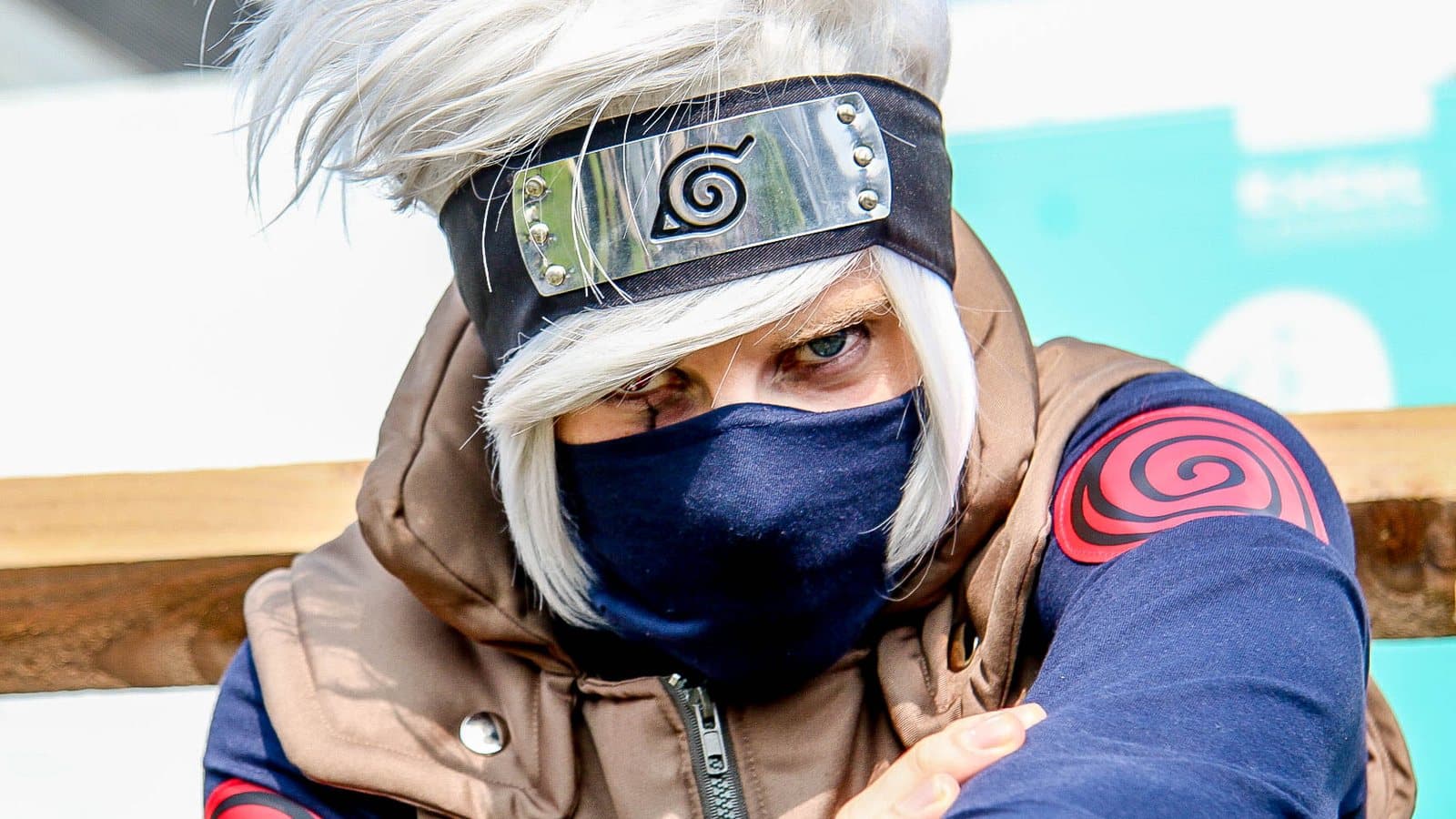
Cover image: "Kakashi Naruto Cosplay - MCM Comic Con London 2016" by Altan Dilan, CC BY 2.0, via Wikimedia Commons.
Tags
Frequently asked questions
- What is Naruto: Shadow Rising?
- It is a new Naruto manga written and drawn by original creator Masashi Kishimoto. It is set after the end of Naruto Shippuden and before Boruto, in the period fans call the blank decade, and was announced at New York Comic Con on October 10, 2026.
- Is Masashi Kishimoto writing and drawing the new Naruto manga himself?
- Yes. Both Variety and Kotaku reported that Kishimoto will write and draw Shadow Rising. He wrote the original Naruto manga but mainly supervised its sequel Boruto, which was drawn by Mikio Ikemoto.
- What is NARUTO×NINKŪ?
- It is a Naruto anime crossover with NINKŪ, the manga by Koji Kiriyama, supervised by both Kishimoto and Kiriyama. Variety published the official synopsis, in which Kakashi hands Team 7 a mission, Naruto leads as acting captain, and the trio meets a frog-faced boy named Fūsuke in another world.
- When does Naruto: Shadow Rising come out?
- No release date has been announced. The teaser trailer at New York Comic Con said only that more details will be shared at Jump Festa 2027, in December.

TPW Editorial
Editorial Team
TechPastWeek's editorial team reports and edits every story we publish. We research each piece against primary and credible secondary sources, and a human editor reviews and signs off before it goes live.