The Gilded Age Season 4 Opens at 100% on Rotten Tomatoes, the Series' Best Score
The Gilded Age Season 4 is at 100% on Rotten Tomatoes from 14 reviews, the series' best score, with Carrie Coon's Bertha at the center of the new season.

On this page
Key takeaways
- The Gilded Age Season 4 premiered on 1 November 2026 at 9 p.m. ET on HBO and HBO Max, and its eight episodes run weekly through 20 December 2026.
- Rotten Tomatoes listed Season 4 at 100% from 14 reviews on 3 November 2026, with an average rating of 8.20 out of 10.
- The series average on Rotten Tomatoes is 89% and Season 1 scored 79%; ScreenRant reported the Season 4 score as the series' best Tomatometer result.
- Carrie Coon's Bertha Russell is the critics' common ground: IndieWire called Season 4 'Team Bertha's Time to Shine' and Tom's Guide said Coon 'remains an absolute force as Bertha.'
- Fourteen reviews is a small sample and Rotten Tomatoes showed fewer than 50 audience ratings on 3 November, so the 100% can move as more reviews arrive.
The Gilded Age returned on 1 November 2026 with the best reviews of its run. By 3 November, Rotten Tomatoes had Season 4 at 100% from 14 critic reviews, with an average rating of 8.20 out of 10. The series average is 89%. Season 1 scored 79%. ScreenRant reported the score as the series’ best on premiere day, when it rested on seven reviews. The page now carries 14, and all of them are positive.
Related reading: Dexter: Resurrection Season 2 Opens at 86% on Rotten Tomatoes, Below Season 1 · 'VisionQuest' Review Roundup: Marvel's WandaVision Sequel Splits Critics.
HBO released the first of eight episodes at 9 p.m. ET on 1 November, on both HBO and HBO Max. The rest follow weekly on Sundays through 20 December. Episode 1, “Ring the Bells,” finds Bertha Russell in England for the birth of her daughter Gladys’s child, gives Peggy Scott a professional milestone, and has Agnes van Rhijn planning a prestigious dinner.
A fourth season drawing the show’s best notices is the story. The reasons sit in the reviews, and most of them concern confidence.
What a 100% score does and does not say
Rotten Tomatoes counts the share of reviews that are positive. A 100% score means all 14 critics who filed marked the season Fresh, not that all 14 called it a masterpiece. The average rating, 8.20 out of 10, is the better measure of enthusiasm, and it describes a season critics liked a great deal without treating it as flawless. A 6-out-of-10 notice that leans positive counts the same as a rave in the percentage, which is why the two numbers are worth reading together.
The difference matters at this sample size. One negative review among the 14 would put the score near 93%. At 40 reviews, the same single negative would leave it near 98%. A perfect score is a statement about consensus, and the consensus here is unanimous, but the sample is small. It is also early: the season runs to 20 December, and Rotten Tomatoes will keep adding reviews as episodes air.
The audience side is thinner still. Rotten Tomatoes showed fewer than 50 audience ratings on 3 November, which is not enough to compare with the critic score or to call a popular verdict. There is no audience verdict yet.
The critics agree on one thing: Bertha
Fourteen reviews found different things to admire, but most roads lead to Carrie Coon. IndieWire’s Ben Travers titled his review “Season 4 Is Team Bertha’s Time to Shine” and argued that Coon’s Bertha ascends to another plane. Tom’s Guide’s Kelly Woo, who scored the season 4 out of 5, wrote that Coon “remains an absolute force as Bertha.” Peter Travers of The Travers Take, at 3.5 out of 4, offers “deep bows to Carrie Coon.”
The character is the show’s engine because she treats social position as a campaign. Bertha married into a new railroad fortune and has spent the series trying to convert it into acceptance from people who inherited theirs. Season 4 puts her in England, where her daughter now holds a title. IndieWire’s framing puts her at the center of the season.
Coon’s advantage is tone. Bertha could be a villain in a lesser show, and the writing gives her enough self-awareness to keep her from becoming one. She is funny about her own calculation, and the humor makes the calculation watchable.
A period soap that stopped apologizing for being a soap
The other shift is in how the show presents itself. Decider’s Meghan O’Keefe called Season 4 “A Lavish Soap Opera That Embraces the Campy Alongside the Utterly Chic,” and named Kelley Curran, who plays Enid Winterton, as a scene-stealer. Curran has been upgraded to the main cast this season.
The Wall Street Journal’s John Anderson went further in the same direction: “It takes a gaggle of great actors to sell a show as objectively ridiculous as The Gilded Age.” He calls it a “sly soap opera.” The Seattle Times’ Moira MacDonald wrote that the show “has completely found its stride as a lavishly costumed and beautifully acted period soap.” Kathia Woods of Cup of Soul, who gave it 8 out of 10, called it “the most confident The Gilded Age has been.”
The tone of the notices has changed. Critics are no longer treating the show as a guilty pleasure to be defended. The show’s world of dinner tables, ballrooms, and reputations staked on a seating plan is absurd, and the reviews now treat the absurdity as the point. That is a real change from the early reception, when critics measured it against prestige drama.
Maybe it’s more playful than profound, more fizz than substance. But four seasons into a run I don’t want to see end, this wickedly well acted series (deep bows to Carrie Coon) is also totally irresistible.
It helps that the ensemble has deepened. A soap needs a large cast and the discipline to give each strand its own momentum, and four seasons in, the show has both. The risk is the opposite one: too many stories competing for eight episodes. Tom’s Guide’s 4 out of 5 is a strong review that still notes “a few storylines stumble,” which is a fair note on a season this crowded.
What Season 4 actually changes
The season picks up months after Season 3 and moves several pieces at once:
- Bertha is in England with Gladys, who is now a Duchess and expecting a child. Episode 1 deals with a difficult childbirth.
- George Russell (Morgan Spector) is estranged from Bertha and dealing with the aftermath of being shot, along with pressure on his business.
- Agnes van Rhijn (Christine Baranski) sees a chance to regain her social position.
- Marian Brook (Louisa Jacobson) sets out on a new path.
- Peggy Scott (Denée Benton) tries to win acceptance from her future in-laws.
The returning cast includes Cynthia Nixon as Ada Brook, Harry Richardson as Larry Russell, Blake Ritson as Oscar van Rhijn, Kelley Curran as Enid Winterton, Simon Jones, Jack Gilpin, Ben Ahlers, Michael Cerveris, and Audra McDonald. Julian Fellowes created the series and writes it with Sonja Warfield. The directors include Gareth Neame and Salli Richardson-Whitfield.
What has not changed is the premise. The show is set in 1880s New York and built on the friction between old money and new, with the Russell railroad fortune at the center. Season 4 widens the map to England without abandoning the American drawing rooms where the status fights happen. The season gives Bertha, Agnes, Marian and Peggy major arcs, which is part of why the reviews keep returning to the performances.
The time jump does useful work. It lets the show skip the months between seasons and start with consequences: a marriage, a birth, a wound, an estrangement. Soap operas often stall when they refuse to let time pass. This one moves forward.
The Downton shadow, and how the show stepped out of it
The Gilded Age arrived in 2022 as Julian Fellowes’s American follow-up to Downton Abbey. Season 1 scored 79% on Rotten Tomatoes, and it came with a cast large enough to need a diagram.
Four seasons later, the show has its own voice and its own set of problems. The American setting changes the material. The British class system is inherited, while the New York version is a market in which money can buy almost everything except the thing it is meant to buy. Fellowes and Warfield have leaned into that difference. Much of the show’s pleasure comes from watching people negotiate over what cannot be bought, and the negotiations are funnier when the participants believe they are being subtle.
The early seasons also had to introduce a very large cast. Four seasons in, the audience knows who these people are, so a scene between two of them arrives with history attached.
Why a lavish period drama is landing now
Three things are working at once.
The first is scheduling. Eight weekly episodes through 20 December give the show a fixed appointment in a season when attention is split. A weekly release lets a soap breathe: viewers have a week to argue about a dinner party, and critics have a reason to keep writing. A binge drop would have collapsed the conversation into a single weekend and put the whole season’s judgment in the first 48 hours.
The second is craft. The show looks expensive: the rooms, the clothes, the sheer number of people required to fill a ballroom. Decider’s headline calls it lavish, and the Seattle Times review calls it lavishly costumed. That kind of production is a large part of the appeal.
The third is escapism with a sharp edge. The stakes are reputations, marriages, and who gets invited where. Nobody is saving the world. That is the appeal of a show critics describe as delicious. It offers high emotion with low real-world stakes, and it lets the audience enjoy the scheming without being asked to admire it.
There is a platform story underneath, though a modest one. HBO is using a Sunday slot and a simultaneous HBO Max release, and the finale lands on 20 December. A 100% score is useful marketing for a fourth season. It is not evidence of an audience.
Caveats: what 14 reviews can and cannot carry
The limits are plain. Fourteen reviews is a small sample. The score can fall, and at this size it can fall fast. The “best score in series history” framing comes from ScreenRant’s premiere-day piece, which was based on seven reviews. The comparison still holds at 14, but it is early.
No Metacritic aggregate is included, and there is no meaningful audience score yet. The positive reviews are not unanimous in their enthusiasm: Tom’s Guide’s 4 out of 5 notes that “a few storylines stumble,” and Peter Travers calls the show “more fizz than substance” before concluding that he finds it irresistible. Those are the judgments of critics who like the show, and they are more useful than a single number.
What the critics saw matters too. Several reviews discuss the finale, which suggests the season was made available to press in full, though HBO’s screening arrangements are not something this article can confirm. If critics did see all eight episodes, the score reflects the whole season, not a pilot and a second hour.
The score as of 3 November
Rotten Tomatoes: 100% from 14 reviews, average rating 8.20 out of 10. Series average: 89%. Season 1: 79%. Audience score: fewer than 50 ratings. Season 4 runs eight episodes on HBO and HBO Max through 20 December 2026.
What to watch
The first number to track is the review count. If the score holds at 100% past 30 or 40 reviews, the consensus is sturdy. A negative notice now would cost several points; later, with a larger sample, it would cost less.
The second is the audience score, which will become meaningful only after several episodes have aired. A period soap can do well with viewers without matching its Tomatometer.
The third is the season itself. Episode 2 arrives on 8 November, and the finale on 20 December. The reviews describe a show that has figured out what it is.
By 20 December, all eight episodes will have aired and the sample will be larger.
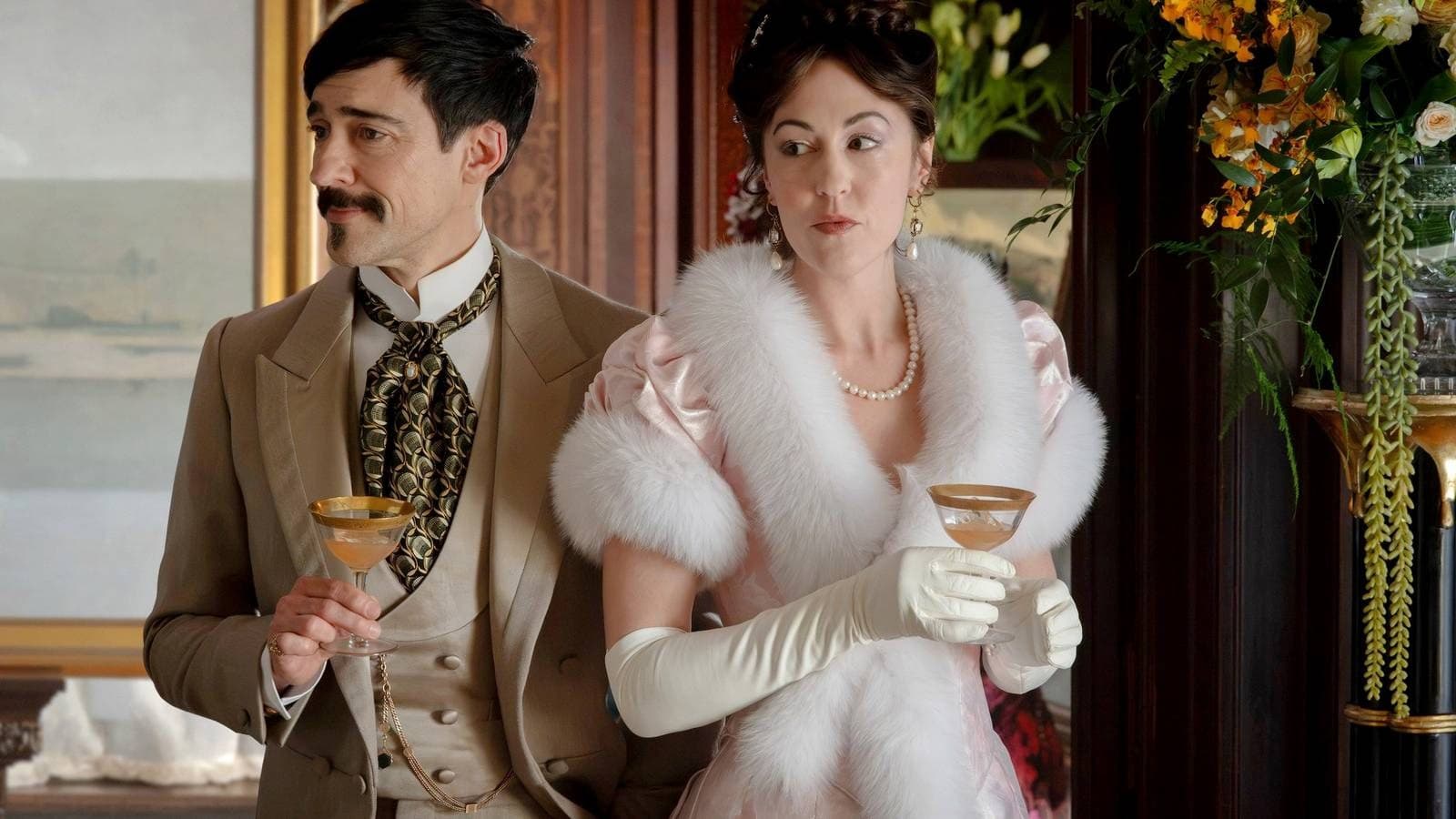
Cover image: Still from The Gilded Age Season 4, courtesy of HBO, via ScreenRant.
Tags
Frequently asked questions
- What is The Gilded Age Season 4's Rotten Tomatoes score?
- Rotten Tomatoes listed Season 4 at 100% from 14 critic reviews on 3 November 2026, with an average rating of 8.20 out of 10. That is a small early sample, and the score can change as more reviews are added.
- When does The Gilded Age Season 4 air, and how many episodes are there?
- Season 4 premiered on 1 November 2026 at 9 p.m. ET on HBO and HBO Max. It has eight episodes, released weekly on Sundays through 20 December 2026.
- Is Season 4 the best-reviewed season of The Gilded Age?
- Yes, according to ScreenRant, which reported the 100% as the series' best Tomatometer score. The series average is 89% and Season 1 scored 79%, though the sample is much smaller than a full season's review count.
- What changes in The Gilded Age Season 4?
- The season picks up months after Season 3. Bertha is in England with her pregnant daughter Gladys, now a Duchess, George is estranged from Bertha and recovering from being shot, and Agnes, Marian and Peggy each pursue a new position in New York society.

TPW Editorial
Editorial Team
TechPastWeek's editorial team reports and edits every story we publish. We research each piece against primary and credible secondary sources, and a human editor reviews and signs off before it goes live.