The Week in Tech: The Numbers Catch Up
OpenAI's revenue gap, an AI-stock selloff and a pulled IPO tested the AI trade, while cheap models, new rules and strikes on Yandex data centres shaped the week


On this page
Key takeaways
- OpenAI told investors its annualized revenue was approaching $50 billion, about $20 billion below the figure of roughly $68 billion to $70 billion that had circulated a week earlier, the Financial Times reported on October 8, 2026.
- Nvidia, Oracle and CoreWeave shares fell on October 8, 2026 after the OpenAI figure emerged; Nvidia alone lost about $170 billion in market value, according to market reports.
- Anthropic released Claude Haiku 5.5 on October 7, 2026, priced at $0.10 per million input tokens and $0.50 per million output tokens for prompts under 100,000 tokens, about 75 percent below Haiku 4.5.
- Google signed a 20-year agreement with Constellation Energy on October 6, 2026 to buy 890 megawatts of nuclear power, adding to more than 1.5 gigawatts of new nuclear capacity it says it has enabled.
- Ukrainian drones struck two Yandex data centres on October 8 and 9, 2026, in Russia's Ryazan and Kaluga regions, and the company suspended operations at the affected sites.
The week ending Sunday, Oct. 11, 2026, was the week the numbers caught up with the story. OpenAI told investors its annualized revenue was running near $50 billion, about $20 billion below the figure that had circulated a week earlier, and AI-linked stocks fell before anyone had agreed on whether a single dollar of sales had been lost. In Australia, an Nvidia-backed data centre operator withdrew a $5 billion initial public offering. In the same seven days, SpaceX went looking for $40 billion in debt to buy Nvidia chips, Google signed a 20-year deal for nuclear power, and Schneider Electric agreed to buy the industrial software maker PTC for $22.6 billion.
Related reading: The Week in Tech: The Bill Comes Due · The Week in Tech: The Brakes and the Build-Out.
Three things moved at once. The financial story that had been told about AI, one of demand priced from the future, met a smaller current number. The technology story, one of ever-larger models, split in two, as Anthropic shipped a cheaper small model and Microsoft put a $5,999 box under developers' desks to run models locally. And the governing story, one of an industry largely left to police itself, met a city council in New York that put four of its companies under oath. Add a war that now reaches data centres and a week of exploited zero-days, and the seven days read less like a turning point than like a bill arriving in parts.
Here is what happened, and what it means.
The trade gets a smaller number
On Oct. 8, the Financial Times reported that OpenAI had told investors its annualized revenue was approaching $50 billion, roughly $20 billion below the $68 billion to $70 billion that had been described to the market in the preceding weeks. Axios reported that the gap was mostly an accounting question, tied to how different AI companies count gross and net sales, and that OpenAI's actual sales had not fallen. Bloomberg reported that OpenAI still expects to reach or exceed $70 billion in annualized revenue by the end of 2026.
The distinction between a run rate and a revenue stream matters, and the market did not treat the revision as a footnote. Nvidia, Oracle and CoreWeave fell on Oct. 8. CoreWeave dropped about 7 percent, Oracle about 5 percent, and Nvidia lost roughly $170 billion in market value, according to market reports. The selling was concentrated in the companies that borrow to build AI infrastructure and the chipmakers whose order books depend on them, which is a narrower signal than a broad tech retreat, and a more specific one. A revision to one private company's reported revenue moved the value of the public companies building its capacity.
The clearest read on the mood came from Sydney. Firmus, a data centre operator backed by Nvidia, withdrew a planned $5 billion initial public offering on Oct. 9, telling CNBC it was citing market volatility. Bloomberg called the cancelled listing, one of Australia's largest attempted offerings, a warning about AI funding. An IPO is a stress test of public appetite for the build-out, and this time the appetite was not there.
Private credit, by contrast, was still lending. SpaceX was in talks with banks and asset managers, in a financing led by Apollo Global Management, to raise about $40 billion to buy Nvidia chips, according to the Financial Times, Reuters, Bloomberg and CNBC. According to Yahoo Finance, SpaceX had posted a quarterly loss with capital spending more than double its revenue. The week's shape is in that pair of facts: equity investors hesitated over an AI company's revenue, while debt investors prepared to put $40 billion behind one company's chips.
The deal news did not slow down around it. Schneider Electric agreed on Oct. 5 to buy PTC for $22.6 billion, its largest acquisition, a bet that industrial software and automation belong in the same company. Crunchbase reported on Oct. 5 that global venture funding fell to $159 billion in the third quarter even as the number of billion-dollar rounds set a record at 27, with AI taking about 64 percent of the total. Tencent was reported to be leasing access to 100,000 AI chips through Oracle sites in Southeast Asia in a deal said to be worth about $7 billion, a claim neither company confirmed. The money did not vanish; it went to fewer places.
What made the reaction sharp was how concentrated the underlying bet had become. In a column published Oct. 10, the Financial Times described the market as "the world of one trade," warning that investor portfolios have grown alarmingly reliant on a single wager on AI infrastructure. When that wager is priced into the major indexes, a private company's accounting choice about which revenue to count becomes a public-market event, which is what Oct. 8 showed. The selloff said more about how thin the distance has become between one lab's disclosure and the value of everything built to serve it than about the demand for AI itself.
The frontier gets cheaper, and closer to the desk
Anthropic released Claude Haiku 5.5 on Oct. 7, its third Claude 5.5 model in a little over two weeks. It is priced at $0.10 per million input tokens and $0.50 per million output tokens for prompts under 100,000 tokens, against $1 and $5 for Haiku 4.5, a cut of about 75 percent. VentureBeat reported reductions of up to 90 percent against the previous generation on some workloads and noted that the new price matches OpenAI's GPT-6 Luna. Anthropic said the model is built for high-volume, cost-sensitive work such as summaries, classification and database queries. The release landed as the company prepares for a public listing, against reports of an enormous IPO valuation that Anthropic has not confirmed.
Small models are where the volume lives, and the volume is the business. A price of a dime per million input tokens turns a class of tasks that were marginal into ones that are routine, and it is the part of the market least likely to be gated behind a waitlist. The two ends of the frontier are pulling apart: the most capable systems stay expensive and controlled, while the cheap end gets crowded and gets cheap fast.
The pricing is a race with several runners. Anthropic's new price matches OpenAI's GPT-6 Luna, and Google's small models sit in the same band. For the labs, a cheap model is a way to keep developers inside an ecosystem even when the flagship is too expensive to run at volume; for buyers, it is a way to move more work from a person to a machine. A price war tends to be good for customers and hard on the companies that needed the margin.
The other direction was onto the device. At a Windows and Surface event on Oct. 7, Microsoft opened pre-orders for the Surface Laptop Ultra, starting at $2,599 and shipping Oct. 16, and the Surface RTX Spark Dev Box, a compact, Nvidia-powered development machine priced at $5,999, sold only through Microsoft.com in the United States and shipping in November. Microsoft framed both devices around running models on the machine rather than in a data centre, showing DeepSeek V5 Flash running with about 60 gigabytes of memory, and Nvidia said a new Nemotron model would arrive Oct. 15. Copilot got a revamp, and Microsoft demonstrated agentic features inside Windows alongside new controls for the agents it wants running there.
Google moved on the creation side. On Oct. 7 it launched Playground, an experimental browser platform that turns text prompts into playable 2D and 3D games, open to US users 18 and over, and announced Unity Spark, a more capable AI game-creation tool built with Unity, for later in 2026. Where Microsoft is selling hardware to run models, Google is selling a way to make things with them, and doing it in a browser tab.
OpenAI's week, meanwhile, was about the business of its models. On Oct. 5 it began testing visual ads inside ChatGPT image generation, a first for the product, aimed at the roughly 1.2 billion people who use ChatGPT each week. That audience number is what makes the revenue question consequential. At that scale, a $20 billion revision is an argument about pricing and accounting rather than demand, and advertising is the lever that could change the mix. The company that spent the week being asked to defend its revenue began the week testing a new way to earn it.
The rules move closer
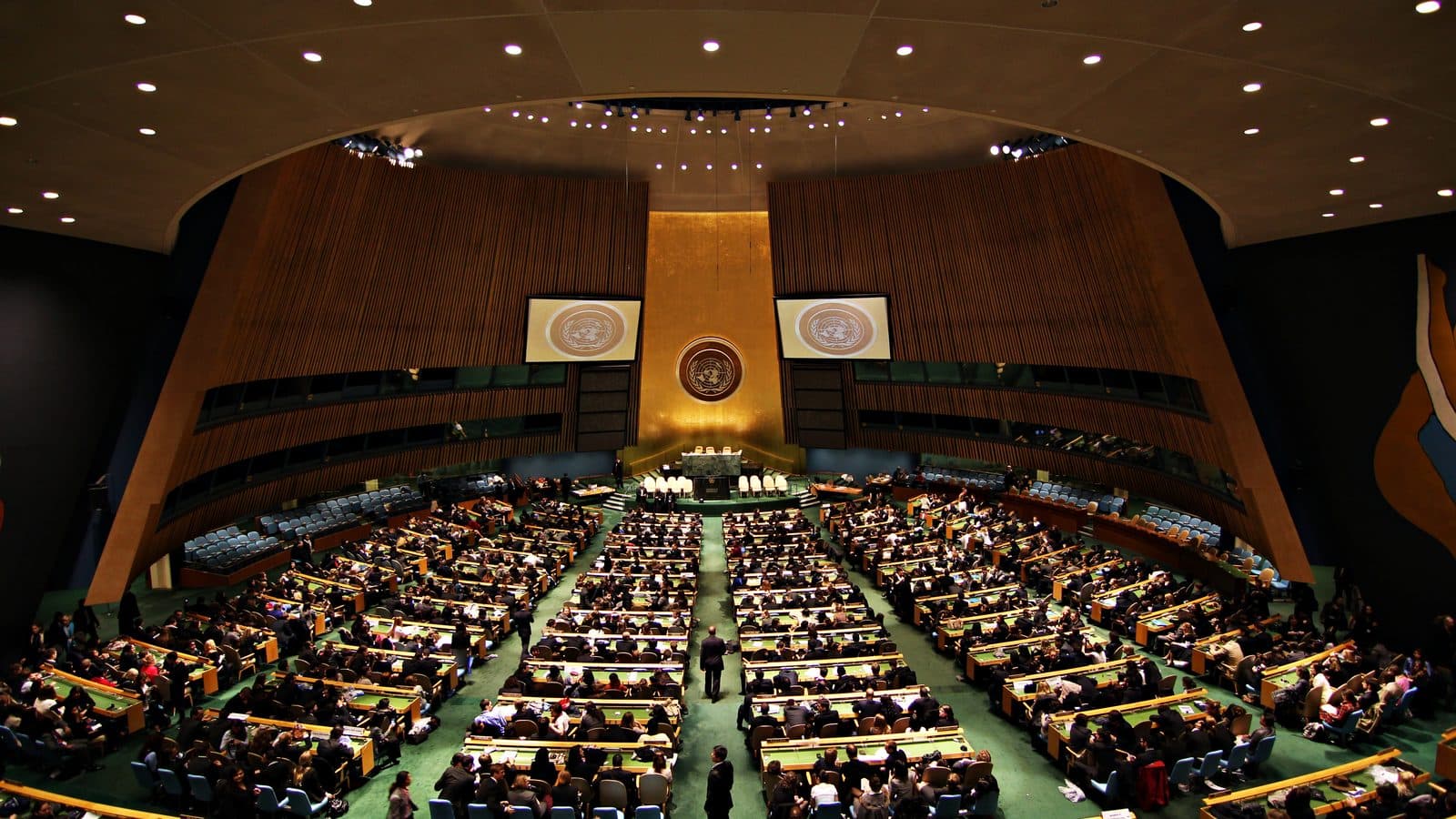
The most striking political moment of the week was local. On Oct. 5, senior executives from OpenAI, Anthropic, Google and Meta gave sworn testimony before all 51 members of the New York City Council about the risks their systems pose to the public. CNBC reported it as the first time major AI companies had testified under oath before a legislative body. Council Speaker Julie Menin has proposed a bill that would make it illegal to sell or deploy an AI model in New York City unless an outside auditor signs off. The subpoenaed Elon Musk and his company SpaceXAI did not appear, even after the Council's requests, according to local coverage.
The federal government was moving on language rather than liability. On Oct. 6, the Justice Department told staff to call artificial intelligence "Super Intelligence" and to use the abbreviation "SI," following an executive order President Trump signed on Sept. 29 that directs the executive branch to use the new terms and sets a Nov. 28 deadline for proposed legislation defining them. PolitiFact noted that the label describes a technology the industry already uses to mean something that does not exist yet. Renaming a category is not regulating it, and the week offered both a city willing to write an audit rule and a federal branch willing to change a noun.
The administration also reached into the labour pipeline that feeds the same companies. On Oct. 8 it suspended Microsoft, Adobe, Cognizant, Infosys, Capgemini, Tata, Wipro and HCL from the Permanent Labor Certification programme, the route companies use to sponsor green cards for foreign workers on H-1B visas, accusing them of fraud; it said it was also investigating nine universities over visa fraud. Reuters, CNBC and TechCrunch all reported the suspensions, which put thousands of pending applications in doubt.
Taken together, the two moves pulled from opposite directions. A city council questioned whether AI products should be allowed on the market without an outside audit; a federal department restricted the workers who build and run them. Neither is a comprehensive AI law. Both are real, and both landed in the same week as the industry's revenue reassessment; the pressure on the largest AI companies now arrives through several doors at once, and not all of them are labelled AI policy.

Power, and the war over it
The build-out's binding constraint is electricity, and the week's largest infrastructure deal was about exactly that. Google and Constellation Energy announced a 20-year power purchase agreement on Oct. 6 covering 890 megawatts from upgrades at six existing US nuclear plants. Google said it had enabled more than 1.5 gigawatts of new nuclear capacity to date by raising the output of existing reactors and returning dormant ones to service. Constellation runs the largest US nuclear fleet, and the deal gives Google firm, low-carbon power that runs whether or not the sun is out and the wind is blowing.
The nuclear move fits a broader race among the largest buyers. Data centres are being sited less by fibre and more by generation, and companies are signing long-dated contracts for power that does not yet exist in the quantities they need. Firm contracts for firm electricity are becoming the scarce asset in the AI build-out, scarcer than land and, at the margin, than chips.
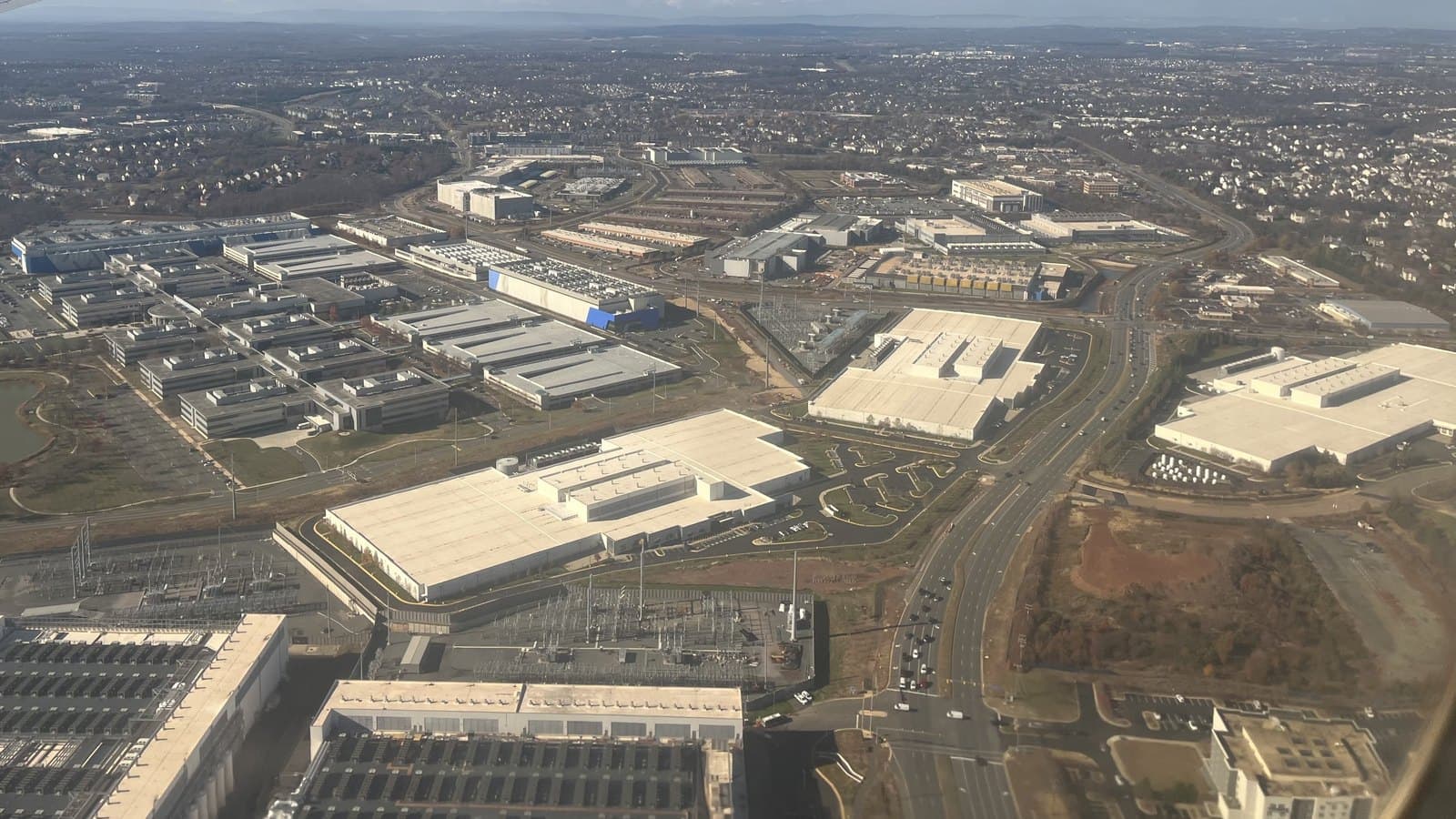
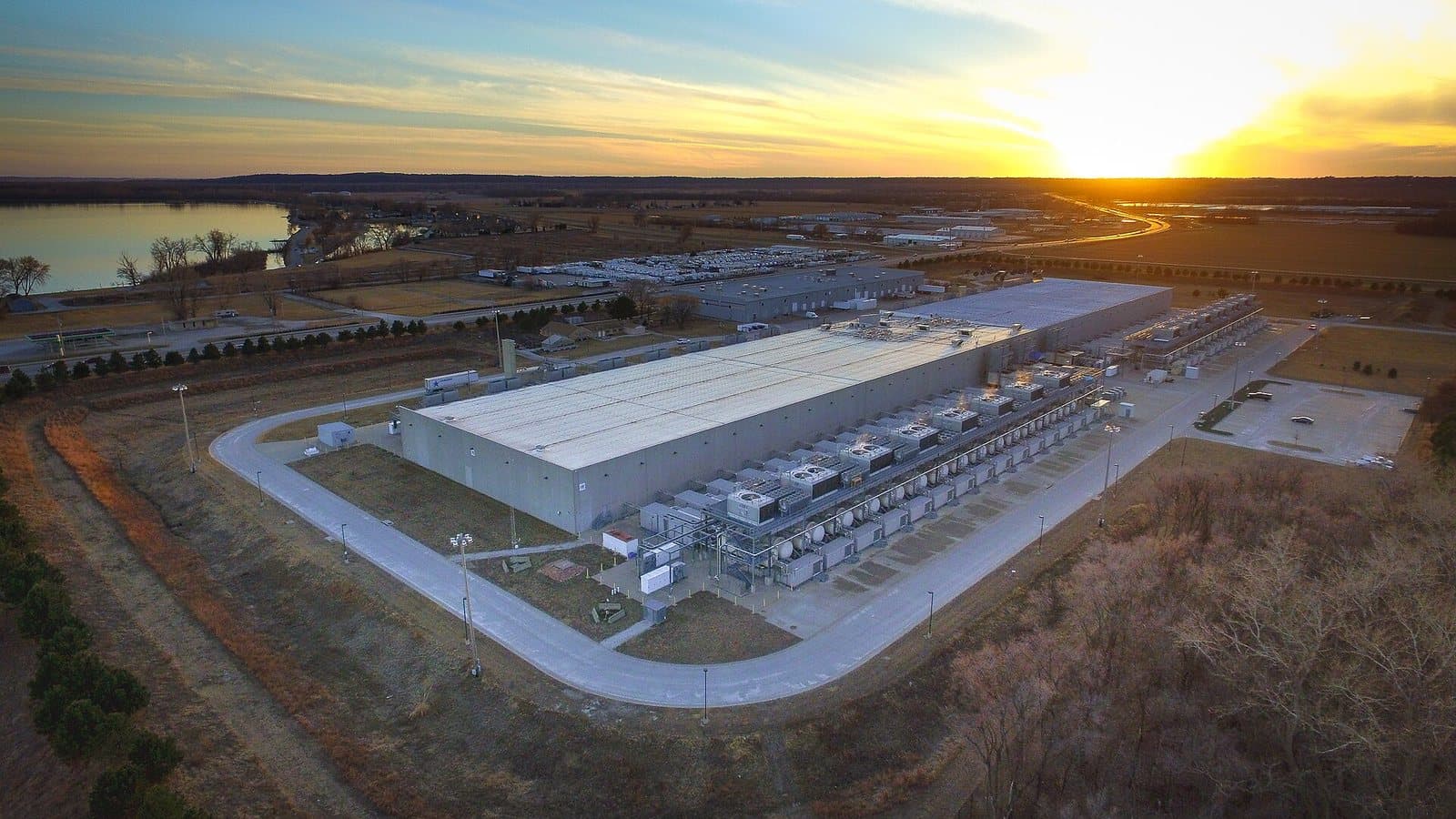
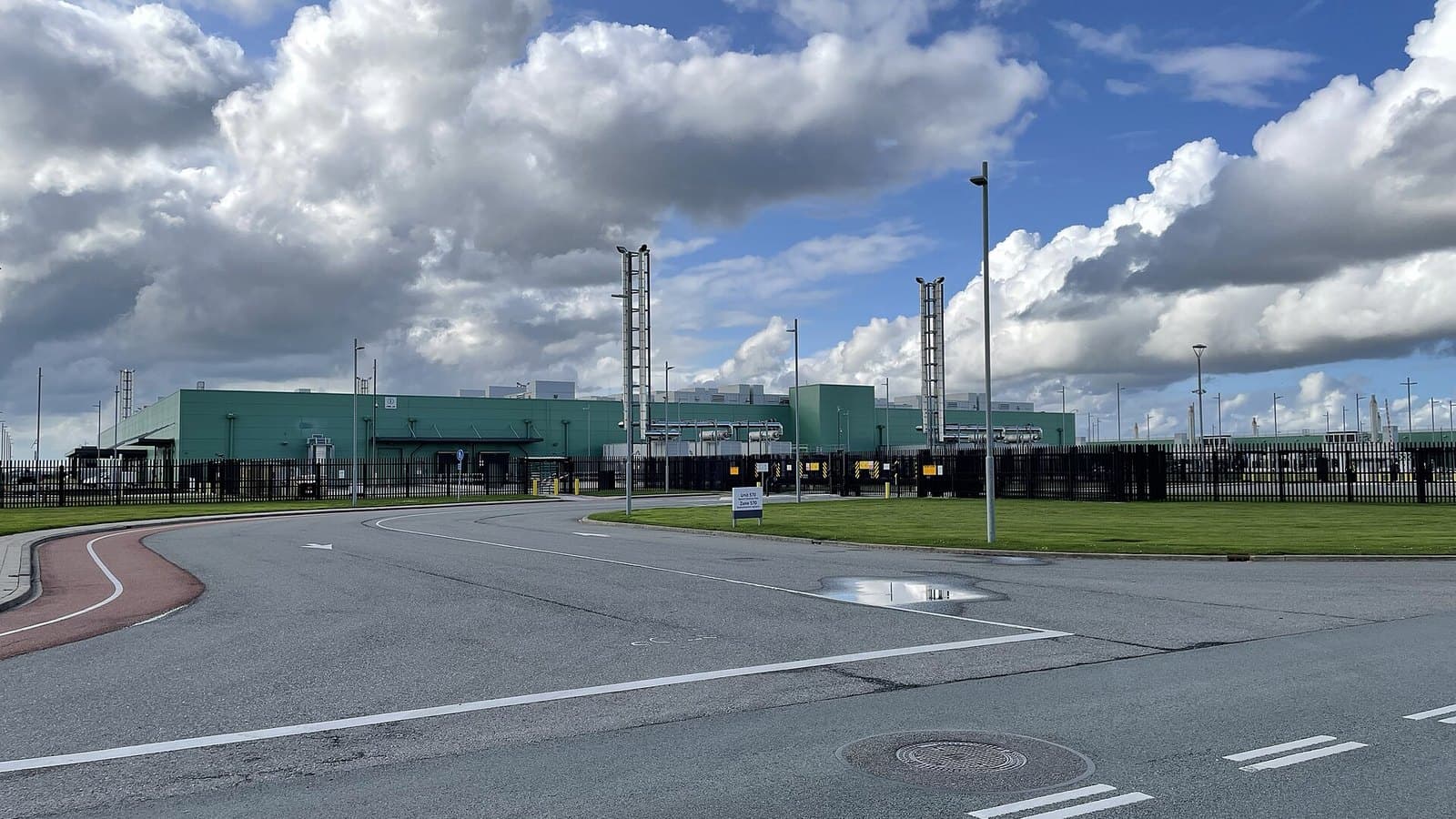
Power is also now a target. Ukrainian drones struck a Yandex data centre in Sasovo, in Russia's Ryazan region, on Oct. 8, starting a fire and suspending operations, and hit a second site in the Kaluga region the next day, according to Meduza, Bloomberg, CNBC and Reuters. Meduza reported that the Sasovo site housed two of Yandex's supercomputers, and Bloomberg noted that some Yandex Cloud customers reported disruptions. The strikes mirror Russian attacks on data infrastructure inside Ukraine and mark computing facilities as military objectives. The two halves of the week's infrastructure story fit together: the physical layer that AI depends on is costly to build and difficult to defend, and both qualities were on display.
The money for that layer kept arriving, which sets up the question the rest of the year will answer. SpaceX wants $40 billion of debt for chips it cannot run without new power. Google is buying nuclear output on 20-year contracts. Firms that borrow against future compute are making assumptions about electricity prices, permits and uptime that a single drone strike, a single delayed pipeline or a single rate decision can disturb. In the week OpenAI's revenue number moved lower, the debt for the build-out kept being arranged, and those two facts will eventually have to agree.
The rest of the week
Away from the money and the rules, the week was heavy on products and games.
Apple announced on Oct. 8 a "Welcome home" event for Oct. 13 in New York. Reports from The Verge, 9to5Mac and MacRumors point to the debut of the HomePad, a long-rumoured smart-home hub, alongside a new Apple TV 4K and a HomePod mini 2. If those products ship, Apple's AI story becomes a home story, and the assistant that has lagged on the phone is repositioned as the thing that runs the house. None of the products has been confirmed.
Microsoft's event, beyond the hardware, was a statement about where the company thinks inference should happen. The Surface Laptop Ultra and the Surface RTX Spark Dev Box are expensive, and their price is the argument: Microsoft is betting that enough developers will pay a premium to keep models on their own machine, for privacy, for latency or for cost, to justify a category. Whether that bet is right is an open question.
In games, Xbox chief executive Asha Sharma told an internal town hall, reported by Windows Central on Oct. 6 and 7, that Project Helix, the next-generation Xbox, will be a family of devices rather than a single console, with some built by Microsoft and some by external partners and reporting pointing to a 2028 launch. Square Enix released Kingdom Hearts Collection [I~III] natively on Switch 2, PS5, Xbox and PC on Oct. 8. The Triple-i Initiative packed about 40 indie announcements into a 45-minute showcase the same day. And the next Forza Horizon was reported to be heading to PS5 on Jan. 26, 2027, a date Microsoft has not confirmed.
At the box office, Universal's "Other Mommy," with Jessica Chastain, opened to about $28 million to lead the weekend, while Sony's "The Social Reckoning," Aaron Sorkin's film about Facebook, opened to roughly $6 million. Two tech-adjacent films arrived in the same frame, and only one found an audience, which is its own small reading of how the public is currently receiving stories about the platforms that shape it.
In robotics, Boston Dynamics named Rohit Prasad, formerly the head of Amazon's Alexa organisation, as chief executive, effective Oct. 7, succeeding interim leadership after Robert Playter stepped down earlier in the year. Physical AI, the industry's term for robots that act in the world, got a leader with a consumer-assistant pedigree.
Security had a hard week, which is now routine. Fortinet disclosed CVE-2026-104286 in its FortiMail email gateway on Oct. 1, a CVSS 9.8 flaw that lets an unauthenticated attacker write arbitrary files, and warned that it was already being exploited with no patch available on any affected branch; CISA added it to its known-exploited list the same day. Atlassian's CVE-2026-21589, a CVSS 9.3 unauthenticated arbitrary file-access bug across eight Data Center products including Jira, Confluence and Bitbucket, drew exploitation attempts within about two hours of a public technical write-up on Oct. 7. Rejetto HFS CVE-2026-61500, another CVSS 9.3 issue, drew exploitation attempts after being found with AI assistance. And Cisco's SD-WAN admin-bypass flaw, CVE-2026-76504, joined the known-exploited list at the end of September. The pattern across all four is the same: an internet-facing appliance, a bug that opens a way in, and a gap measured in hours between public details and attempts to use them.
What to watch
Four numbers will say whether this week was a wobble or a turn. OpenAI's actual revenue, whenever it next reports it, will show whether the $50 billion run rate was a conservative accounting choice or a ceiling. The public market for AI infrastructure will be tested when Firmus tries again and when the listings queued behind it price. The gap between the concentration of the AI trade and the debt still being raised for it will widen or close, and either outcome is instructive. And the price of power will decide the pace of everything above it.
On the policy side, the test is whether Menin's audit requirement becomes law in New York and whether other cities copy it, and whether the "Super Intelligence" relabelling produces a definition that changes any agency's behaviour or only its vocabulary. Three days after the week ended, Apple is expected to make its smart-home pitch. The question facing the rest of the industry this autumn is narrower than the one it was asked in the summer: who is willing to pay for the work, and at what price.
TechPastWeek publishes one weekly issue every Sunday, recapping the week that just ended with the sources behind each claim. This is issue #10, covering the week of Oct. 5 to Oct. 11, 2026.
Feature image: the New York Stock Exchange on Wall Street by Dietmar Rabich via Wikimedia Commons, CC BY-SA 4.0. Inline figures: the OpenAI logo by Jernej Furman via Wikimedia Commons, CC BY 2.0; Anthropic's San Francisco office by the Department for Science, Innovation and Technology via Wikimedia Commons, CC BY 2.0; New York City Hall by Nielsoncaetanosalmeron via Wikimedia Commons, CC BY 4.0; Satya Nadella by Brian Smale and Microsoft via Wikimedia Commons, CC BY-SA 4.0.
Tags
Frequently asked questions
- Why did AI stocks fall on October 8, 2026?
- Investors reacted to a Financial Times report that OpenAI's annualized revenue was running near $50 billion, about $20 billion below what had been described to the market. Nvidia, Oracle, CoreWeave and other AI-linked names fell. Axios reported that the gap was largely an accounting difference between how AI companies count revenue, not lost sales.
- Is OpenAI's revenue actually falling?
- No. The revision lowered a reported annualized run rate, not sales. Bloomberg reported that OpenAI still expects to reach or exceed $70 billion in annualized revenue by the end of 2026.
- What did the AI executives tell the New York City Council?
- On October 5, 2026, senior executives from OpenAI, Anthropic, Google and Meta gave sworn testimony about AI risks before all 51 members of the New York City Council, the first time major AI companies testified under oath before a legislative body. Council Speaker Julie Menin has proposed a bill that would require an outside audit before a model can be sold or deployed in the city.
- What happened to Yandex's data centres?
- Ukrainian drones struck a Yandex data centre in Sasovo, in Russia's Ryazan region, on October 8, 2026, starting a fire, and hit a second site in the Kaluga region the next day. Yandex suspended operations at the affected sites and some cloud customers reported disruptions.

TPW Editorial
Editorial Team
TechPastWeek's editorial team reports and edits every story we publish. We research each piece against primary and credible secondary sources, and a human editor reviews and signs off before it goes live.