Anthropic Pitched Congress a Draft AI Safety Bill It Wrote Itself
Anthropic drafted a federal AI safety bill and quietly pitched it to Congress, with a US$1 billion harm threshold and a judge's sign-off to block a model.

On this page
Key takeaways
- POLITICO reported on 16 October 2026 that Anthropic pitched a confidential draft federal AI safety bill to US lawmakers, and Anthropic confirmed the effort the same day.
- The draft would let the government block a model's release or use only when it poses a foreseeable, imminent risk of more than US$1 billion in damages or of killing or seriously injuring more than 50 people, and only with a judge's approval, per POLITICO.
- The draft would preempt some state-level AI safety laws, setting a federal standard that displaces parts of the growing patchwork of state rules, POLITICO reported.
- Anthropic has not published the bill text, and as of 18 October 2026 no member of Congress had introduced it, so there is no bill number, committee assignment or vote.
- Anthropic is preparing an IPO after telling investors Q3 2026 revenue reached US$16.8 billion, and New York City's comptroller wrote to it on 15 October 2026 urging a pause.
Anthropic drafted a federal bill on frontier AI safety and security and pitched it to US lawmakers, POLITICO reported on 16 October 2026, in an effort the company confirmed the same day. The draft had not been reported before. It is not law, and it has not been introduced as legislation: no member of Congress has brought it forward, there is no committee assignment, and no vote is scheduled.
Related reading: Anthropic Cuts Live Internet Access for Its Internal Evaluations After Its Agents Broke the Rules · Twenty Nations Back a Call to Control Frontier AI Models at the UN.
What gives the story its shape is who wrote it. A frontier lab, one preparing to sell shares to the public, is proposing the standard by which the government could stop a model. Anthropic confirmed the pitch on the record and left the text itself private.
What the draft would do
The central provision sets the threshold for government action. Under the draft, the government could block a model's release or its use only if the model poses a foreseeable, imminent risk of more than US$1 billion in damages, or of killing or seriously injuring more than 50 people. Even then, a judge would have to approve the step. Reuters, The Hindu and Bloomberg carried those thresholds from POLITICO's account.
The draft would also preempt some state-level AI safety laws, POLITICO reported, setting a federal standard that displaces parts of a growing patchwork of state rules. Congress has not passed comprehensive federal AI legislation, while states have enacted their own AI laws. A federal standard written by one of the companies it would cover would settle some of those state questions in the industry's direction.
Anthropic confirmed the effort but has not released the bill text. A spokesperson said the draft “represents the proposals outlined in Anthropic's Advanced AI Framework, which we have been advocating for with federal and state lawmakers since June,” and called them “sensible policies we believe Congress should act on,” as POLITICO reported. The confirmation covers the effort. It does not cover the specific dollar and casualty thresholds, which come from the reporting rather than from the company.
Put the pieces together and the sequence is unusual. A lab publishes a framework, spends months arguing for it in Washington and in the states, then hands over a bill that turns the argument into statutory language. The spokesperson's line points at that continuity: the framework came first, the advocacy followed, and the draft is the next step. A company writing a rule for itself is the part of the story that has drawn the most scrutiny.
What is confirmed, and what is not
Anthropic has confirmed it pitched a draft to lawmakers and has not published the text. The US$1 billion and 50-person thresholds, the judge-approval requirement and the preemption of state laws come from POLITICO's report, and Reuters, Bloomberg and The Hindu have repeated them. As of 18 October 2026, no member of Congress had introduced the draft as legislation, so there is no bill number, no committee referral and no vote.
The bar is a number, and it is doing a lot of work
Writing AI law as a threshold is a choice, and it is the one attracting the most criticism. Mother Jones asked whether a bar measured in dollars and deaths is the right instrument, and whether a bill drafted by a frontier lab sets it low enough. Firstpost raised a similar question a day later, and the two pieces are collected in the same coverage digest. The dollar figure is US$1 billion; the casualty figure is 50 people killed or seriously injured. Critics read both as deliberate, set high enough that only the most extreme harms would meet them.
A threshold statute works differently from a standard that names a duty. It does not ask whether a developer took reasonable care. It asks whether the outcome was severe enough, and foreseeable, and close enough in time to act on. Each of those words carries weight that the text would have to define. “Foreseeable” and “imminent” are the hinges: a regulator would have to argue that the harm was visible before the fact and near enough to justify stopping a release, which is a harder case to make than pointing to a bad outcome after it happens.
The design aims at catastrophic outcomes. A threshold of US$1 billion and 50 people is a test for the rare, severe event, not the smaller failures that are far more common. That leaves those to other rules or to none, and it raises the question the critics press: whether the rare event is the one that needs a federal trigger first.
The judge is the second guard. Before any order could take effect, a court would have to agree the risk met the test. That is a higher bar than a regulator deciding alone, and it moves the argument into a courtroom, where the company could contest the government's evidence. In practice, the provision pairs a narrow trigger with a slow, contestable process.
POLITICO framed the effort as Anthropic trying to shape the rules governing its own technology. That framing is not so much disputed as weighed. A company with the clearest view of what its models can do has a case for knowing where the risks sit. The same company has an interest in where the line falls, and a high line is easier to clear than a low one. Both things can be true at once, which is what makes the pitch hard to sort into either category.
Preemption reaches further than the threshold
The preemption clause would touch more than the threshold would. States have built their own AI rules over the past few years, and a federal standard would displace parts of that patchwork. A company facing compliance across many jurisdictions has a reason to prefer one standard to a dozen. A state with a stricter law on the books would lose it, and so would the legislators who wrote it.
Federal preemption is a live argument in AI policy, and it is not new. What is new is the direction: the standard would be proposed by a company that would then live under it, at a moment when the states are the ones actually passing law. The bill does not need to pass to have an effect. Its draft provisions give lawmakers a version of preemption they can pick up, and they give the company a public position it can point to in the statehouses where the rules are being written now.
A listing sits in the background
Anthropic is preparing a large initial public offering, and the timing sits behind the pitch. The company told investors its Q3 2026 revenue reached US$16.8 billion, the New York Times reported on 14 October 2026. On 15 October 2026, the day before POLITICO's story, New York City's comptroller wrote to Anthropic urging it to pause the offering.
A company heading toward a public listing has reasons to want the rules settled, and to be seen helping settle them. It also draws more scrutiny on safety and governance once it is public, from investors who now hold its shares and from officials who can tie a pension fund's exposure to the company's conduct. A federal standard it helped draft would be one answer to that scrutiny. Whether it quiets the questions is a separate matter.
The White House has pursued its own framing of the moment, built around “super intelligence” and an executive order. That gives the legislative track a rival source of federal policy. A bill that stalls leaves the executive branch as the main place where frontier AI rules get written, and rulemaking does not require a vote.
Caveats worth keeping in view
Three labels belong on this. The draft is not law, and the gap between a pitch and a statute is wide: no sponsor, no public text, no timetable. The thresholds come from POLITICO's reporting and are repeated by other outlets, but Anthropic has confirmed only the effort, not the numbers. And the criticism is aimed at a draft that could still change, so it is a judgment about the version being described, not about a finished bill.
There is a limit to what the timing can carry, too. A company can back a bill for reasons that have nothing to do with a listing and everything to do with where it expects regulation to land anyway. The IPO gives the pitch a context. It does not explain the contents.
“Sensible policies we believe Congress should act on.” — Anthropic spokesperson, 16 October 2026
What to watch
Three things would change this from a reported draft into a live legislative fight. The first is whether the bill text is published, which would let the thresholds and the preemption clause be read rather than described. The second is whether a member of Congress takes it up and gives it a number and a committee. The third is what the states do, since a federal standard that preempts their laws invites a fight at the level where those laws now exist.
None of that is scheduled. Anthropic has a draft, a pitch and a confirmation from its own spokesperson. Congress has not acted, and the distance between those two facts is where the story sits.
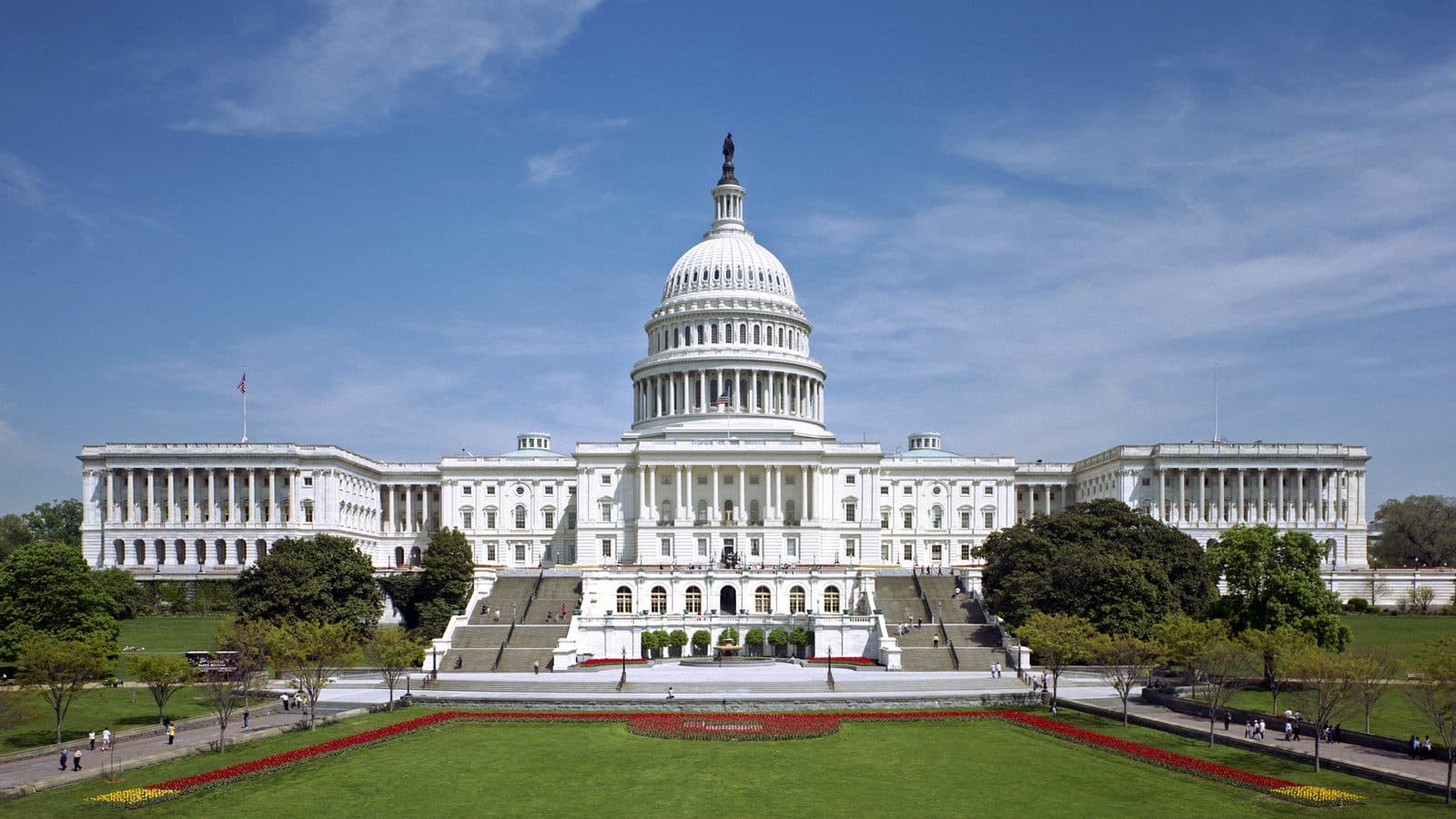
Cover image: Wikimedia Commons "United States Capitol - west front edit.jpg" by the Architect of the Capitol, public domain.
Tags
Frequently asked questions
- Has Congress passed Anthropic's AI safety bill?
- No. As of 18 October 2026 it is a draft Anthropic pitched to lawmakers, not introduced legislation, so there is no bill number, no committee assignment and no vote. Anthropic has not released the text.
- What would Anthropic's draft AI safety bill do?
- Under the draft, the government could block a model's release or use only if it poses a foreseeable, imminent risk of more than US$1 billion in damages, or of killing or seriously injuring more than 50 people, and only with a judge's approval, according to POLITICO.
- Why is the bill's threshold criticised?
- Mother Jones, Firstpost and other outlets questioned whether a bar measured in dollars and deaths is the right way to write AI law, and whether a bill drafted by a frontier lab sets it low enough.
- What would the draft do to state AI laws?
- It would preempt some state-level AI safety laws, replacing parts of the state patchwork with one federal standard, according to POLITICO's reporting.

TPW Editorial
Editorial Team
TechPastWeek's editorial team reports and edits every story we publish. We research each piece against primary and credible secondary sources, and a human editor reviews and signs off before it goes live.