AI Debt Fears Trigger a Global Tech Selloff
CoreWeave shares and bonds slid on 16 October 2026 as AI debt fears drove a global tech selloff, with the Nasdaq down 2.14% and its worst week since July.

On this page
Key takeaways
- The Nasdaq Composite fell 2.14% on Friday 16 October 2026 and ended the week down more than 4%, its worst weekly loss since July, while the S&P 500 fell about 1.09%.
- CoreWeave (CRWV) fell 14% on Friday and about 25% over the week; its 2031 bond briefly yielded past 16% and its credit default swaps passed 1,000 basis points for the first time, a record.
- CoreWeave reported $640 million of net interest expense in Q2 2026, more than double the $267 million a year earlier, against about $50 billion of debt.
- Gartner told Reuters on 15 October 2026 that about 80% of neoclouds could shut down by 2030 and more than $3.5 trillion of AI infrastructure spending could face impairment.
- South Korea's Kospi fell 14.5% over the week, its worst week since October 2008, with Samsung down about 20% and SK Hynix about 25%.
The Nasdaq Composite fell 2.14% on Friday, 16 October 2026, and closed the week down more than 4%, its worst week since July, as investors sold AI infrastructure stocks and the debt that funds them. The S&P 500 fell about 1.09% on the day; some outlets put the drop nearer 1.3%. At the centre of it was CoreWeave, the AI cloud provider whose shares and bonds were both repriced on the same day.
Related reading: The Week in Tech: The AI Boom Meets Its Limits · The Week in Tech: The Buildout Meets Its Balance Sheet.
CoreWeave fell 14% on Friday, according to CNN Business, after a 16% drop on Wednesday and a fall of roughly 15% earlier in the week. The stock was down about 25% over the five days, more than 60% below its post-IPO peak in March 2025, and on track to erase about a fifth of its value in October alone. Its 2031 dollar bond briefly yielded past 16% on Thursday, a level that usually signals distress, while the 2032 bond yielded around 14.8% and the cost of insuring the company's debt against default passed 1,000 basis points for the first time, a record, according to S&P Global Market Intelligence. CNBC and Reuters traced the move to one question: how the buildout of AI data centres is being paid for.
Two things moved together this week. The first was the cost of money. The 10-year Treasury yield sat above 5.09%, and the selloff accelerated after hotter-than-expected US inflation data pushed yields higher again, per Reuters. The second was the scale of the borrowing. JPMorgan, cited by CNBC, estimates that hyperscalers will spend $800 billion on AI infrastructure this year and more than $1 trillion a year by 2027. When the companies making those commitments already carry large debt loads, a rise in yields hits them twice: it raises the cost of servicing what they owe and lowers the present value of the returns they have promised.
What the selloff looked like
The damage reached past one company. Oracle fell nearly 7% on Wednesday, while Dell dropped 10% and Nebius 9% over the same stretch. On Friday, SanDisk fell 6.7%, AMD 5.9% and Micron 5.7%, and the VanEck Semiconductor ETF slipped 3.3%, ending the week down more than 10%. One closely watched semiconductor index fell 3.9% on Friday, its eighth consecutive daily decline, Yahoo Finance reported.
Asia took a harder hit. South Korea's Kospi ended the week 14.5% lower, its worst weekly performance since October 2008, with Samsung down about 20% and SK Hynix about 25%, as Reuters and Yahoo Finance recorded in their market wraps. Chipmakers in Seoul and Taipei sit further up the supply chain from the data centre financing that spooked US investors, but they sell into the same demand, and they were sold as if a slowdown at the top would reach them first.
Why CoreWeave carries the signal
CoreWeave is not the largest borrower in the AI buildout, but it is the most exposed to the question the market is asking. It rents out Nvidia chips for AI workloads, which makes it a direct read on demand for compute rather than a diversified technology company with other revenue to lean on. It reported net interest expense of $640 million in the second quarter of 2026, more than double the $267 million it paid a year earlier, and it carries about $50 billion in debt, according to CNBC and Reuters. Its next quarterly results are due in November 2026.
The company listed in March 2025 and rode the AI trade to a peak its shares now sit more than 60% below. It belongs to a group of providers known as neoclouds, companies built to rent out scarce AI accelerators rather than sell general-purpose cloud services. Many of them, CoreWeave included, have leaned on debt and long-term customer contracts to fund the data centres those chips sit inside. That structure holds together while rates are low and demand keeps rising. This week put pressure on both.
The reaction from the rest of the industry was instructive. Nvidia chief executive Jensen Huang told Bloomberg on Thursday that he was optimistic about CoreWeave, and the stock rallied on the remark before giving it back with Friday's 14% drop. Elon Musk replied “yikes” to the rise in CoreWeave's bond yield, in a post Reuters picked up. Gil Luria, an analyst at D.A. Davidson, told Bloomberg Intelligence that he could see the stock going to zero while also saying that demand for AI is real and growing. Both things can be true at once: a business can be selling something the world wants and still be priced for a future it may not reach.
The bond move is the part with the widest implications. A yield above 16% on a dollar bond is the kind of level that tells lenders a borrower is in distress, and credit default swaps past 1,000 basis points say the same thing in the insurance market. If a company funds data centres with debt, a jump in borrowing costs is not a sentiment problem. It changes the arithmetic of every project under construction and every project still on the drawing board.
What Gartner said about the neoclouds
The clearest statement of the bear case came from Gartner. Analyst Will Sommer, cited by Reuters on 15 October, said about 80% of neoclouds could shut down by 2030, and that more than $3.5 trillion of AI infrastructure spending could face impairment if providers keep up their current pace of investment. Gartner expects AI providers to spend nearly $1 trillion on infrastructure in 2026 and another $6 trillion between 2027 and 2030.
The week in one line
The Nasdaq fell 2.14% on Friday, 16 October 2026, for a weekly loss above 4%. CoreWeave fell 14% on the day and about 25% over the week, and its 2031 bond briefly yielded past 16%. Gartner warned that about 80% of neoclouds could close by 2030.
Sommer's numbers are a scenario, not a result, and Gartner is in the business of forecasting. Read as a warning about where the current spending pace leads, they line up with the market's own move. If providers are committing trillions to infrastructure against demand that has not yet been proven at that scale, the gap between the commitment and the return is the part to watch.
Not everyone framed the week as a valuation problem alone. Nic Puckrin, founder of Coin Bureau, told the New York Post that the worries were “turning into a full-blown crisis of confidence,” and said Anthropic's $2 trillion valuation is now being questioned. That is a reading of sentiment, not a priced-in number. Still, it describes what happens when lenders stop trusting the story.
None of this changes the demand side yet. Oracle, Microsoft, Amazon and Google have all said they intend to keep spending, and some AI accelerators remain in short supply. What changed this week is the price the market will pay for that spending when it is financed with debt. The same companies that were rewarded for announcing multibillion-dollar builds are now being asked to show that the builds earn more than they cost.
Caveats
The percentages in this story are intraday and closing snapshots, and they move. Each should be read as attributed to the outlet that reported it, which is why several figures here carry a range. Gartner's 80% figure and its $3.5 trillion impairment estimate are a forecast and a scenario, not observed outcomes. The CoreWeave debt and interest figures come from company filings and market data, and the view that the stock could go to zero belongs to one analyst, not to the market as a whole.
The most important caveat is about scale. What happened this week is a sharp repricing and a confidence shock, concentrated in the companies that borrow most heavily against AI demand. It is not confirmation that the AI buildout has failed, and it is not a general burst of an AI bubble. On the measures the industry publishes, demand for chips and cloud capacity kept growing. The question the market raised is narrower and harder: whether the financing structure underneath that growth can survive a higher cost of capital.
Not a bubble call
This was a repricing of debt-funded AI infrastructure and a drop in confidence, not a confirmed collapse. Gartner's figures are a forecast, and the debt metrics are a snapshot of a volatile week.
What to watch
Three things will tell you whether this was a correction or the start of something larger. CoreWeave's November results will show whether its interest costs are still climbing and whether it can keep finding lenders at a workable rate. The 10-year Treasury yield will decide how much of the pain is about AI and how much is about the broader cost of money. And the hyperscalers' capital spending plans will show whether the companies with the strongest balance sheets treat one bad week as a signal or as noise.
What to watch next
CoreWeave's Q3 2026 results are expected in November 2026. Watch the 2031 bond yield, the credit default swap spread, and whether any hyperscaler trims its capital spending guidance for 2027.
The spending plans that follow will say more than any single week's price move. For now, the bond market has raised the price of the bet that AI demand will pay for itself.
“The market is waking up to the fact that AI demand and a profitable business model are two very different things.” — Axel Rudolph, chief technical analyst at IG Group, 16 October 2026
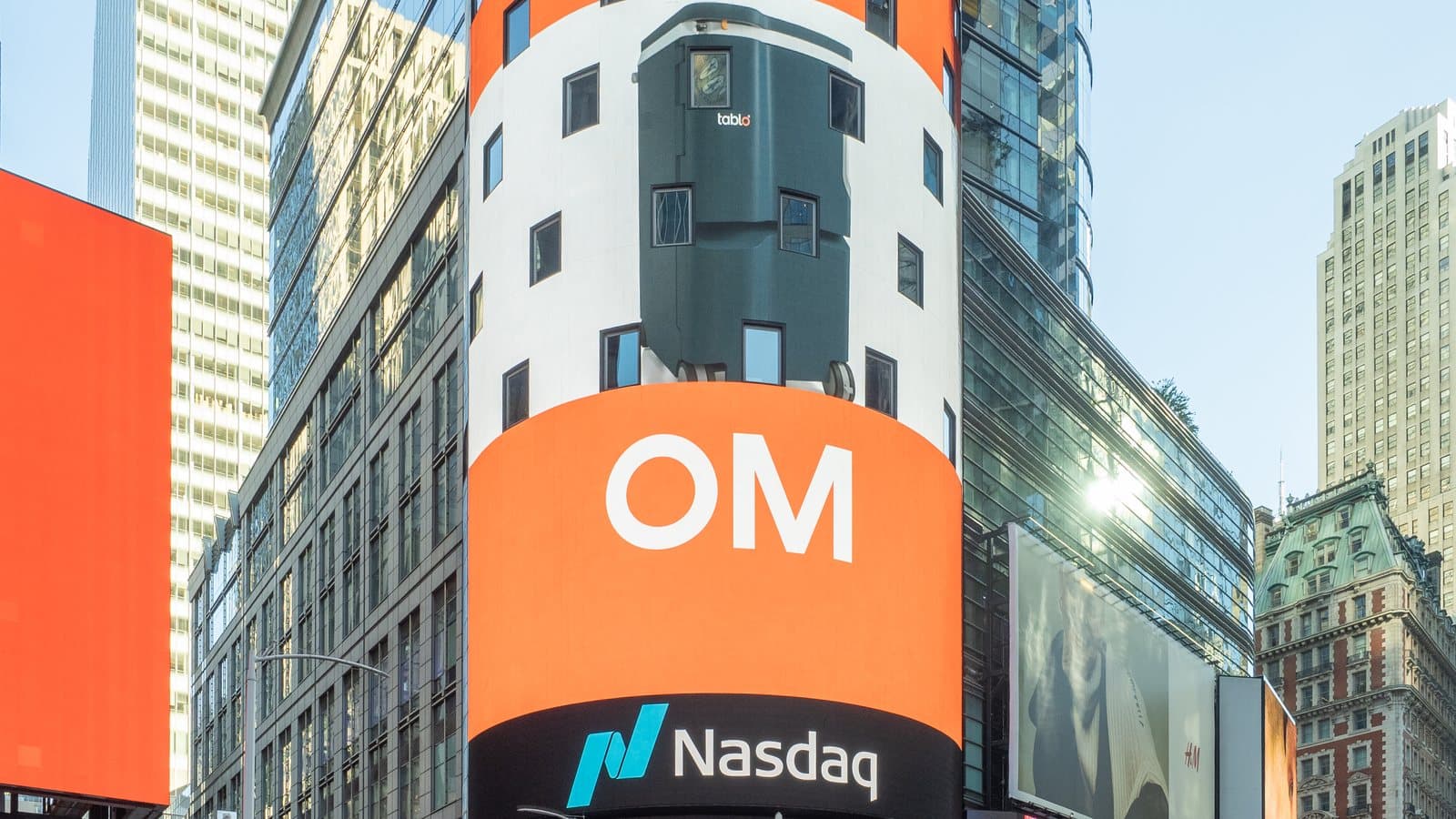
Cover image: Nasdaq MarketSite, Times Square, New York, by ajay_suresh, Wikimedia Commons, CC BY 2.0.
Tags
Frequently asked questions
- Why did CoreWeave shares and bonds fall in October 2026?
- Investors sold CoreWeave and other AI infrastructure names over fears that the debt funding the AI buildout has become too expensive. CoreWeave fell 14% on Friday 16 October 2026 and about 25% over the week, while its 2031 bond briefly yielded past 16% and its credit default swaps passed 1,000 basis points, a record.
- Did the AI bubble burst?
- No. The 16 October 2026 selloff was a sharp repricing of debt-financed AI infrastructure and a fall in confidence, not a confirmed collapse. Demand for chips and cloud capacity kept growing on the measures the industry publishes; the market cut the price it will pay for that growth while borrowing costs are high.
- How much debt does CoreWeave have?
- CoreWeave carried about $50 billion in debt as of October 2026, according to company filings and market data reported by CNBC and Reuters. Its net interest expense reached $640 million in Q2 2026, more than double the $267 million it paid in the same quarter a year earlier.
- What is a neocloud?
- A neocloud is a smaller cloud provider built to rent out AI accelerators, mainly Nvidia chips, rather than sell general-purpose cloud services. Gartner analyst Will Sommer said about 80% of them could shut down by 2030 if AI providers keep up their current pace of infrastructure spending.

TPW Editorial
Editorial Team
TechPastWeek's editorial team reports and edits every story we publish. We research each piece against primary and credible secondary sources, and a human editor reviews and signs off before it goes live.