The Week in Tech: The Buildout Meets Its Balance Sheet
Four hyperscalers reported negative or falling free cash flow, Samsung and SK hynix booked records, Anthropic filed to go public and Binance lost billions

On this page
Key takeaways
- Meta, Alphabet and Amazon all reported negative free cash flow for the third quarter of 2026 in the same week, while Microsoft's fell 27% to $18.63 billion, as AI capital spending outran operating cash.
- Samsung reported KRW 107.4 trillion of operating profit and SK hynix KRW 83.33 trillion, both records, putting most of the buildout's profit with the memory suppliers.
- Anthropic's S-1 showed $16.3 billion of first-half revenue against an $80.7 billion net loss, mostly a noncash convertible-bond charge, while OpenAI was reported near a $30 billion round at a $1.25 trillion pre-money valuation.
- Binance suspended withdrawals as up to $5.6 billion left its wallets, a Group-IB campaign exposed more than 70,000 edge-device credentials, and Sony's ISP arm disclosed 2.59 million exposed records.
- Apple priced its first touchscreen MacBook Pro from $2,899 and the OLED iPad mini at $699, while FromSoftware moved The Duskbloods to 2027 and Bungie put Destiny 2's unvaulting at 2028 at the earliest.
The number that framed the week was not a valuation. It was $42.4 billion, Amazon's trailing twelve-month free cash flow, negative. A year earlier the same measure was +$14.8 billion. Amazon's quarterly gross capital spending had more than doubled to $77.3 billion, and the company still expects to spend about $220 billion in cash on property and equipment in 2026. Its cloud business grew 39%, its operating income rose 61%, and its cash generation went the other way. Amazon's results
Related reading: The Week in Tech: The Silicon Turns Inward · The Week in Tech: The Bill Comes Due.
Amazon was not an outlier. Meta's free cash flow was -$2.12 billion for the quarter, against +$10.63 billion a year earlier. Alphabet's was -$9.07 billion. Microsoft's stayed positive at $18.63 billion but fell 27%. Four of the largest buyers of AI infrastructure reported in five days, and all four showed the same shape: revenue growing, operating profit growing, cash left over shrinking.
On the other side of those transactions, the suppliers had a very different week. Samsung reported KRW 107.4 trillion of operating profit, the first quarter above KRW 100 trillion for any technology company. SK hynix reported KRW 104.62 trillion of revenue and an 80% operating margin. Anthropic filed to go public with $16.3 billion of first-half revenue, and OpenAI was reported to be closing a $30 billion round at a $1.25 trillion pre-money valuation. Binance paused withdrawals as up to $5.6 billion left its wallets. Apple put a touchscreen on the Mac and raised the price of the iPad mini.
Those stories do not share a cause. They share a boundary. The AI buildout has spent the past two years as a plan, a promise or a PowerPoint slide about gigawatts. This week it became a set of line items: capital expenditure, debt, depreciation, component cost, delayed releases and, in one case, a missing balance. What follows is the week's ledger.
Four cash-flow statements, one direction
Meta reported on Oct. 21. Revenue was $64.60 billion, up 26%, and operating income rose. Capital spending was $34.91 billion for the quarter, and the company guided full-year 2026 capex to $135-145 billion. Free cash flow came in at -$2.12 billion after a $9.89 billion legal charge tied to the $18.59 billion teen-mental-health settlement with 52 state attorneys general. The charge is noncash in the quarter. The capex is not. Meta's stock fell almost 7% the next day, and its five-year credit default swaps reached a record. The claim that this was Meta's first negative free-cash-flow quarter since its 2012 IPO comes from an external calculation, not the company. CNBC's report
Alphabet reported on Oct. 28. Revenue was $127.58 billion, up 25%, and operating income $40.58 billion, up 30%. Google Cloud brought in $30.71 billion, more than double a year earlier, with $11.12 billion of operating income. Capital spending was $51.36 billion. Free cash flow was -$9.07 billion, against roughly -$2.70 billion expected. Net income of $26.17 billion carried an $8.66 billion loss on equity securities. Long-term debt reached $125.1 billion, up 479% from a year earlier, and the company still expects $195-205 billion of 2026 capex. The shares fell about 13% on Oct. 29, the worst day since the 2004 IPO, wiping out roughly $500 billion of market value. Alphabet's filing
Amazon reported the next day. Net sales were $201.9 billion, up 12%. Operating income was $28.08 billion, up 61%, a 13.9% margin. AWS grew 39% to $45.98 billion with $17.77 billion of operating income, its fastest growth in nearly five years. Capital spending was $77.26 billion in the quarter, more than double the $35.10 billion a year earlier, and trailing free cash flow was -$42.36 billion. Long-term debt rose to $173.13 billion from $65.65 billion at the end of 2025. The fourth-quarter revenue guide was $240-247 billion, and the company held its 2026 cash capex plan at about $220 billion. The stock fell 7.3% after hours and closed 1.41% lower on Oct. 30, recovering most of the premarket loss. Amazon's release
Microsoft, which reported on Oct. 28, is the exception that tests the pattern. Revenue was $92.28 billion, up 19%, net income $36.63 billion, and Azure grew 48% to $33.17 billion. Capital spending including finance leases was $45.2 billion. Free cash flow of $18.63 billion was down 27%, and the company guided calendar-2027 capex to $170 billion. Microsoft still funds the buildout from operating cash. It is also the company offering 60,000 staff a voluntary exit. Microsoft's results
Read together, the four statements say something narrower than "AI is unprofitable". Every one of these companies earned an operating profit, and three of them increased it at double-digit rates. What changed is the distance between operating profit and cash. Capex is deducted when it is spent; depreciation arrives later. A company can look healthy on the income statement for several quarters while its cash flow turns negative, and that is roughly where the largest four are now. The question is not whether the spending is real. It is whether the revenue attached to it arrives before the depreciation does.
The comparison has limits. Amazon's free cash flow is a trailing-twelve-month measure and is not GAAP. Microsoft includes finance leases in its capex figure. Meta's quarter carries a legal charge that will not repeat. None of the four publishes a clean return on AI capital, and all four describe demand in adjectives rather than contracted revenue. The $578 billion AWS backlog is a company figure, not an audited order book.
The figures in this issue are company-reported unless stated otherwise. Free cash flow is a non-GAAP measure and is calculated differently by each company. Quarterly results are unaudited at this stage.
The margin sits upstream
Samsung's quarter, reported Oct. 29, was the loudest number of the week. Revenue was KRW 195.3 trillion, up 14% from the previous quarter and 126.88% from a year earlier. Operating profit was KRW 107.4 trillion, up 783.11%. Device Solutions, the chip division, produced KRW 147.1 trillion of revenue and KRW 106.5 trillion of profit, about 99% of the group total. Memory alone brought in KRW 140.7 trillion, up 427%, a figure flattered by a weak base a year ago. The device experience division, which sells phones and consumer electronics, lost KRW 0.8 trillion for a second consecutive quarter. Samsung's release
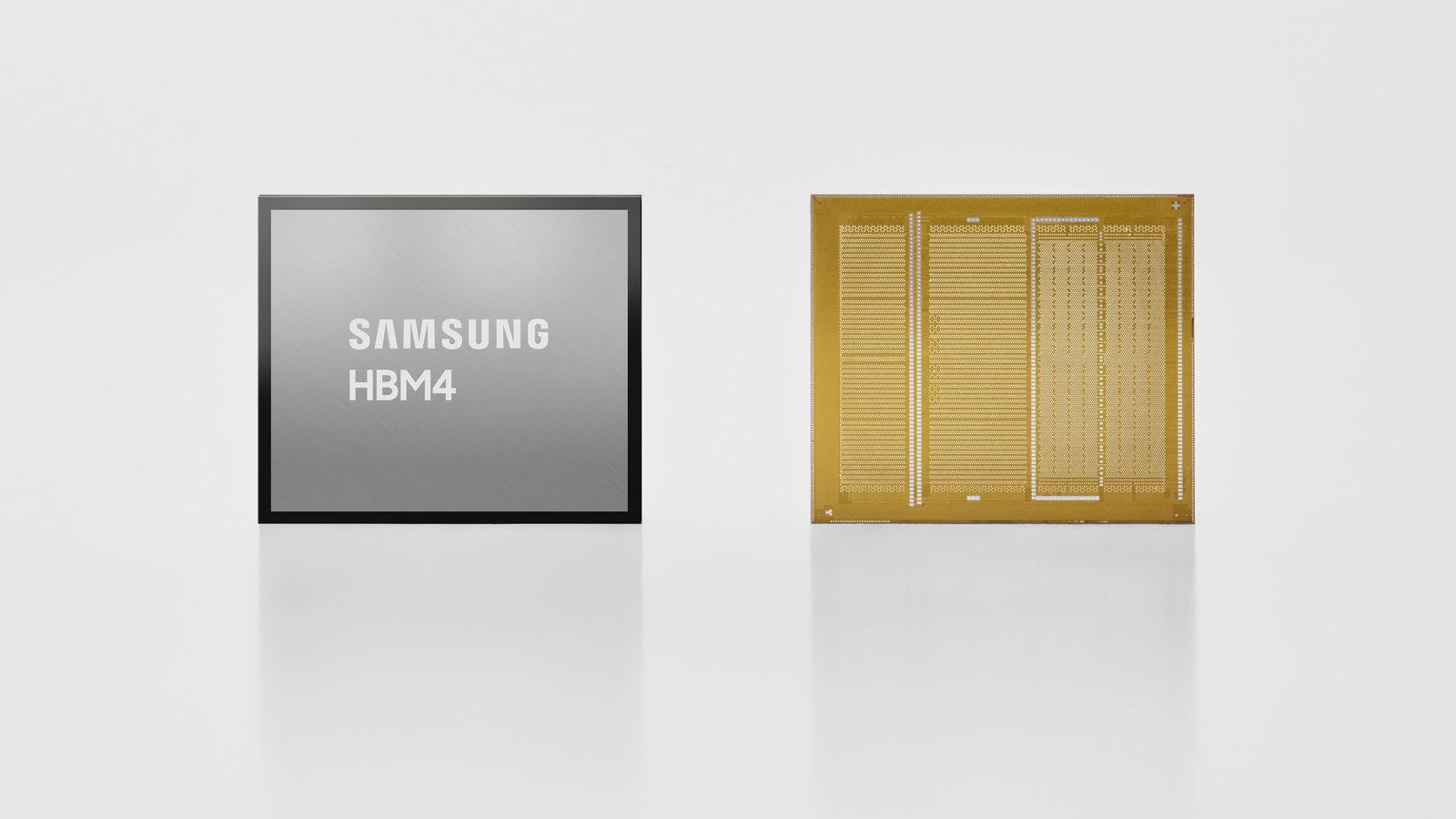
SK hynix reported the day before. Revenue was KRW 104.62 trillion and operating profit KRW 83.33 trillion, up 327.9% and 632.1% respectively, for an 80% operating margin. Net profit was KRW 39.78 trillion. The company said HBM4 will pass HBM3E as its main memory product in the fourth quarter as its M15X fab ramps, and that long-term agreements with 14 customers cover more than half of its 2027-28 capacity. It also committed to about KRW 100 trillion of shareholder returns for 2026. SK hynix's release
The contrast inside the chip industry is Intel. Intel's third quarter, reported Oct. 29, showed revenue of $16.51 billion, up 21%, and non-GAAP earnings of $0.52 a share against $0.40 expected. Data Center and AI revenue was $7.3 billion, up 78%, and Client Computing $8.1 billion, down 5%. Intel Foundry reported $6.7 billion of revenue, up 58%, but a $1.9 billion operating loss and only $411 million of external revenue. Guidance for the fourth quarter was $15-16 billion and $0.25 of non-GAAP earnings, against $17.1 billion and $0.43 of consensus. The stock closed 28.58% lower on Oct. 30, its worst session since 1974 by StockTitan's and CNN's count. The company is still absorbing the Oct. 14 explosion at Fab 28 in Kiryat Gat, Israel, which killed two workers and is expected to cost about $600 million in revenue across the fourth quarter of 2026 and the first quarter of 2027. Intel's release
The pattern is not "chips good" or "chips bad". It is that the buildout's profit has collected where supply is tightest. Memory, and high-bandwidth memory in particular, is the current chokepoint. The hyperscalers' capex becomes Samsung's and SK hynix's revenue before it becomes anyone's productivity. That gives the memory makers pricing power and gives the buyers a cost they cannot negotiate down by switching vendors, because there are only a few. Intel is the counterexample: a company spending on capacity without the demand or the external customers to fill it, and the market marked it accordingly.
This arrangement can unwind from either end. If memory prices fall, the upstream margin normalizes and the downstream cash flow improves. If the hyperscalers slow their orders, the memory makers' record quarters become the peak of a cycle. HBM4 pricing in the first half of 2027 is the number to watch, not another capex guide.
Two prices for the same business
Anthropic filed its S-1 with the SEC on Oct. 26, for a Nasdaq listing under ANT. The filing showed $16.3 billion of revenue in the first half of 2026, against about $1.2 billion a year earlier, and an operating loss of $693 million, down from $2.1 billion. Net loss was $80.7 billion, up from $13 billion, almost entirely because of a noncash charge of about $72 billion tied to convertible bonds. The company spent nearly $9 billion on compute and counted 11,900 customers paying more than $100,000 a year. It filed without a price range or a raise size. Anthropic's S-1
The operating loss is the useful number. At $16.3 billion of half-year revenue, a $693 million operating loss is a margin problem a public market can underwrite. The $80.7 billion net loss is an accounting event, not a cash burn, and it says more about how the company was financed than how it trades. The valuation is the open question. Reuters reported on Oct. 15 that investors were tempering their expectations for the IPO, and the filing gives them no price to argue with yet. TechCrunch's account
OpenAI, which has not filed, was reported by CNBC on Oct. 22 to be close to an up-to-$30 billion round at a $1.25 trillion pre-money valuation, led by UAE investors and Coatue. That is $150 billion below the more than $1.4 trillion target Reuters reported on Oct. 20. The round is described as a bridge ahead of a possible IPO. OpenAI confidentially filed in June 2026, and its chief financial officer has talked about a 2027 window. CNBC's report
Two prices for similar businesses can coexist for a while. A private investor can underwrite a story about 2030; a public investor marks the stock every day, and this week the public market marked Alphabet down 13% for spending too much. The gap between a $1.25 trillion private valuation and what a public listing might clear is the week's most expensive unanswered question. It is also why the Anthropic filing matters more than its headline loss: it will produce the first audited comparison between a frontier lab's revenue and its cash costs, and every private valuation will be measured against it.
The week also showed how the supplier finances the customer. Nvidia said on Oct. 26 that it would invest $3 billion in Meta's equity offering and expand their Muse partnership. AMD added $1 billion the next day. Meta was raising $95 billion, split between $35 billion underwritten and $60 billion at the market, and Bloomberg reported that the first $25 billion tranche priced at $625 a share and was about five times oversubscribed. Nvidia's $3 billion is small next to Meta's raise. The direction of the money is what matters: a chip supplier is taking equity in a company that buys its chips. NVIDIA's announcement
Vendor financing is not new, and none of this is improper. It does make the cycle harder to read. If Nvidia's investment helps Meta buy Nvidia hardware, Nvidia's revenue and its investment portfolio move together, and a slowdown would hit both. The same logic applies to the memory makers' long-term agreements: they lock in demand, but they also lock their customers into a cost base that was set at the top of the cycle.
The trust ledger
Binance's incident began on the evening of Oct. 29, when large transfers left wallets the exchange controls. Binance suspended withdrawals on multiple networks and said it was investigating a "potential security issue". Changpeng Zhao wrote on X that "It does look like a hack on Binance" and that user funds were safe. Tether froze more than $1.567 billion of USDT and Circle more than $800 million of USDC, which Reuters put at more than $2.38 billion combined. Arkham tracked 55 addresses holding about $5.78 billion, StarPlatinum traced about $3.48 billion from Binance 14 and two other wallets, and the Wall Street Journal reported at least $1.7 billion. Bybit's February 2025 loss of $1.4-1.5 billion was the previous record. TechCrunch's report
No loss total, intrusion vector or attacker has been confirmed. The published figures measure different things: transfers out of exchange wallets, balances in a cluster of addresses, and what a newsroom could verify. Frozen funds are blocked, not recovered. Binance's SAFU fund, at about $1.2 billion, is one reserve, not a solvency statement. If the largest figure holds, this is the largest exchange breach on record. If it does not, the week still produced the largest unanswered question in crypto.

The week's other breaches were smaller and better documented. Group-IB and NyxLab published an investigation into a campaign they call k0t, which collected more than 70,000 credentials and LDAP dumps from FortiGate and FortiWeb appliances and Palo Alto GlobalProtect gateways. The campaign exploited CVE-2025-64446 and CVE-2026-0257, brute-forced passwords, and used OpenConnect VPN, MeshCentral, Atera, Teramind, AnyDesk and AdaptixC2 for persistence, with Rclone for exfiltration. Group-IB found overlap with Qilin and The Gentlemen victims but did not establish a shared operator. The credential count is entries and directory records, not a count of victims. Group-IB's report
Sony Network Communications disclosed on Oct. 27 that 2,585,481 records were exposed in a breach on Oct. 19 that it detected on Oct. 23. The total includes 2,141,986 So-net records and 443,495 plala records used for NTT Docomo's Docomo Hikari service, plus a separate 54,401 email-and-password set. Sony has not published the vector, the attacker or a full forensic timeline. The record count is not a count of unique people, and the password set is separate, with overlap unestablished. Sony's notice
The fourth item is a report, not a confirmed event. The New York Times reported on Oct. 29 that US officials had concluded Alice Huang, also known as Huang Le, an executive at Megaspeed who was close to Jensen Huang, was a Chinese intelligence asset passing information to Beijing, and that President Trump had been briefed about a year earlier and taken no action. Nvidia, China's foreign ministry and Megaspeed disputed the account. No charges were announced. The story rests on anonymous sources and classified intelligence, and it does not establish what information was passed or whether Jensen Huang knew. The New York Times reported it; CNBC and others followed.
Taken together, the four stories describe the same weak point from different angles. An exchange asks customers to trust its custody. A firewall asks a company to trust its VPN. An ISP asks subscribers to trust that their account records are boring. A chip company asks investors to trust that its chief executive's relationships are commercial. Each is a relationship that works because most of the time nothing happens. The week's costs were the exceptions.
The Binance loss total, the Nvidia intelligence report and The Elder Scrolls VI name are unconfirmed. Each is identified in the text as a report or an estimate, and none should be treated as a settled fact.
The price of a screen
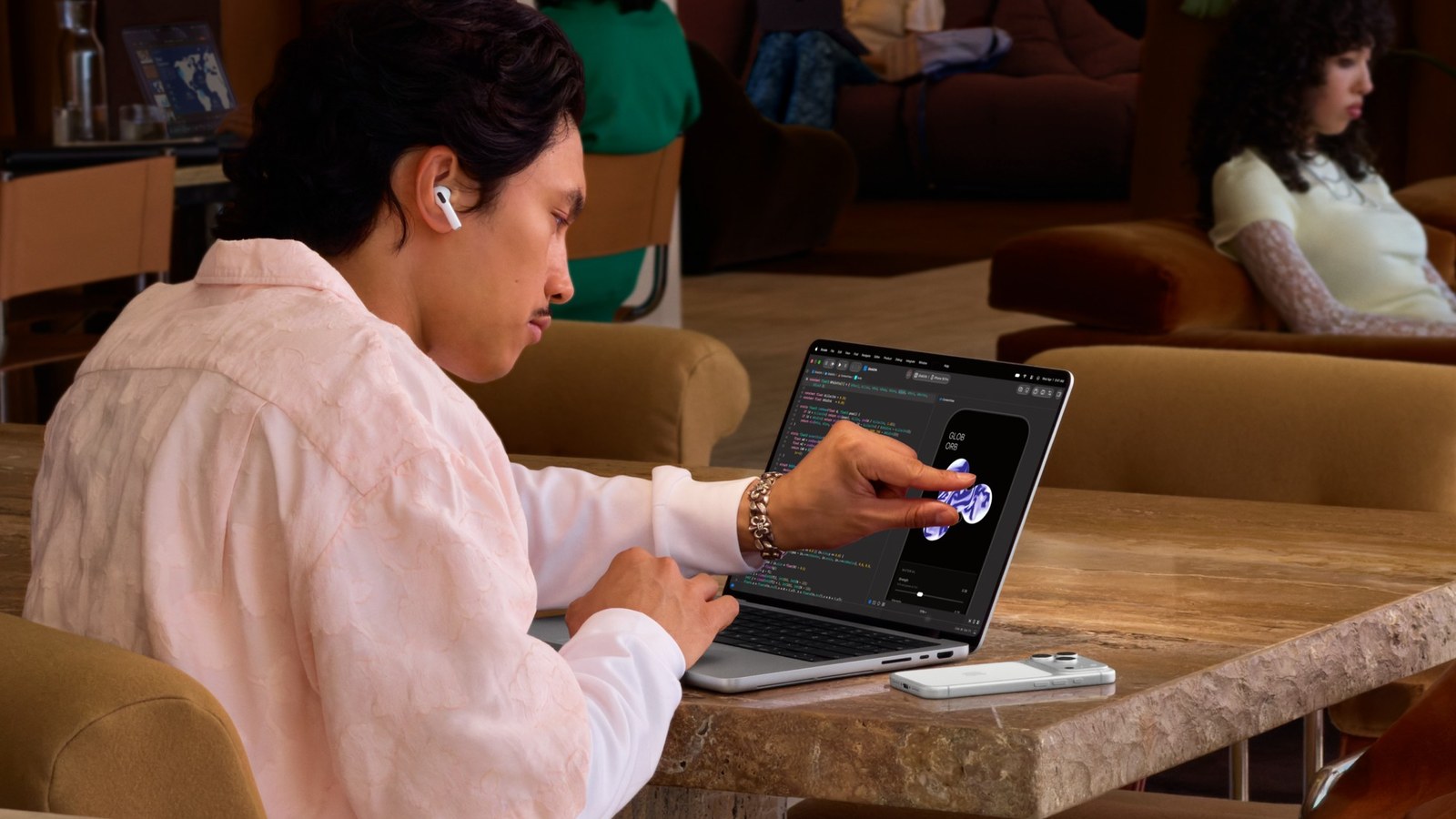
Apple announced the MacBook Pro with PROLED XDR Display and Touch on Oct. 28, its first touchscreen Mac. The 14-inch M5 Pro model starts at $2,899 and the 16-inch at $3,399. M5 Max configurations start at $4,499 and $4,799, and a fully specified machine reaches $14,549. Preorders opened the same day, with shipping on Nov. 6. Apple's announcement
Two days earlier, Apple put an OLED display and a 2nm A20 Pro chip in the iPad mini and raised the starting price to $699, $200 above the $499 A17 Pro model it replaces. Preorders opened Oct. 28 and the tablet goes on sale Nov. 6. Apple's iPad mini announcement
Apple has not said that memory prices caused either increase. The timing is hard to ignore. The same week that Samsung and SK hynix reported record profits on memory, Apple raised the price of its small tablet by 40% and introduced a laptop at a higher floor than the model it succeeds. Component costs are one input among several, and Apple's own margins, tariffs and positioning matter too. But the consumer is now standing at the end of the same chain as the hyperscalers: the memory maker's record quarter is somebody's bill.
That is the part of the AI buildout that reaches people who never buy a GPU. Data center demand pulls memory supply toward HBM, HBM capacity is finite, and the products that use ordinary DRAM and NAND compete for the rest. Whether that becomes a sustained consumer price increase depends on how long the shortage lasts and how much demand Apple is willing to test. The $699 iPad mini is a bet that it can.
The release calendar is a financing decision
Three games this week showed how the same logic reaches studios. Creative Assembly's Total War vice president, Roger Collum, published an update on Oct. 26 conceding that the botched Shogun 2 Complete Edition was not developed in-house; Steam co-credits MATABOO. He said the studio was investigating generative-AI assets, 11 days after Sega pulled the $39.99 release and reinstated the original. The statement did not confirm that generative AI was used, and it did not name MATABOO. Collum's post
FromSoftware moved The Duskbloods from 2026 to 2027 on Oct. 29, citing feedback from an August network test on game rules and balance. The test ran Aug. 21-24, the game is a Switch 2 exclusive directed by Hidetaka Miyazaki with eight-player PvPvE, and the new date has no month. FromSoftware's statement
Bungie's community update on Oct. 29 was more specific and further out. The first Destiny 2 unvaulting pass will include the Red War, Forsaken, Curse of Osiris and Warmind campaigns, their strikes, raids and raid lairs, and the Menagerie. Full production is targeted for February 2027, and about 12 months of porting points to 2028. The studio did not give a release date, and it has not said whether the content will ship incrementally. The plan follows the June 2026 final update and 292 layoffs under a WARN notice. Bungie's update
The Verge's Tom Warren reported on Oct. 29 that Bethesda is preparing to announce The Elder Scrolls VI under the name Sentinel, possibly in November around Skyrim's 15th anniversary. Bethesda has not confirmed the name, the setting or the timing. A name reveal would not be a release date, and the report rests on a single source.
The one number that says demand exists is GTA VI's. Sensor Tower estimated on Oct. 20 that the game had 6.45 million digital preorders worth about $630 million, 74% on PS5 and 26% on Xbox, before its Nov. 19 console launch. Those are estimates, not Take-Two figures, and the $630 million is consumer spending rather than net revenue. They still describe a market that will absorb a $70 or $80 game at a scale that makes a delayed live-service roadmap look small. Sensor Tower's tracker

A delay is a financing decision as much as a creative one. A game moved from 2026 to 2027 pushes its revenue into another fiscal year and keeps its costs running. A remaster pulled from sale removes revenue that was already booked in a plan. A 2028 unvaulting is a promise that costs almost nothing this quarter and may never ship. The studios are not making the same choice, but they are all managing the same constraint: the money arrives later than the work.
A score is not a business
The week's entertainment coverage made a smaller version of the same point. Wicker opened on Oct. 23 in 1,471 North American theatres to $5.75 million, fifth place, with $620,000 in previews. Rotten Tomatoes had it at 94% from 31 critics and Metacritic at 70. Those are good numbers for a film that Black Bear bought for $2.5 million after Sundance, and the acquisition price is not the production budget. Rotten Tomatoes
Klara and the Sun opened the same weekend to 25% on Rotten Tomatoes from 73 reviews, 30 on Metacritic and 81% from audiences, with a $725,000 opening. Lupin Part 4 debuted at No. 1 on Netflix's non-English TV chart with 6.4 million views for the week of Oct. 19-25, while Part 1 returned at No. 10 with 2.1 million. Nocturne opened at 100% from five reviews on Oct. 27 and fell to 83% the same day, before its Oct. 30 premiere. Dexter: Resurrection Season 2 opened at 86% from seven reviews and 75 on Metacritic from five, below Season 1's 95% from 64 reviews. Netflix's Top 10
None of those scores predicts the business. Wicker's 94% did not turn a $5.75 million opening into a hit. Klara's 25% did not stop 81% of its audience from liking it. Lupin's chart position is Netflix's own metric for one week. The aggregates are thin at premiere: five reviews, seven reviews, critics who saw two episodes. A score is a sample. The business is a distribution decision, a marketing budget and a release date, and this week those were the numbers that moved.
60,000 desks
Microsoft's Voluntary Exit Offer, announced Oct. 26, covers about 60,000 eligible employees in the US, UK, Canada and India at level 70 and below. That is 27% of its 223,000 staff according to CNBC's source, not a company figure. Decisions are due in early December and departures on Dec. 31. Microsoft set no target for take-up, so the number of people who leave will be smaller and is not yet known. Microsoft's memo
The offer arrived in the same week as the $170 billion capex plan and the 48% Azure growth. Microsoft is not alone in making both moves. The buildout reallocates capital toward data centers, chips and power, and companies describe the other side of that reallocation as efficiency, role consolidation or a voluntary exit. The memo does not say the offer is funding the capex, and the two numbers should not be read as a single transaction. They are two decisions made by the same management team in the same week, and both point the same way.
For the people inside the eligible group, the offer is a price. Microsoft has not published the terms. A voluntary exit is not a layoff count, and the absence of a target means the company has left itself room to call the result a success whatever it is. The December departure date is the only firm number.
What to watch
The next three weeks have dates. World of Warcraft: Forever launches Nov. 4, with raids on Dec. 9. Apple's touchscreen MacBook Pro and OLED iPad mini ship Nov. 6. GTA VI arrives Nov. 19. Each will produce the first hard demand data for a product that has so far been discussed through forecasts, and each sits on the same consumer budget that the memory shortage is squeezing.
The bigger questions do not have dates yet. Anthropic's IPO will need a price range, and that price will be compared with OpenAI's $1.25 trillion private mark. Binance will eventually publish a loss figure, or decline to. Meta's New Mexico judgment is under appeal, and the $25 billion is not paid. The memory makers will report again in January, when HBM4 pricing for 2027 will be clearer. The four hyperscalers will report December-quarter results in late January with another capex guide. If free cash flow is still negative and the stocks are still holding, the market will have decided that the spending is an investment. If not, the week of Oct. 26 will read as the point when the bill first appeared in the cash-flow statement.
Tags
Frequently asked questions
- Why did Meta, Alphabet and Amazon report negative free cash flow?
- All three remained profitable on an operating basis. Free cash flow turned negative because capital spending on data centers, chips and power rose faster than the cash their existing businesses produced. The measure is non-GAAP and sensitive to how each company times payments and leases.
- How much did Samsung and SK hynix earn in the third quarter of 2026?
- Samsung reported KRW 107.4 trillion of operating profit on KRW 195.3 trillion of revenue, and SK hynix reported KRW 83.33 trillion of operating profit on KRW 104.62 trillion of revenue. Both were company-reported records and both are unaudited at the quarterly stage.
- How much money actually left Binance?
- No confirmed total exists. Binance has not described the transfers as unauthorised, and the published figures range from at least $1.7 billion reported by the Wall Street Journal to about $5.78 billion in wallet balances tracked by Arkham. Those numbers measure different things.
- When is The Duskbloods coming out?
- FromSoftware has said only 2027. It moved the game from 2026 on 29 October 2026 and did not name a month or a date.

TPW Editorial
Editorial Team
TechPastWeek's editorial team reports and edits every story we publish. We research each piece against primary and credible secondary sources, and a human editor reviews and signs off before it goes live.