Portuguese Group D3 Sues Meta, TikTok and YouTube Over ‘Addictive Design’
Portugal’s D3 has filed four collective actions in Lisbon against Facebook, Instagram, TikTok and YouTube, alleging their design is deliberately addictive.

On this page
A Portuguese digital-rights group has filed four collective actions against Facebook, Instagram, TikTok and YouTube, arguing that features such as infinite scroll, autoplay and personalised recommendations are deliberately designed to keep users hooked. The cases are among the first of their kind in the European Union, and they are claims, not verdicts.
Related reading: Instagram’s Mosseri Says an Algorithm-Free Feed Is ‘Much Worse’ as Australia Moves to Regulate · Meta One Puts AI and Creator Tools Behind a Monthly Subscription.
Portugal’s consumer and digital-rights association D3 disclosed on 10 September 2026 that it had brought the four actions, as Reuters reported. The suits were filed with Lisbon’s Civil Court between April and May 2026 by the law firm Andersen Tax & Legal Iberia and only publicised after Portugal’s judicial summer break, according to D3’s own announcement. The timing matters: these are filed claims moving through their early stages, not findings of wrongdoing.
Four cases, three owners
The actions name four services but three corporate groups. Meta owns Facebook and Instagram, ByteDance owns TikTok, and Alphabet owns YouTube. Each case targets a single platform.
The procedural vehicle is a collective action, which lets an association sue on behalf of a broader group of consumers rather than one plaintiff. That structure resembles a US class action in spirit, and in Portugal it gives a non-profit a route to pursue platform-wide claims that an individual user would struggle to bring alone.
D3 is a non-profit and Portugal’s only representative in European Digital Rights (EDRi), the Brussels-based network of digital-rights organisations. It says the four cases are the first class actions of their kind to be filed in the European Union, and that further initiatives are being prepared in other member states as part of a pan-European strategy. The legal team was led by Miguel Miranda and Efigénia Marabuto Tavares, with academic support from Fabrizio Esposito and Cecília Isola of the NOVA School of Law.
The group says the goal is to “hold these platforms accountable and force them to provide a safe experience for their users”, framing the dispute as one about product safety rather than the content people post.
What D3 alleges
D3’s case is built on design, not individual posts. The group points to infinite scrolling, autoplay videos, persistent notifications, highly personalised recommendation systems and gamification mechanisms. By removing natural breaks in use, continuously serving tailored content and repeatedly prompting users to return, it argues, the platforms create behavioural feedback loops “akin to techniques long used in the gambling industry.”
The group describes that dynamic as a business model rather than an accident. In its statement it says platforms concentrate “hegemonic informational power” that is “exploited through constant monitoring to shape our private behaviour, without any limits,” and that this can make it “difficult to voluntarily stop using them, reducing the scope for independent decision-making and fostering patterns of compulsive use.”
Platforms do not have to be hyper-addictive. A healthy, productive and educational social media ecosystem is possible, but only if the rules are solid, properly enforced and directed at those who persist in ignoring them.
That quotation is from D3 president Ricardo Lafuente, as reported by Reuters.
The legal theory matters. Courts have historically shielded platforms under rules that treat them as intermediaries for user content, and many early social-media cases failed on those grounds. D3’s claims instead attack the architecture of the services, the mechanics that decide what appears next and when a user is nudged to return. That is closer to a product-liability argument, and it is the same pivot plaintiffs used in the US cases against Meta and YouTube. Whether Portuguese courts accept it is an open question.
Notably, D3’s argument is not that young people should be kept off the platforms altogether. The group explicitly opposes proposals to restrict access for under-16s, arguing that the services have become essential means of communication and should instead be made safe. That puts it at odds with a more restrictive line of thinking now gaining ground in several countries, including in Portugal’s own parliament, where a proposal to restrict minors’ access has been under discussion.
A European wave
The Lisbon filings land in the middle of a widening regulatory push. On 6 February 2026 the European Commission preliminarily found TikTok in breach of the Digital Services Act over its addictive design, citing infinite scroll, autoplay, push notifications and its highly personalised recommender system. The Commission said TikTok needed to change the “basic design” of its service and warned that a confirmed breach could bring a fine of up to 6% of the company’s global annual turnover. The investigation had opened on 19 February 2024.
Five months later, on 10 July 2026, the Commission reached the same preliminary conclusion about Meta, finding that the design of Instagram and Facebook breached the DSA and that Meta’s mitigation measures were inadequate. That finding, too, is preliminary and could carry a fine capped at 6% of worldwide turnover. The European Parliamentary Research Service has also published a briefing on addictive design on online platforms, reflecting how the topic has moved into mainstream lawmaking.
Crucially, the Commission’s findings are preliminary, not final. Both TikTok and Meta have the right to inspect the file and respond in writing, and either could still contest a non-compliance decision in the courts.
The US backdrop
Europe is not the only front. In the United States, the pressure has already produced money and verdicts.
On 25 March 2026, a Los Angeles jury found Meta and YouTube negligent in the design of their platforms, awarding a young woman identified as K.G.M. a combined $6 million in damages, with Meta bearing 70% and Google 30%. The case was a bellwether tied to roughly 2,000 similar suits. Both companies said they would appeal.
Then, on 26 August 2026, Meta agreed to settle social-media addiction claims brought by states across the US. Reuters and CNN put the headline figure at up to about $18 billion when a separate $1 billion Texas settlement is included; the core multistate agreement covering 47 states, the District of Columbia and several territories was reported at up to $16.7 billion, while the Associated Press described a roughly $17 billion deal. Meta denied wrongdoing. As part of the arrangement it agreed to set a default two-hour daily time limit for users under 18, block use between midnight and 6am by default, and introduce a school mode that mutes notifications during the day.
That range of numbers is worth flagging. The final figure depends on whether other platforms settle on similar terms, and different outlets have reported different totals, so the settlement should be treated as “up to” roughly $18 billion, not a single fixed sum.
These are filed lawsuits, not decisions. No court has found Meta, ByteDance or Alphabet liable in the D3 actions, and the Portuguese cases have not yet reached a substantive ruling. The US settlement and the EU findings involve different legal systems, claims and companies; they provide context, not precedent for the Lisbon filings.
Why Portugal
Portugal is a small market, but the four platforms have a large footprint there. According to data aggregated by SocialMediaTransparency.org and cited by Reuters, Facebook, Instagram, TikTok and YouTube had a combined reach of 33 million monthly users in Portugal in the first half of 2026. That is a measure of aggregate reach across four services rather than a count of distinct people, but it illustrates how deeply the platforms are embedded in everyday communication.
D3 argues that this reach is exactly why exclusion is not the answer. Its statement contends that because the platforms are now essential infrastructure, the priority should be redesigning them rather than removing users. Portugal’s legal system does permit collective actions, but platform cases of this scale are still rare there, so the procedural path is relatively untested.
What the companies say
Alphabet’s Google, which owns YouTube, responded to the claims. A spokesperson said that providing people with “a safer, healthier experience has always been core to our work” and pointed to tools such as “take a break” and bedtime reminders designed to help users manage viewing habits. “We’ll be assessing this case and responding in due course,” the spokesperson said, according to Reuters.
Meta and ByteDance did not immediately respond to Reuters’ requests for comment. None of the companies has publicly conceded any wrongdoing in the Portuguese actions.
What to watch
- Whether the actions survive their early procedural tests. Collective actions must clear standing and admissibility hurdles before any court weighs the substance of the addiction claims.
- Portugal’s minors debate. D3 has positioned itself against an under-16 access restriction. How that argument lands in the Portuguese parliament will shape whether the country follows the exclusion approach seen elsewhere.
- The EU endgame. Both the TikTok and Meta DSA investigations are still at the preliminary stage. A final non-compliance decision (or an appeal) would set the regulatory backdrop against which the Lisbon cases proceed.
- Whether other member states follow. D3 says it is preparing initiatives elsewhere in Europe and is open to a coordinated strategy. If that materialises, Lisbon could be the first of several European filings.
- The US spillover. The implementation of Meta’s settlement and the appeal of the Los Angeles verdict will keep pressure on platform design, and plaintiffs’ lawyers in Europe are watching.
The D3 filings are early, and it may be months or years before a Portuguese court rules on the central question: whether a recommendation algorithm and an autoplay button can themselves be treated as a defect. For now, the significance is the claim itself, another front in a global effort to put platform design, not only platform content, on trial.
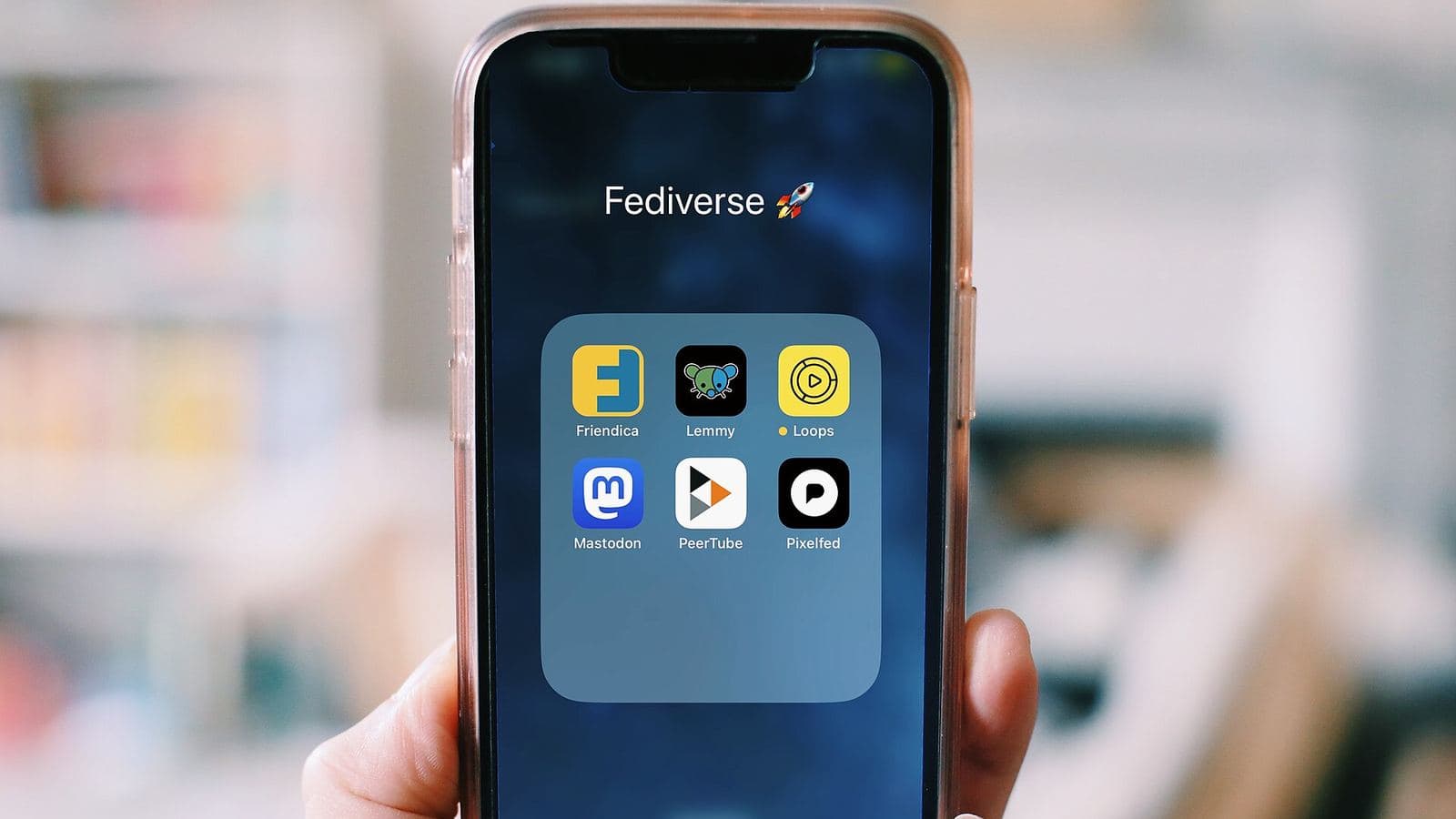
Cover image: a smartphone showing social-media and Fediverse apps. Photo by Elena Rossini (Elexfedi), via Wikimedia Commons, CC BY-SA 4.0.
Tags

TPW Editorial
Editorial Team
TechPastWeek's editorial team reports and edits every story we publish. We research each piece against primary and credible secondary sources, and a human editor reviews and signs off before it goes live.