Instagram’s Mosseri Says an Algorithm-Free Feed Is ‘Much Worse’ as Australia Moves to Regulate
Instagram’s Adam Mosseri says a chronological feed is ‘much worse’ for users, as Australia moves to require an algorithm opt-out and White House pushes back.

On this page
Instagram’s top executive has publicly argued that stripping recommendation algorithms out of the feed makes the service worse for most people, a defence of ranking delivered days after Australia proposed forcing platforms to offer users exactly that choice, and a day after the White House warned Canberra over the plan.
Related reading: Portuguese Group D3 Sues Meta, TikTok and YouTube Over ‘Addictive Design’ · Meta One Puts AI and Creator Tools Behind a Monthly Subscription.
Adam Mosseri, who has run Instagram since 2018, made the remarks at a briefing with Australian journalists on Thursday, September 10, 2026, convened to launch the Australian edition of Instagram’s “Algo Confessions” series and to promote its “Your Algorithm” controls. A Meta spokesperson told reporters that Mosseri would not comment on the government’s proposal; he nonetheless volunteered a view on chronological feeds. “The average user experience gets much worse,” he said, according to ABC News. The exchange matters because it sets up a collision between how platforms measure success (time spent and engagement) and how a growing number of governments now define harm.
What Mosseri actually argued
Mosseri’s case rests on a claim about incentives. In a feed sorted only by time, he said, the way to reach people is to post more often, and the accounts that can post most often are businesses, brands and publishers, not friends.
“If you go to a chronological feed, it ends up getting overwhelmed with content from companies, brands, and publishers,” he said. “Creators get drowned out, and then your friends get drowned out even more.” He continued: “What ends up happening is the best way to get more reach is just to post more often and those who can afford to post the most often do and then therefore get the most reach. And it turns out your friends post a lot less than creators, who post a lot less than brands and companies” (The Guardian).
The consequence, he argued, is disengagement. Mosseri told reporters that engagement fell by as much as 50 per cent when users were switched to a chronological feed, though he did not provide figures, and that satisfaction dropped too. “Both at the aggregate [experience], ‘Are you satisfied?’ and at the specific post, ‘Was this worth your time?’, those numbers fall off a cliff,” he said. He described only a “very vocal minority” of users as wanting a reverse-chronological feed, and said the tension was “between what an individual might want and what happens when you actually explode that to the entire community.”
Mosseri did not present ranking as flawless. “That’s not to say that ranking is perfect, it’s not, we make mistakes — one of the things that frustrates me about ranking is that we end up over-optimising for things that we can measure and undervaluing things that are more difficult to measure,” he said. He conceded that Instagram’s ranking “feels like a black box,” and said the company is trying to hand users more control through the Your Algorithm tool, which lets people see and edit the topics behind their recommendations.
The Australian law behind the row
The trigger is Australia’s draft Digital Duty of Care, released for consultation on Tuesday, September 8, 2026. Its centrepiece is an initiative the government calls My Feed, My Way: platforms including Instagram, Facebook and TikTok would have to notify users over 16 that they can choose a default feed, either personalised recommendations or a reverse-chronological stream of only the accounts they follow. Non-compliance could draw penalties of up to A$109.2 million (about US$79 million), according to CNBC and The Guardian. The bill also imposes a broader duty to reduce foreseeable harm, extends to online games, apps and AI chatbots, and adds protections for under-18s.
The key word is “prompt.” Instagram already offers a “Following” view globally, reachable by tapping the app’s logo. Mosseri said Australian uptake was probably “in the low single-digit percentages,” adding: “Anything that isn’t the default just doesn’t get used the majority of the time, which is why defaults are so important.” He denied hiding the option. “I’m not trying to hide it…. I think we can make it more prominent,” he said, acknowledging there was “definitely room to improve the discoverability of that.”
Washington pushes back
Australia’s move drew an unusually blunt response from Washington. On Wednesday, September 9, White House spokesperson Kush Desai said the administration would raise the plan with “trading partners.” “President Trump has unequivocally warned trading partners against imposing digital services taxes, fines, and other forms of extortion on America’s leading technology sector,” Desai said, as reported by the Guardian and Reuters. The framing places platform-design rules in the same category as digital services taxes and other trade instruments.
Canberra pushed back. Communications Minister Anika Wells said Australia is “a sovereign nation” with “the right to defend Australian parents and kids,” Reuters reported. Prime Minister Anthony Albanese is expected to raise the reforms around the UN General Assembly this month, where he may meet Trump.
What the evidence shows, and what it doesn’t
The disagreement is partly a matter of definitions. The Next Web noted that Mosseri’s warning is framed as lower engagement and less time on the platform, outcomes the Australian bill treats as harms to be reduced, not benefits to preserve. A design that keeps people scrolling is exactly what the legislation is trying to make less automatic; the fact that people “spend a lot less time” on an unranked feed does not, on its own, settle whether that feed is worse for them.
The brands argument is stronger on its own terms, and it raises an awkward point for both sides. A purely chronological feed does reward whoever posts most, and that behaviour was partly trained by ranking in the first place: for years, reach depended on volume and freshness, which encouraged professional accounts to publish constantly. Removing ranking may not remove the habit it created.
There is, however, a factual gap in Mosseri’s framing. The Australian proposal is not simply “chronological”; it is a feed limited to accounts the user has chosen to follow. Users who object to brand content can unfollow brands. Tubefilter made this point directly, and it undercuts the claim that opt-out users would be “overwhelmed” by companies they never chose to see.
The 50 per cent figure also deserves scrutiny. Instagram has not published the research behind it, and any comparison depends on which users were switched, in which markets, and against what baseline. When the European Union’s Digital Services Act began requiring very large platforms to offer a non-profiled feed in 2023, adoption stayed modest, which the industry reads as proof that people do not want one, but which critics read as evidence of how well the option is hidden. The Netherlands went further in October 2025, when a court ordered platforms to make chronological feeds the default.
A contested default
Australian researchers are not unanimous. Rashina Hoda, a professor at Monash University, called the reform long overdue but noted that opt-out and opt-in produce different outcomes, because inertia favours whichever setting is the default. That is the practical problem both sides are arguing about: not whether users may choose, but which choice they get by default.
The counterargument
The strongest objection to Mosseri’s position is that it answers a different question than the one regulators are asking. Critics of algorithmic feeds do not claim that recommendations make social media boring; they claim that engagement-optimised ranking can amplify extreme, harmful or polarising content and keep vulnerable users (especially minors) on the platform longer. Gizmodo framed it bluntly: the concern is that hyper-personalised feeds are too engaging, not too dull.
Meta’s own defences are worth separating, too. In Australia the company argued on background that “there is no single algorithm that can be turned off,” and that a broad switch would remove critical ranking and safety functions, a point Mosseri echoed when he said Instagram runs many ranking systems, for Feed, Reels, Stories and even message suggestions. The bill does not require switching all of them off; it targets the main feed’s recommendations.
Behind the argument sits a legal backdrop. In August 2026, Meta agreed to a landmark US settlement over child-safety claims, reported by Reuters at up to US$16.68 billion for the multistate deal, which included letting US teens choose a non-algorithmic feed. That outcome, more than any single interview, is why algorithm choice has become a live policy question rather than a theoretical one.
What to watch
Three things will decide how far this goes. First, whether the bill survives consultation in a form that still requires the prompt. Australia’s opposition has called the draft a threat to free speech, while the Greens, who hold the balance of power in the Senate, want a tougher version. The government expects the bill to be tabled in October and, if a deal is struck, passed in the final sitting fortnight in November. The prompt is the one part platforms have a clear reason to fight.
Second, whether Washington turns rhetoric into measures. Australia was already among the economies swept up in US tariffs in July 2026, and the White House has now explicitly linked platform fines to trade. If the warning stays rhetorical, other countries may copy Canberra; if it hardens into economic pressure, the calculus for smaller regulators changes.
Third, whether Instagram makes the alternative easier to find. Mosseri says he wants algorithm controls to be central rather than buried, and Australia proposes to make that a legal requirement. If the company moves first, it may blunt the case for regulation; if it does not, it strengthens it.
Mosseri’s defence is candid about what ranking is for: it keeps people on Instagram longer. The question lawmakers are asking is whether that is the same thing as serving them better.
For now, both sides are describing the same mechanism from opposite ends. Instagram argues that ranking protects friends and creators from the accounts that post the most; regulators argue that ranking is the reason so much professional content floods the feed in the first place. Australia’s bill would not settle that dispute. It would simply make the choice explicit, and, for the first time in a major market, make refusing the algorithm the default path for anyone who says they want it.
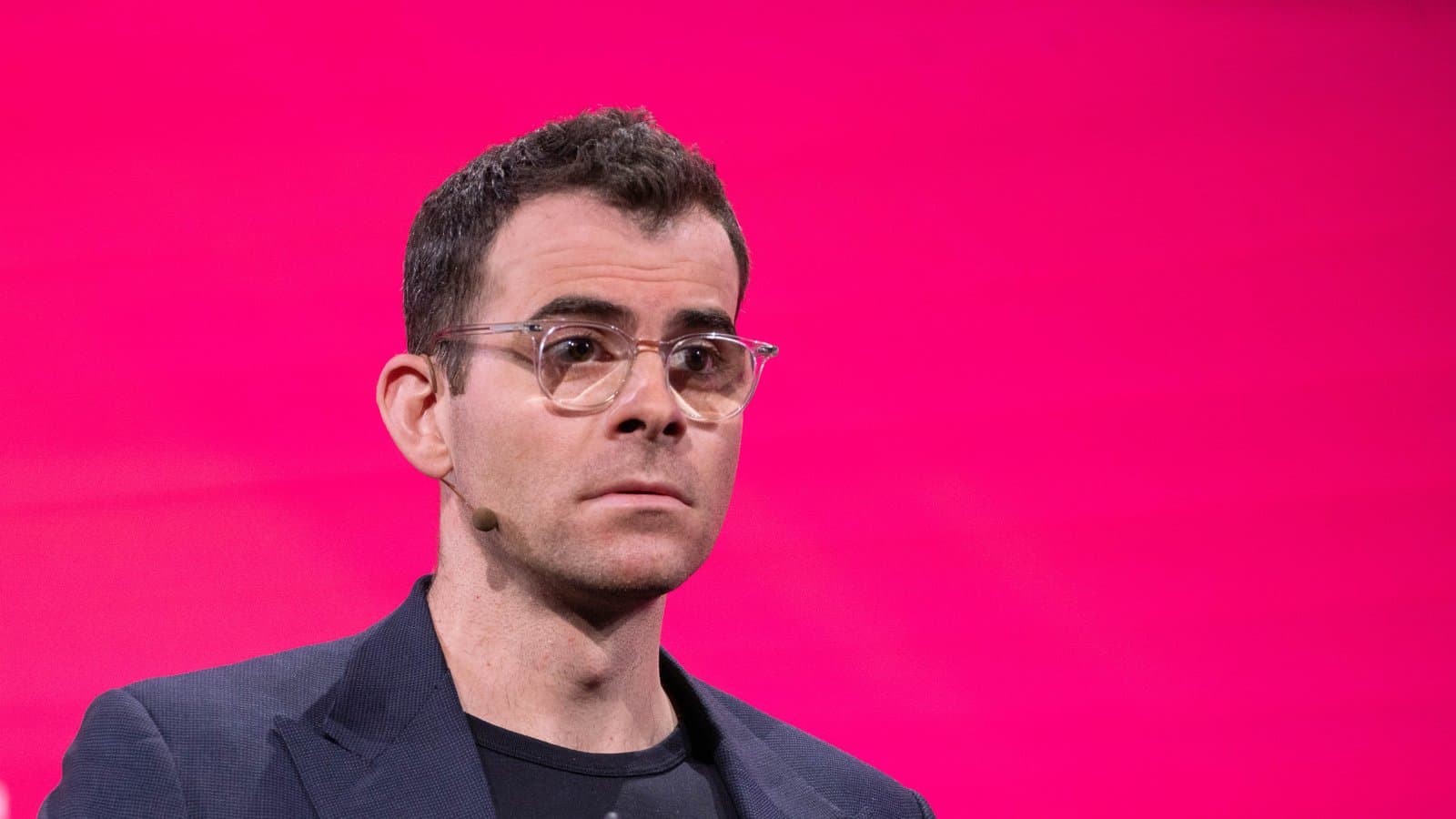
Cover image: Adam Mosseri, head of Instagram, photographed in 2019 by Anthony Quintano, licensed under CC BY 2.0 via Wikimedia Commons.
Tags

TPW Editorial
Editorial Team
TechPastWeek's editorial team reports and edits every story we publish. We research each piece against primary and credible secondary sources, and a human editor reviews and signs off before it goes live.