The Week in Tech: YouTube Rewrites the View, Europe's Chips Get Closer
YouTube redefined the view, a $700 million settlement closed the Google Play case, TSMC readied its first angstrom node, and Stripe bought the AI meter.

On this page
The week ending Sunday, August 23, was one of those stretches when the tech industry seemed to be auditing its own foundations. YouTube redefined what a "view" means. A federal judge closed a five-year antitrust case against Google's app store. TSMC declared its first angstrom-class chip process ready for production. Stripe agreed to buy the company that decides which AI model answers each request. And Google DeepMind explained how it intends to use a 23-year-old video game as a laboratory for machine intelligence.
Related reading: Meta One Puts AI and Creator Tools Behind a Monthly Subscription · YouTube Now Counts a View at the First Frame. That Changes What the Number Means..
Underneath those five stories runs a single theme: the infrastructure of measurement and metering. Who counts, who routes, who bills, and on what terms. That is the layer where value gets captured in mature technology markets, and this week the industry spent a lot of energy rearranging it. Here is what happened, why it matters, and what to watch.
1. YouTube rewrites the view
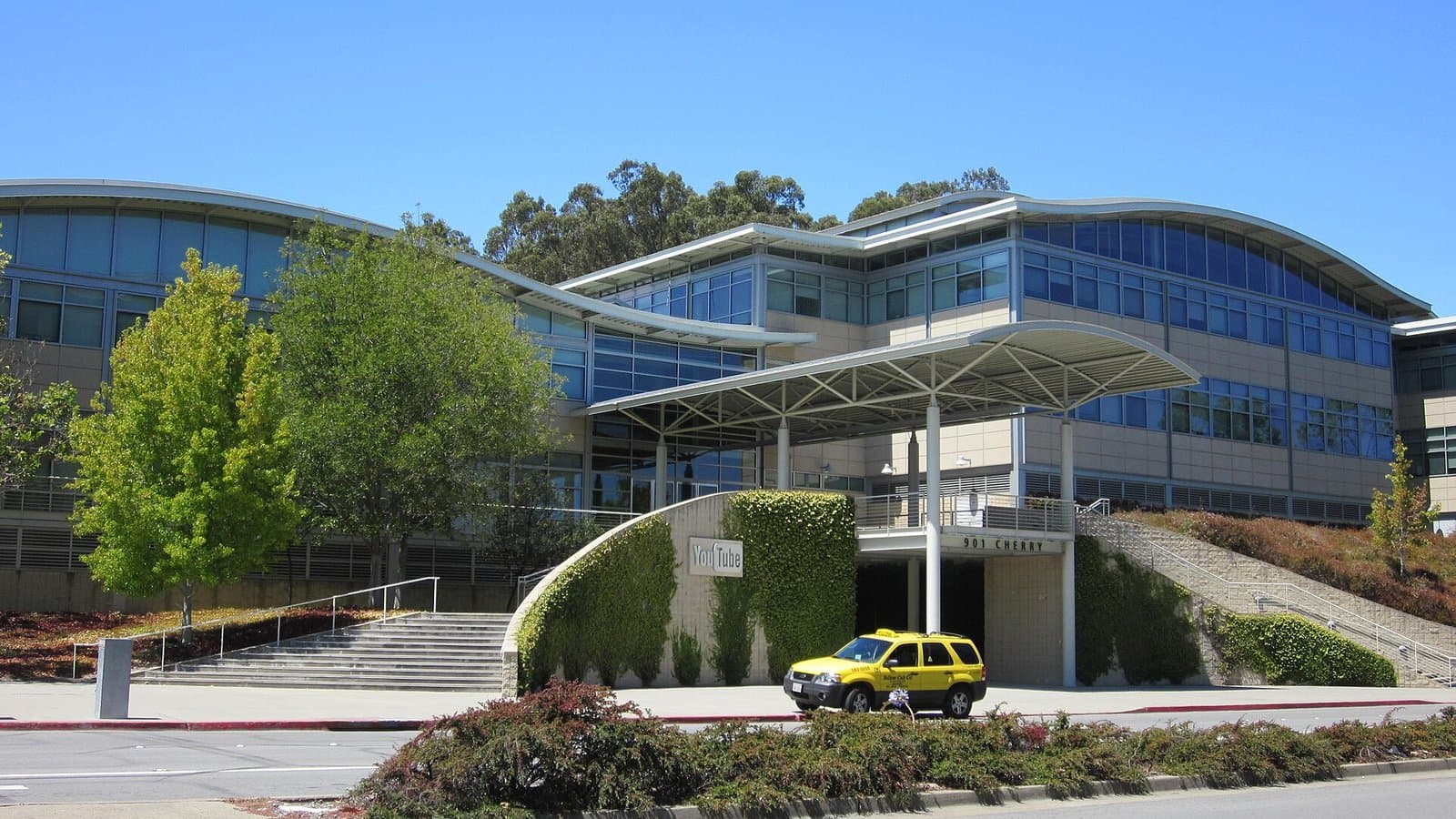
YouTube announced on Monday, August 17, that it will count a view from the first frame of playback. The change takes effect on August 24 and applies to long-form video, Shorts and live broadcasts, in every market. The old, stricter measure is renamed "Engaged views" and moves into YouTube Analytics.
The platform framed the move as standardisation. It had been running different counting systems for different formats, and creators wanted a consistent number. "Historically, we've used multiple view counting systems across different formats," YouTube said, according to TechCrunch. Extending first-frame counting to all formats was the obvious way to end the confusion.
What it actually does is split exposure from attention. Public view counts will rise, because a viewer who watches for three seconds now registers a full view. The creator-advertising platform Agentio estimated on August 21 that public views on long-form videos could run roughly 30 percent above engaged views after the switch, with smaller channels seeing the largest relative lift. "Exposure and attention are not interchangeable," Agentio co-founder Arthur Leopold said.

The practical consequence is a comparability break. Sponsorship deals and brand campaigns are frequently benchmarked on public view counts because anyone can check them. If the public number jumps overnight, before-and-after comparisons stop being meaningful. Agency and creator-management teams were recalculating within hours of the announcement. The sensible response, as we argued this week, is to specify in writing which metric governs each deal and to re-baseline historical data rather than pretend the old and new numbers measure the same thing.
None of this is unprecedented. Facebook spent years recovering from its 2016 disclosure that it had overestimated video watch time, an error that fed an industry-wide rush into video production and then a painful reversal. Twitter and its successor, X, have changed their view definitions more than once. In every case, the disruption landed not on the platforms, which own their metrics and can simply restate them, but on the contracts and reporting systems built around those metrics by everyone else.
There is a countervailing change worth holding alongside this one. A week earlier, YouTube said it would raise the bar for joining its Partner Program from January 31, 2027, to 8,000 qualified watch hours or 20 million qualified Shorts views. Public views get more generous; monetisation gets stricter. Read them together as a single policy on what YouTube wants creators to optimise for.
The measurement thread
YouTube's change is the cleanest example this week of a broader pattern: platforms are separating the number that flatters them (exposure) from the number that describes reality (attention), and only one of those will be quoted in public.
2. A $700 million settlement closes the Google Play case
On Tuesday, August 18, U.S. District Judge James Donato granted final approval to the $700 million settlement resolving the antitrust case over Google's Play Store. The deal, first announced in principle in September 2023, ends a five-year case brought by the attorneys general of all 50 states plus Washington, D.C., Puerto Rico and the U.S. Virgin Islands, alongside a class of consumers.
The money breaks into $630 million in consumer restitution, for purchases made on Play between August 2016 and September 2023, and $70 million to the states. Most eligible consumers do not have to file a claim; payments are meant to arrive automatically via PayPal or Venmo. State attorneys general began issuing public notices within days, which is a useful signal that the money is actually moving.
The remedies are the more consequential half. For at least five years, Google must let developers use alternative payment systems, tell customers about lower prices outside Google's billing, and distribute on competing stores without retaliation. For at least seven years, Android users must be able to install apps from outside the Play Store. As the Washington State Attorney General's office put it, the settlement "forces Google to change its business practices."
Three caveats matter. First, the settlement does not rewrite Google's fee schedule; alternative billing only helps developers if the alternatives are cheap and users can be moved onto them. Second, as our analysis noted, the remedies are time-limited, five and seven years, after which Google can revisit the practices. Third, the parallel Epic Games litigation has produced its own changes to Play, and the two together have done more to open Android distribution than either alone.
The clock is the catch
A conduct remedy with an expiry date is a window, not a new market structure. The teams that benefit most from this settlement will be the ones that treat alternative billing and sideloading as product decisions to test now, while the clock is running.
3. TSMC readies the first angstrom-class node
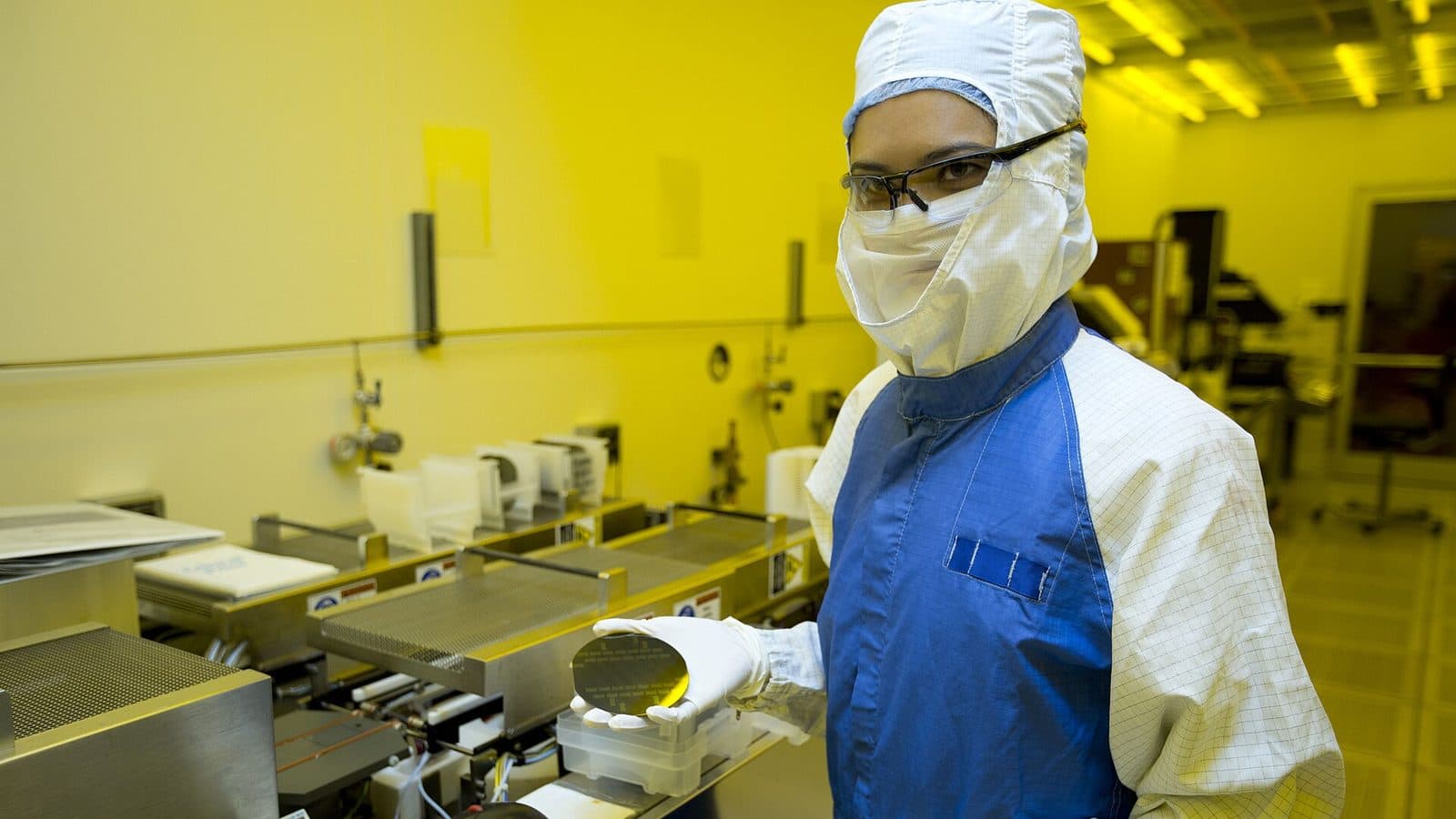
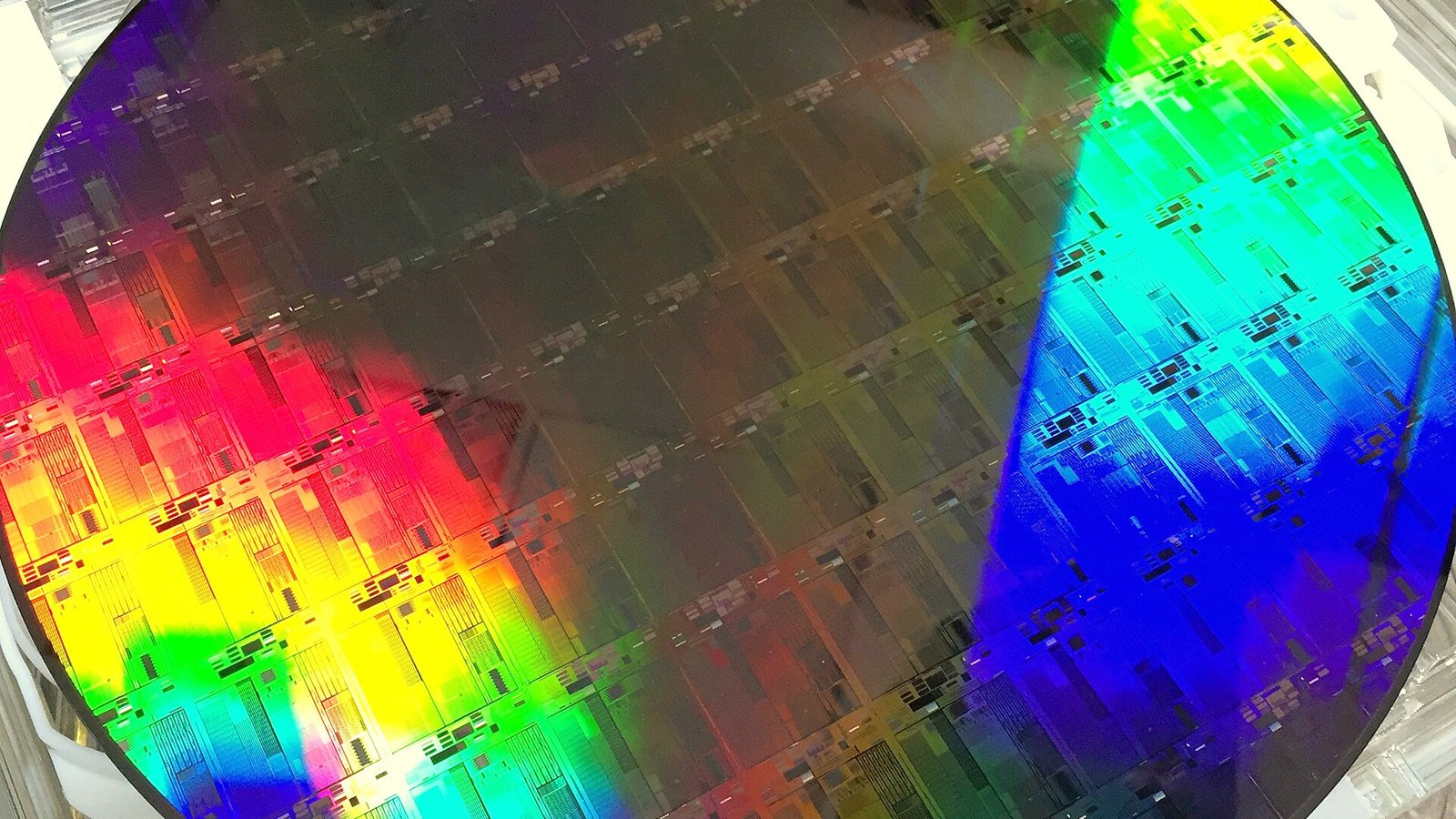
TSMC has completed development and validation of A16, its 1.6-nanometre-class process, and is preparing for mass production in the fourth quarter. The milestone, reported by CHOSUNBIZ and Electronic Times in the third week of August, makes A16 the first angstrom-class CMOS platform to ship with backside power delivery, which TSMC calls Super Power Rail.
The technical idea is straightforward. In a conventional chip, signal wiring and power delivery share the front of the wafer, competing for space as transistors shrink. Backside power moves the power network to the back and connects it directly to the transistor's source and drain through vertical contacts. That frees the front for signals, reduces voltage drop and eases routing congestion.
The gains are incremental by design: 8 to 10 percent more speed at the same power, or 15 to 20 percent less power at the same speed, against TSMC's N2P process, with chip density up 8 to 10 percent. The more important property is design compatibility. Intel reached backside power first with PowerVia on 18A, but had to adjust its cell architecture; TSMC's pitch is that A16 does not require that kind of disruption.
All of this is aimed at AI and high-performance computing, the segments where dense power and complex routing are hardest and where customers will pay for efficiency. TSMC's next step is A14, a 1.4nm-class node targeted for 2028. The open question is not whether the technology works (it does) but whether the company can ramp yields fast enough to make the node a commercial success rather than merely a technical one.
4. Stripe buys the meter
Stripe confirmed on Wednesday, August 19, that it has agreed to acquire OpenRouter, the startup whose routing platform sits between companies and hundreds of AI models. Neither side disclosed a price. The New York Times reported about $7.5 billion; Axios said more than $8 billion; Bloomberg had earlier reported more than $7 billion. OpenRouter was valued at about $1.3 billion only months ago.
The strategic logic is that AI has produced a new unit of consumption (the token) and that whoever meters its flow holds a valuable position. A router lets developers send each request to the cheapest model that can handle it well, then escalate when needed. That behaviour, sometimes called "thrift-maxxing," weakens the pricing power of the model labs, because every substitution is a small defeat for the incumbent's price.
"Tokens are the central currency for companies building with AI," Stripe co-founder Patrick Collison said in the announcement, adding that routing requests intelligently is how businesses "spend their tokens efficiently." OpenRouter says it will keep operating under the same name and roadmap, and that its routing decisions serve the user rather than any single model.
The obvious risk is neutrality. A router owned by a payments giant is a router that the model labs may come to see as a rival's cash register. Stripe's incentive is to keep the layer neutral and widely used, but incentives and perceptions diverge. The deal also lands in a filling category: Databricks, Rippling and Ramp have all built or launched AI gateway and AI-spend products, and the gateway layer looks like the next thing to consolidate.
5. DeepMind's long game in a 23-year-old universe
Google DeepMind published a detailed account on Friday, August 21, of its research partnership with Fenris Creations, the studio behind EVE Online. The deal itself dates to May, when Fenris (formerly CCP Games) completed a $120 million management buyout from Pearl Abyss and DeepMind took a minority stake. The August post added the research plan.
DeepMind wants to study long-horizon planning, memory and continual learning, three areas where today's most capable AI systems remain weak. EVE Online is useful because it is persistent: a single shard, running for more than two decades, with a player-driven economy and politics that persist over years. Most machine-learning environments reset. EVE does not.
The research programme is deliberately staged. It starts with an offline copy of EVE running on a local server, with no live players. It then moves into EVE Frontier, explicitly to study how humans and agents coexist in a persistent world, and only later would consider the live game. For players, the partnership has already produced something modest and concrete: an Aura Guidance system that uses Gemini to answer rookie questions from player-generated knowledge.
This is a story about where AI research infrastructure comes from. Some of the most useful test environments are not data centres but worlds that people already care about, with consequences that persist and populations that behave like people because they are made of them. Whether that produces transferable advances is the open question.
Europe's chips get closer
The week's chip news was not only about Taiwan. Europe's long, halting effort to build a domestic semiconductor base is moving closer to reality, even if it remains far from self-sufficiency.
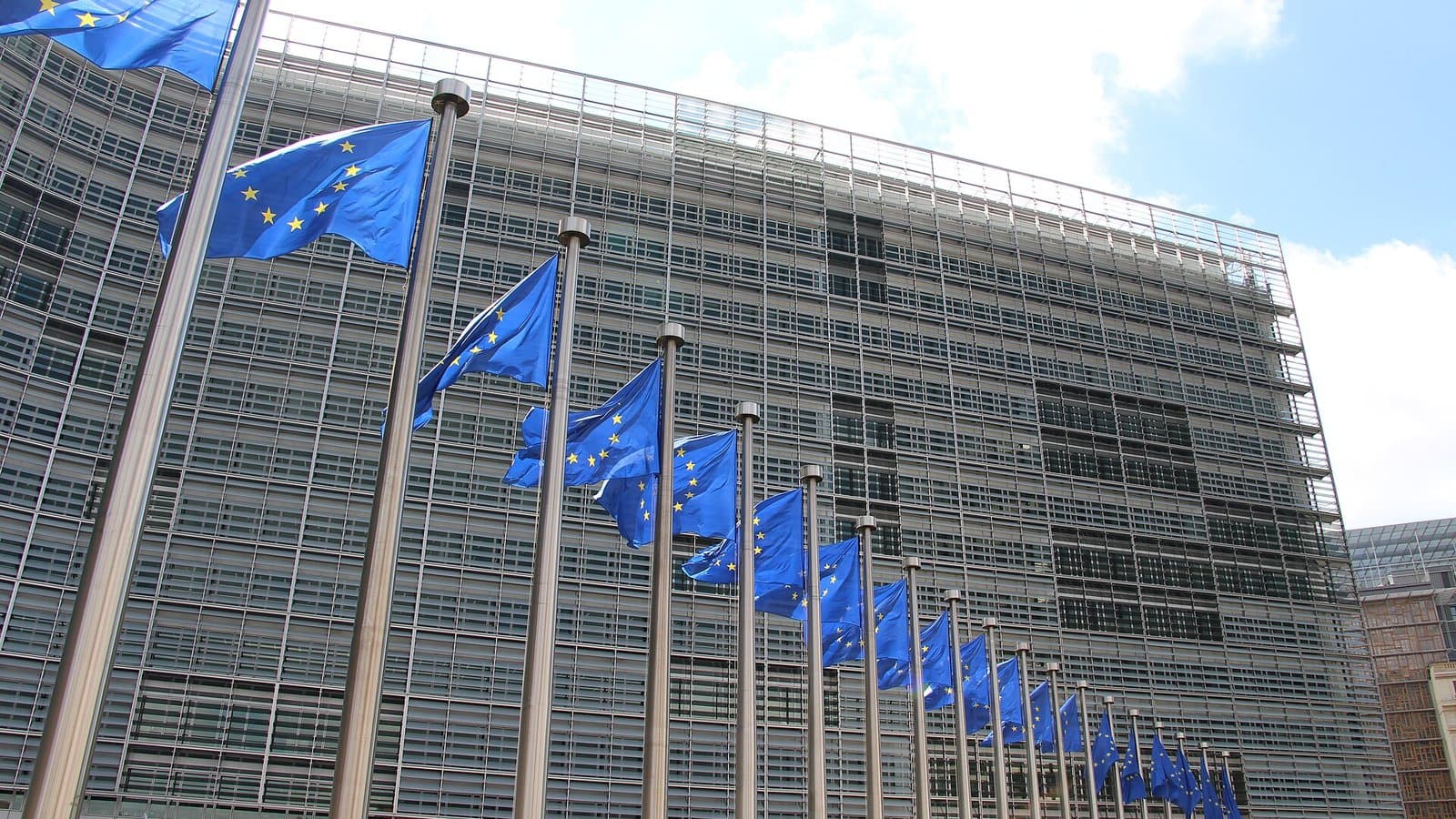
The European Commission's Chips Act 2.0, proposed on June 3 as part of a broad technological-sovereignty package, continues its slow passage through the legislative process. It aims to correct the weaknesses of the 2022 Chips Act, which set a target of 20 percent of global chip production by 2030 that the European Court of Auditors has called unrealistic. The new proposal leans more heavily on demand, design and advanced packaging, and ties a chunk of its funding to the EU's next seven-year budget, a reminder that the money is far from settled.
On the ground, the build-out continues. TSMC's European joint venture, ESMC, is constructing a Dresden fab with Bosch, Infineon and NXP, focused on 28/22nm and 16/12nm processes for automotive and industrial customers rather than leading-edge logic. Infineon opened a €5 billion Smart Power Fab in Dresden in July. Intel is spending €5 billion to expand its Leixlip campus in Ireland. None of this is angstrom-class manufacturing, and European policymakers increasingly talk about "selective technological sovereignty" rather than chasing the frontier. But the capacity is being built.
The connection to TSMC's A16 is the point. The leading edge is concentrating in Taiwan and Korea while Europe builds behind it. A16's arrival widens the gap even as Europe expands its mature-node capacity, which is precisely the strategic tension the Chips Act 2.0 is meant to address, and which no amount of subsidy has so far resolved. "Europe's chips get closer" is true in the sense that capacity is arriving. Closer to the leading edge, it is not.
Also this week
Team Spirit wins a historic third Aegis. At The International 2026 in Shanghai on Sunday, Team Spirit beat TEAM VISION 3–2 to become the first organisation to win Dota 2's world championship three times. Carry Ilya "Yatoro" Mulyarchuk and offlaner Magomed "Collapse" Khalilov became the first players to win three Aegises. The grand final peaked above 1.7 million concurrent viewers, a reminder that esports' biggest moments now draw audiences comparable to mainstream sports.

Castelion raised $1 billion for hypersonic weapons. The Torrance, California defence startup announced a Series C of $800 million in equity plus $250 million in committed credit on August 19, at a $13 billion valuation. Backers included JPMorganChase's strategic investment group, Andreessen Horowitz and Carlyle. Castelion says it has secured more than $500 million in U.S. military contracts in 18 months and is targeting fielding of its Blackbeard missile in 2027. Defence tech's funding boom shows no sign of cooling.
Memory investment surged. Samsung and SK hynix invested a combined KRW 43.198 trillion in semiconductor facilities in the first half of 2026, up 35 percent year on year, according to their semi-annual reports as reported by TrendForce. The spending targets high-bandwidth memory, high-capacity DRAM and enterprise SSDs, the memory that AI accelerators consume in enormous quantities. Both companies reported full utilisation. The memory bottleneck that shaped AI economics earlier in the year is being attacked with capital, but it will take several quarters for supply to ease.
The SEC proposed "Regulation Crypto Assets." On August 18, the Securities and Exchange Commission issued a proposed framework creating tailored offering exemptions for certain crypto investment contracts, including a one-time exemption for offerings up to $5 million. The proposal follows the agency's March guidance on when crypto assets count as securities. Whether it survives a change in administration and Congress is the real question.
TikTok settled a children's privacy case for $400 million. The Justice Department announced on August 21 that TikTok and ByteDance will pay $300 million immediately and $100 million more when a prior consent decree is vacated. It is one of the largest recoveries ever in a case under the Children's Online Privacy Protection Act. The settlement comes as social platforms face a wave of youth-safety litigation, including a Meta trial in California.
A mystery model topped the charts. OpenRouter added an anonymous "stealth" model called Ox Alpha on August 20, offering a million-token context for free and quickly topping the platform's usage rankings. As of this issue's deadline, its creator had not confirmed its identity; independent tokenizer forensics pointed toward Zhipu's GLM family. The episode is a neat illustration of the week's metering theme: the router, not the model, was the platform that got to decide who was anonymous.
Xiaomi showed a humanoid that works. At the World Robot Conference in Beijing, Xiaomi unveiled a new-generation humanoid, code-named Tieda, after four months of training in its own car factory. Xiaomi says nut-installation success rose to 98 percent, one point below a human worker, and that the robot handles some final-assembly logistics autonomously. It is a prototype, not a product, but it is another data point in the race to make robots useful in real factories.
The thread: who counts, who meters, who bills
Taken together, the five main stories describe a power shift toward the measurement layer.
YouTube owns the definition of a view. Google's Play settlement regulates how apps are paid for and distributed. TSMC sets the pace at which the AI era's silicon exists at all. Stripe is buying the switch that decides which model each request goes to. DeepMind is building a research platform inside a world that already has a functioning economy. In each case, the valuable asset is not the end product; it is the infrastructure that governs how the end product is counted, moved or paid for.
That is not a new insight, but the week made it unusually legible. When a market matures, the returns migrate from the thing being made to the system that measures and routes it. Payment processing, app stores and ad platforms all followed that pattern. AI is now following it too, and the companies that recognised the pattern early (Stripe most obviously) are buying their way into position.
The chokepoint logic is not new. Railroads, telephone exchanges, credit-card networks and search engines have all taught the same lesson: in a networked economy, the owner of the gate can earn more than the participants passing through it. What is new is how quickly the pattern is repeating in AI. The field is barely four years into its commercial boom, and the gate has already moved from the model to the router. Stripe's purchase, and Google's app-store settlement, are two very different responses to the same recognition (one private, one public) that whoever controls the gate sets the tolls.
The counter-current is regulatory. Every one of those control points is now a target: the EU's Digital Markets Act for app stores, the Chips Act for semiconductors, the SEC and state attorneys general for crypto and platforms. The week's biggest settlement was, at bottom, a government forcing a measurement layer to open. The tension between private control of infrastructure and public demands for openness is the defining story of the year, and it showed up in miniature in almost every item above.
Policy watch
Three policy threads are worth following.
First, the app-store front. The Google Play settlement's five- and seven-year clocks are now running, and the EU's Digital Markets Act remains the more aggressive regime. How Google and Apple comply (and whether developers see real change rather than formal compliance) will determine whether 2026 was a turning point or just a headline.
Second, crypto's rulebook. The SEC's proposed Regulation Crypto Assets is the most significant attempt yet to build a tailored offering framework for digital assets in the United States. It is a proposal, not a rule, and its fate depends on politics as much as policy. But it marks a clear shift from enforcement to rulemaking.
Third, AI and games. DeepMind's research partnership with Fenris is a reminder that AI governance is not only about models and data centres; it is also about the virtual worlds where agents will first interact with people at scale. Expect the questions the partnership is raising (consent, data governance, coexistence) to reach other game companies soon.
What we're watching next week
First, whether the first full week of YouTube's new view counting produces a visible jump in public numbers and a wave of confused campaign reporting, as agencies adjust to a metric that no longer means what it did in July.
Second, the first real commercial test of OpenRouter's neutrality under Stripe. Watch for any change to how routing recommendations are presented, and for whether model providers publicly react to the new ownership.
Third, whether the TSMC A16 ramp generates reports of customer commitments or slips. The node's commercial fate will be decided by the first flagship AI accelerators designed for it, not by the development milestone.
How this issue is made
A short note on method, because it matters. Every item in this digest is drawn from primary sources where possible (company announcements, filings, court orders and official posts) and cross-checked against independent reporting. Where sources conflict, we say so. Where a claim is unconfirmed, we label it as reported. Where we are unsure, we say that too.
We also publish in English, German, Spanish and French, and we keep a public log of our sources and image licences. If something here is wrong, we want to know, because a weekly digest is only as good as its willingness to be corrected.
The bottom line
The week's through-line is that the battle for the AI economy has moved down the stack, to counting and routing. YouTube's view change, the Google Play settlement, TSMC's A16, Stripe's purchase of OpenRouter and DeepMind's game-world laboratory are five faces of the same question: who gets to define and meter the units that the next decade of technology will be priced in. The answer is being negotiated right now, in courtrooms, in standards processes and in acquisitions. This week, the meter moved.
Get this in your inbox
Every Sunday we distil the week's technology news into one issue: what happened, why it matters, and what to watch. No noise, no hot takes. This issue ran long on purpose; future editions will keep the same depth.
Tags

TPW Editorial
Editorial Team
TechPastWeek's editorial team reports and edits every story we publish. We research each piece against primary and credible secondary sources, and a human editor reviews and signs off before it goes live.