Sony Cancels Ratchet & Clank: Ranger Rumble Before Its Global Launch
Sony and Oh BiBi will delist the mobile shooter on 21 November and shut its servers on 1 May 2027, ending a soft launch that never became a full release.

On this page
Key takeaways
- Sony Interactive Entertainment and Oh BiBi announced on 6 November 2026 that Ratchet & Clank: Ranger Rumble has been cancelled after a regional soft launch.
- The final update shipped on 6 November 2026, the game leaves the App Store and Google Play on 21 November 2026, and its servers close on 1 May 2027.
- Pre-registration had opened worldwide on 15 July 2026, when Oh BiBi said the game was "gearing up for global launch" after a "successful testing phase", but no global release date was ever announced.
- Ratchet & Clank: Ranger Rumble was revealed on 12 November 2025 as a free-to-play multiplayer hero shooter for Android and iOS with 12 heroes and six modes at launch.
- The shutdown FAQ says the closure has no impact on other Ratchet & Clank games or PlayStation services, and player data will be deleted on 1 May 2027.
Sony Interactive Entertainment and developer Oh BiBi announced on Friday, 6 November 2026, that Ratchet & Clank: Ranger Rumble has been cancelled. The free-to-play mobile shooter shipped its final update the same day. It comes off the App Store and Google Play on 21 November 2026, and its servers shut down for good on 1 May 2027.
Related reading: Marvel's Wolverine Splits Critics and Players, and Insomniac Says It Is Listening · Santa Monica Studio Delays God of War Laufey to May 2027 as PS5 Nears 98M Units.
Less than four months earlier, Oh BiBi had opened worldwide pre-registration and described the game as gearing up for global launch after what it called a successful testing phase. No global release date was ever published. The cancellation did not interrupt a launch; it replaced one.
A year from reveal to shutdown
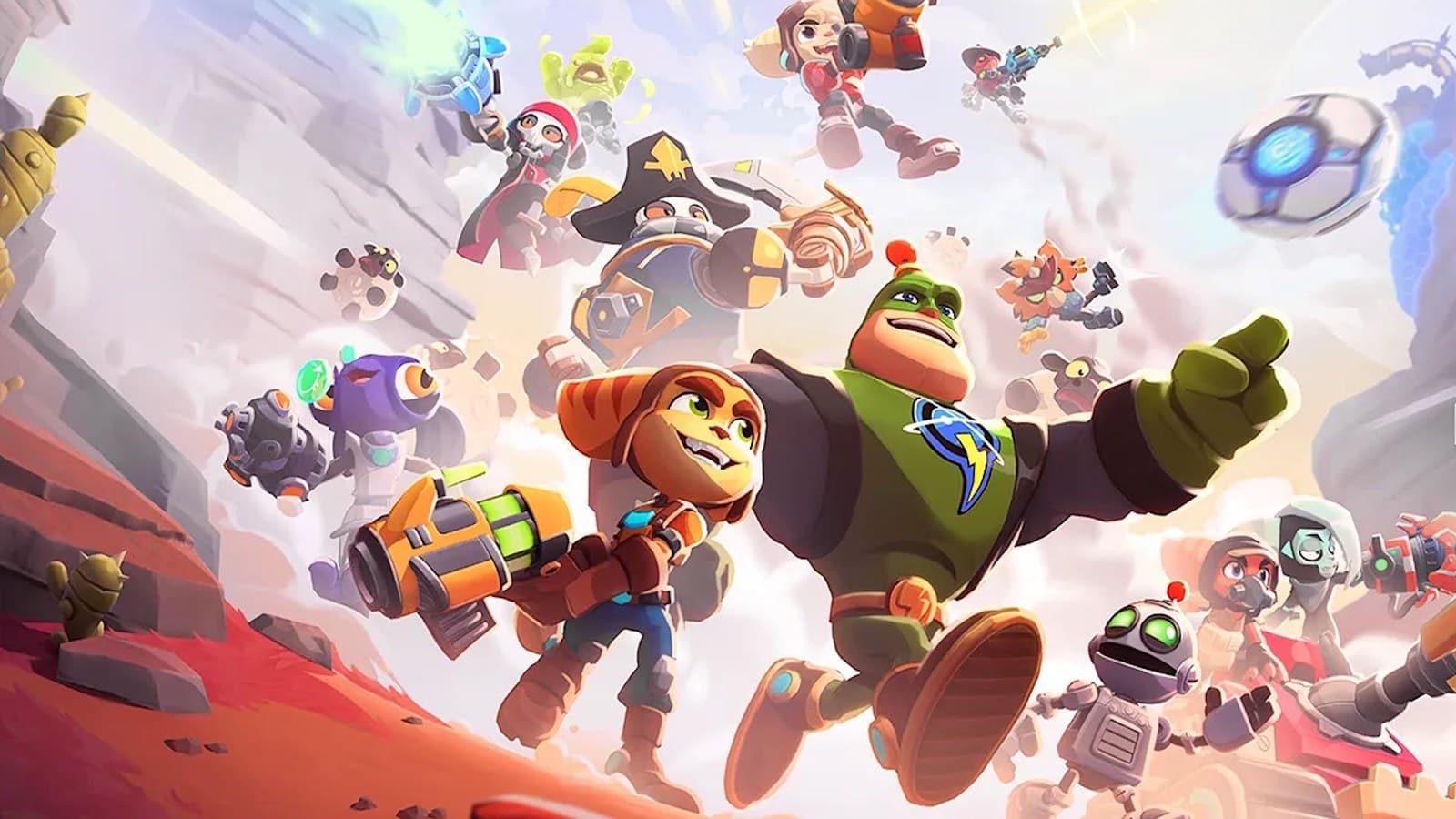
Ranger Rumble was revealed on 12 November 2025, almost exactly a year before the cancellation. It was a multiplayer hero shooter for Android and iOS, built by Oh BiBi with Insomniac Games and PlayStation Studios, and set inside a combat simulation that Captain Qwark had built to train new Galactic Rangers.
The pitch had real detail behind it. A PlayStation Blog post from 15 July 2026 listed 12 heroes at launch, six game modes, a battle royale variant and a football-inspired mode, and new Lombax characters developed with input from designers who had worked on the console games. Pre-registration opened worldwide that day, with a Clank Suit skin for a hero named Widget as the final community reward.
Before that, Sony had tested the game quietly in Canada, the Nordics, France and Asia. The United Kingdom followed in August 2026, the last of the regional soft launches. Polygon reported that reception in those markets was mixed at best. The public record then shows no launch date in July, none in August, none in September or October, and a shutdown notice on 6 November.
What players lose, and when
The wind-down is staggered, and the official shutdown FAQ sets out the order. The final update arrived on 6 November 2026. Stores delist the game on 21 November 2026, though anyone who already owns it can reinstall until that date. Servers stay up until 1 May 2027, and the game will not load afterwards.
Monetisation stopped sooner than play did. In-app purchases have already been removed, and the Super Pass is free for the rest of the game's life. The Qwark Pass seasons keep running until 1 May 2027, and players can claim and spend whatever currency and rewards they have earned or bought by then. Refunds for past purchases go through Apple or Google, not through Sony.
On 1 May 2027 all player data is deleted from the servers, and progress, purchases and unlocked items cannot be transferred to another game. The FAQ also says the closure has no impact on other Ratchet & Clank games or on PlayStation services, a line that reads as an attempt to keep the damage contained to one product.
The pre-registration campaign ended in an unusually literal way. Rewards promised to everyone who signed up for the worldwide launch are being handed out through the update the FAQ dates to 7 November 2026 instead, delivered to the in-game mailbox. A marketing mechanic built to convert interest into day-one installs for a launch that never happened was repurposed into a parting gift.
The announcement itself is short and warm, and it thanks players without citing a single number: "thanks to our amazing community for all your support, especially to those who have spent time playing, sharing feedback, and helping shape Ranger Rumble throughout its development!"
What Sony has not said
Sony Interactive Entertainment and Oh BiBi have published no player numbers, no revenue figures, no retention data and no reason for the cancellation. The announcement describes a difficult decision and thanks the community, nothing more. Any explanation for why the game failed to reach a global launch is inference, not disclosure.
"We've made the difficult decision to cease development of Ratchet & Clank: Ranger Rumble." — Oh BiBi and Sony Interactive Entertainment, 6 November 2026.
The economics of stopping early
A soft launch is a paid experiment. A publisher releases a free-to-play game in a handful of small markets, watches how many players stay past the first week, how many spend, and how much it costs to acquire each one, then decides whether to fund a global release. That second step is where the money goes. Launching worldwide means buying installs in dozens of countries at once, staffing live operations for a much larger audience, and committing to years of content updates.
Stopping before that step is the cheaper outcome, even though it looks worse in public. The development cost is already spent either way. What a cancellation avoids is the marketing budget and the live-operations commitment that a global launch would require, on a game that had not shown it could hold an audience at small scale. That is the standard failure mode for service games, and it is not specific to Sony.
The six-month gap between delisting and server closure fits the same logic. Keeping a small, already-built game running until 1 May 2027 costs far less than a global launch, and it lets the remaining players spend the currency and rewards they already paid for instead of losing them overnight. A hard switch-off in November would have produced refund requests and angry threads.
The odd part is the silence around it. A console game delayed by three months generates a statement, a new date and a wave of coverage, which is what happened with God of War Laufey's move to 20 May 2027. A mobile game cancelled outright after months of regional testing generates a support FAQ and a date for the servers to go dark. The difference is reach: a console delay lands in front of the whole PlayStation audience, a mobile shutdown in front of the people who installed a soft-launched game.
There is also a genuine ambiguity in how to read the decision. One reading is that the test markets returned weak numbers, so Sony pulled the plug before paying for a global push. Another is that Sony decided the returns on mobile games of this size do not justify the management attention, whatever the test data said. Both fit the available facts.
Where this leaves Sony's mobile push
PlayStation's business still runs through console hardware and big single-player exclusives, and the past week made that plain. Sony reported 97.9 million PS5 shipments through 30 September 2026, 127 million monthly active PlayStation Network accounts, and 2.4 million copies sold of Insomniac's Marvel's Wolverine, as covered in our report on the Laufey delay and Sony's quarterly results. Those are the numbers the company discloses and the ones investors ask about.
Ranger Rumble was an attempt to extend a console franchise into a free-to-play mobile hero shooter, a format that lives on scale and daily engagement rather than on a finished story. Sony never attached a player target, a revenue target or a launch window to it in public. The only public benchmark it offered was the language of momentum: successful testing phase, gearing up, pre-registration open worldwide.
That makes the cancellation a data point about method as much as about one game. A publisher testing a console IP on phones learns something either way. It learns whether the brand travels to a free-to-play audience, whether a mobile-native studio can carry the tone, and how expensive it is to find out. Sony has not said what it concluded, or whether another mobile project is in the same position.
The corporate framing is deliberately narrow. The FAQ treats the closure as one product ending, with no bearing on the rest of the portfolio, and that is almost certainly how Sony wants it read. The broader read, that PlayStation's mobile expansion has yet to produce a lasting hit, is an interpretation the company has not addressed.
The console franchise is a separate question
Ratchet & Clank itself is not in trouble, at least not on the evidence here. Insomniac Games created the series in 2002, and its last console release was Ratchet & Clank: Rift Apart in 2021. Insomniac has not formally announced a new Ratchet & Clank console game. Polygon noted that the 2023 Insomniac hack and the leaks that followed indicated the studio had been working on a Rift Apart sequel, a reported detail rather than an announced plan.
That gap is now five years. It is also the normal rhythm of modern blockbuster development, where a studio of Insomniac's size splits its time between Marvel's Wolverine, other Marvel projects and its own catalogue. A cancelled mobile spin-off says nothing about whether a new console game is in production. The official FAQ goes out of its way to say the two are unconnected.
What the cancellation does show is how a franchise extension can fail without touching the franchise. Ranger Rumble borrowed the characters, the humour and the weapon design, put them in a free-to-play structure built for phones, and did not survive the test phase. Nothing in the shutdown notice suggests the brand failed. The business model or the execution did, and Sony has not said which.
What to watch
The first date is 21 November 2026, when the game disappears from both stores. Watch whether Oh BiBi announces a next project, and whether any of the new characters it created for Ranger Rumble surface elsewhere. Neither company has said anything about what comes after the shutdown.
Then comes 1 May 2027, the end of service and the deletion of player data. Between now and then, the useful signals are indirect: whether Sony restates any mobile plans at its next earnings report, whether another soft-launched PlayStation mobile title reaches a global release, and whether a new Ratchet & Clank console game is announced before the gap since Rift Apart reaches six years. For now, the mobile experiment ends with a store delisting and a FAQ, not a launch.
Cover image: Ratchet & Clank: Ranger Rumble key art, courtesy of Oh BiBi and Sony Interactive Entertainment, via Polygon.
Tags
Frequently asked questions
- When does Ratchet & Clank: Ranger Rumble shut down?
- The servers close permanently on 1 May 2027, after which the game will no longer load. The final update arrived on 6 November 2026 and the game is delisted from the App Store and Google Play on 21 November 2026.
- Can I still play Ranger Rumble after it is removed from the stores?
- Yes, if you already installed it. Existing players can keep playing until the end of service on 1 May 2027, and can reinstall until the delisting date of 21 November 2026.
- Why did Sony cancel Ratchet & Clank: Ranger Rumble?
- Sony Interactive Entertainment and Oh BiBi have not given a reason. Their announcement says only that they made the difficult decision to cease development, and neither company has published player numbers, retention data or revenue.
- Will the cancellation affect other Ratchet & Clank games?
- No. The official shutdown FAQ states that ending Ranger Rumble has no impact on other Ratchet & Clank games or PlayStation services, and Insomniac Games has not announced a new console entry in the series.

TPW Editorial
Editorial Team
TechPastWeek's editorial team reports and edits every story we publish. We research each piece against primary and credible secondary sources, and a human editor reviews and signs off before it goes live.