Silent Hill: Townfall Puts the Series in First Person in 1990s Scotland
Silent Hill: Townfall sends the series first-person to a foggy Scottish island in 1996, and critics have welcomed Konami's latest horror revival entry.

On this page
Key takeaways
- Silent Hill: Townfall released on September 24, 2026 for PlayStation 5, Steam and the Epic Games Store.
- It was developed by Screen Burn, a studio in Scotland, and published by Konami as part of the publisher's revival of the Silent Hill franchise.
- The game is a full-length, self-contained first-person survival-horror title set in 1996 on the fictional, foggy Scottish island town of St. Amelia.
- Its signature item is the CRTV, a battery-powered pocket television that reveals puzzle hints and lets players sense monsters through walls and fog.
- Critical reception is strongly positive, with Metacritic's aggregated critic scores sitting around 90 and GameSpew and PlayStation LifeStyle each scoring it 90.
Silent Hill: Townfall released on September 24, 2026 for PlayStation 5, Steam and the Epic Games Store. Developed by Screen Burn, a studio based in Scotland, and published by Konami, it is a full-length, self-contained first-person survival-horror game set in 1996 on the fictional, foggy Scottish island town of St. Amelia. Konami's release announcement described it as "a full-length, self-contained psychological horror set against the cold, isolated backdrop of Scotland."
Related reading: It: Welcome to Derry Surprise-Releases a 30-Minute Halloween Special Set Centuries Before Pennywise · Crystal Lake Reviews: A Thoughtful, Slow Friday the 13th Prequel.
The game is the latest step in Konami's revival of the Silent Hill franchise, arriving after the Silent Hill 2 remake and 2025's Silent Hill f. It is also built entirely around a first-person camera, a change that reviewers treated as the central design decision rather than a cosmetic one. That camera, more than the new setting, is what separates this entry from the remakes that preceded it.
Konami has presented the release as the next phase of the franchise rather than a side story, and the game's structure supports that reading. It carries its own cast, its own location and its own mystery, so a player can start here without having played an earlier entry, while the larger revival continues around it. The result is an entry that is simultaneously a fresh start and a continuation, which is an unusual thing for a long-running horror series to attempt.
Why first person changes the terms of the series
The series has spent its modern revival in third person, most visibly in the Silent Hill 2 remake, where a camera behind the protagonist gives a player room to read enemy positions and plan an escape. Townfall removes that room. PlayStation Blog's hands-on report framed the shift as the thing that narrows a player's options to facing a threat head-on or running, which the report said adds intensity to every battle and makes it easy for the protagonist to be overwhelmed.
That is a meaningful departure for a franchise whose horror has often depended on seeing the character and the space around them at the same time. Placing the player behind Simon's eyes turns the environment itself into the threat, because a monster that would be visible on a third-person screen can now be behind the player. Townfall leans into that by making awareness a resource, which is where its signature item comes in.
A letter, an abandoned island and a woman named Zoe
The protagonist, Simon Ordell, is drawn back to St. Amelia by a letter. The town appears abandoned, and the line between reality and hallucination is deliberately blurred. The PlayStation Blog report described Simon arriving ambiguously, apparently drifting toward a dock aboard a boat one moment and bursting out of the water and pulling himself ashore the next, as if he had just woken there.
The mystery turns on a woman named Zoe. The report said Simon answers a ringing pay phone, hears a cryptic voice pushing him to find her, and is pulled into an underground structure bathed in red light, the series' Otherworld. Exploring the structure leads him, impossibly, to an apartment where he finds the handheld television that becomes the game's most important item. The report also noted that the puzzles Simon faces double as story clues tied to Zoe and to the town's past, so the mystery is delivered through the mechanics as much as through cutscenes.
Konami's announcement set the same tone, describing Simon as called back to St. Amelia to "put things right," encountering a town that lies quiet beneath a heavy fog, seemingly abandoned but not at rest. The ambiguity is not a marketing line. It is the subject of the game.
The CRTV is the game's defining tool
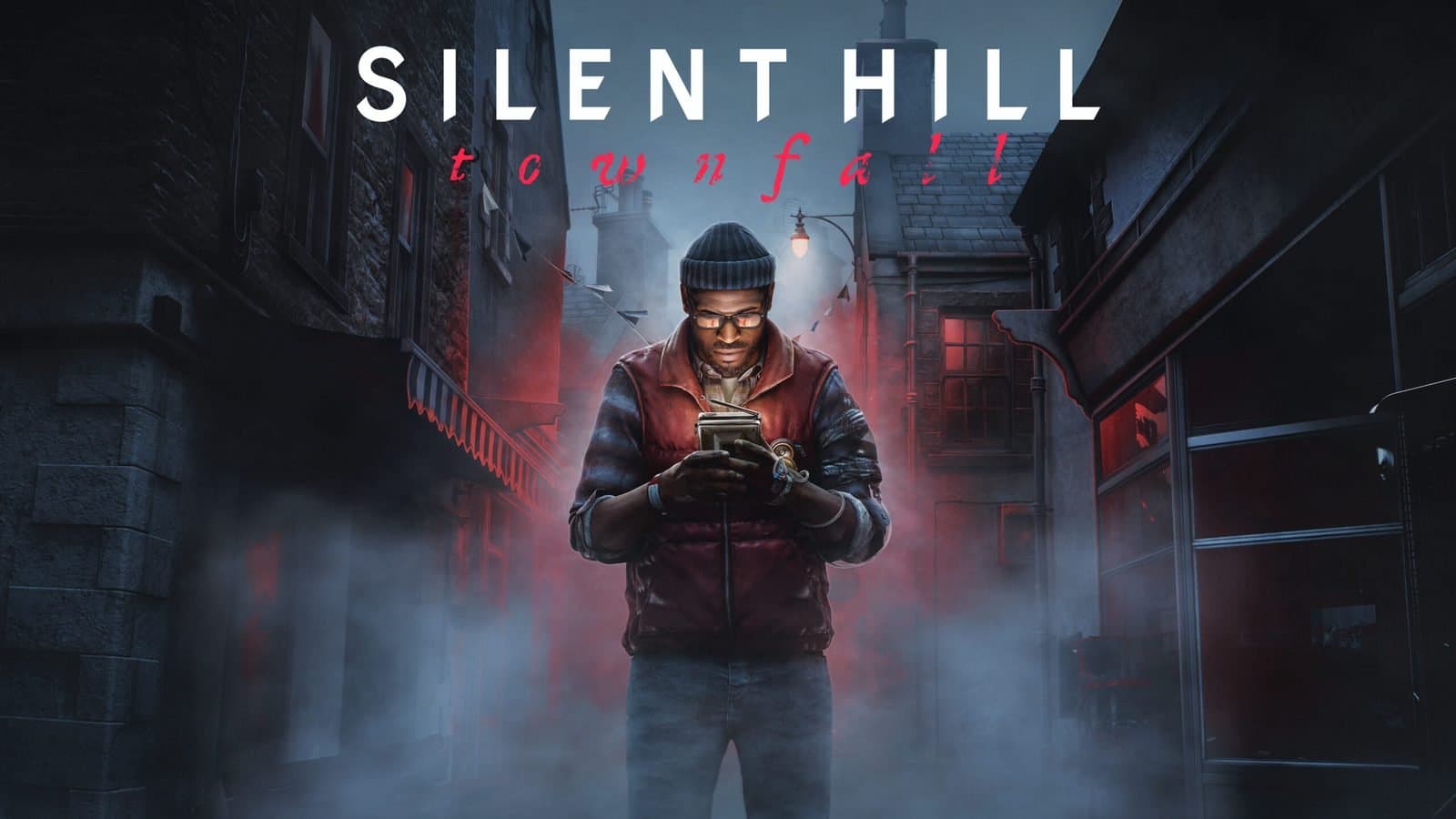
The signature item is the CRTV, a battery-powered pocket television. Tuning it to unstable signals reveals hints for puzzles, and it lets players sense monsters through walls and fog. TechRadar described the device as functioning like the game's "detective mode," rendering enemies in silhouette against a red background while keeping the screen obscure enough that players cannot lean on it constantly.
That last detail is the design. The CRTV occupies the player's attention while it is equipped, so using it trades awareness of your surroundings for awareness of threats. Reviewers treated the trade-off as the mechanism that keeps an information tool from flattening the tension. A device that simply marked every enemy on a map would end the horror; a device that shows you enemies at the cost of not seeing the room does not.
The CRTV makes monster awareness a resource rather than a given. Combined with scarce ammunition and breakable melee weapons, it pushes the game toward reading a space before entering it, which is the opposite of the combat-first rhythm of the earlier remakes.
Stealth and evasion come before combat
The game emphasises stealth and evasion over combat. Melee weapons such as wooden clubs break after a couple of fights, and the revolver is powerful but very loud, drawing more enemies, and reloads slowly cartridge by cartridge. Players can hide in closets, sheds and doorways, peek around cover, and throw bottles or bricks as distractions.
The PlayStation Blog report described combat as "fast and frenetic," with makeshift clubs surviving only a couple of battles and enemies that do not go down easily. It described the revolver as powerful but incredibly loud, and said firing it always made the situation worse by drawing more enemies. Tuning the CRTV to certain signals let the reporter see monsters through walls and fog and slip past them, which the report framed as the better option when a fight could be avoided.
The result is a survival-horror loop built on avoidance. A player who fights everything runs out of weapons, because the things that hit hardest also break fastest or attract the most attention. A player who reads patrols and finds hiding places progresses. That structure sits closer to the stealth-driven end of the genre than to the combat of recent Silent Hill titles, and the reviewers who liked it tended to cite the tension of being seen rather than the satisfaction of winning.
The design also gives the hiding places equal weight to the weapons. Closets, sheds and half-open doorways are not decoration; they are the answer to a world where every direct confrontation has a cost. TechRadar noted the outdoor sections are laid out with cut-throughs and hiding spots, which is what lets a player build a route instead of a kill count.
A cinematic frame, two performance modes and a photographed Scotland
Presentation is unusually specific. The game uses a 2.35:1 cinematic aspect ratio, with a 30fps Quality mode and a 60fps Performance mode. It is enhanced for PS5 Pro with an upgraded PSSR upscaler and ray tracing, and it uses DualSense haptics plus gyroscope motion controls to tune the CRTV and aim firearms. The 2.35:1 framing narrows the vertical view, which suits a horror game that wants players looking ahead and into fog rather than scanning a wide field.
Screen Burn photographed real coastal Scottish towns to build St. Amelia. The PlayStation Blog report said the developers visited and photographed those towns to recreate their look and feel, and TechRadar called the art direction "fantastic," saying the game captures the feel of a small Scottish town with period-correct storefronts, pebble-dashed houses, telephone booths and post boxes. The same review noted that the letterbox mode is enabled by default.
Motion controls are the other distinctive choice. With them enabled, tuning the CRTV requires physically moving and twisting the controller, and firearms can be aimed by moving the whole controller. It is a control scheme that either suits a player or does not, and reviewers who preferred it described it as a fast and precise way to aim.
What the critics said
Critical reception is strongly positive. Metacritic's aggregated critic scores sit around 90, with GameSpew and PlayStation LifeStyle each scoring it 90. Eurogamer called the game proof that the series' "stellar revival continues," and IGN said it gives the series "a welcome shot in the arm." TechRadar reviewed it positively, and Gaming Age called it an easy recommendation at $49.99.
The praise was not uniform in its reasoning, even when the direction was the same. TechRadar's verdict described the game as a competent blend of stealth, exploration, puzzle-solving and occasional combat, praising the art direction, the puzzles and the stealth, while listing less original monster designs, stilted facial animations and a less emotionally engaging story among its reservations. A pattern runs through the positive reviews: strong atmosphere and strong puzzles, with character work that lands less firmly.
Read together, the reviews point to a game whose strongest qualities are atmospheric and mechanical rather than narrative. That is a shift in what a Silent Hill entry is being praised for. The remakes were judged partly on how faithfully they carried familiar characters and stories, while Townfall is being judged on how well its stealth, its puzzles and its fog work as systems. Strong scores for a self-contained game with no returning cast suggest the audience for the franchise is willing to follow it into unfamiliar ground.
Where Townfall sits in the Silent Hill revival
Townfall follows the Silent Hill 2 remake and 2025's Silent Hill f, and it arrives while the franchise's commercial standing is being restated. Konami said in June 2026 that the series has sold more than 17.1 million copies worldwide, a figure it said included units shipped, store downloads and subscription services.
The choice of developer is part of the pattern. Screen Burn is based in Scotland, and the studio was founded under the name No Code. Handing a full-length, self-contained entry to an outside studio, in a new country and a new perspective, continues a strategy that has paired the franchise with partners rather than keeping every project inside one team. Whether that strategy produced a one-off experiment or a template is the question the reception now feeds into.
What could temper the praise
The main open question is whether the first-person, stealth-forward design appeals beyond the reviewers who praised it. The game asks players to accept that combat is a failure state and that the monsters are not the draw. TechRadar said it found the game less impactful than the Silent Hill 2 remake, and noted that some players will see Townfall as departing too far from the formula, a debate the review said had already begun.
Price is less of a hurdle. At $49.99, Gaming Age called it an easy recommendation, and the game is self-contained, so it does not require prior series knowledge. The stronger caveats are tonal and mechanical rather than structural: the game is a slow burn, and its emotional payoff arrives late.
What happens next depends less on Townfall's scores than on how Konami reads them. The game gives the publisher a template that differs from the remakes, with a new setting, a new perspective and an outside studio at a mid-tier price. For now, the narrower takeaway is simpler. Townfall released on September 24, 2026, and the early critical consensus places it among the stronger entries of the franchise's revival era.
Cover: Official Silent Hill: Townfall key art. Image via Konami / PlayStation.Blog press assets.
Tags
Frequently asked questions
- When did Silent Hill: Townfall come out?
- It released on September 24, 2026 for PlayStation 5, Steam and the Epic Games Store. It was developed by Screen Burn and published by Konami.
- Who developed Silent Hill: Townfall?
- Screen Burn, a studio based in Scotland, developed the game, and Konami published it. It is part of Konami's wider revival of the Silent Hill franchise after the Silent Hill 2 remake and 2025's Silent Hill f.
- What does the CRTV do in Silent Hill: Townfall?
- The CRTV is a battery-powered pocket television and the game's signature tool. Tuning it to unstable signals reveals hints for puzzles and lets players sense monsters through walls and fog.
- Is Silent Hill: Townfall focused on combat?
- No. The game emphasises stealth and evasion over combat. Melee weapons such as wooden clubs break after a couple of fights, and the revolver is powerful but very loud, drawing more enemies and reloading slowly cartridge by cartridge.

TPW Editorial
Editorial Team
TechPastWeek's editorial team reports and edits every story we publish. We research each piece against primary and credible secondary sources, and a human editor reviews and signs off before it goes live.