'Xbox is not for sale,' CEO Asha Sharma says as the division sheds studios and staff
Xbox CEO Asha Sharma told The New York Times on September 30, 2026 that Xbox is not for sale, capping a year of layoffs, studio spin-offs and Game Pass changes.

On this page
Key takeaways
- Xbox CEO Asha Sharma told The New York Times in a profile published September 30, 2026 that 'Xbox is not for sale,' responding to a report that Microsoft had considered spinning off or selling it.
- Microsoft cut about 4,800 roles globally on July 6, 2026, including 1,600 in Xbox, as part of a restructuring that will remove about 3,200 Xbox roles by the end of fiscal year 2027, close to one-fifth of the division.
- Four studios left Xbox in the July 2026 reset: Compulsion Games and Double Fine Productions returned to independence, while Ninja Theory and Undead Labs moved to new ownership. A fifth, Arkane in France, is still unresolved.
- On September 22, 2026, Xbox cut another 268 roles across Halo Studios, other first-party teams and Xbox Game Studios management, part of the previously announced reductions, and moved the next Halo game to Activision.
- Under Sharma, Xbox has lowered Game Pass prices, ended day-one Call of Duty on Game Pass and put time limits on cloud gaming, while signing a Kojima Productions deal that carries TV and film rights to Physint.
"Xbox is not for sale." That is how Asha Sharma, the CEO of Microsoft's gaming division, answered months of speculation in a New York Times profile published on September 30, 2026. The denial came at the end of a difficult year in which Microsoft has cut thousands of jobs, parted with four studios and reorganised what remains of Xbox into fewer, narrower units.
Related reading: Xbox Cuts 268 Roles, Gives the Next Halo Game to Activision and Proposes Closing Ninja Theory · Forza Horizon 6 PS5 Release Date Reportedly Set for January 26, 2027.
Sharma was responding to reporting from The Information that Microsoft had at one point considered spinning off or selling Xbox, the brand it has owned since 2001. The New York Times profile gives her the most direct denial yet, and it also shows how much room Microsoft has left itself to change how the division operates.
What Sharma said, and what she left open
Sharma's quotes are short and consistent. "Xbox is not for sale," she told the Times. Pressed on the operating model, she said: "We will do whatever it takes to set the company up for success, and we will look at the right partnerships, the right operating model and everything needed to achieve that." On Microsoft itself, she said: "We've got a long way to go with Microsoft, and we're going to take the long-term view."
Those three sentences do different jobs. The first rejects a sale. The second keeps every other option on the table, including partnerships and a new operating model. The third treats the current arrangement as unfinished work rather than a settled plan.
"Xbox is not for sale." — Asha Sharma, Xbox CEO
Sharma replaced Phil Spencer as the head of Xbox in February 2026, Polygon reported, and has moved quickly since. The division has cut spending, narrowed its studio roster and rewritten the terms of its subscription business.
The reset started in July, not September
The scale of the change is easy to misdate. The largest single round came on July 6, 2026, when Microsoft eliminated about 4,800 roles across the company, roughly 2.1% of its global workforce, according to TechCrunch. Of those, 1,600 were in Xbox that day. Sharma said in an internal email that total Xbox reductions would reach about 3,200 by the end of fiscal year 2027, close to one-fifth of the division, and called it "the most significant restructure in Xbox history."
The same restructuring sent four studios out of Xbox. Compulsion Games and Double Fine Productions returned to independence with their intellectual property. Ninja Theory and Undead Labs moved under new ownership with funding attached. A fifth studio, Arkane in France, was also marked for divestment; its consultations have run longer than the others, and no outcome has been announced, GeekWire reported.
The July round was smaller than it first looked, because Microsoft had already thinned the workforce voluntarily. Earlier in 2026 the company offered a buyout to about 8,750 eligible US employees, and roughly 30% took it, GeekWire reported, which reduced the number of involuntary cuts in July.
Sharma's internal note was blunt about why. "Our business today is not healthy," she wrote, adding that Xbox was "operating at margins that are 3–10x lower than comparable platform and publishing businesses." She also pointed to what she described as the most severe hardware crisis in the industry's history.
September's cuts are smaller, and part of the same plan
On September 22, 2026, Xbox eliminated another 268 roles, across Halo Studios, other first-party teams and the Xbox Game Studios management layer, as GeekWire and Variety reported. Microsoft put total company reductions that week at fewer than 600, about 300 of them in Washington state.
Those Xbox cuts are part of the roughly 3,200 roles the division had already announced in July, not a new round on top of them. The same memo moved work around. Development of the next Halo game goes to Activision, which Microsoft bought in 2023 for $68.7 billion, with a new team kept separate from Call of Duty. A reduced Halo Studios will support existing games and the community. Obsidian moves under Bethesda, Microsoft Casual Games moves under King, and Turn 10 and Playground Games merge to handle Forza and Fable. Xbox chief content officer Matt Booty said the restructuring is about three-quarters complete.
Ninja Theory remains unresolved. Two separate agreements to hand off the Hellblade studio fell through, and Microsoft has told employees it could close while it keeps looking for a buyer. No final decision has been announced.
A leaner publisher, not a retreat
Put the cuts and the reorganisation together and a strategy appears. Xbox is keeping the parts that scale: franchises, Game Pass, publishing and the next console. It is shedding the parts that do not return platform-sized money.
The subscription business has already changed shape. Under Sharma, Xbox lowered Game Pass prices, ended the practice of putting new Call of Duty games on Game Pass at launch, and put time limits on cloud gaming, as Polygon noted. More changes to Game Pass have been rumoured but not confirmed.
Publishing has moved in the same direction. Xbox signed a deal with Kojima Productions for Physint, the action-espionage game Sony dropped, and the Times reported the agreement was "substantially below what Xbox would typically spend to develop a premium game." It also gives Xbox TV and film rights to the Physint intellectual property. That is how a company buys reach without carrying the full cost of development.
The backdrop: a hardware crunch and an impatient parent
Two pressures are pushing Xbox toward this version of itself. The first is the console business, which has been squeezed by rising component costs and a shrinking pool of buyers. Sharma calls it the most severe hardware crisis in the industry's history, and she has an interest in saying so, but the anxiety about console pricing is real enough.
The second is Microsoft itself. The company is pouring tens of billions of dollars into AI and cloud infrastructure, and its other divisions are judged against those returns. A games business on thin margins is an easy target for cost discipline, especially when the parent has already promised a date. Microsoft's gaming unit does not set the company's spending priorities; the cloud and AI businesses do. On the July 2026 earnings call, Microsoft said it expects Xbox to return to growth by the end of fiscal year 2027.
That target explains much of the activity. Cutting roles, folding studios under fewer publishers and relaxing the day-one Game Pass commitment all improve the near-term numbers. They also make the division easier to explain to investors, whether or not it stays inside Microsoft forever.
The money question
Microsoft CEO Satya Nadella described the division's "streamlining" as "great to see" on the Sources podcast in late September 2026, even as the job cuts continued.
Why deny a sale and break up the studios?
Both things can be true at once. Microsoft can intend to keep Xbox while making it cheaper to run and easier to value. A division with fewer studios, lower costs and a clearer multiplatform publishing model is a more attractive business inside Microsoft. It would also be a cleaner asset to separate later, if the strategy shifts.
That is the tension in Sharma's position. She ruled out a sale outright, then described an operating model that is still being chosen. The earlier reports that Microsoft weighed a spin-off were never confirmed by the company, and the profile does not say the idea was abandoned so much as that it is not the plan now.
There is a reading that fits the industry better than a simple sale story. Platform holders are being pushed toward software and services as hardware margins tighten. Xbox already publishes on PlayStation and Nintendo. A publisher that ships games everywhere and sells a subscription does not need to own four mid-sized studios to work.
The counterargument is that Xbox has now cut the creative capacity that makes exclusive games possible. Ninja Theory, Double Fine and Compulsion built distinctive titles. Their departure leaves Xbox more dependent on a smaller set of franchises, including Halo, Forza, Minecraft and Candy Crush.
Caveats
The quotes in this article come from the New York Times profile and, for the internal comments, from material Sharma posted or that was shared with reporters. The claim that Microsoft considered selling Xbox traces to The Information and has not been confirmed by Microsoft. Sharma's denial is the company's position, and it is a statement of intent, not a legal commitment.
The July and September layoff figures are company statements and press reporting, and totals have been revised as more detail emerged. The September reductions were described as part of the July plan, so they should not be added to the 3,200 as a separate total. Arkane's future and Ninja Theory's closure remain unresolved.
Project Helix, the code name for Xbox's next-generation console, was confirmed in March 2026. Microsoft says it will play both Xbox console and PC games, and Sharma has referred to a "family of devices," but the company has not given a release date or price. Any suggestion of when it arrives is speculation.
What to watch
Four things will show whether the reset is working.
- Xbox's next earnings. Microsoft has said it expects the division to return to growth by the end of fiscal 2027. The first quarterly report after the September cuts will show whether revenue is moving that way.
- Game Pass. The service is central to the subscription strategy, and further changes have been rumoured. A price increase, a tier shuffle or a new commitment about day-one games would clarify what Xbox thinks the service is for.
- Project Helix timing. The console is the hardware half of the plan. A release window and a price would say how soon Microsoft expects the current generation to hand over.
- Arkane and Ninja Theory. The two unresolved studio situations are the last pieces of the July divestment plan. Their outcomes will mark the end of the restructuring, or the start of another round.
Sharma's message on September 30 was that Xbox stays. The shape it will be in when the cutting stops is still undecided.
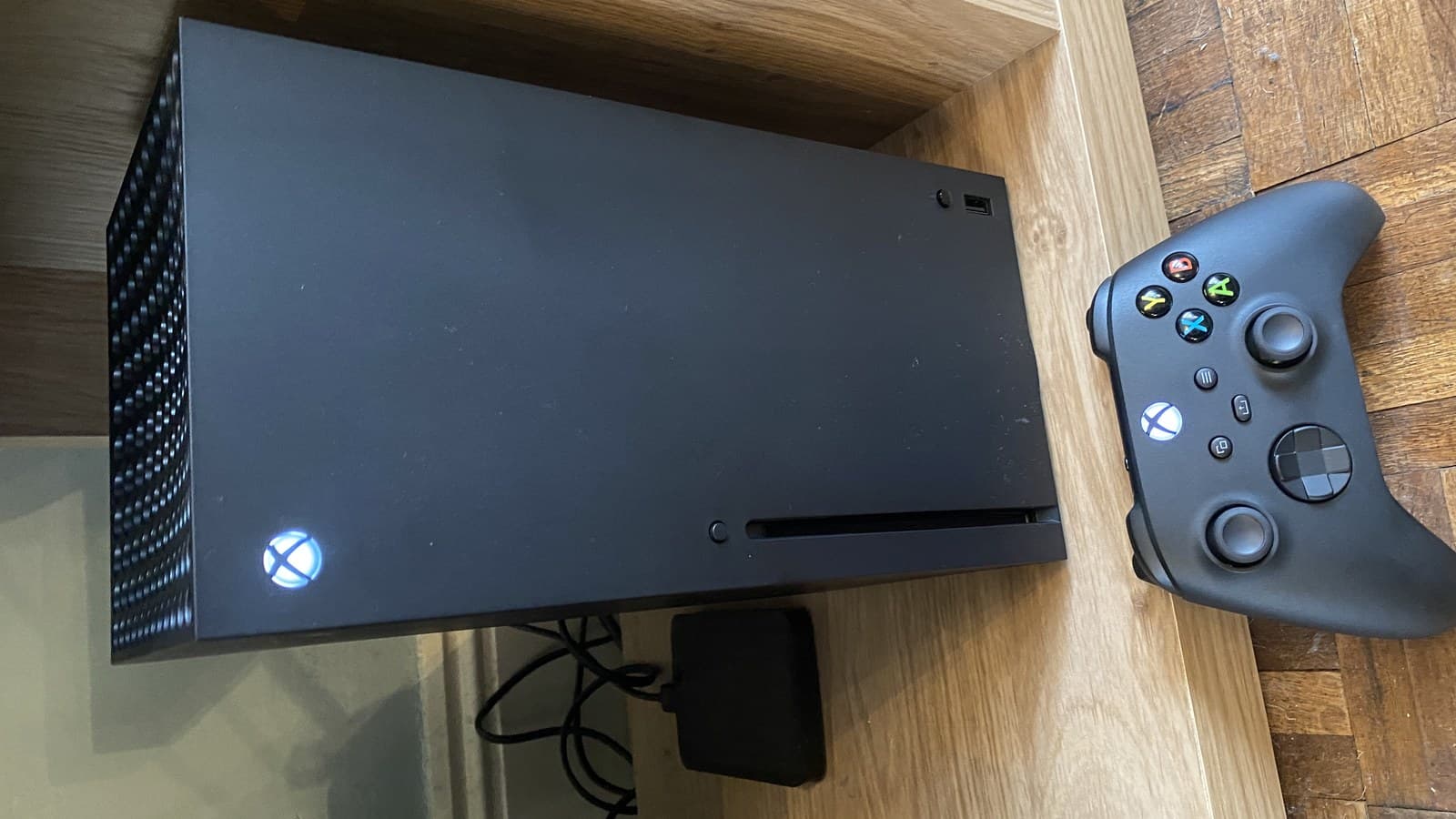
Cover: An Xbox Series X console with a controller. Image: Ian Hughes / Wikimedia Commons, CC BY 2.0.
Tags
Frequently asked questions
- Is Xbox for sale?
- No, according to Xbox CEO Asha Sharma. She told The New York Times in a profile published September 30, 2026: 'Xbox is not for sale.' Microsoft has not confirmed the earlier report from The Information that it considered a spin-off or sale of the division.
- How many jobs has Microsoft cut at Xbox in 2026?
- Microsoft cut about 4,800 roles company-wide on July 6, 2026, including 1,600 in Xbox, and said Xbox would remove about 3,200 roles by the end of fiscal year 2027, roughly one-fifth of the division. On September 22, 2026, Xbox cut a further 268 roles as part of that previously announced plan.
- Which studios did Xbox divest?
- Compulsion Games and Double Fine Productions returned to independence with their intellectual property, while Ninja Theory and Undead Labs moved to new ownership. Arkane in France was also marked for divestment and remains unresolved.
- What is Project Helix?
- Project Helix is the code name for Xbox's next-generation console, confirmed in March 2026. Microsoft says it will play both Xbox console games and PC games, but it has not announced a release date or price.

TPW Editorial
Editorial Team
TechPastWeek's editorial team reports and edits every story we publish. We research each piece against primary and credible secondary sources, and a human editor reviews and signs off before it goes live.