Boston Dynamics Names Ex-Amazon AI Executive Rohit Prasad as CEO
Boston Dynamics named Rohit Prasad, Amazon's former Alexa and Nova AI chief, as its CEO effective October 7, 2026, as it pushes a Physical AI strategy.

On this page
Key takeaways
- Boston Dynamics announced on October 6, 2026 that Rohit Prasad will become CEO effective October 7, 2026.
- Prasad spent 12 years at Amazon, rising to head scientist for Alexa and artificial general intelligence and later leading the Amazon Nova foundation-model family.
- He succeeds Robert Playter, who stepped down as chief executive in February 2026 after about six years; Amanda McMaster served as interim chief.
- Boston Dynamics is controlled by Hyundai Motor Group and sells the Spot and Stretch robots while developing the Atlas humanoid.
- The company announced the hire without a product roadmap, an Atlas delivery date or financial targets.
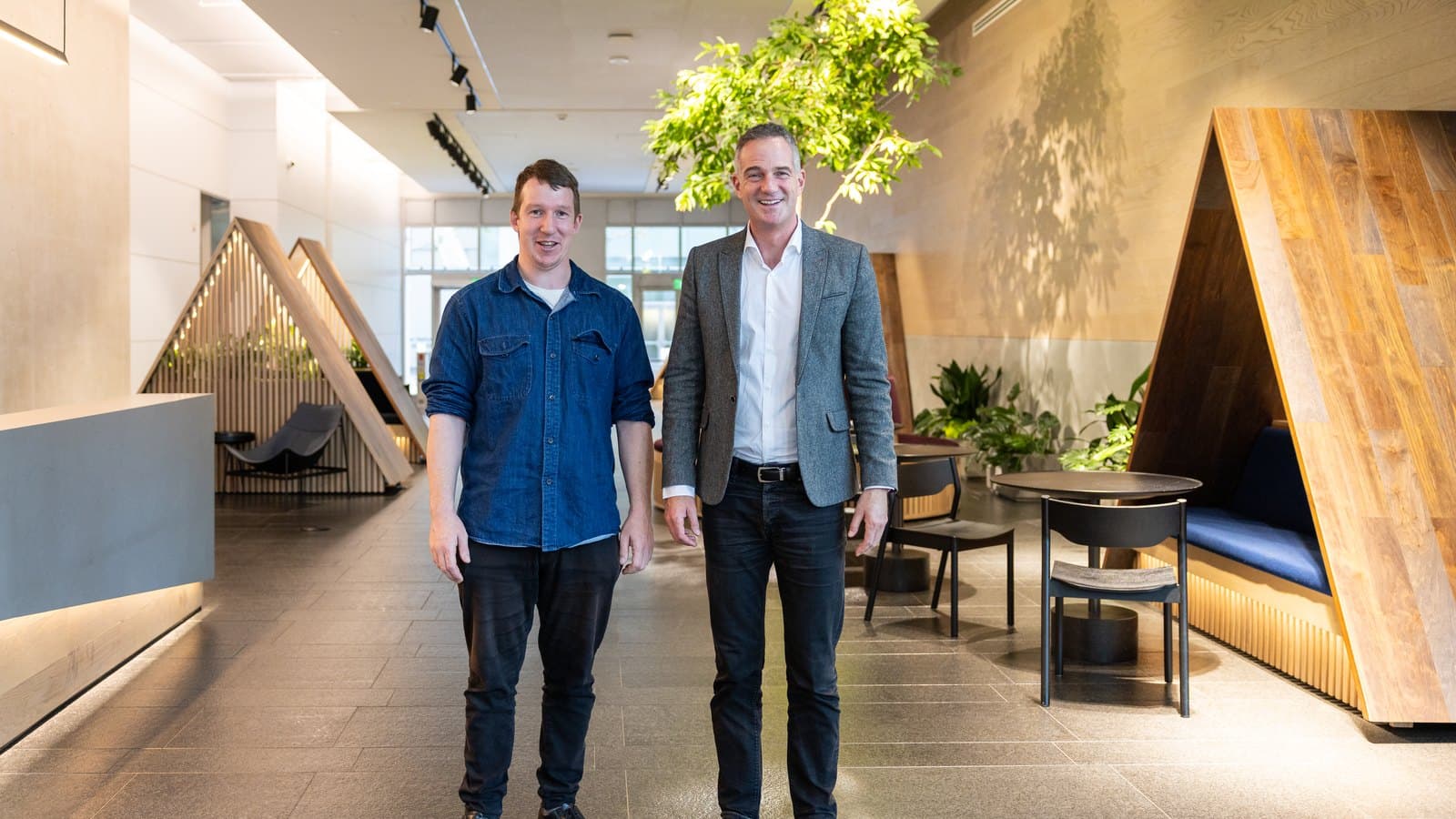
Boston Dynamics announced on October 6, 2026 that Rohit Prasad will become its chief executive officer, effective October 7. Prasad spent 12 years at Amazon, where he rose to senior vice president and head scientist for Alexa and artificial general intelligence, and later led the Amazon Nova family of foundation models. Boston Dynamics described the appointment as a way to accelerate a strategy it calls Physical AI, which pairs its robotics work with advanced AI. The company is controlled by Hyundai Motor Group.
Related reading: The Week in Tech: The Buildout Meets Its Balance Sheet · Genie 4 Adds Sound and Real-Time Steering to DeepMind's World Model.
The hire puts a consumer-AI and foundation-model executive in charge of a company known for machines that walk, run and catch themselves when they fall. Boston Dynamics has spent decades solving motion, and its next phase turns on a harder question: whether its robots can understand plain instructions and adapt to places no engineer mapped for them, instead of executing code written for each new task.
What Prasad brings from Amazon
Prasad's 12 years at Amazon were spent on the software side of AI at consumer scale. He helped build Alexa into a large-scale consumer AI service, later became head scientist for artificial general intelligence, and then led the Amazon Nova foundation-model family. Before Amazon, he spent nearly 14 years at Raytheon BBN Technologies leading machine-learning research. Reuters and The Robot Report both reported the appointment.
The career path matters as much as the title. Alexa was a product built to interpret messy human requests, ship updates continuously and hold up at enormous user scale. Nova was about training and fielding models rather than one polished demo. Those are the disciplines a robotics company needs when the goal shifts from a controlled demonstration to a machine that runs unattended in a customer's warehouse or plant.
Boston Dynamics has spent years making that shift on the hardware side. Spot, its quadruped, is sold for industrial inspection; Stretch, its wheeled robot, moves boxes in warehouses; Atlas, its electric humanoid, is still in development. Prasad's job is to make those machines easier to instruct and cheaper to run, and to decide where the company's AI work sits between models it builds itself and models it can rent from elsewhere.
The scale of his previous work is the relevant part. A consumer AI service used by millions of people has to cope with accents, half-finished sentences and requests its developers never imagined, and it gets judged on how often it fails. Warehouse and factory floors present the same kind of unstructured input, which is why that background maps onto robotics more directly than a conventional hardware profile would.
What Physical AI means to the company
The company's own framing is broad. It says Physical AI combines world-class robotics with advanced AI to commercialise intelligent machines at scale, and it presented Prasad's arrival as a way to advance that goal. The term carries the argument: it bridges a hardware company's history and the software future its owners want to fund.
Jaehoon Chang, Hyundai Vice Chair and chair of the Boston Dynamics board, tied the hire to the parent company's industrial base. "Boston Dynamics' industry-leading robotics, Rohit's proven ability to turn AI into products at global scale, and Hyundai Motor Group's modern manufacturing, logistics, and mobility capabilities give us a powerful foundation to build and scale Physical AI," he said in the company's announcement.
That is a statement about distribution as much as technology. A parent with factories, logistics networks and mobility operations can become a launch customer for inspection and handling robots, and can feed the kind of operational data that is hard to buy. Hyundai's ownership also means Boston Dynamics does not have to find its first industrial buyers from scratch.
Prasad framed his own arrival in the same announcement.
"Boston Dynamics is uniquely positioned to advance Physical AI through its world-class robotics expertise. I am honored to join the company at such a pivotal moment for the industry."
The leadership gap he inherits
Prasad succeeds Robert Playter, who stepped down as chief executive in February 2026 after about six years in the role. Amanda McMaster served as interim chief while the company searched for a permanent replacement. Prasad is based in the Boston area and is expected to join the company's board, subject to approval. The Boston Globe and The Next Web covered the transition.
The gap between February and October is roughly eight months, and it points to a deliberate search. The company sells inspection and warehouse robots and is developing a humanoid, yet its owner chose to run on an interim leader for two-thirds of a year rather than promote from within or settle quickly. The result is a chief executive whose experience sits almost entirely in software and AI rather than mechanical engineering or industrial sales.
The problem the hire points to
Robotics has a hardware problem and an intelligence problem, and the second one is now the harder. Legged and wheeled machines that can cross rough ground, recover from a shove and carry a payload are no longer exotic; several companies build and sell them. Making a robot that understands what a person means, plans around obstacles it was not warned about, and recovers when a task changes remains an open problem across the industry.
That is the gap a foundation-model background is meant to close. When a supervisor tells a warehouse robot to clear the inbound pallets before the truck leaves, the robot has to work out what "inbound" means at that site, which pallets count, what "before" implies about ordering, and what to do when one pallet is blocked. Hand-written code struggles with that kind of instruction. A model trained on language and paired with perception can, in principle, turn a request into a plan, then hand the plan to the motion stack Boston Dynamics already knows how to build.
That is the theory. It is also where the commercial stakes sit. A robot that needs a specialist to reprogram it for every layout is a project. A robot that can be told what to do is a product, and the difference between those two shows up in deployment cost and in how many customers a company can serve with the same engineering team. The hire suggests Boston Dynamics believes the second model is now reachable.
What the announcement does and does not say
Boston Dynamics confirmed the appointment, the effective date and the Physical AI framing. It did not publish a product roadmap, a delivery date for Atlas, or any financial target, and neither did Hyundai. Prasad's board seat is expected but still subject to approval.
There is a wider context the appointment sits inside. The mechanical side of robotics has been advancing for years, and the machines that result are capable of real work, but they are still configured by people who know the system. Moving that configuration into a model that can be prompted is what would change how the machines are sold. It is the same bet driving humanoid programs across the field, and it is the reason hardware companies have started hiring AI leaders rather than only robotics veterans. Boston Dynamics is not the only company making that turn. The wider humanoid race is about pairing capable bodies with models that can plan, and the programs that connect the two well will shape industrial automation over the next few years.
Caveats
Boston Dynamics announced a leadership change and a strategic label. It did not announce which parts of the business Prasad will restructure, how much the company will spend on AI, or when systems built under the new strategy will reach customers. The phrase Physical AI is broad enough to cover inspection software, warehouse orchestration, humanoid autonomy and more, so it reads as a direction rather than a plan.
The appointment itself is concrete and dated. The strategy behind it is a statement of intent, and the two should not be read as the same thing. The absence of targets is normal for a leadership change at this stage, and it also means the hire should be judged later against whatever roadmap the company eventually publishes. The Next Web centred its coverage on the Amazon experience in Prasad's background, and the reporting agrees on the facts of the move while offering little about what changes next. Whether the intelligence work pays off is a question for the products, not the press release.
Timing is one detail that sits apart from the rest. Prasad takes over in October 2026, the same month Boston Dynamics is marketing Spot and Stretch to industrial buyers and showing Atlas as a work in progress. A new chief executive arriving mid-cycle has to keep the shipping business running while changing how the company builds software, and those two jobs pull in different directions. The announcement does not say how he will balance them.
What to watch
Three things will show whether the appointment changes the company's trajectory. The first is Atlas. A humanoid that keeps improving in videos is not the same as a humanoid sold to a customer, and any move to name a pilot site or a buyer would be the signal that the intelligence work is reaching a product.
The second is whether the AI shows up in Spot and Stretch, the machines that generate revenue today. If inspection robots start taking verbal task assignment or adapt to unfamiliar sites without reprogramming, the strategy is real. If those products look unchanged a year from now, the hire is a bet on the future rather than a change to the present.
The third is Hyundai. The parent's factories, logistics and mobility operations give Boston Dynamics a place to deploy and a reason for the group to keep funding a business long associated with research rather than profit. Whether Hyundai treats the robotics unit as a strategic supplier or a science project will shape the answer.
Boston Dynamics confirmed the appointment; no roadmap was attached to it.
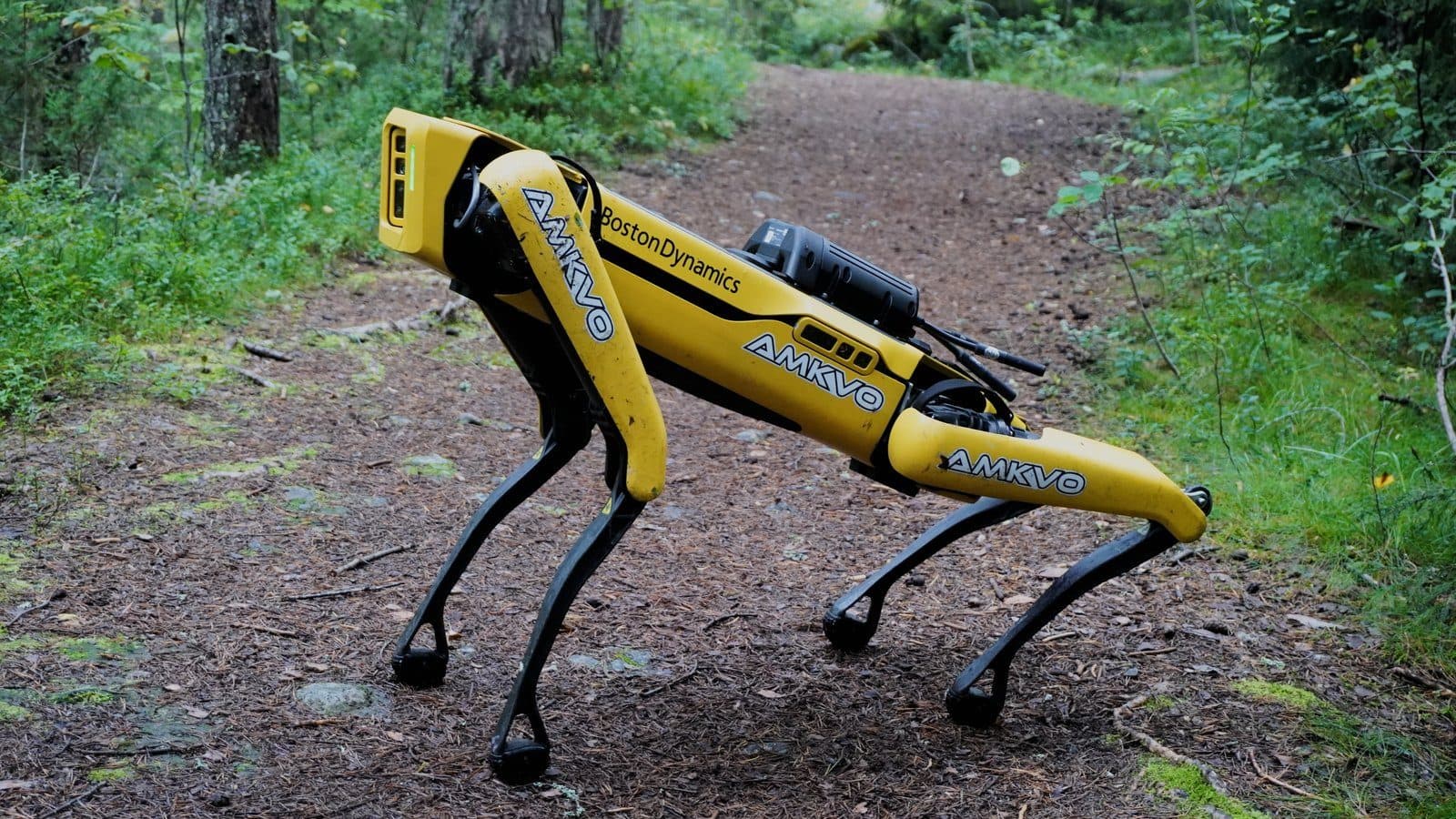
Cover image: Jonte, Wikimedia Commons, CC BY-SA 4.0.
Tags
Frequently asked questions
- Who is Boston Dynamics' new CEO?
- Rohit Prasad, a former Amazon senior vice president and head scientist for Alexa and artificial general intelligence, became CEO effective October 7, 2026. He spent 12 years at Amazon and previously spent nearly 14 years at Raytheon BBN Technologies leading machine-learning research.
- Why did Boston Dynamics choose an AI executive to run the company?
- The company framed the appointment around its Physical AI strategy, which combines its robotics hardware with advanced AI. Boston Dynamics already sells machines that move well; naming a foundation-model and consumer-AI leader points to software intelligence and commercialisation as the next priority.
- Who did Rohit Prasad replace at Boston Dynamics?
- Prasad succeeds Robert Playter, who stepped down as CEO in February 2026 after about six years in the role. Amanda McMaster served as interim chief during the search. Prasad is expected to join the company's board subject to approval.
- Who owns Boston Dynamics?
- Boston Dynamics is controlled by Hyundai Motor Group. Hyundai's manufacturing, logistics and mobility operations give the robotics company a potential industrial deployment path, according to Jaehoon Chang, Hyundai Vice Chair and chair of the Boston Dynamics board.

TPW Editorial
Editorial Team
TechPastWeek's editorial team reports and edits every story we publish. We research each piece against primary and credible secondary sources, and a human editor reviews and signs off before it goes live.