Bungie Reopens the Destiny Content Vault and Concedes Marathon Fell Short
Bungie says it will restore vaulted Destiny 2 campaigns, destinations and raids for all players, and rework Marathon into a deeper survival game.


On this page
Key takeaways
- Bungie said on 17 September 2026 that it will bring vaulted Destiny 2 campaigns, destinations and raids back into the game, available to all players.
- The studio said restoring the content requires updating lighting, encounters, combatants and other systems changed since the Beyond Light expansion, and gave no dates.
- Bungie also said Marathon did not reach as many players as it hoped and will be reworked into a deeper survival experience, with a permanent PvE mode in a December update.
- The reversal follows a difficult stretch for Bungie, including a fan petition reported at more than 400,000 signatures and roughly 300 layoffs.
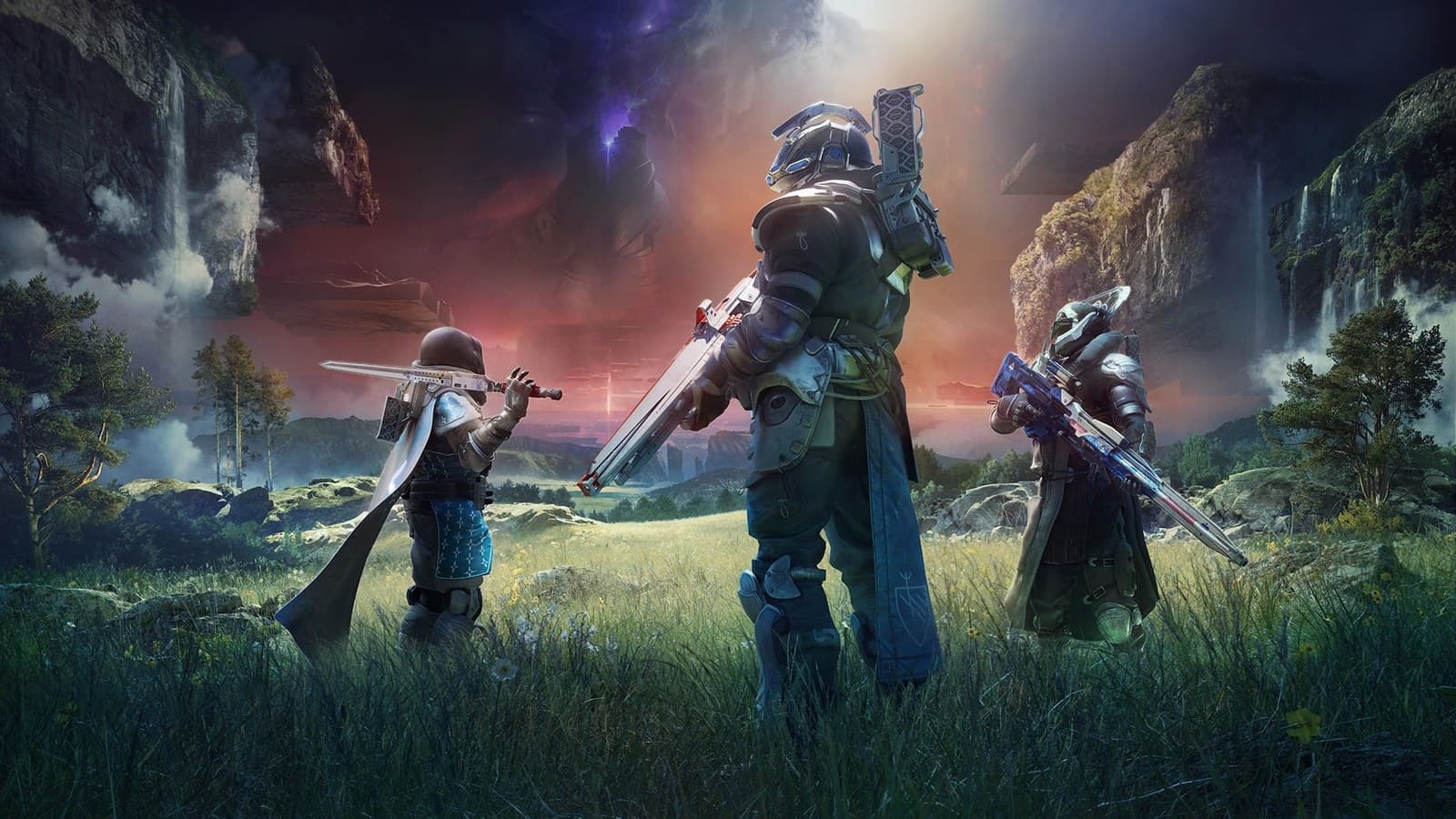
Bungie spent the past few months being asked to explain a decision it kept defending. On 17 September 2026 it answered a different question, publishing a studio update titled "The Next Chapter for Bungie" that commits the studio to undoing the Destiny Content Vault, the mechanism it introduced in 2020 to remove older Destiny 2 content from the live game. Campaigns, destinations and raids that were vaulted over the past six years will come back, and the studio says they will be available to all Destiny 2 players.
Related reading: Bungie Maps the Destiny 2 Unvaulting, With 2028 as an Estimate and No Release Date · GTA VI Has Already Booked About $630 Million in Pre-Orders.
The post, paired with a video from studio head Poria Torkan and Marathon general manager Josh Deane, is unusually direct about why. "We understand that removing these experiences had a lasting impact on player trust and enjoyment of Destiny," Bungie wrote. "We cannot change the decision we made, but we can acknowledge its impact and do the work to make it right by restoring these important parts of Destiny's history."
It is a notable reversal for a franchise that Bungie had appeared to be winding down. Earlier in 2026 the studio said Monuments of Triumph would be Destiny 2's final content update, and when that update arrived more than 160,000 players logged in to mark the end. Three months later, Bungie says the goodbye was premature.
The vault, and why undoing it is slow
The Destiny Content Vault was Bungie's answer to two problems at once: a game that had grown too large to maintain, and a live-service pipeline that could not keep every older activity tested and balanced. Starting with the Beyond Light expansion in 2020, Bungie removed whole campaigns and destinations from Destiny 2, including the original Red War campaign. The content was not deleted in a technical sense, but players who had paid for it could no longer play it.
That decision cast a shadow over the rest of the game's life. It split the player base between those who remembered the removed content and those who arrived later, and it raised a question the studio never fully answered: what does ownership mean in a game whose operator can take pieces of it away.
Bungie is clear that restoring the content is not a matter of flipping a switch. "Changes made to Destiny 2 since Beyond Light require us to update lighting, encounters, combatants, and other underlying systems," the post says. "That work will take time, but it is necessary to ensure returning content meets the stability and gameplay standards of Destiny 2 today."
"I wish we could just flip a freaking switch, but we're going to commit to unvaulting the Destiny 2 campaigns, the destinations, the raids that never should have been ripped away to begin with." — Josh Deane, Marathon general manager
Deane's line, quoted by GamerHub, captures the tone of the update. It is an apology as much as a roadmap, and it is thin on specifics. Bungie has not said which campaign, destination or raid returns first, how large the download will become, or whether the restoration will arrive in stages. The studio says only that more details are coming "in the months ahead."
The scale of the job is real. Vaulted activities were built against older versions of Destiny 2's engine, enemy AI and damage systems, and they were designed for player power levels that no longer exist. Bringing a raid like the Leviathan back means rebalancing encounters that were tuned for a different game. PC Gamer's Samuel Roberts called the move a studio-saving emergency decision, arriving at the last possible moment, and noted that Bungie framed it as one step among several rather than a finished plan.
What is actually in the vault
The list of what disappeared is long, and it is the reason the reversal carries so much weight with long-time players. Bungie began vaulting content with the Beyond Light expansion in 2020, and the first round removed the original Red War campaign that shipped with Destiny 2 in 2017, along with the Curse of Osiris and Warmind expansions that followed. Later rounds took the Forsaken campaign and its Tangled Shore destination, plus locations including Titan, Io, Mercury and Mars.
Raids went with them. The Leviathan and its lair activities, Scourge of the Past and Crown of Sorrow were all removed from the live game, even though players had paid for the expansions that contained them. Bungie has not said which campaign, destination or raid returns first, or whether the restored activities will arrive in a single update or in stages.
There is a practical problem the studio will eventually have to solve. The vault existed partly to keep Destiny 2's install size under control, and restoring years of content means a larger game. Bungie has not said how it will manage that, and it has not said whether every vaulted activity will return. What it has said is that the restoration is a project rather than a patch, which is why the update is long on intent and short on dates.
The vault also became a flashpoint for a wider argument about ownership in games that are sold as services. Destiny 2 was not the first live game to remove content, but it was one of the most visible, and the phrase "vaulted" entered the vocabulary of players who had watched a purchase turn into something they could no longer open. Reversing it is Bungie's attempt to answer that argument with action rather than a policy statement.
Marathon did not land as hoped
The same update addresses Marathon, the extraction shooter Bungie launched as its next big bet. The studio's message there is blunt: the game did not reach as many players as it expected, and the fix is to change what kind of game it is.
According to The FPS Review, Bungie says Marathon "was never meant to replace Destiny" and "admits the game did not reach as many players as it had hoped and needs to evolve beyond the genre constraints the studio placed on it." The next major update, due in December 2026, will add a permanent PvE mode. PC Gamer reported that the studio wants to turn Marathon into a "deeper survival experience" and shed some of the hardcore PvP-first framing it shipped with.
That is a significant pivot for a game that was positioned as a tense, player-versus-player extraction shooter in the mold of Escape from Tarkov and Hunt: Showdown. Adding permanent PvE and leaning into survival systems moves Marathon toward a crowded but more forgiving space. It also gives Bungie a way to keep the game alive without depending on the player counts that PvP extraction shooters need to stay healthy.
The money behind the reversal
Bungie's willingness to reverse course is easier to understand against its financial record. The FPS Review reported that Sony recorded roughly $765 million in combined impairment losses against Bungie in its fiscal 2025 results, tied to Destiny 2's underperformance and Marathon's lukewarm launch. An impairment is an accounting write-down of an asset's value, and at that size it tells a story about expectations that were not met.
The human cost has been steep too. GamerHub reported that the decision to end Destiny 2 drew a fan petition that gathered more than 400,000 signatures, and that it was followed by layoffs that affected almost 300 staff. A studio that has shed that much of the team that built Destiny's best content faces a hard question about whether it can restore old raids to their original standard.
Bungie's answer, for now, is that the franchise is the point. "Destiny is foundational to Bungie's future," the studio says, framing the unvaulting as the first step toward "new stories and games that you all deserve." That language leaves the door open to a Destiny 3 without committing to one.
What to watch
Three things will determine whether this is a turnaround or a gesture. The first is the pace of restoration: if the first unvaulted raid arrives in months rather than years, players have something concrete to judge. The second is quality, since old content rebuilt on a new engine can feel like a museum piece if the balance is off. The third is whether Bungie can keep Destiny 2's live service running with a much smaller team while also reworking Marathon.
For now the studio has done the part that costs the least and matters the most to its most loyal players: it has said out loud that removing paid content was a mistake. Everything that follows is engineering, scheduling and money. Bungie has promised more detail on the unvaulting effort in the coming months, and it has stopped pretending the vault was a closed chapter.
What Bungie has not said
The update does not name the first piece of content to return, does not give a release window for any of it, and does not say whether the restored campaigns and raids will be free or require existing expansions. It also does not confirm a Destiny sequel.
Cover: a Destiny 2 booth at E3 2018. Image by Sergey Galyonkin, via Wikimedia Commons, licensed under CC BY-SA 2.0.
Tags
Frequently asked questions
- What is Bungie unvaulting in Destiny 2?
- Bungie says it is beginning work to restore vaulted Destiny 2 campaigns, destinations and raids, and that the content will be available to all Destiny 2 players. It has not named which campaign, destination or raid will return first.
- When will the vaulted Destiny 2 content come back?
- No date has been announced. Bungie says years of changes since the Beyond Light expansion mean returning content needs updated lighting, encounters, combatants and underlying systems, and that it will share more details in the months ahead.
- Is Bungie making Destiny 3?
- Bungie has not announced a Destiny 3. It says the restoration work is a first step to laying a foundation for new Destiny stories and games, without naming a project or a release window.
- What is happening to Marathon?
- Bungie says Marathon did not reach as many players as it hoped and needs to evolve beyond the genre constraints it placed on the game. The next major update, due in December 2026, adds a permanent PvE mode.

TPW Editorial
Editorial Team
TechPastWeek's editorial team reports and edits every story we publish. We research each piece against primary and credible secondary sources, and a human editor reviews and signs off before it goes live.