DeepMind's AlphaGenome Atlas Predicts All 9 Billion Ways to Change Human DNA
Google DeepMind has precomputed the likely effect of every possible single-letter change to the human genome, a one-petabyte research tool it hopes will speed up rare-disease diagnosis.

On this page
Google DeepMind has released a database that predicts what nearly every possible single-letter change to human DNA is likely to do, roughly nine billion of them, precomputed across hundreds of cell and tissue types. The company calls it AlphaGenome Atlas, and describes it as "the most comprehensive catalogue of how genetic mutations affect molecular biology." It is free to use for academic research, and it exists because running the underlying model one variant at a time had become the bottleneck.
Related reading: Anthropic Says Claude Discovered a CRISPR-Like Enzyme System in Phage DNA · Google DeepMind Launches an Institute to Debate AGI Before It Arrives.
The human genome is about three billion base pairs long. Each position can, in principle, change into one of three other letters, which multiplies out to more than nine billion possible single-nucleotide variants. Most have never been observed in a living person, and for the overwhelming majority, whether a given change is harmless or the trigger for a disease is unknown. Atlas is DeepMind's attempt to fill in that blank space computationally, assigning each possible change a prediction of how it affects the regulation of nearby genes.
DeepMind published the details in a company blog post and an accompanying Google blog on September 8, 2026, alongside a preprint on bioRxiv and coverage in Nature. The atlas is a one-petabyte dataset, more than 30 times the size of the AlphaFold protein-structure database DeepMind released in 2021.
From one query at a time to a searchable map
Atlas is built on AlphaGenome, an AI model DeepMind released in 2025. Given a stretch of DNA up to a million letters long, AlphaGenome predicts how strongly a gene is read, whether regulatory proteins can bind to the sequence, and how the gene's transcript gets spliced together. It was designed for researchers who had a specific variant in hand and wanted to know what it might do. What it lacked was a way to look across the whole genome at once.
To build Atlas, DeepMind ran AlphaGenome across a reference human genome and compared each reference base against each of the three alternatives, precomputing the answers rather than serving them on demand. Each variant is linked to an average of about 27,000 individual predictions, enough detail to be useful and far too much to be read directly. So the team also built a summary metric, the AlphaGenome Variant Impact score, or AVI.
AVI folds AlphaGenome's predictions together with AlphaMissense, an earlier DeepMind model for protein-altering variants, and with measures of how strongly a DNA site has been conserved across evolution. The result is a single number. An AVI of 10 places a variant among the 10 percent most impactful in the genome; an AVI of 30 places it in the strongest one in a thousand. Crucially, the score works for both the roughly 2 percent of the genome that codes for proteins and the 98 percent that does not, the non-coding regions that orchestrate gene activity and hold most of the variants associated with common traits.
Why non-coding variants are hard
Most genome-wide association studies turn up signals in regions that do not encode proteins, which makes them hard to interpret: a variant may sit near a gene without any obvious way to tell whether it matters. AVI's usefulness is that it offers a ranking signal in exactly the part of the genome where researchers have historically had the least to go on.
DeepMind also scored more than 100 million short insertions and deletions observed in population databases, including the UK Biobank and the US National Institutes of Health's All of Us programme, extending the tool beyond single-letter substitutions.
A rare-disease case, and a benchmark
The most concrete evidence for Atlas comes from a collaboration with the GREGoR Consortium, which studies unsolved rare genetic diseases. Researchers at the Broad Institute, Laura Covill and Anne O'Donnell-Luria, used AVI to re-examine cases that genome sequencing had failed to resolve. In one child with epileptic encephalopathy, a severe form of epilepsy, the score elevated a previously overlooked variant in the gene DNM1 to the top of the candidate list.
The mechanism the model proposed was specific: the variant created an incorrect splice site, a mistake in the cell's instructions for assembling a protein, which led to the protein being extended by 13 amino acids. The effect showed up only in a version of the gene expressed in the brain, which is why earlier sequencing of blood samples had come up empty. Laboratory experiments confirmed the prediction, and the variant was reclassified as likely pathogenic.
DeepMind also reported a retrospective test on cases the consortium had already solved. AVI placed the known causal variant among a patient's top 50 candidates in 29.5 percent of cases, against 12.5 percent for CADD, an established ranking method. A second collaboration, with the University of Exeter's Gareth Hawkes, applied Atlas to whole-genome data from more than 54,000 UK Biobank participants. Grouping variants by their predicted molecular effect yielded 22 percent more associations between rare non-coding variants and circulating protein levels than a conventional analysis, and in one case narrowed a region of interest from 526 candidate variants to four.
What it does not do
DeepMind is careful, in its own materials, to bound the claims. AVI is a research tool, not a diagnostic one; the company notes the predictions have not been validated or approved for clinical use and can form only part of the evidence behind a diagnosis. AlphaGenome's science lead, Žiga Avsec, said the model works well for some classes of variant (those affecting splicing or promoters, for instance) but can miss others, particularly in enhancers, and that the predictions are not, overall, as accurate as AlphaFold's protein-structure results. Researchers should not treat them as "the universal truth," he told Fortune.
There are structural limits too. The atlas does not cover every cell type, and it captures effects that act directly on DNA rather than those that work indirectly, through changes in the levels of other regulatory proteins. Those caveats are not unique to DeepMind; they are the shape of the problem in computational genomics, where a prediction can be genuinely useful as a prioritisation tool without being a substitute for experimental work.
The commercial framing is worth noting. Atlas is free for non-commercial use through DeepMind's website, but commercial use is routed through Google Cloud, and DeepMind said its sibling company Isomorphic Labs, which applies AI to drug discovery, would also need a commercial licence. That is the same pattern the company has followed with other science models: publish the research, offer the base model broadly for academic work, and monetise the enterprise tier. For academic labs without large compute budgets, the practical effect is that a resource generating a petabyte of predictions is now a website query rather than a training run.
Why this is more than a database
The significance of Atlas is less about any single gene than about the change in method it represents. Genetics has always been limited by the cost of finding out what a variant does: a researcher who suspected a mutation might matter had to identify it, design an experiment and run it, which is why most of the nine billion possible variants will never be examined in a lab. Precomputing an AI prediction for all of them does not replace that evidence, but it changes where the search starts, from an unranked list to one ordered by likely impact.
The comparison to AlphaFold is instructive but imperfect. AlphaFold predicted protein structures with an accuracy that made experimental confirmation largely confirmatory; the structure-prediction problem has an objective answer that can be checked. Variant-effect prediction is messier. The same DNA change can matter in one tissue and not another, and its consequence often depends on other genes, on environment and on developmental timing. A model that predicts a splicing disruption can be right about the mechanism and still be wrong about whether it causes disease. That is why DeepMind's own researchers describe Atlas as a way to prioritise rather than to conclude, and why the clinical community is likely to treat it as a hypothesis generator for some time.
There is a governance question, too. Atlas is free for academic use but gated behind Google Cloud for commercial work, and DeepMind's sibling Isomorphic Labs is subject to the same licensing. That structure concentrates a powerful scientific resource inside one company's ecosystem, at a moment when access to large-scale genomic data is already uneven. DeepMind has published the model and a preprint, which is more openness than a purely proprietary tool would offer, but the training data and the commercial terms are not fully public. Researchers who build on Atlas should understand what they can and cannot do with the outputs, and what happens if the licence changes.
That has a compounding quality. Every experiment that confirms or contradicts a prediction becomes data that can improve the next model, and every researcher who uses Atlas generates a case that future versions can learn from. DeepMind's own framing traces the idea to AlphaFold, whose database of more than 200 million protein structures has been accessed by millions of users and reshaped how structural biology is done.
There is a reasonable scepticism to apply here. AI predictions have a way of sounding authoritative while being wrong in ways that are hard to spot, and a database that ranks variants by a single score risks being treated as more definitive than it is. The AVI benchmark results (beating CADD on the tasks reported, but not on all of them) are encouraging rather than conclusive. The tool's value will be settled not by the launch coverage but by whether labs find that it consistently points them at variants worth testing, and by how often it is wrong. On that test, the honest answer is that nobody knows yet. What is clear is that DeepMind has made the search space of human genetic variation navigable in a way it was not before, and that the tools for interpreting it will now be iterated on in public.
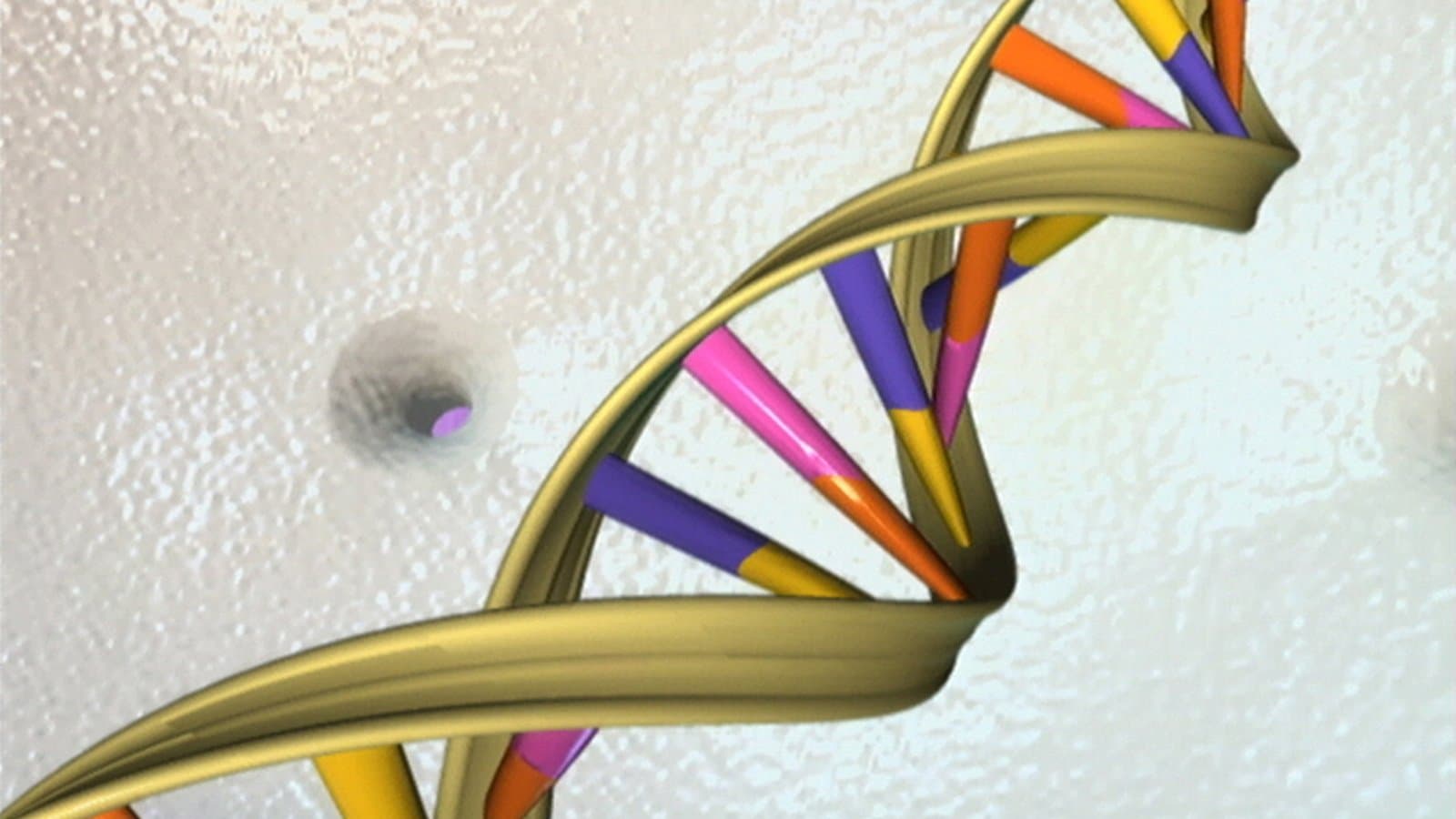
Feature image: a DNA double helix illustration by the National Human Genome Research Institute (NHGRI), public domain.
Tags

TPW Editorial
Editorial Team
TechPastWeek's editorial team reports and edits every story we publish. We research each piece against primary and credible secondary sources, and a human editor reviews and signs off before it goes live.