DeepSeek's V4 Pro Is Its Best Model Yet, and Its Priciest by Far
DeepSeek launched V4 Pro and raised API prices by up to 14x, its sharpest break yet from the low-cost strategy that made it a global AI phenomenon.

On this page
DeepSeek released its most capable model to date on Thursday, and, in the same breath, announced the steepest price increase in its short history. The Chinese company formally launched V4 Pro on August 13, ending a preview that had run for nearly four months, then confirmed that API pricing for its V4 family would rise sharply and move to a peak/off-peak structure starting this weekend.
Related reading: DeepSeek's Cheaper V4.1-Flash Beats Its Own Pro Model on Agent Tasks · Anthropic's Claude Haiku 5.5 Is Its Cheapest Small Model Yet.
The headline numbers are striking even by the standards of a company that built its reputation on being almost free. According to independent benchmarking firm Artificial Analysis, V4-Pro-0813 is priced at $1.32 per million input tokens and $3.96 per million output tokens, roughly nine times the input price and fourteen times the output price of V4 Flash, which lists at $0.14 and $0.28 respectively (Reuters).
It is the clearest signal yet that the era of the Chinese AI price war, at least as DeepSeek practiced it, is over.
What DeepSeek actually announced
Two things happened on the same day, and they are easy to conflate.
The first was a product release: V4 Pro, a flagship model the company says "substantially improves its capabilities for AI agents," is now generally available through its API, app and web products. It is a 1.6-trillion-parameter mixture-of-experts model with a 1-million-token context window, and it is already showing up on developer platforms.
The second was a pricing decision. DeepSeek said it would raise the rates it charges developers for both V4-Pro and the cheaper V4-Flash, and introduce time-of-day billing for the first time. The changes take effect at 16:00 UTC on August 16, according to the company's own pricing documentation. Peak hours are defined as 01:00–04:00 and 06:00–10:00 UTC; every other hour is off-peak, and off-peak rates are half the peak rates.
The new price list at a glance
Peak-hour rates, per million tokens, effective August 16: V4-Pro, cache-hit input $0.044; cache-miss input $1.32; output $3.96. Off-peak: $0.022 / $0.66 / $1.98. V4-Flash, cache-hit input $0.014; cache-miss input $0.44; output $1.32. Off-peak: $0.007 / $0.22 / $0.66. Before the change, V4-Pro cost $0.435 in and $0.87 out; V4-Flash cost $0.14 in and $0.28 out.
The increases vary enormously depending on which line item you look at. Quartz calculated the range as 50% to more than 1,100%, with the largest jumps landing on the cheapest tokens (cache hits), rather than headline output (Quartz). That is a subtle but important detail: the discount DeepSeek long offered to applications that reused context is the thing it is now clawing back most aggressively.
One point of confusion followed the announcement. Reuters, citing the company's statement, put the effective date at August 17; DeepSeek's pricing page says 16:00 UTC on August 16. The two are consistent once time zones are accounted for, but the discrepancy is a reminder that even basic details of this rollout were communicated hastily.
From price war to profitability
Why would a company whose entire brand is "frontier capability at a fraction of the price" suddenly charge more?
The most direct answer is that the old prices were never a sustainable business model. They were a land grab. DeepSeek used ultra-low pricing to win users at roughly one-tenth of competitors' rates, and it worked: the company recently claimed the top spot in global token-processing volume. But an aggressive discount is a customer-acquisition cost, and at some point the bill comes due.
That moment appears to have arrived. Analysts quoted by the Seoul Economic Daily describe the low-price strategy as having "hit its limits," with profitability pressure mounting ahead of a roughly 50-billion-yuan fundraising round and a planned initial public offering. Bloomberg reported that the increase is best understood as a pre-IPO move to demonstrate a credible path to margin. DeepSeek has also begun building a large AI data center in Ulanqab, Inner Mongolia, the kind of capital commitment that does not pay for itself on $0.28 output tokens.
DeepSeek did not suddenly become an expensive option. It became honest about what frontier inference costs to serve.
The bigger picture is that Chinese AI labs are collectively pivoting from market share to margin. A price war is a race to the bottom that only works while outside capital is covering the difference; once investors want a return, prices have to reflect reality. DeepSeek is the most prominent lab making that turn, but it is unlikely to be the last.
The compute bill behind the price tag
It is worth being precise about what changed and what did not. DeepSeek did not raise prices because its models became more expensive to train; the training was already paid for. It raised prices because serving those models at scale (the GPUs, the power, the cooling, the on-call engineers, and the inference optimization work) is a recurring cost that has to be recovered from someone.
The structure of the new pricing is a tell. By discounting off-peak usage to half the peak rate, DeepSeek is doing exactly what cloud providers have always done: using price to smooth demand across a fixed capacity base. Inference clusters are expensive whether they run at 40% or 90% utilization, so filling the troughs is worth real money. The fact that a model lab is now managing demand this way suggests it is thinking like an infrastructure business, not a research project.
That framing also explains the cache-hit increases. Reusing cached context is cheap for the customer and, in principle, cheap for the provider, but it consumes memory that could otherwise serve fresh requests. Pricing cache hits closer to their true opportunity cost is one of the easiest ways to improve margin without touching the headline output rate that developers watch most closely.
The open-weight pressure cuts both ways
There is a paradox in the timing. DeepSeek rose to prominence as the standard-bearer for capable open-weight models, the idea that frontier-class performance need not come from a closed, expensive API. That argument put enormous downward pressure on everyone else's prices.
Now DeepSeek is testing how much of that pressure it can release. By charging more for its hosted API, it is implicitly making a bet: that customers will pay a premium for convenience, reliability and agent-grade tool use rather than self-hosting an open model or routing to a cheaper competitor.
The open-weight escape hatch
DeepSeek's own weights remain downloadable. If the hosted API becomes too expensive, sophisticated teams can fall back to running V4-class models themselves, or to other open models. The company's pricing power is therefore bounded in a way that a closed lab's is not.
The counterargument is that serving a 1.6-trillion-parameter mixture-of-experts model at production reliability is not cheap either. The teams most likely to self-host are precisely the ones with the engineering depth to do it; everyone else still faces a build-versus-buy calculation in which a managed API often wins despite a higher headline token price.
What it means for developers
For anyone with production traffic on DeepSeek, the practical consequences are immediate.
- Costs will rise unevenly. Workloads that lean on output tokens will see the biggest absolute increases. Workloads optimized around cache hits face the steepest percentage jumps.
- Time-shifting has real value now. Because off-peak rates are half of peak, moving batch jobs and non-urgent inference outside the 01:00–04:00 and 06:00–10:00 UTC windows can roughly halve the bill.
- Routing becomes a discipline. With DeepSeek's budget and flagship tiers now further apart, teams have more reason to route easy requests to a small model and escalate only the hard ones.
- Portability matters more. The single best defense against any provider's price change is the ability to switch providers without rewriting your application. If your prompts, tool schemas and evaluation harness are tangled into one vendor's SDK, you cannot negotiate.
Even after the increases, DeepSeek remains cheaper in absolute terms than the top U.S. models. The Seoul Economic Daily notes that its new peak output price is about six times lower than Anthropic's Claude Opus 5 and roughly eight times lower than OpenAI's GPT-5.6 Sol. But U.S. vendors have begun arguing that absolute token price is the wrong metric, contending that their models need fewer tokens to finish the same task, which can flip the total-cost comparison on complex work.
The harness, the benchmark and the message
One more thread complicated the week's narrative. In the same 48-hour window, DeepSeek appeared to launch a coding "harness" (a tool positioned as a competitor to agentic coding assistants) and then deleted the announcement without explanation, according to The Next Web, which cited the South China Morning Post. The company did not respond to requests for comment on the deletion.
Read charitably, this is a publishing error. Read less charitably, it is a claim the company decided it could not yet stand behind, and the timing is awkward. The core pitch for V4 Pro is that it is materially better at agentic work, the exact category where customers are most willing to pay a premium. If that claim is not backed by independently run benchmarks, the higher prices rest on a promise rather than a measurement.
That is not unique to DeepSeek; the entire industry leans on vendor-reported benchmark numbers that are hard to reproduce and easy to game. But it affects how buyers should approach this release. The sensible posture is to treat V4 Pro as a candidate, not a fait accompli: run it against your own tasks, measure the token counts and latency it actually needs, and compare the total cost against both the cheaper tier and the competition before moving a production workload onto it.
Caveats and what to watch
A few cautions are warranted before drawing sweeping conclusions.
The price increase is not as large as the loudest "14x" framing suggests for every customer, because it is measured against an unusually cheap predecessor and because off-peak rates cushion the blow. Nor is DeepSeek the only Chinese lab raising prices; the broader shift is industry-wide.
More importantly, the product itself drew a mixed early reception. The Next Web reported that developer reaction to the V4-Pro-0813 build was underwhelming on general capability and critical of the pricing, though researchers were impressed in narrower areas such as cybersecurity. DeepSeek also quietly deleted its own announcement about a coding "harness" it had teased, without explanation, a reminder that the company's messaging is still in flux.
As for the money, reporting after the launch placed DeepSeek's ambitions higher still: Reuters and The Wall Street Journal reported the company is preparing a round of around $7.4 billion at a valuation near $74 billion, up from a June mark above $50 billion. Those figures are forward-looking and should be treated as reported rather than confirmed.
What to watch next is whether the increases stick. If DeepSeek's token volumes hold up through September, it will have proved that a Chinese lab can charge premium prices for a premium model. If volumes slide, the company may discover that its users were loyal to the price, not the logo, and that the price war it started is one it cannot easily un-start.
For now, the safest assumption for any team building on top of these APIs is the one that has always been true and is now impossible to ignore: model prices are a variable, not a constant, and architecture that assumes otherwise is a liability.
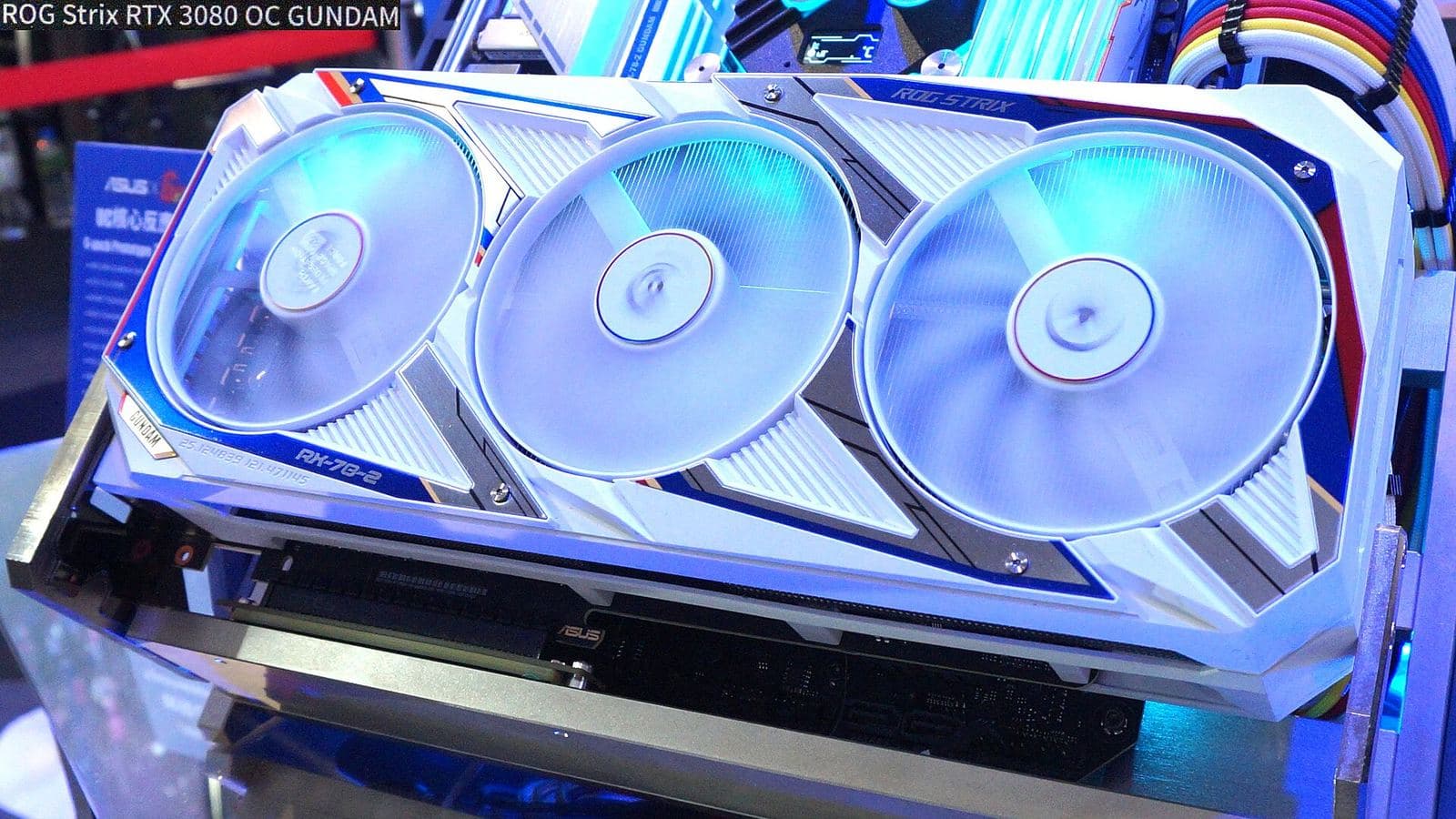
Cover image: an ASUS ROG Strix Nvidia GeForce RTX 3080 graphics card. Photo by Solomon203, via Wikimedia Commons, CC BY-SA 4.0.
Tags

TPW Editorial
Editorial Team
TechPastWeek's editorial team reports and edits every story we publish. We research each piece against primary and credible secondary sources, and a human editor reviews and signs off before it goes live.