SpaceXAI Ships Grok 4.7 for Coding at Grok 4.6 Prices, With Vendor Benchmarks to Match
SpaceXAI released Grok 4.7 on 21 September 2026, calling it its most capable coding model yet, with the same $2 and $6 token prices as Grok 4.6.

On this page
Key takeaways
- SpaceXAI released Grok 4.7 on 21 September 2026, describing it as its most capable model for coding and knowledge work, with the same $2 per million input tokens and $6 per million output tokens as Grok 4.6.
- The model uses a larger base model and a longer reinforcement learning run than Grok 4.6, and SpaceXAI says it checks its own work more carefully on long tasks.
- SpaceXAI reports CursorBench 4.0 rising from 40.4% to 46.3% and Terminal-Bench 4.0 from 20.3% to 38.0%, both vendor figures that have not been independently verified.
- Independent measurement tells a more cautious story: the Artificial Analysis Intelligence Index places Grok 4.7 at 46, behind Claude Fable 5.1 and GPT-6 at 53.
- Grok 4.7 is available through Cursor, Grok Build, the Grok API and third-party gateways, but not yet in the consumer Grok app or the free tier.
SpaceXAI released Grok 4.7 on 21 September 2026, calling it the company's most capable model yet for coding and knowledge work. It arrives with the same headline token prices as its predecessor, a larger base model underneath, and a set of benchmark improvements that the company published itself.
Related reading: Grok Voice Transcribe 2.0 Claims Double the Accuracy at the Same 10-Cent Price · Anthropic's Claude Haiku 5.5 Is Its Cheapest Small Model Yet.
The release is part of a fast cadence for Elon Musk's AI company, which had shipped Grok 4.6 in August and Grok Voice Transcribe 2.0 days earlier. Grok 4.7 is aimed squarely at the market where AI labs are competing hardest: software engineering agents that can work on a task for hours, run commands and check their own output.
The pitch is straightforward. SpaceXAI says Grok 4.7 was trained with a longer reinforcement learning run on a harder mix of tasks, weighted toward problems that can take many hours to complete, and that it verifies its own work more carefully than Grok 4.6. Availability is broad: Cursor, Grok Build, the Grok API, third-party coding tools and model gateways including OpenRouter, Vercel and Cloudflare. Cursor's announcement confirmed the model went live in its editor the same day.
The price is the strategy
The most consequential detail is what did not change. Grok 4.7 starts at $2 per million input tokens and $6 per million output tokens, the same base rates SpaceXAI charged for Grok 4.6. Cached input costs $0.50 per million tokens, and prompts at or above 200,000 tokens move to $4 per million input and $12 per million output.
That rate card sits closer to Chinese open-weight models than to the Western frontier. Claude and OpenAI's top models have generally carried higher per-token prices, and holding the line while improving capability is a deliberate way to compete for cost-sensitive developers. The Decoder read the pricing as the clearest signal in the launch, noting that the low rates probably exist for a reason.
SpaceXAI also sells a faster variant. Grok 4.7 Fast runs on speedier serving infrastructure and costs twice the standard rates, at $4 per million input and $12 per million output. It is the default in Cursor and Grok Build but is not offered through the public API, which keeps some control over how the capacity is consumed.
The model itself is capable on paper. It supports a 500,000-token context window, a knowledge cutoff of May 2026, text and image input, and four reasoning levels from low to xhigh with high as the default. It can use function calling, web search, X search and code execution. Those are table-stakes features for a frontier coding model, and none of them is unusual for the class.
What you get: a 500,000-token context window, text and image input, four reasoning levels, and tools for function calling, web search, X search and code execution, at $2 per million input tokens and $6 per million output tokens for standard prompts.
Vendor numbers and independent ones
SpaceXAI's published benchmarks show gains on every measure it chose. On CursorBench 4.0, which stresses longer-running coding tasks, Grok 4.7 scores 46.3 percent against 40.4 percent for Grok 4.6. On DeepSWE v1.1 it rises from 65.2 percent to 71.0 percent. The largest jump is on Terminal-Bench 4.0, where the company reports 20.3 percent for Grok 4.6 and 38.0 percent for Grok 4.7.
Those are vendor figures, and the gap between them and independent testing is the most important caveat in the release. The Decoder reported that independent Terminal-Bench 4.0 results put Grok 4.7 at about 26 percent, far below SpaceXAI's 38 percent and well behind GPT-6 Astra at 60 percent and Claude Fable 5.1 at 55 percent. The same article noted that even DeepSeek V4.1 Flash, a cheaper model, edges past it on that measure.
On the broader Artificial Analysis Intelligence Index, which combines ten benchmarks, Grok 4.7 scores 46 and lands mid-pack. Claude Fable 5.1 and GPT-6 lead at 53 each. That is not a poor result for a model priced this low, but it does not support the claim of a frontier leader either.
Mind the benchmark source: the CursorBench, DeepSWE and Terminal-Bench numbers from SpaceXAI are its own. Independent evaluation puts the model below the top tier on agentic coding, and vendor and third-party figures for the same test can differ by more than ten percentage points.
The discrepancy matters because the buyers SpaceXAI is courting do their own evaluation. A developer choosing between Grok 4.7, Claude and GPT-6 will run their own tasks and measure cost, corrections and time to completion. On price, Grok 4.7 competes hard. On raw coding ability, the independent numbers suggest it trails the leaders.
A crowded market with room at the value end
The context for the launch is a coding-agent market that has split into tiers. At the top, GPT-6 Astra and Claude Fable 5.1 compete on capability and carry premium pricing. Below them, a group of cheaper models competes on value, and Grok 4.7 sits in that group despite SpaceXAI's frontier framing.
That position is not a bad one. Many teams do not need the absolute best model for every task, and code review, test generation and routine refactoring are often good enough at a lower price. A model that is roughly competitive and much cheaper can win a large share of everyday work, while leaving the hardest problems to the premium tier.
There is also a distribution story. Grok 4.7 arrives in Cursor and Grok Build at the same time as the API, which puts it in front of developers inside the tools they already use. Model routers and cloud gateways add more routes, and the breadth of availability reduces the friction that can stall a launch. The limit is that it is not yet in the consumer Grok app or on the free tier, so the mass audience SpaceXAI reaches through its social platform has not seen it.
The race Grok 4.7 is entering
Coding agents have become the most competitive front in AI, because software engineering is the clearest place where a model's output can be verified and paid for. OpenAI's GPT-6 Astra and Anthropic's Claude Fable 5.1 sit at the top of the independent rankings and compete on capability, while a lower tier led by cheaper models competes on price and volume. Grok 4.7 lands in that lower tier on the evidence, with a frontier price tag that undercuts the leaders sharply.
The gap to the top is not enormous in absolute terms. An Artificial Analysis score of 46 against 53 is a real difference, but it is the kind of margin that shrinks with each model generation, and SpaceXAI has been releasing updates quickly. What separates the tiers today is less raw ability on average tasks than reliability on the long, multi-step jobs where an agent has to plan, act, recover from mistakes and check its own work. That is exactly where the independent Terminal-Bench numbers put Grok 4.7 behind.
For buyers, the practical question is not which model wins a leaderboard. It is which model finishes a given task at an acceptable cost, and that varies by team. A model that is slightly weaker but several times cheaper can be the better choice for review, testing and routine changes, while the hardest architecture and debugging work stays with the premium tier. Grok 4.7 is positioned to take the first kind of work, and the breadth of its distribution, from Cursor to the major gateways, is how SpaceXAI intends to win it.
What to watch
The first question is whether the low price holds. SpaceXAI has not said whether $2 and $6 per million tokens will persist as capacity scales, and the history of AI pricing is one of generous launch rates followed by rises once a model is entrenched. Buyers planning around these numbers should treat them as a current offer rather than a permanent floor.
The second is whether the capability gap narrows. SpaceXAI has been shipping models quickly, and each revision has improved on the last. If the independent benchmarks start to match the vendor claims, Grok 4.7's price advantage becomes much more threatening to the premium tier. If the gap persists, the model stays a value option.
The third is how Cursor and other distributors position the model. Making Grok 4.7 Fast the default inside Cursor is a strong vote of confidence, and defaults shape what developers use. Being the default in a popular tool is worth more than a leaderboard place, because it removes the choice entirely for users who do not switch models.
For readers weighing a switch, the honest summary is this: Grok 4.7 is a capable, inexpensive coding model from a company improving quickly, with vendor benchmarks that overstate its position against the leaders. Teams that value price and distribution should test it. Teams that need the best agentic coding should wait for independent results to catch up with the marketing.
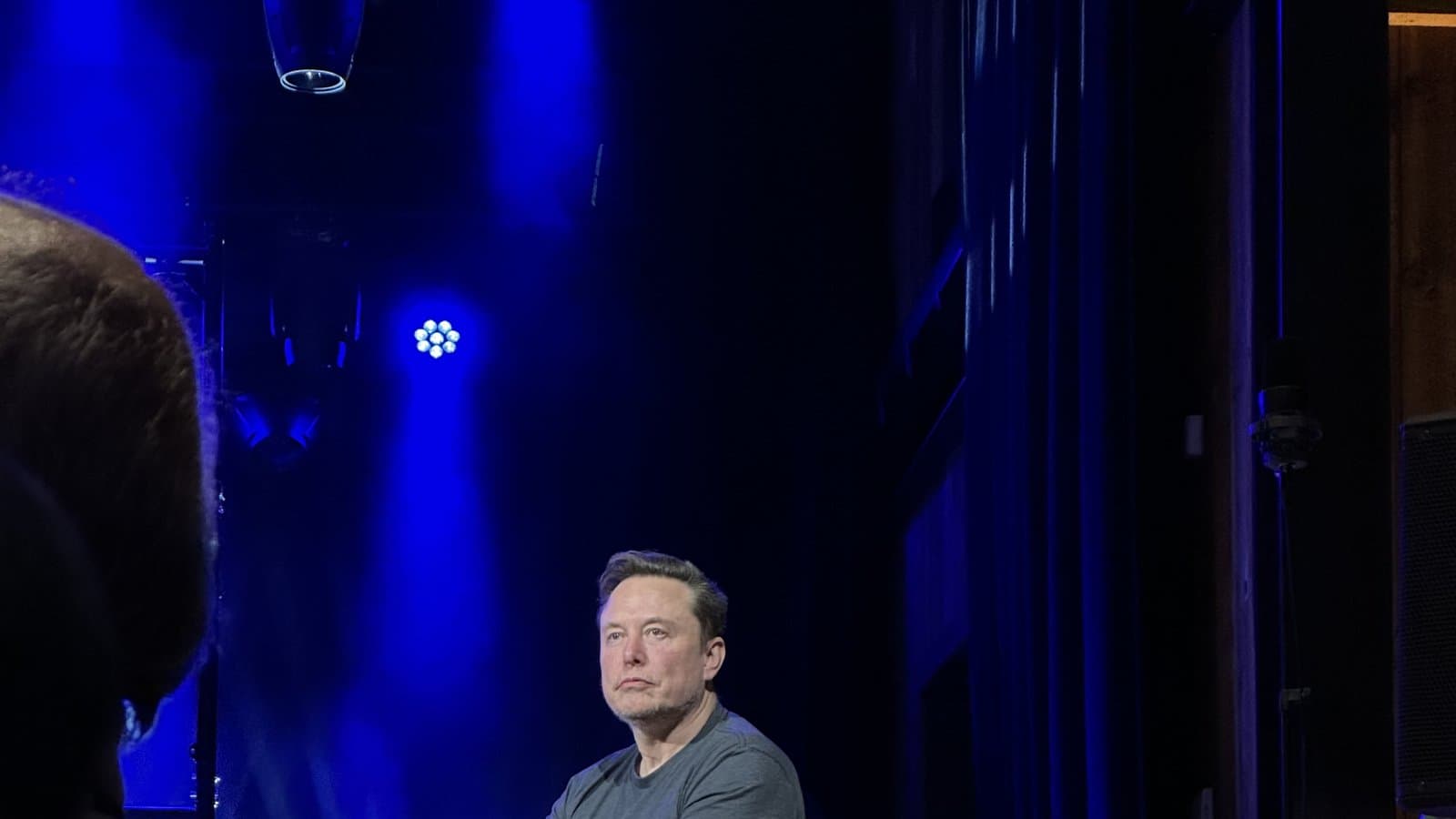
Cover: Wikimedia Commons photo of Elon Musk at a conference on 28 March 2024 by Wcamp9 (CC BY 4.0).
Tags
Frequently asked questions
- How much does Grok 4.7 cost?
- SpaceXAI lists Grok 4.7 at $2 per million input tokens, $0.50 per million cached input tokens and $6 per million output tokens for prompts below 200,000 tokens, the same base rates as Grok 4.6. Prompts at or above that size cost $4 per million input and $12 per million output.
- Where is Grok 4.7 available?
- It is available in Cursor, in Grok Build, through the Grok API, and via model gateways including OpenRouter, Vercel and Cloudflare. It is not yet in the consumer Grok app or the free tier, and a faster Grok 4.7 Fast variant is limited to Cursor and Grok Build.
- What is Grok 4.7's context window?
- It supports a 500,000-token context window with a knowledge cutoff of May 2026. It accepts text and image input, supports four reasoning levels, and can use function calling, web search, X search and code execution.
- Is Grok 4.7 the best coding model?
- Not according to independent testing. SpaceXAI's own benchmarks show strong gains over Grok 4.6, but the Artificial Analysis Intelligence Index puts Grok 4.7 at 46 while Claude Fable 5.1 and GPT-6 score 53, and independent Terminal-Bench results are well below SpaceXAI's published figure.

TPW Editorial
Editorial Team
TechPastWeek's editorial team reports and edits every story we publish. We research each piece against primary and credible secondary sources, and a human editor reviews and signs off before it goes live.