Grok Voice Transcribe 2.0 Claims Double the Accuracy at the Same 10-Cent Price
SpaceXAI's Grok Voice Transcribe 2.0 keeps batch pricing at $0.10 an hour while claiming double the accuracy of version 1.0. Here is what is verified.


On this page
Key takeaways
- SpaceXAI released Grok Voice Transcribe 2.0 on 18 September 2026, priced at $0.10 per hour of audio for batch transcription and $0.20 per hour for streaming, unchanged from version 1.0.
- SpaceXAI says the new model is twice as accurate as Grok Voice Transcribe 1.0 and that short-phrase word error rate across 19 languages fell from 20.6% to 6.8%. Both are company-reported figures.
- The company says Grok Voice Transcribe 2.0 ranks first for accuracy among 32 streaming models on the public Artificial Analysis leaderboard.
- Atlassian says Loom now transcribes every video with the model, and SpaceXAI says Transcribe 2.0 will become the API default while version 1.0 is deprecated in the coming weeks.
- OpenAI's competing GPT Live Transcribe, shipped 28 July 2026, lists at $0.017 per minute for streaming, while Grok Voice Transcribe 2.0 works out to $1.67 per 1,000 minutes for batch and $3.33 for streaming.
For an API that costs a dime an hour, the notable part of SpaceXAI's new speech model is not the price. It is what the company says it bought with that price.
Related reading: SpaceXAI Ships Grok 4.7 for Coding at Grok 4.6 Prices, With Vendor Benchmarks to Match · OpenAI Moves Frontier Training Off the Live Internet and Onto a Cached Copy of the Web.
On 18 September 2026, SpaceXAI released Grok Voice Transcribe 2.0, a speech-to-text model it describes as twice as accurate as Grok Voice Transcribe 1.0 while keeping the same published rates: $0.10 per hour of audio for batch transcription and $0.20 per hour for streaming (SpaceXAI). The company says the model ranks first for accuracy among 32 streaming models on the public Artificial Analysis leaderboard, and that on a 19-language set of short voice-assistant phrases, word error rate fell from 20.6% to 6.8%.
Those are company figures measured on company evaluations, and the qualification matters. The direction of travel does not: speech recognition is getting cheaper and better at once, and the vendors selling it increasingly compete on the audio they can train on rather than on the model alone.
What SpaceXAI actually shipped
Grok Voice Transcribe 2.0 is a hosted model, available through the Grok Voice API under the ID grok-voice-transcribe-2.0. It handles recorded files and live streams through the same weights, and SpaceXAI says existing Speech-to-Text integrations receive the accuracy improvement with no code changes (MarkTechPost). There are no open weights, so self-hosting is not an option.
The pricing is unchanged from version 1.0, which converts to about $1.67 per 1,000 minutes for batch and $3.33 per 1,000 minutes for streaming. At those rates, 1,000 hours of recorded audio costs about $100 to transcribe. Features that were billable line items not long ago are now bundled: speaker diarization at no additional cost, word-level timestamps with confidence scores, multichannel transcription across up to eight channels, key-term biasing of up to 100 domain terms per request, written-form formatting for numbers, dates, currencies and contact details, filler-word removal, and smart turn detection for voice agents.
The model is built on the audio foundation model behind Grok Voice. SpaceXAI says that system already handles tens of thousands of customer-support calls a day, transcribes millions of hours of video narration, and runs voice agents in physical products, including the Grok assistant in Tesla vehicles. Those usage figures are self-reported, but they explain the strategy: the company is training on live, noisy, multilingual audio from real deployments, which is the data that clean-studio benchmarks do not capture.
Multilingual handling is where SpaceXAI says the generational jump is largest. The model transcribes dozens of languages, detects the language automatically, and follows a switch between languages mid-recording in a single pass. That matters for the short commands that in-car and voice-assistant systems rely on, where a model has almost no surrounding words to work out which language it is hearing.
SpaceXAI says version 2.0 will soon become the default in the Speech-to-Text API and that version 1.0 will be deprecated in the coming weeks. Developers who need to stay on 1.0 can pin grok-voice-transcribe-1.0 during the transition.
Company-reported benchmark: The doubling of accuracy, the 20.6% to 6.8% short-phrase result, and the internal gains on telephony and credential audio all come from SpaceXAI's own evaluations on data drawn from its production traffic. None has been independently reproduced. The Artificial Analysis ranking is a third-party board, but it is updated continuously and a launch-day first place is a snapshot, not a permanent position.
How to read "twice as accurate"
The headline comparison is with SpaceXAI's own predecessor, not with a rival. SpaceXAI says it measures word error rate on four internal sets drawn from production traffic: customer-support telephony at 8 kHz, conversations with Grok, spoken credentials such as account codes and email addresses, and short multilingual voice commands (The Next Web).
The most specific figure it published is the short-phrase set, where error rates fell from 20.6% to 6.8% across 19 languages. Reporting on the announcement cites company numbers of 8.7% to 3.3% on conversational audio, 10.6% to 7.1% on telephony, and 7.2% to 3.2% on spoken credentials (Basenor). The company says it leads every model it tested on the telephony set, which it sampled at the compressed 8 kHz typical of a phone call. Its own charts compare against Gemini 3.5 Transcribe, MAI-Transcribe-2, ElevenLabs Scribe v2, Deepgram Nova-3 and Whisper Large v3.
On the independent side, the Artificial Analysis streaming board shows a reported final-transcript error rate of 2.7% for the new model, about 0.49 seconds after the end of speech, against 3.9% for OpenAI's GPT Live Transcribe (OrcaRouter). The same reporting puts the batch error rate at 2.3%. Those are reads of a leaderboard that changes as vendors submit models, so the number and the rank move.
A company called SpaceXAI
The announcement is published under a name that is still catching on. xAI was founded in March 2023 as Elon Musk's AI company. SpaceX acquired it on 2 February 2026 in an all-stock deal that valued xAI at $250 billion (CNBC). In May 2026, Musk said xAI would cease to exist as a separate company, and in July the merged entity was rebranded SpaceXAI (Engadget). Coverage, this article included, still reaches for "xAI" out of habit. The company no longer uses that name, and its developer documentation and footer now carry SpaceXAI.
Loom is the launch customer
The most concrete third-party signal is a deployment rather than a benchmark. Atlassian says it tested Grok Voice Transcribe 2.0 against its existing supplier, found it more accurate, and now uses it to transcribe every Loom video. Sanchan Saxena, Atlassian's senior vice president for its Teamwork Collection, framed the work in terms of where transcripts go next: a recorded action plan in Loom becomes a transcript, the transcript is passed to the Cursor coding agent, and the requested changes are made.
Why the deployment matters more than the chart: A named buyer moving production traffic is harder evidence than a vendor-run benchmark, and it gives SpaceXAI daily audio volume at launch. The announced Loom-to-Cursor flow is a workflow SpaceXAI illustrates, not a documented generally available integration between the two products.
The competition, and the price gap
OpenAI split its transcription line in two on 28 July 2026. gpt-transcribe handles completed files and committed turns at $0.0045 per minute, while gpt-live-transcribe handles low-latency streaming at $0.017 per minute (OpenAI). Normalised, that is about $4.50 and $17 per 1,000 minutes.
The streaming prices of Grok and GPT Live Transcribe land at roughly the same point, near $3.33 per 1,000 minutes. On the file path they do not: Grok's $1.67 versus OpenAI's $4.50 is a gap of about 63%, driven by OpenAI's per-minute billing on a model that was repriced down 25% at launch while SpaceXAI simply held its old rate. Microsoft's MAI-Transcribe-2 arrived at the same $0.10 per hour, which suggests that figure is becoming the frontier-lab floor for batch work rather than one vendor's promotion.
The trade-off between the two leaders is not a clean sweep. Reads of the Artificial Analysis board put Grok ahead on final-transcript accuracy and on the first partial transcript, the early guess that a voice agent acts on before the speaker has finished. OpenAI still wins on time to first partial, roughly 0.26 seconds against Grok's 0.49, so a team that would rather be early than right has a reason to stay. The accuracy of the partial is the number that decides whether an agent interrupts, escalates or waits, and the two vendors sit on opposite sides of that choice.
ElevenLabs' Scribe v2 and Deepgram's Nova-3 sit in the same band and appear on both the public leaderboard and SpaceXAI's internal comparisons. They compete on the same axes now: accuracy on messy audio, latency, and how much of the pipeline a vendor bundles into the base rate.
What cheap transcription changes
At ten cents an hour, transcription stops being a budget line that shapes product decisions and becomes a commodity input. The consequences run in several directions.
For call centres, a support conversation can be transcribed, searched and scored at a cost small enough to apply to every call rather than a sample. Voice agents become cheaper to run and easier to evaluate, because the transcript that verifies what an agent heard is no longer the expensive part. For media companies, podcast and video archives that were too large to retro-transcribe become a one-off bill in the hundreds of dollars. For accessibility, live captioning gets closer to a default setting rather than a premium add-on.
The bundling of diarization, timestamps and key-term biasing points the same way. Those were billable features not long ago, and SpaceXAI has folded them into the base price while improving the model. The competitive pressure therefore falls less on the model and more on the surrounding service: retention, throughput, latency and the trust that a regulated customer needs before routing sensitive audio through a third party.
The caveat worth watching
One detail in the announcement deserves more attention than it has received. SpaceXAI says one of its evaluation sets consists of people reading spoken credentials aloud: account codes, phone numbers, email addresses and postal addresses. Nothing in the announcement says how that audio was collected, retained or consented to, and in Europe a support call has two parties while only one holds a contract with the vendor (The Next Web).
That is a question for every vendor training on call audio, SpaceXAI included. It also underlines what the company is actually selling. At ten cents an hour the model is close to free; the durable asset is the stream of real conversations flowing through it, and the accuracy that stream buys.
What to watch
Three things will settle whether this launch matters beyond the launch post. The first is whether independent evaluations, not vendor ones, confirm the short-phrase improvement that SpaceXAI puts at its centre. The second is how the batch price floor holds as OpenAI, Microsoft and the specialist vendors respond, because a 63% gap on file transcription is the kind of number that forces a response. The third is the deprecation: a default swap on a live API moves every unpinned integration at once, and the migration notices in developers' inboxes will be the first real test of how the new model performs on other people's audio.
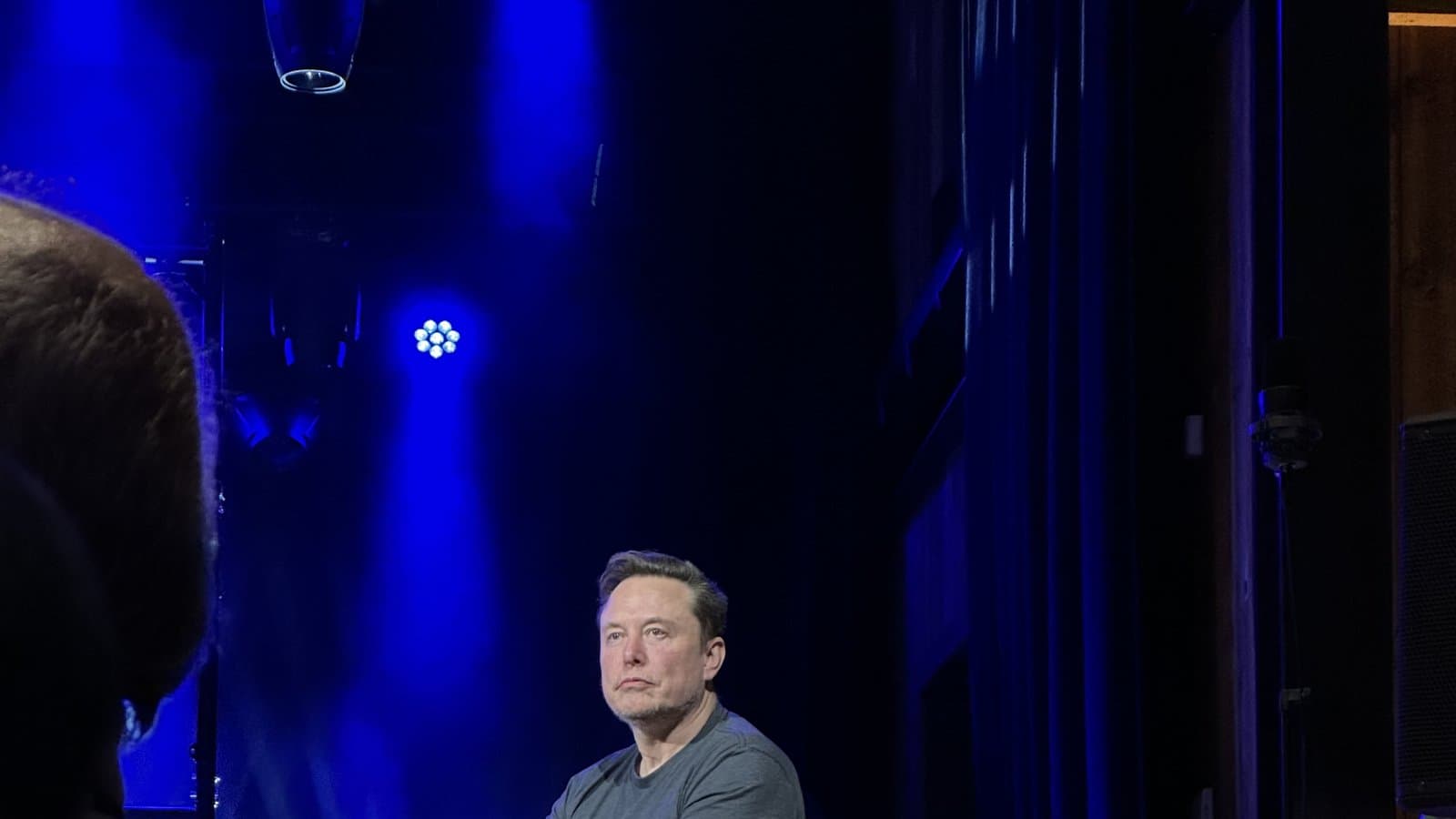
Cover: Elon Musk by Debbie Rowe (CC BY-SA 4.0) via Wikimedia Commons, cropped to 16:9.
Tags
Frequently asked questions
- How much does Grok Voice Transcribe 2.0 cost?
- SpaceXAI lists batch transcription at $0.10 per hour of audio and streaming at $0.20 per hour, the same rates as version 1.0. That works out to roughly $1.67 and $3.33 per 1,000 minutes of audio.
- Is the 'twice as accurate' claim independently verified?
- No. The comparison is against SpaceXAI's own Grok Voice Transcribe 1.0, measured on four internal evaluation sets drawn from the company's production traffic. The company also cites a public Artificial Analysis ranking, but Artificial Analysis updates that leaderboard continuously and a launch-day first place is a snapshot.
- What features are included in Grok Voice Transcribe 2.0?
- SpaceXAI lists batch and streaming modes, word-level timestamps with confidence scores, speaker diarization at no extra cost, multichannel transcription up to eight channels, key-term biasing up to 100 terms per request, text formatting, filler-word removal and smart turn detection for voice agents.
- When will Grok Voice Transcribe 1.0 be retired?
- SpaceXAI says version 2.0 will soon become the default in its Speech-to-Text API and that version 1.0 will be deprecated in the coming weeks. Developers who need to stay on the older model can pin grok-voice-transcribe-1.0 during the transition.

TPW Editorial
Editorial Team
TechPastWeek's editorial team reports and edits every story we publish. We research each piece against primary and credible secondary sources, and a human editor reviews and signs off before it goes live.