The Elder Scrolls VI Is Called Sentinel, and It Still Has No Release Date
Bethesda has named its next Elder Scrolls game Sentinel and confirmed Hammerfell as the setting, but there is still no release date, platform list or gameplay.

On this page
Key takeaways
- Bethesda revealed the title The Elder Scrolls VI: Sentinel on 3 November 2026 at the end of its 40th anniversary video, with no gameplay shown.
- The teaser's lore text is credited to Yazar, Moth Priest to High Queen Iradne of Hammerfell, and dated 4E 206, five years after the events of Skyrim.
- The name and the Hammerfell setting match The Verge's 29 October 2026 report, which our earlier article covered as single-source reporting.
- Bethesda said development is ongoing and it will be "some time" before it has more to show; no release date, window or platforms were announced.
- The game was first teased at E3 on 10 June 2018, eight years and four months before the name reveal.
The Elder Scrolls VI has a name. Bethesda Game Studios announced on 3 November 2026 that the game will be called The Elder Scrolls VI: Sentinel, confirming both the subtitle and the Hammerfell setting that had circulated as a leak a week earlier. The reveal came at the end of a video marking the studio's 40th anniversary, after Todd Howard walked through Bethesda's history. It contained no gameplay.
Related reading: The Elder Scrolls VI Is Reportedly Called Sentinel, With a Reveal Close · Forza Horizon 6 PS5 Release Date Reportedly Set for January 26, 2027.
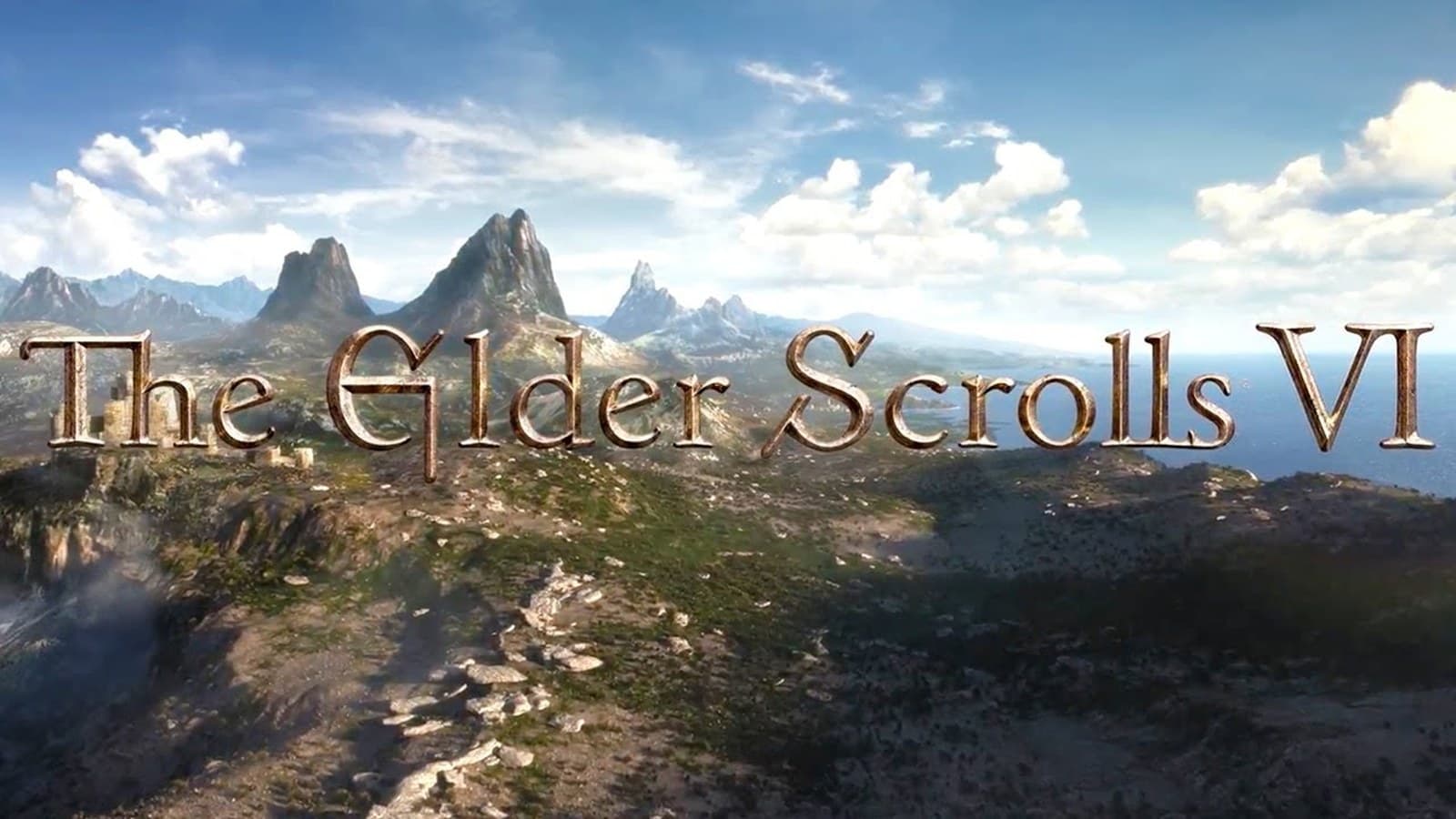
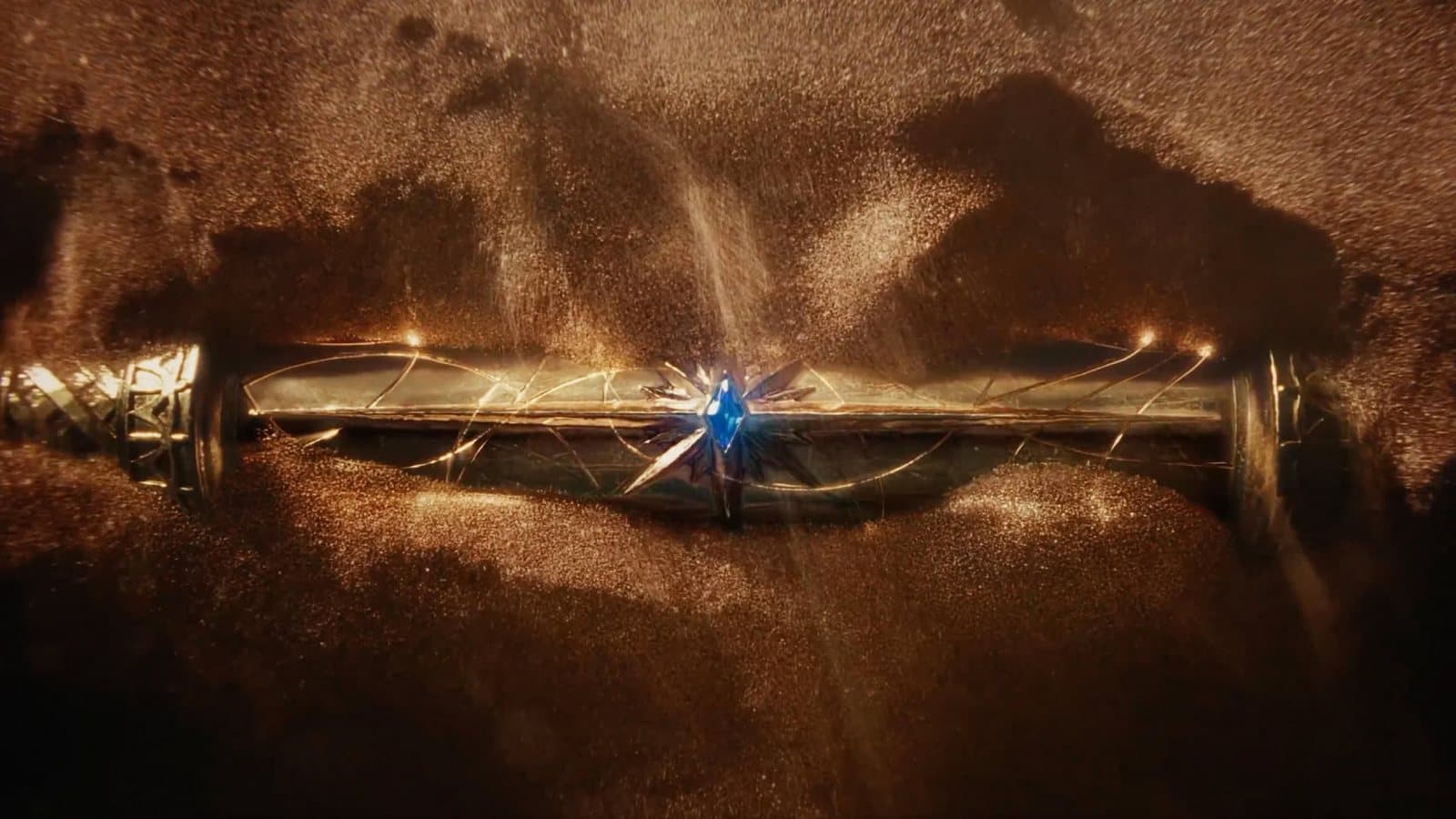
The teaser itself is short. A stretch of desert fills the frame, an Elder Scroll glows half-buried in the sand, and the new logo appears. A line of lore text is credited to Yazar, Moth Priest to High Queen Iradne of Hammerfell, and dated 4E 206, Xbox Wire reported. Bethesda followed with a post on X saying development is ongoing and that it will be "some time" before the studio has anything else to show. No release date, launch window or platform list was announced.
This article is an update to our 30 October report on The Verge's leak. The reveal confirms the two central claims in that report: the name and the province. Most of the rest remains unconfirmed.
A name, a place and nothing to play
The 40th anniversary video is the frame for the announcement. Bethesda was founded in 1986, and the studio used the milestone to run through its back catalogue before handing over to the teaser. The name therefore arrives at the end of a retrospective, not at the opening of a showcase. The clip is a title card with atmosphere. The camera holds on sand. The scroll rises. The logo resolves. There is no character, no environment beyond the desert, no voice-over and no interface. Anyone hoping for a first look at combat, cities or a quest has nothing to examine.
Bethesda's post on X was careful for the same reason. The studio said it was happy to have the name and location out in the open, then set expectations for what comes next: "some time" before anything else. That is the only timing the studio has offered. The statement confirms the game is in development and that Bethesda is not ready to show it.
The net gain is a subtitle and a province. That is more than the 2018 teaser gave, which was a coastline and a logo. It is still less than a game.
The October report got the name and the map right
Tom Warren's 29 October column for The Verge said Bethesda was about to announce the subtitle Sentinel and that the game was set in Hammerfell. Our earlier article treated both as single-source reporting because neither had been confirmed. The teaser now confirms them. Sentinel can lose the "reportedly", and Hammerfell is official.
The confirmation stops there. The Verge also reported that the game concerns the history of the Elder Scrolls and ancient artifacts. The teaser's lore text is consistent with that idea, but consistency is not confirmation. It shows no story, no characters and no mechanics, so the artifact premise remains a reported detail rather than an announced one.
There is a longer trail behind the leak. Fans had already guessed Sentinel from a redacted social post by Xbox CEO Asha Sharma and from clues in Starfield, Eurogamer reported. The guess came first, the report came second, the announcement came third. A matching guess does not make a report stronger, but the sequence explains why the reveal felt less like a surprise than a confirmation for people who had been following the clues.
Two claims in the October report now carry Bethesda's confirmation. The others do not.
Hammerfell is the bigger reveal for lore readers
A subtitle alone would have been thin. The province is the substantive part. Hammerfell is the Redguard homeland, and it has appeared as a setting in The Elder Scrolls Adventures: Redguard and The Elder Scrolls Online, as our October article noted. For a large share of Skyrim's audience it is a name from the map rather than a place they have played.
Sentinel gives that map a fixed point. The city sits on the Iliac Bay and is one of Hammerfell's major cities. Eurogamer's breakdown places it in the province's established lore, but Bethesda has not published a map or a region list, so those details describe the setting as previous games and books established it, not a confirmed game map. The desert in the teaser is at least consistent with Hammerfell, though a short clip of sand could stand for several parts of Tamriel.
The lore text adds one new name. Yazar is described as a Moth Priest to High Queen Iradne of Hammerfell, and the quote is dated 4E 206. Skyrim takes place in 4E 201, so the text sits roughly five years after the events of the previous game. That date belongs to the fictional document, not to the game's setting. The teaser does not say when the player arrives, and Bethesda has not described the plot.
The text also introduces a name that had not appeared in the marketing before: High Queen Iradne of Hammerfell. Moth Priests are the order that studies the Elder Scrolls themselves, which fits a game named after the scrolls and a teaser built around one. The quote invites plot speculation. The speculation is worth separating from the confirmed text.
"The scroll offered only a shimmer, a veil thinly lifted to my eyes. A future lost. A victory undone. Sands of time scattered by fate." — Yazar, Moth Priest to High Queen Iradne of Hammerfell, 4E 206
Why a name was enough for an anniversary
The timing explains the format. Bethesda turned 40 in 2026, and Skyrim turns 15 on 11 November 2026, eight days after the reveal. Those two dates give a publisher a reason to say something without having a game to show. A name drop fills the slot.
It is also cheap. A logo and a lore quote generate a news cycle, a set of search results and a fresh round of discussion, and they cost nothing in terms of a release commitment. Bethesda did not have to attach a window or a platform to the announcement. It did not have to show a build. The anniversary video carries the weight instead.
For Xbox, the franchise is one of the few proven system sellers in the portfolio. Microsoft has been under pressure over hardware sales and studio closures, and a mainline Elder Scrolls game is a rare asset that can move consoles on name alone. A title reveal is useful in that context because it signals that the asset is still alive without promising a date that the studio might miss.
The 2018 clip followed the same logic. Bethesda showed it at E3 in 2018 with no date attached, then said almost nothing for years. The studio announces early and fills in the details much later. This reveal fits that pattern.
That is the commercial reading, and it is inference rather than something Bethesda said. What the studio said is narrower: the name is out, the location is out, and more will come later.
The missing date is the story
Eight years and four months after the first teaser, the game still has no release date, no launch window and no platform list. TechPowerUp noted that the name is all fans are getting for now, and Bethesda's own wording supports that. "Some time" is not a schedule.
Reporting points in the same direction. Bloomberg's Jason Schreier said on Bluesky that the game is at least two years away. That is a reporter's sourcing, not a Bethesda statement, and it should be read as an estimate. It does fit the official silence. A publisher that planned to ship in the next twelve months would normally have more to show than sand and a scroll.
The production record is long and thin. Bethesda announced the game at E3 on 10 June 2018, and Eurogamer calculates the gap to the name reveal at eight years, four months and 23 days. Skyrim had shipped in 2011. Starfield did not arrive until 2023. In July 2026 the studio said The Elder Scrolls VI remained its primary development focus, alongside four Fallout games in development, TechPowerUp reported. "Ongoing" is the word Bethesda uses. It has not said the game is in full production.
The Xbox context adds uncertainty without settling it. Recent layoffs and studio closures raised questions about timelines across Microsoft's games business, and Bethesda moved to reassure players that the Elder Scrolls VI roadmap was unaffected, Eurogamer reported. That statement did not include a date.
No date, no platforms, no gameplay
The teaser contains a title, a logo and a line of lore text. It does not contain gameplay, a release window, a platform list or a story synopsis. Bethesda's only guidance is that it will be "some time" before the studio has more to show. Any specific launch year circulating online is reporting or speculation, not an announced date.
Platforms are the other open question. Bethesda has not said which systems the game will run on, so nothing in the reveal settles whether it will appear on PlayStation or stay exclusive to Xbox. The company has given no reason for the omission and has not said when it will discuss platforms.
What to watch
The first date on the calendar is 11 November 2026, Skyrim's 15th anniversary. Bethesda may mark it with another piece of lore, a trailer or nothing at all. The reveal already used the anniversary window, so a second beat is possible but not promised. Bethesda has not said what form the next update will take.
After that, the signals to watch are concrete. A dated store listing, an age rating or a platform page would be the first real evidence of a launch window. An official Bethesda post that moves beyond "some time" would matter more than another teaser. Schreier's estimate also gives a rough floor: if it holds, and counting from November 2026, the earliest plausible launch sits in late 2028, and later is entirely possible.
The lore is the other thread. The teaser introduced Iradne, named a Moth Priest and dated its document to 4E 206. If Bethesda follows up with more in-fiction text, those details will start to describe a story rather than a mood.
For now the confirmed record is a name, a province and a five-year gap in the fiction. The game itself is still unshown.
Cover image: The Elder Scrolls VI: Sentinel teaser still courtesy of Bethesda Game Studios.
Tags
Frequently asked questions
- Is The Elder Scrolls VI officially called Sentinel?
- Yes. Bethesda announced on 3 November 2026 that the game is called The Elder Scrolls VI: Sentinel, confirming the subtitle that had circulated as a leak in October.
- When is The Elder Scrolls VI coming out?
- There is no release date or launch window. Bethesda said it will be "some time" before it has more to show, and Bloomberg's Jason Schreier reported that the game is at least two years away.
- Where is The Elder Scrolls VI set?
- Hammerfell. The teaser's lore text names High Queen Iradne of Hammerfell and is credited to a Moth Priest, and Sentinel is a major city in the province on the Iliac Bay.
- Will The Elder Scrolls VI be an Xbox exclusive?
- Bethesda has not announced any platforms, so exclusivity is unresolved. Nothing in the 3 November 2026 reveal says which consoles or storefronts the game will reach.

TPW Editorial
Editorial Team
TechPastWeek's editorial team reports and edits every story we publish. We research each piece against primary and credible secondary sources, and a human editor reviews and signs off before it goes live.