Meta Wants You to Build a Playable Game From a Prompt on Your Phone
At Meta Connect 2026, Meta unveiled Horizon Create and Horizon Studio, two tools that turn text prompts into complete 2D or 3D mobile games and push them straight into Facebook and Instagram feeds.

On this page
Key takeaways
- Meta announced Horizon Create, a mobile app, and Horizon Studio, a browser tool, at Meta Connect 2026 on September 24, 2026.
- Both tools use text prompts to generate complete 2D or 3D games with progression systems, difficulty balancing, art direction and multiplayer support.
- The tools are in early access through a waitlist, and projects transfer between the phone and browser versions because they share a backend.
- Published games become eligible for native distribution on Facebook, Instagram and Horizon, where players can join a multiplayer session from a feed clip without installing an app.
- Meta says discovery will reward games that are engaging, stable and culturally relevant, with monetization through in-game purchases and the Meta Horizon Creator Fund.
Meta used its Connect developer conference to make a direct bet that artificial intelligence can turn almost anyone into a game developer. On September 24, 2026, the company introduced Horizon Create, a mobile app, and Horizon Studio, a browser-based tool, both built to convert a short text prompt into a finished, playable game and then push it into the feeds where Meta's audience already lives.
Related reading: Google Launches Playground, an AI Platform That Builds Playable Games From Prompts · Capcom Wants to Build AI Into the RE Engine. What 'AI Game Engine' Means Is Contested.
The pitch is deliberately broad. Meta says the two tools can turn "any idea into a complete 2D or 3D mobile game," including progression systems, balanced difficulty, art direction and multiplayer, and that creators can refine every part of the result to their own standards. The company is not aiming at professional studios. It is aiming at the far larger group of people who have a game idea and no path to building one.
"We make it easier to turn your ideas into playable 2D and 3D games," Meta wrote in its developer announcement, adding that publishing makes a game eligible for distribution across Facebook, Instagram and Horizon. The company's framing is that the traditional barriers of time, hardware and specialized skill can be collapsed into a prompt.
Two tools, one project
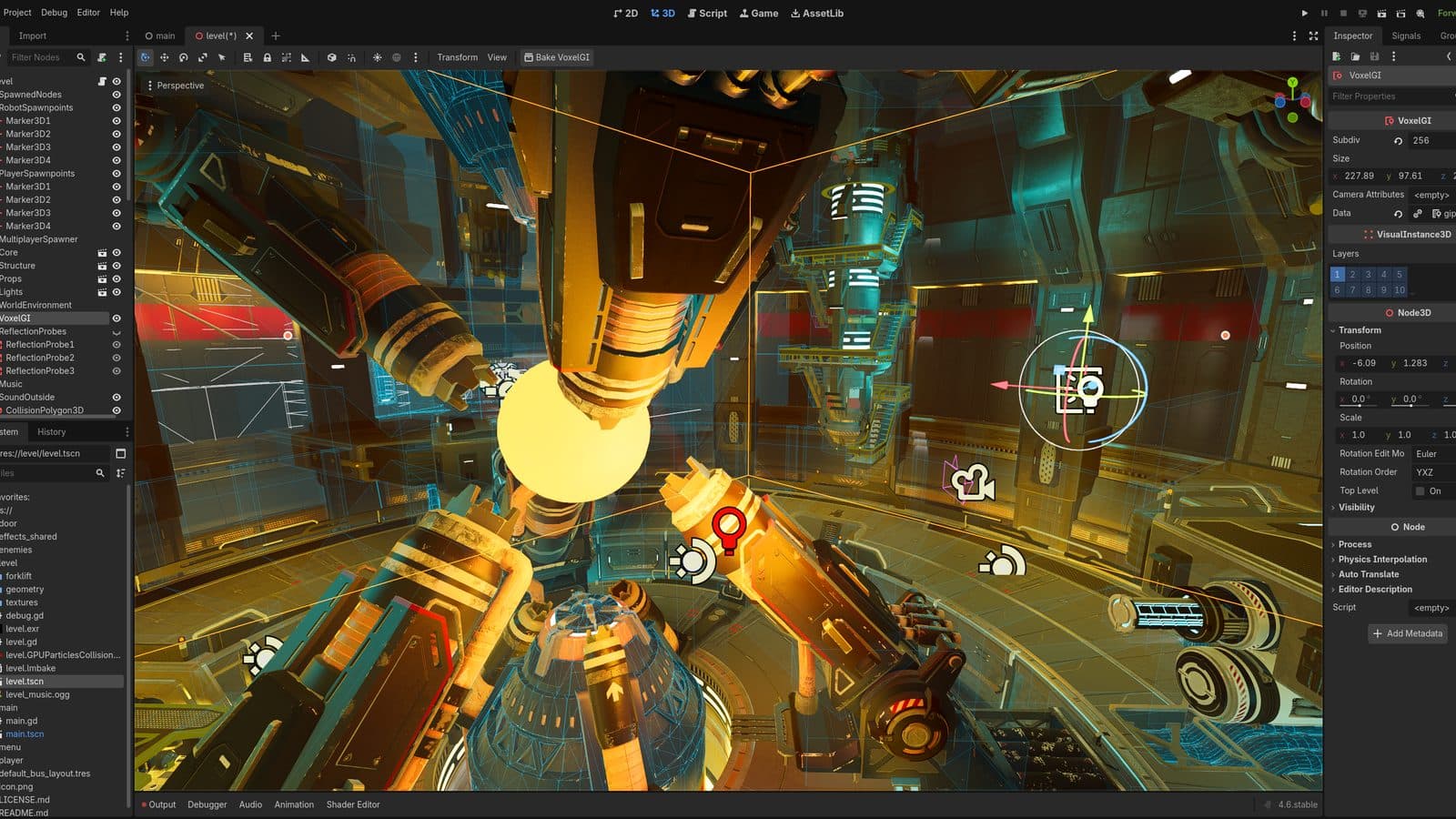
Horizon Create is the simpler entry point. It runs as a standalone app on a phone, where a creator can start from a prompt or a template, adjust the art style, characters, story and progression by describing the changes they want, and let the system assemble the result. Meta says builders can run more than one project at a time, start a build and keep playing other games while it generates, and get a notification when the game is ready to playtest.
Horizon Studio is the deeper environment. It runs in a browser with no install and, Meta says, no gaming PC required. It pairs the same natural-language prompting with visual editing: arranging scenes by hand, browsing and swapping individual assets, tuning script parameters, and shaping spatial layouts. Creators can describe a change in words when that is faster or make the edit directly when precision matters.
The two tools share a backend, so work transfers between them. Assets, systems and iteration history move from phone to browser and back, which means a creator can prototype on the go and polish at a desk without starting over. Meta says a project does not need to begin in Create; a builder can start in Studio with just an idea.
Meta says Horizon Create and Horizon Studio are built on the "agentic creation" capabilities of the Meta Horizon Engine. Both are in early access through a waitlist, with broader availability rolling out gradually.
Distribution is Meta's real advantage
The technical claim is easy to repeat and hard to verify before launch. The distribution claim is the one worth paying attention to. Meta already operates the social surfaces where short-form discovery happens, and it is promising to wire generated games directly into them.
"Someone scrolling through Instagram can tap a clip of your game and be in a multiplayer session within seconds, without needing to download an app or being redirected," Meta said. "Your game lives natively in the feeds where people already discover content and connect with friends." That is a meaningful difference from a conventional app store funnel, where a new game competes for a download before a player experiences it at all.
Meta is also explicit that reach will be earned rather than granted. Games that are "engaging, stable, culturally relevant, and keep players coming back" will get more distribution, while those that do not will be deprioritized and "fade from discovery." Revenue is to come from in-game monetization and the Meta Horizon Creator Fund, with Meta promising more detail on monetization later.
That quality filter is doing a lot of work in the announcement, because AI-generated games have an obvious failure mode. Prompt-to-game tools can produce something that technically functions and is still not fun, and platforms that flood their feeds with low-quality results risk damaging the very surfaces Meta wants to monetize.
The Roblox comparison is unavoidable
Meta is not the first platform to bet that prompts can produce games. Roblox, which Meta's own announcement implicitly acknowledges by the contrast, is pursuing AI-assisted development with far greater scale behind it. Roblox reported 123 million daily active users, against a Horizon platform that The Verge noted had reached roughly 300,000 monthly users back in 2022 and has never approached mainstream scale.
That gap explains the strategy. Horizon launched as a virtual-reality app, then pivoted to focus primarily on mobile, and AI generation is the next attempt to solve its supply problem: too few creators making too few things that people want to do. If Meta can lower the cost of making a game to a single prompt, it can increase the number of games without waiting for the creator community to grow organically.
Whether that produces anything worth playing is a separate question. The Verge's Jay Peters was openly skeptical that a wave of AI-generated games "will be as engaging as a handcrafted experience," while allowing that the Meta tools sound more complete than earlier prompt-based experiments. The announcement promises structure, progression and multiplayer rather than a disposable interactive demo, which is a higher bar.
The moderation question behind the waitlist
Meta is launching the tools in early access rather than at full scale, and its announcement devotes unusual space to safety. Every piece of generated content passes through the company's content-safety systems before it reaches players, games are reviewed before publishing and distribution, and each published title receives an automated age rating and is gated into age-appropriate tiers. Parental supervision through Meta's Family Center carries over from Horizon's existing framework.
That machinery is doing more than checking a box. Prompt-driven creation means the person publishing a game may never have thought about what its assets contain, and a platform that distributes games natively inside feeds for all ages inherits responsibility for what those games show. Meta's review layer is the mechanism that stands between a generated idea and a live audience, and its capacity will be tested as soon as access widens beyond a waitlist.
The moderation setting also shapes what kinds of games can succeed. A creator working from a prompt has less control over every generated asset than a traditional developer, which means Meta's filters are effectively part of the design process. How transparent that process is, and how quickly creators can resolve a rejection, will influence whether the platform attracts people who treat it seriously.
Why this matters beyond Meta
The tools matter for what they say about where game development is heading. For a decade, the cost of producing a game has been spread across engines, asset pipelines, testing and marketing, and the industry's biggest platforms have competed to lower each of those costs. Unified engines made teams more productive; marketplaces made art cheaper; storefronts made distribution faster. Prompt-driven creation is the next reduction, and it collapses several of those steps at once.
It also raises the questions that follow any labor-saving tool. If anyone can describe a game into existence, the scarce resources become taste, curation and the ability to iterate on something that is genuinely fun. Meta's discovery algorithm is an implicit answer to that: it will try to sort the engaging from the forgettable. Meta's safety layer is another, with every piece of generated content passing through content-safety systems, games reviewed before publishing, automated age ratings and parental controls carried over from Horizon's existing framework.
For independent developers, the more immediate concern is attention. A platform that can fill its own feeds with instant, free, AI-built games changes the competitive landscape for the smaller titles that previously used those feeds to find players. Meta's promise to reward quality through reach is a pledge, not a guarantee, and how its algorithm treats handcrafted games in a larger pool is one of the things to watch.
What to watch next
The early-access waitlist will define the first real test: whether prompt-built games reach players as fast as Meta's announcement suggests, and whether the results hold up to the "fun" standard the company set. The monetization rules, still undated, will matter as much as the creation tools, because they determine whether serious creators treat Horizon as a platform or a novelty.
Meta has spent years trying to make its social platforms into places where games are made and played, not merely discussed. Horizon Create and Horizon Studio are its clearest attempt yet to remove the skill barrier from the first half of that sentence. The coming months will show whether removing the barrier also removes the reason to care.
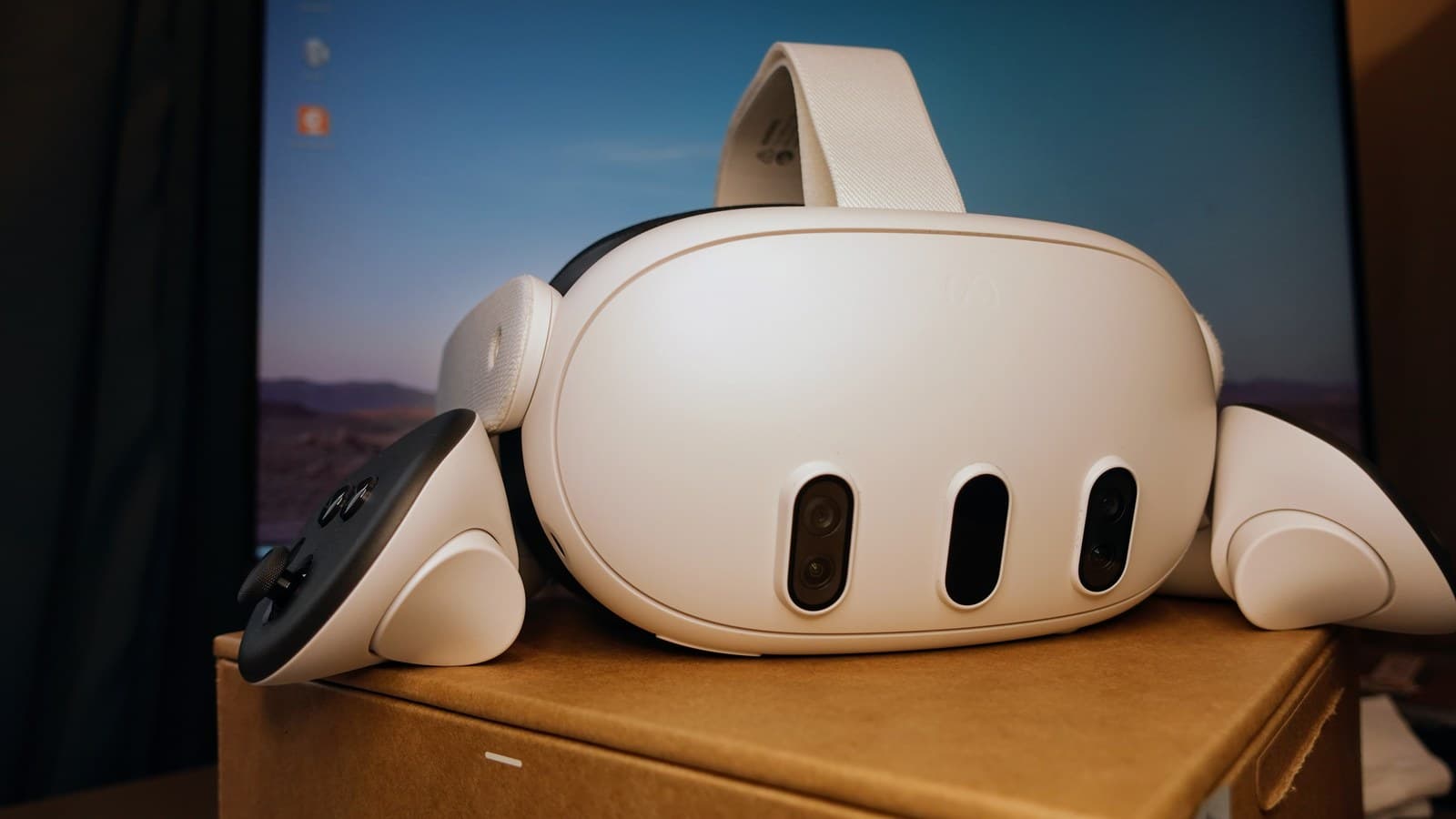
Cover image: a Meta Quest 3 headset. Photo by Roy.wonder.cohen via Wikimedia Commons (CC BY-SA 4.0).
Tags
Frequently asked questions
- What are Horizon Create and Horizon Studio?
- They are two AI game-creation tools built on Meta's Horizon engine. Horizon Create is a standalone mobile app, and Horizon Studio is a browser-based environment with more granular art, scripting and layout controls.
- Do you need to know how to code to use them?
- Meta is presenting the tools as prompt-first. Users describe a game in natural language and refine it by describing changes, though Horizon Studio adds visual editing, asset swapping and script parameters for people who want precise control.
- Where can games made with the tools be played?
- Published games are eligible for distribution across Facebook, Instagram and Horizon. Meta says a player scrolling Instagram can tap a clip and enter a multiplayer session without downloading an app.
- Are the tools available now?
- They are in early access with a waitlist as of September 2026, and Meta says broader access will open gradually.

TPW Editorial
Editorial Team
TechPastWeek's editorial team reports and edits every story we publish. We research each piece against primary and credible secondary sources, and a human editor reviews and signs off before it goes live.