A New Rumor Suggests PlayStation Is Second-Guessing Its End to Physical Discs
A report says Sony quietly surveyed developers about its plan to stop making PlayStation discs by 2028, but any reversal is unconfirmed speculation.

On this page
Key takeaways
- Sony announced on 1 July 2026 that physical game disc production for new PlayStation releases would stop starting in January 2028, with new games sold digitally only after that.
- On 23 September 2026, ComicBook.com reported a claim by the YouTube channel Moore's Law Is Dead that Sony sent developers an unusually large survey touching on the disc decision.
- The report is unconfirmed and the reversal talk is speculation; neither Sony nor the developers said to have received the survey have commented publicly.
- PlayStation has strong financial reasons to stay digital: it said 85% of sales were digital in its Q4 fiscal 2025, up from 19% in fiscal 2015.
On 1 July 2026, Sony ended a debate the industry had been circling for years. In a post on the PlayStation Blog, senior director Sid Shuman wrote that "physical game disc production for all new games releasing on PlayStation consoles will be discontinued starting January 2028," after which new titles would be sold through the PlayStation Store and retailers in digital formats only. Games released before that date were unaffected.
Related reading: The Elder Scrolls VI Is Reportedly Called Sentinel, With a Reveal Close · Leak Claims Xbox Game Pass Could Drop Day-One Releases in 2027.
More than two months later, the backlash has not faded. Players are still filling the comments under PlayStation's YouTube videos, blog posts and social accounts with complaints, and the question of whether Sony might relent has become a durable fixture of gaming podcasts. On 23 September 2026, ComicBook.com reported a new claim that has rekindled the idea of a reversal.
It should be read with caution. This is a rumor, not a decision.
What the rumor actually says
The claim comes from Tom, the host of the YouTube channel Moore's Law Is Dead, speaking on an episode of his Broken Silicon podcast. According to ComicBook.com, Tom said PlayStation sent a survey to developers that was bigger than the surveys the company usually distributes, and that it discussed the decision to stop producing discs indirectly, including how the change would affect the teams being surveyed.
Tom then speculated that if the feedback is negative enough, Sony might consider "some sort of mea culpa." That is the entire substance of the report: a survey described second-hand, and a host's guess about what it might mean. Neither Sony nor any named developer has confirmed the survey exists, let alone that a policy change is coming.
Unconfirmed and speculative
This article describes a rumor. The survey and the possibility of a reversal come from a YouTube report relayed by ComicBook.com, not from Sony. Treat the reversal talk as speculation until the company says otherwise.
Surveys are also a weak signal. Large publishers routinely poll developers about platform policies, storefront terms and hardware roadmaps, and a question about disc production could mean Sony is planning for the transition, gathering data to defend it, or genuinely testing whether the industry would support a retreat. A survey is not a commitment to change, and reading one as a coming reversal is a stretch.
Why the decision was so unpopular
Sony's announcement landed harder than most corporate policy shifts because it touched ownership. A disc is a physical object a player can lend, resell, trade in, or keep after a storefront closes. A digital purchase is a license tied to an account and a platform's willingness to keep serving it. When Sony said it would stop making discs, it was not just changing a format; it was ending a way of buying games that many players treat as the default.
Sony made a second announcement at the same time that sharpened the point. It confirmed it would close the PlayStation 3 and PlayStation Vita digital stores over the following year, in regional waves. The combination was easy to read as a warning: digital storefronts do not last forever either. Nintendo Wire noted the irony that Sony had once mocked Microsoft for proposing an always-online, all-digital Xbox One in 2013, a plan Microsoft abandoned after a consumer revolt.
There is an institutional awareness of the risk. Former Santa Monica Studio writer Alanah Pearce said on a stream, as reported by ComicBook.com, that her sources at PlayStation's first-party studios told her the company knew the backlash would be enormous and imposed strict social media guidelines on employees for the announcement. "They would only have done this if they knew it was going to be an enormous PR issue," she said, adding that "this is no surprise to them."
A decade of drift toward digital
The disc decision did not arrive out of nowhere. Sony has been moving toward digital distribution since the PlayStation 3 era, and the share of games bought without a disc has climbed steadily. Sony's own figure, 85% of sales digital in the fourth quarter of fiscal 2025, is the end point of a long trend rather than a sudden shift, and it is why the company felt able to set a date at all.
The announcement also included the closure of the PlayStation 3 and PlayStation Vita digital stores, rolling out region by region over the following year. That detail is what turned a format debate into a preservation debate. If discs are ending and storefronts are closing, then the two ways a player can keep access to a game both have an expiry date, and the only remaining guarantee is whatever a platform chooses to maintain.
For collectors and preservationists, the stakes are concrete. A disc works as long as the hardware does. A digital purchase works as long as the store, the account and the network remain available. Sony has not said it will remove purchased games, but it has now demonstrated that it will retire storefronts, which is why the disc decision reads to many players as a loss of control rather than a change of packaging.
There is also a resale market to consider. Physical games can be sold, lent and traded, and a disc-based library has a second-hand value that a digital one does not. Publishers have long viewed that market as lost revenue, which is part of why they prefer digital, but for players it is a form of ownership that disappears the moment discs do.
The money pushing the other way
If Sony does reverse course, it will be against strong financial incentives to go digital. Digital sales keep more revenue inside PlayStation's ecosystem because there is no disc manufacturing cost and no retailer taking a cut. Sony has said 85% of its software sales were digital in the fourth quarter of fiscal 2025, up from 19% in fiscal 2015. The trend has been in one direction for a decade.
Analysts argue the shift is about more than format. Daniel Ahmad, director of research and insights at Niko Partners, has noted that PlayStation makes 59% more revenue per user than it did in the PlayStation 4 era, and a digital-only console is part of how that number grows. Insider Gaming reported that PlayStation views the console market as maturing and wants to extract more value from existing players rather than aggressively sell consoles to new ones. A storefront with no second-hand market is central to that plan.
The hardware roadmap points the same way. Sony has not detailed the next console, but reporting and analyst commentary have long assumed a machine without a built-in disc drive, following the digital-only PlayStation 5. If the PlayStation 6 ships without a disc reader, a reversal on disc production would be an odd, expensive detour.
What a reversal would take
For the rumor to become real, Sony would need to reverse a public, dated commitment, restart or preserve disc manufacturing capacity it may already be winding down, and persuade retail partners to keep shelf space for a format it had told them was ending. That is a lot of institutional friction, which is why most observers still treat the January 2028 plan as final.
What the rumor does show is that the pressure has not gone away. A company that expected anger is still hearing it months later, and the fact that a YouTube claim about a developer survey can move the conversation says something about how much players care. Whether that pressure changes a decision is a different matter. Until Sony speaks, the disc deadline stands, and the reversal is a theory.
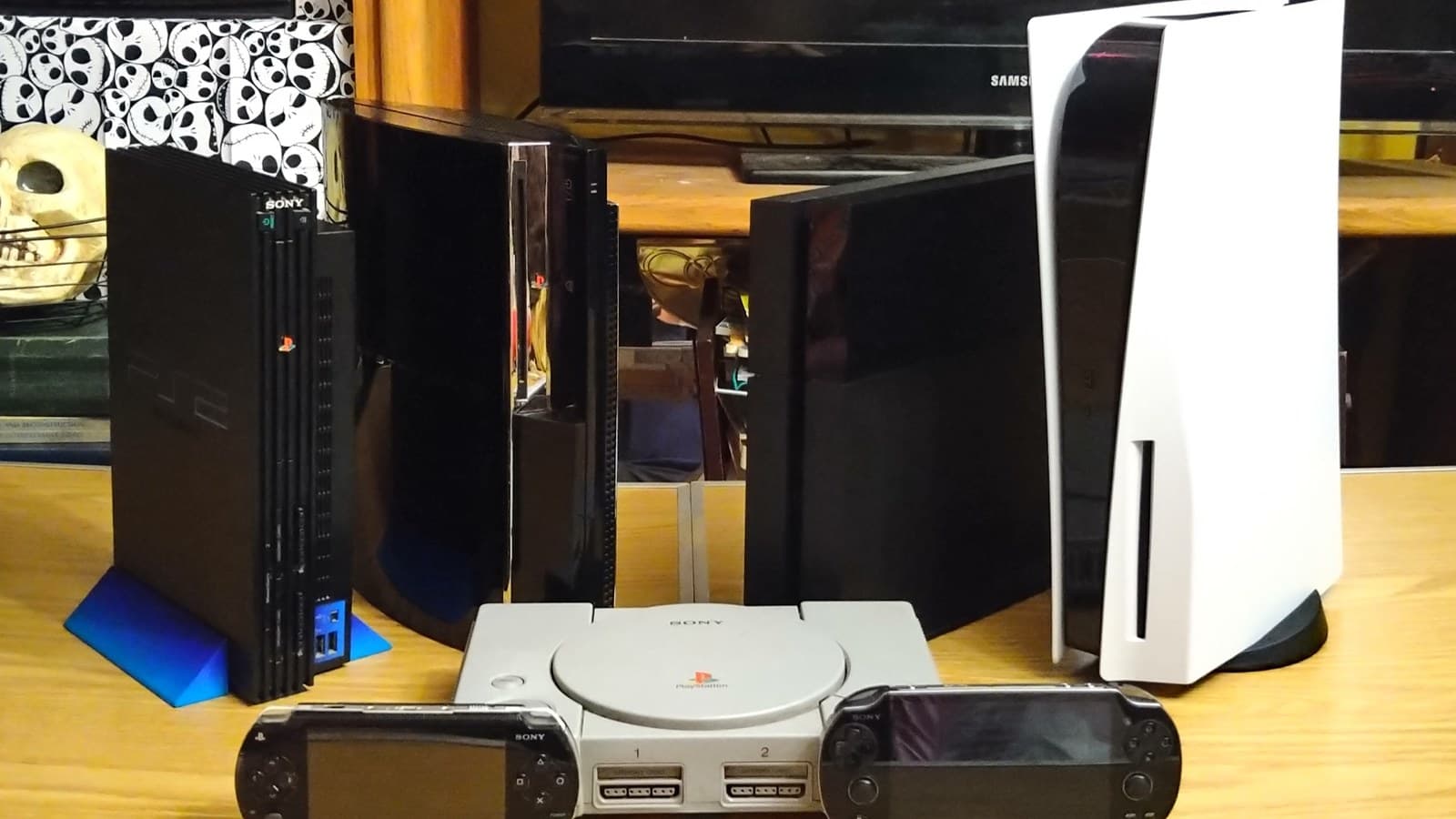
Cover: a row of Sony PlayStation consoles from the original model to the PlayStation 5. Image by JDC808, via Wikimedia Commons, licensed under CC BY-SA 4.0.
Tags
Frequently asked questions
- Is Sony reversing its decision to stop making PlayStation discs?
- There is no confirmation. The claim comes from a YouTube report that Sony surveyed developers about the policy, and the reversal talk around it is speculation. Sony has not said it will change course, and the January 2028 deadline still stands as announced.
- When will PlayStation stop making physical discs?
- Sony said physical game disc production for all new games releasing on PlayStation consoles will be discontinued starting January 2028. Games that released or will release before that date are unaffected and will still be available on disc.
- Why would Sony want to go all-digital?
- Digital sales carry higher margins because there is no disc manufacturing or retail split, and Sony reported that 85% of its sales were digital in the fourth quarter of fiscal 2025. Analysts also say PlayStation now earns far more per user than it did in the PlayStation 4 era.

TPW Editorial
Editorial Team
TechPastWeek's editorial team reports and edits every story we publish. We research each piece against primary and credible secondary sources, and a human editor reviews and signs off before it goes live.