Leak Claims Xbox Game Pass Could Drop Day-One Releases in 2027
A ResetEra leak says Xbox could end day-one Game Pass releases in 2027. Microsoft says no plans are finalised, so the report remains unconfirmed.

On this page
Key takeaways
- A ResetEra user reported on September 14, 2026 that Xbox could remove day-one releases from Game Pass between February and April 2027.
- The unverified leak also claims ad-supported and ad-free tiers, a separate cloud-streaming add-on and standalone multiplayer pricing.
- Microsoft told a reporter it has no finalised plans and that previously announced day-one games will still arrive as promised.
- The wording protects only games already announced for day-one Game Pass, leaving future titles unaddressed.
- Xbox has already added cloud playtime limits and dropped Call of Duty from its day-one commitment, so change is not new.
A rumor about the future of Xbox Game Pass surfaced on September 14, claiming Microsoft plans to overhaul the subscription service in 2027 and, most consequentially, to stop putting new releases on the service on their launch day. Microsoft has not confirmed the report, and the details remain unverified. But the company's response has not closed the door either, which is why the claim has kept circulating.
Related reading: The Elder Scrolls VI Is Reportedly Called Sentinel, With a Reveal Close · A New Rumor Suggests PlayStation Is Second-Guessing Its End to Physical Discs.
The report originated with a ResetEra post by a user named Slayven, who said they knew the person supplying the information and that the source had been right before. It was amplified by the leaker NateTheHate, who said the source likely had knowledge of Xbox's plans. Neither claim is proof, and no outlet has independently verified the list. This article treats the entire report as unconfirmed and attributed.
What the leak claims
According to the post, Microsoft is considering replacing the current Game Pass tiers with a new structure sometime in 2027. The specific claims are unusually detailed:
- An ad-supported tier at $12.99 a month, and an ad-free tier at $19.99 a month or $239.99 a year.
- Day-one new releases removed from Game Pass between February and April 2027, with a $3 monthly price reduction to account for the change.
- Cloud streaming removed from Game Pass and sold as a separate $5.99 add-on covering roughly 25 hours.
- Online multiplayer split into its own subscription at around $10.99 a month.
- A $14.99 tier combining library access with online multiplayer.
- A family plan available as an additional $5.99 a month.
The list's internal logic has been questioned. Gaming outlets noted that removing day-one releases while cutting the price by only $3 does not obviously reflect the value of the feature, and that Microsoft has already confirmed several day-one titles for 2027. A separate report from Windows Central said the circulating list does not represent Microsoft's current plans and includes speculation, while adding that changes of some kind are being explored.
Microsoft's careful answer
The most informative development came when a reporter put the rumor directly to Microsoft. The company's spokesperson responded with a statement that neither confirms nor denies the specifics:
"We regularly test different Game Pass offerings and look at what works best for players in different markets. We don't have any changes to announce today or plans that have been finalized. There are no changes to previously announced games coming to Game Pass Ultimate on day one."
Two things stand out. The first is the phrase "no plans that have been finalized," which leaves room for plans that exist but are not final. The second is the specific protection given to "previously announced games" for day-one Game Pass Ultimate. That is a real commitment to the roughly 31 titles already confirmed for 2027, including Fable on February 23 and Persona 4 Revival on February 18. It says nothing about games that have not been announced yet, which is exactly where a policy change would bite first.
How to read this: A company statement that says "no finalised plans" is a non-denial. It is standard corporate language for a situation that is still in flux. It is not evidence that the leak is accurate, and it is not evidence that it is false. The safe conclusion is that Game Pass is under review and that its current shape is not guaranteed.
Why day-one releases matter so much
Day-one releases have been the defining feature of Game Pass since Microsoft began putting its own games on the service at launch. The strategy was simple: use first-party games, and later major third-party deals, to make the subscription feel indispensable, then convert that loyalty into recurring revenue. It worked well enough that Microsoft spent tens of billions of dollars acquiring publishers whose catalogues could feed it.
The problem is that day-one releases are expensive. Every copy given to subscribers is a copy not sold at full price, and the accounting works only if the subscription revenue and the engagement it generates exceed the foregone sales. For a service with tens of millions of subscribers, that math can be made to work, but it becomes harder when development budgets rise and subscriber growth slows.
Microsoft has already been testing the boundaries. In 2025 it restructured Game Pass pricing and tiers. It also removed Call of Duty titles from the day-one commitment, a notable decision given that the Activision Blizzard acquisition was justified in part by the value those games would bring to the service. More recently, the company confirmed monthly cloud-gaming playtime limits starting in November: 15 hours for Ultimate, 10 for Premium and five for Essential, which it attributed to rising cloud costs.
Each of those moves is consistent with a company trying to make a mature subscription business more profitable. Whether that eventually means the end of day-one releases is a different question, and a much larger one.
The credibility question
Leaks about Game Pass have a mixed record. The source in this case has been accurate before, according to those tracking the service, and the October 2025 tier overhaul was reportedly leaked in advance by the same account. That history is why the report was taken seriously enough in the first place.
At the same time, a leaked list is not a policy. Corporate plans change, options under consideration are not decisions, and a detailed list can be accurate in its details and wrong in its conclusion. The Windows Central reporting, which said the list does not reflect current plans, is an important counterweight. So is the basic incentive analysis: removing day-one games would strip Game Pass of the feature that most distinguishes it from Sony's PlayStation Plus, and would likely trigger a wave of cancellations.
The most likely reading is that Microsoft is evaluating several options, some of which may resemble parts of the leak, and that the final structure is genuinely undecided. That is a boring conclusion and an honest one. What is not in doubt is that the service's current form is not permanent.
The economics that make the leak plausible
Game Pass is an unusual product for a platform holder. It trades predictable subscription revenue for uncertain retail revenue, and it works only at scale. Microsoft has never published subscriber numbers in detail in recent years, but the service is widely understood to have tens of millions of members across Ultimate, Premium, Essential and PC tiers. At that size, even a small change to the value of a tier moves hundreds of millions of dollars.
That is why the rumoured changes are structured the way they are. An ad-supported tier lowers the entry price and brings in casual subscribers who would never pay $20 a month. Selling cloud streaming separately turns a cost centre into a product. Charging for online multiplayer on its own aligns Xbox with how some competitors monetise access. Each of those moves is a way to grow revenue without raising the headline price, which is politically difficult.
Ending day-one releases would be the most consequential because it changes the value proposition rather than the packaging. Microsoft has spent years and tens of billions of dollars building a content pipeline for the service, and day-one access is the reason many subscribers stay. A subscription that offers a back catalogue but not new releases resembles a conventional library service, and the pricing power that comes with exclusivity disappears. The rumour may be wrong in its specifics, but the financial logic behind it is not hard to follow.
What to watch
The clearest signal will be Microsoft's own announcements. If the company formally changes the day-one policy, it will almost certainly do so alongside a broader tier restructuring, and the roughly 31 titles already promised for 2027 will have to be honoured first. Watch the titles that are dated latest, such as Fable in February and Clockwork Revolution later in the year, as they mark the boundary of the existing commitment.
Watch, too, the next earnings call and the next wave of Game Pass announcements, which will show whether Microsoft is still signing new third-party day-one deals. A slowdown in those deals would support the idea that the strategy is shifting, even without a formal statement. And watch how Sony responds. PlayStation Plus has never matched Game Pass on day-one releases for first-party games, and if Microsoft retreats, the two services become more similar, not less.
For subscribers, the practical advice is to rely on what has been announced rather than on what has been leaked. Games with a confirmed day-one Game Pass date are safe for now. Anything beyond that is a bet on a rumor that Microsoft has neither confirmed nor ruled out.
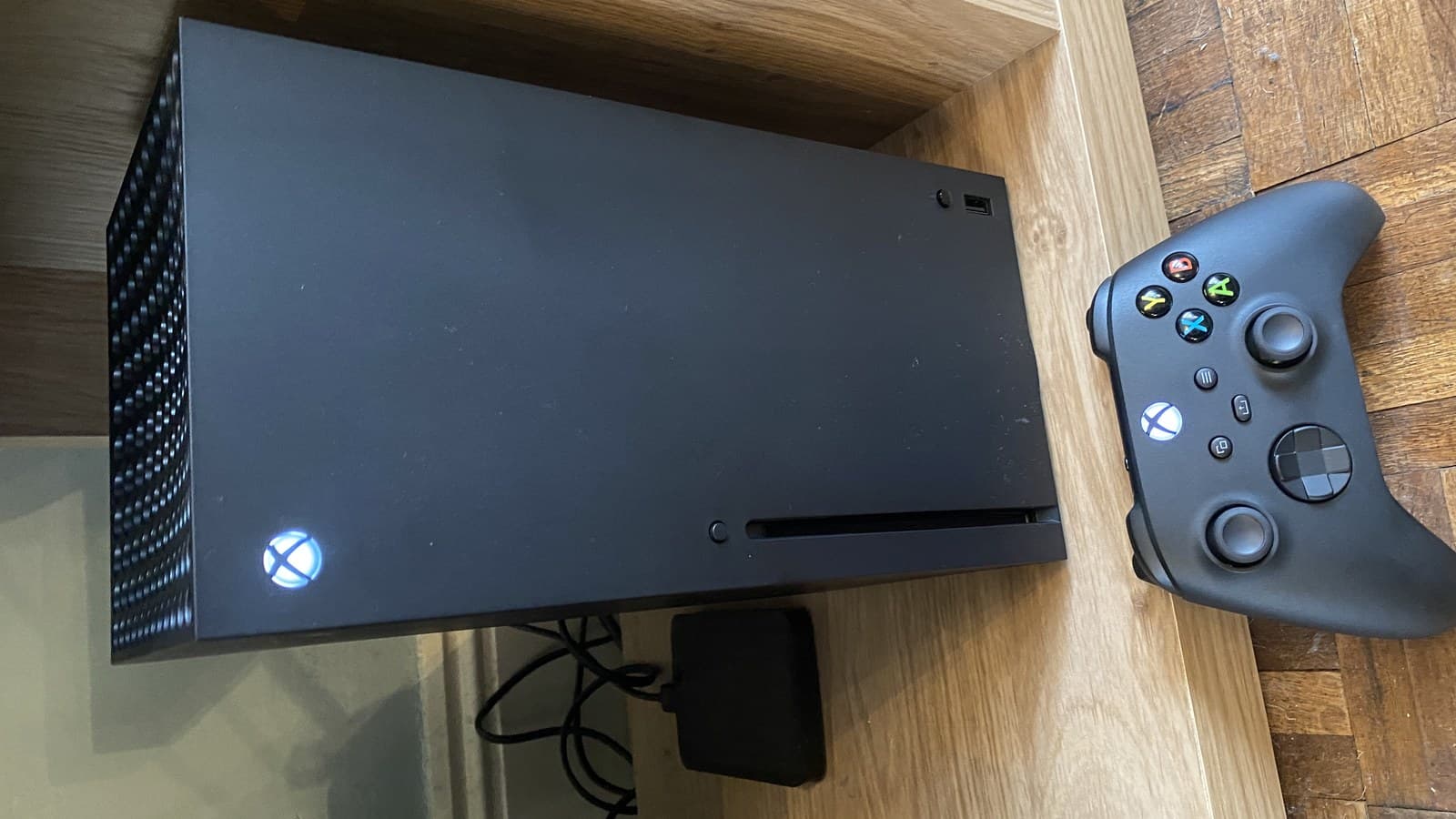
Cover: an Xbox Series X console and controller, by Der. Bellemer (CC BY-SA 4.0) via Wikimedia Commons, cropped 16:9.
Tags
Frequently asked questions
- Is Xbox removing day-one games from Game Pass?
- It is not confirmed. The claim came from an unverified ResetEra post on September 14, 2026. Microsoft responded that it has no changes to announce and no finalised plans, but it did not deny that day-one releases could change in the future. Treat the report as a rumour until Xbox confirms it.
- What changes does the leak claim?
- The leaked list claims an ad-supported tier at $12.99 a month, an ad-free tier at $19.99 a month or $239.99 a year, the removal of day-one new releases between February and April 2027, cloud streaming sold separately at $5.99 for 25 hours, and standalone online multiplayer pricing.
- What did Microsoft say about the Game Pass rumours?
- A Microsoft spokesperson said the company regularly tests different Game Pass offerings and looks at what works in different markets, adding: 'We don't have any changes to announce today or plans that have been finalized. There are no changes to previously announced games coming to Game Pass Ultimate on day one.'
- Which games are still coming to Game Pass on day one?
- Microsoft says all previously announced day-one games remain on track. Roughly 31 titles are confirmed for day-one Game Pass releases in 2027, including Fable on February 23, 2027 and Persona 4 Revival on February 18, 2027.

TPW Editorial
Editorial Team
TechPastWeek's editorial team reports and edits every story we publish. We research each piece against primary and credible secondary sources, and a human editor reviews and signs off before it goes live.