Street Fighter (2026) Arrives to a Rotten Tomatometer and a Fan-Service Split
Street Fighter (2026) opened to about 43% from critics and 78% from audiences, a split that turns on its anime flashbacks, fan service and jumbled tone.

On this page
Key takeaways
- Street Fighter (2026) opened in U.S. and UK cinemas on October 16, 2026, distributed by Paramount Pictures and produced with Legendary Pictures and Capcom, directed by Kitao Sakurai from a script he wrote with T.J. Fixman.
- Rotten Tomatoes listed about a 43 percent critics score against a 78 percent audience score on October 15, 2026, with the Tomatometer still moving as reviews landed.
- The film sits far below the recent Resident Evil reboot at about 96 percent, and Forbes compared Street Fighter's reception to 2016's Warcraft at 29 percent.
- Critics praised the 2D anime-style flashback sequences and Callina Liang's Chun-Li, and faulted a tonally jumbled, overcrowded plot that ends on a sequel-setting cliffhanger.
- Street Fighter reportedly carries an about $80 million budget, and Forbes framed a $25 million to $30 million domestic opening as on track with the first Mortal Kombat.
Street Fighter (2026) opened in U.S. and UK cinemas on October 16, 2026, after a slightly earlier start in Australia, and much of its reputation had settled before the weekend began. Rotten Tomatoes listed about 43 percent from critics against a 78 percent audience score on October 15. The film is distributed by Paramount Pictures and produced with Legendary Pictures and Capcom, directed by Kitao Sakurai (Beef, Bad Trip) from a script he wrote with T.J. Fixman. It runs two hours and five minutes and is rated PG-13. The critics' number is far below the recent Resident Evil reboot, which reached about 96 percent and was called one of the best video-game adaptations, and it is the comparison Forbes drew.
Related reading: Resident Evil (2026) Is a Franchise Record, and a Blueprint for Game Adaptations · Klara and the Sun Reviews: 25 Percent on Rotten Tomatoes, 81 Percent From Audiences.
That gap is only part of the story, because a 43 next to a 78 says as much about who is scoring as it does about the film. The audiences who bought tickets are responding to the fan service, the character designs and the fight scenes. The critics are responding to a story that many found crowded and unsure of its own tone. Both readings show up clearly in the reviews, and neither cancels the other.
The production itself was conventional for a studio adaptation. Paramount distributed, Legendary Pictures and Capcom produced alongside, and Sakurai shared the script credit with Fixman. Reviews were placed under a late embargo and lifted on October 14 and 15, two days before the U.S. and UK openings, so the Rotten verdict reached audiences before most of them had seen the film for themselves. That sequence is why the audience score matters here: it is an early measure from the people who wanted the film, and it will shift as more of them see it.
The scores moved while the reviews were still arriving
The aggregate should be read as a snapshot rather than a fixed verdict. Reviews landed on October 14 and 15 on a late embargo, and Forbes, publishing on October 15 as the count was still climbing, cited 34 percent; an aggregator later placed the figure near 44 percent from roughly 55 reviews. Rotten Tomatoes' first-reviews roundup recorded the mix as it came in, and the audience score held well above the critics' number throughout. Forbes framed the result as a return to a specific era, calling it "a throwback to the days when most video game movies reviewed terribly," and set it beside 2016's Warcraft, which finished at 29 percent.
A faithful adaptation that fans had reason to cheer
The film's clearest strength is how closely it tracks the source material. Character designs resemble their pixelated counterparts, and the film leans on Easter eggs and the signature special moves, details that dominated the positive side of the Rotten Tomatoes roundup, which drew on ComicBookMovie.com and Mama's Geeky. The humour and the 1990s arcade nostalgia are deliberate; the cast, The Guardian and Fiction Machine both noted, "act like they are in a comedy." The cast runs deep: Noah Centineo as Ken, Andrew Koji as Ryu, Callina Liang as Chun-Li, Cody Rhodes as Guile, Vidyut Jammwal as Dhalsim, David Dastmalchian as M. Bison and 50 Cent as Balrog, with Andrew Schulz as Ken's manager and Kyle Mooney also appearing.
The animated flashbacks are the part everyone agrees on
The 2D anime-style flashback sequences drew the most unanimous praise of anything in the film. "The movie shines during animated sequences, which are much more serious in tone and look stunning, like classic '90s anime," Jack Shepherd of GamesRadar+ wrote in the roundup. Tessa Smith of Mama's Geeky put it more bluntly: "The animation is so gorgeous that some might wish the entire movie was done this way." The live-action set pieces came off well enough too. IGN, The Guardian and The Playlist all singled out the fight choreography for being well performed and well paced, and Callina Liang's lead turn as Chun-Li earned strong notices across those same reviews.
The enthusiasm extended beyond the review corps. The Hollywood Reporter collected first reactions as they landed and quoted one social post that made the comparison the film invites: "This might be a controversial thing to say but STREET FIGHTER (2026) often feels like a better successor to Mortal Kombat (1995) than either recent MK movies."
Reading a moving score
The critics' and audience numbers measure different groups and are still updating. A 43 percent critics score beside a 78 percent audience score says the two groups are judging different things.
Where the film comes apart
Critics who disliked Street Fighter agreed on two things. The first is tone. Frank Scheck of The Hollywood Reporter described "a jumbled tonal mess that feels deadly serious one moment and like parody the next," which is a fair summary of why so many reviews landed on opposite sides of the same scenes. The second is structure. Rotten Tomatoes' roundup, drawing on The Playlist, Awards Watch, Fiction Machine and FlickDirect, described an incoherent and overcrowded plot that crams three movies into two hours, and an abrupt cliffhanger ending that puts a sequel ahead of a complete one. Some of the staging was called underwhelming, and the tournament stretch drew complaints about cheap-looking visuals, per The Hollywood Reporter and Awards Watch.
"It's the sort of story an 11-year-old might have considered perfectly adequate while feeding quarters into an arcade machine." — Rodrigo Perez, The Playlist, reviewing Street Fighter (2026), October 2026
The Guardian's review reached a similar verdict, calling the film "a garish and incoherent mess that amuses in fits and starts but barely improves on the Mortal Kombat movies before it, crushing those hopes in its atomic suplex." That line is harsher than most, but the substance behind it is shared: the pieces that come from the games are treated with care, while the connective tissue between them is not.
Why the Resident Evil comparison matters
Street Fighter lands a few weeks after the Resident Evil reboot, which reached about 96 percent on the Tomatometer and was called one of the best video-game adaptations. Two films drawn from well-known game properties, released weeks apart, produced opposite critical results, and the source material does not explain the gap. Resident Evil shows that the genre can still win with reviewers; Street Fighter shows how quickly that can reverse.
There is a more immediate problem for Paramount as well. The Super Mario films combined for $2.3 billion despite middling reviews, per Forbes, and they could absorb a critics' drubbing because families showed up anyway. Street Fighter was not expected to be review-proof in the same way. The film is PG-13 and built for a wide audience, and a Rotten score lands harder on a property that has to persuade adults to buy a ticket.
The audience number complicates that picture. A 78 percent audience score on opening week is not a rejection, and it suggests the film is delivering exactly what the fans who bought tickets wanted. If that holds, the film may have a commercial case even with critics unmoved. If it drifts as general viewers arrive, the critics' verdict and the box office will start to agree.
The opening-weekend math is still tracking
Street Fighter reportedly carries a budget of about $80 million, and the early expectations are modest. Forbes framed a $25 million to $30 million domestic opening as "not bad," on track with the first Mortal Kombat, which opened to $23 million and grossed $84 million worldwide on an about $80 million budget. Its sequel opened to $38 million and reached $129 million globally. Those numbers are comparison points and tracking, not Street Fighter's actual returns; they describe the range the film is being measured against. With an $80 million budget, a mid-$20 million domestic start and a comparable international debut would be survivable and unremarkable, which is roughly where the pre-release tracking put it.
Caveats
The Tomatometer and the audience score both move as more reviews and viewer ratings land, so every percentage here is a mid-October 2026 snapshot. The budget and the opening-weekend estimates are reported and tracked, not confirmed by the studio, and no actual Street Fighter results have been published. By aggregate measures the film is a critical failure, but that summary hides a real split: some critics praised it, and many fans responded positively, which is why the audience score sits so far above the critics' one. The strongest praise and the harshest criticism both come from named outlets, and the individual reviews vary more than any single score suggests.
What to watch
Three signals will settle how Street Fighter is remembered. The first is the actual opening-weekend gross once the studio reports it, which will show whether the tracking was accurate or cautious. The second is whether the 78 percent audience score holds once the opening-week crowd gives way to general viewers, since that is the number that decides word of mouth. The third is the overseas run, where the property's arcade-era following is strongest and where a games-first audience may respond differently to the tone that split the critics.
For now, the two numbers stand where they were on October 15: 43 percent from critics, 78 percent from audiences.
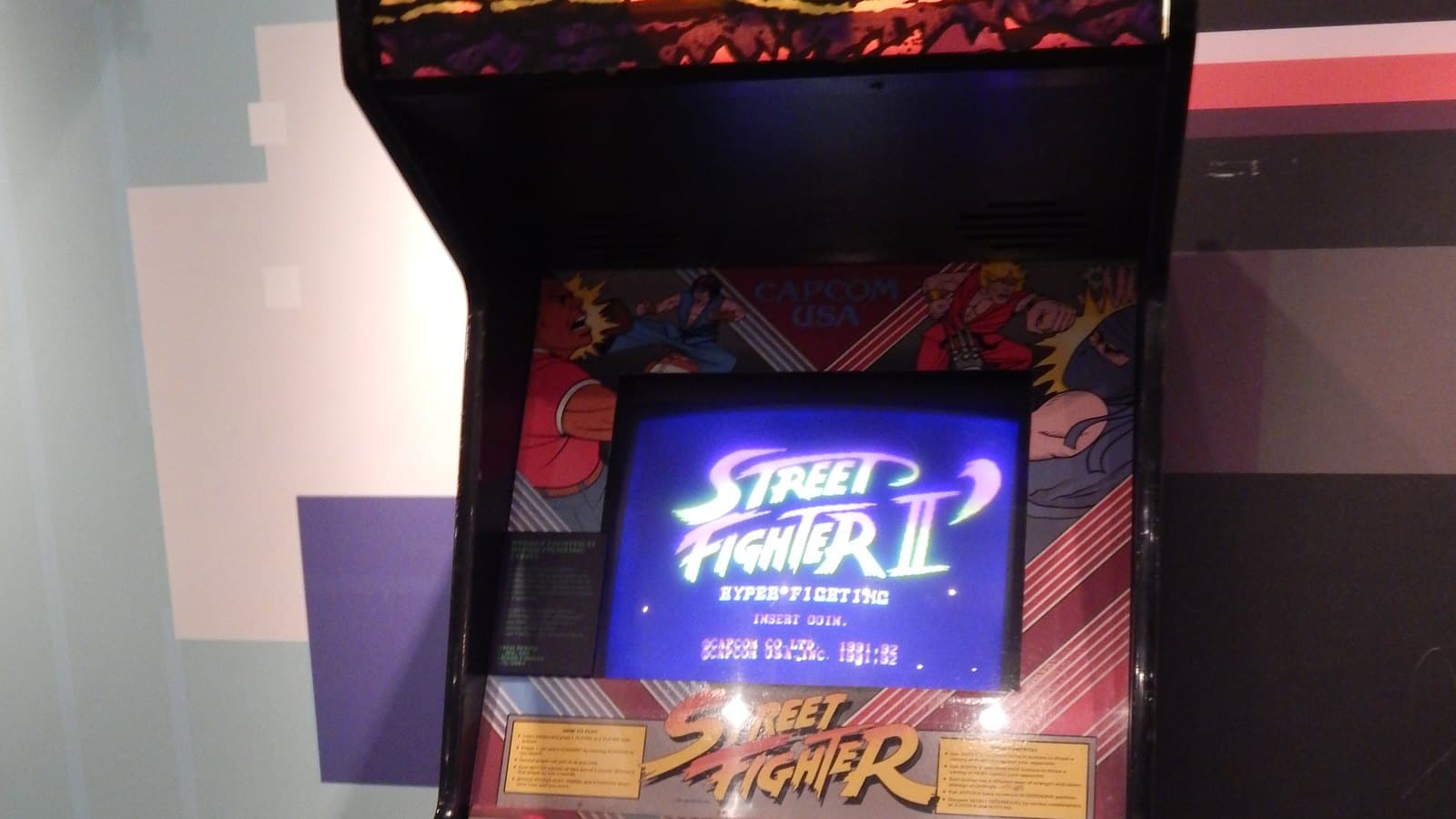
Cover image: Street Fighter II arcade machine.jpg by John Turner via Wikimedia Commons, CC BY 2.0.
Tags
Frequently asked questions
- Is Street Fighter (2026) getting bad reviews?
- By aggregate measures, yes. Rotten Tomatoes listed about a 43 percent critics score as of October 15, 2026, against a 78 percent audience score. Forbes cited 34 percent while reviews were still landing, and the figure moved as more reviews arrived.
- Who is in the Street Fighter (2026) cast?
- Noah Centineo plays Ken, Andrew Koji plays Ryu, Callina Liang plays Chun-Li, Cody Rhodes plays Guile, Vidyut Jammwal plays Dhalsim, David Dastmalchian plays M. Bison and 50 Cent plays Balrog, with Andrew Schulz as Ken's manager and Kyle Mooney also appearing.
- What did critics like about Street Fighter (2026)?
- Most praise went to the 2D anime-style flashback sequences, the fight choreography and Callina Liang's performance as Chun-Li, along with character designs that closely match the games.
- Why does Street Fighter (2026) end on a cliffhanger?
- Critics said the ending puts a sequel ahead of a complete story. The Playlist, Awards Watch, Fiction Machine and FlickDirect reviewed the film as an overcrowded setup that crams three movies into two hours.

TPW Editorial
Editorial Team
TechPastWeek's editorial team reports and edits every story we publish. We research each piece against primary and credible secondary sources, and a human editor reviews and signs off before it goes live.