Z.ai Says Its Own Model Built the Serving Stack That Runs It, on 100,000 Chinese Chips
Z.ai says an AI agent built the production inference stack for GLM-5.3-Flash on more than 100,000 Chinese accelerators, tripling throughput in under two weeks.

On this page
Key takeaways
- Z.ai published a technical account on September 17, 2026 describing how it built production inference for its GLM-5.3-Flash model on more than 100,000 Chinese-made AI accelerators.
- The company said an Infra Agent powered by GLM-5.3 did much of the porting, profiling and kernel work, with engineers setting objectives and reviewing changes that carried production risk.
- Z.ai reported end-to-end throughput roughly tripled from its first working version and that per-token cost and hardware utilization reached levels it compares to mainstream Nvidia GPUs.
- Z.ai opened a high-speed API tier called GLM-5.3-FlashX around September 18, 2026 that it says peaks near 200 tokens per second on the same domestic-accelerator capacity.
- Z.ai described the project as an early step toward a model helping optimize the system that serves it, but said it has not reached recursive self-improvement and that people still set objectives and assess risk.
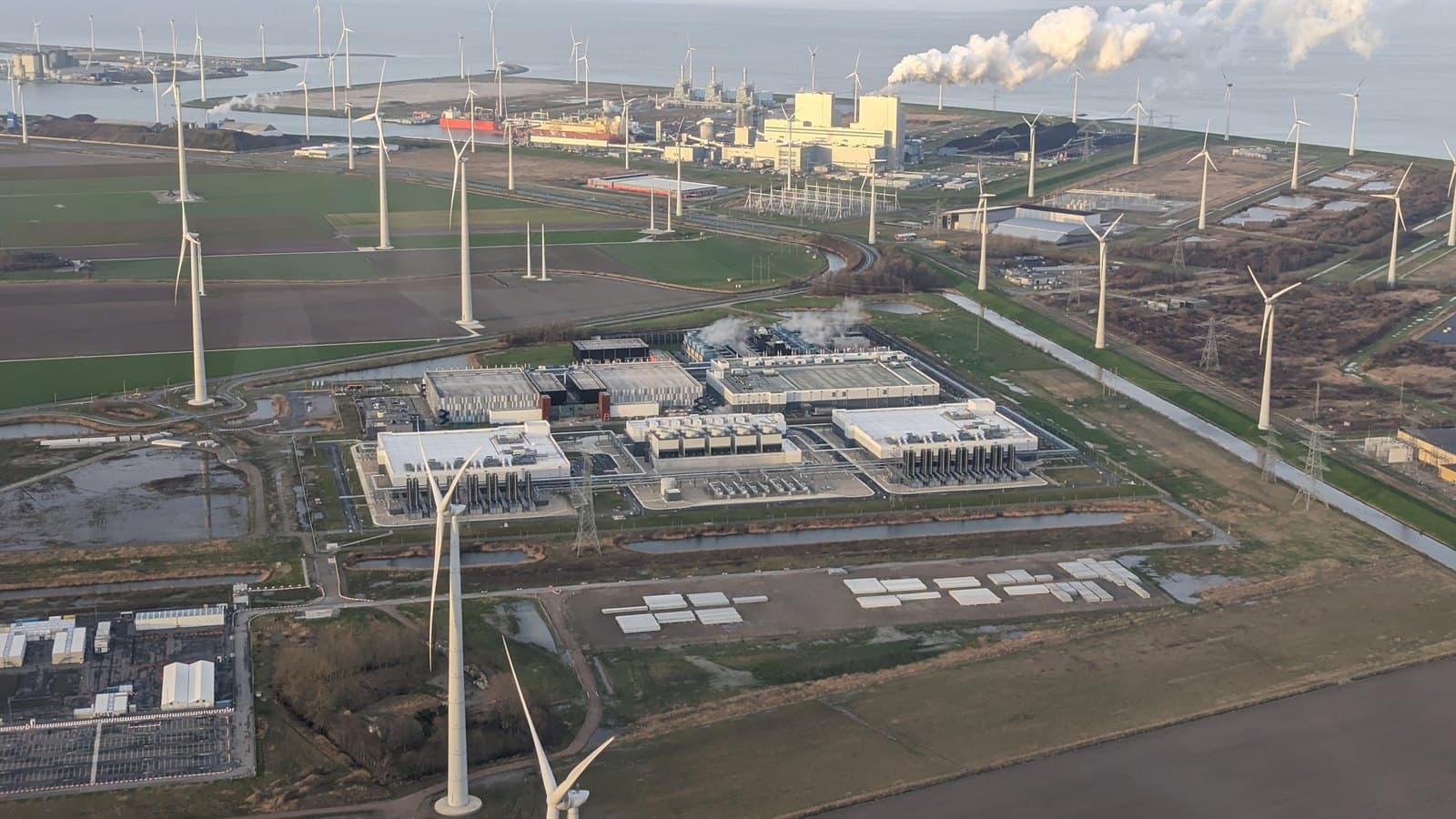
On September 17, 2026, the Chinese AI company Z.ai published a technical account of a project that reads less like a launch announcement and more like an engineering log. The company said it had built a complete production inference service for its GLM-5.3-Flash model from scratch on a cluster of more than 100,000 Chinese-made AI accelerators, and that an AI agent running on the model did much of the low-level work.
Related reading: A ChatGPT Co-Inventor Says the Missing Piece of AI Is a Model That Won't Talk · AI's Own Builders Are Warning About the Machines They Are Making.
Z.ai, formerly known as Zhipu AI, says no one had previously operated domestic Chinese accelerators at that scale for a frontier multimodal model. The account, published on the company's blog, lays out the hardware constraints, the agent's role and the specific bugs its engineers and the agent fixed. It is a company document, not an independent benchmark, and the performance figures come from Z.ai itself. Read that way, it is still one of the more detailed public descriptions of what it takes to serve a large model on silicon that was not designed with Nvidia's software ecosystem in mind.
What Z.ai says it built
GLM-5.3-Flash launched on August 26, 2026. It is a 320-billion-parameter mixture-of-experts model with about 18 billion parameters active per token, a hybrid of sparse and linear attention, and a context window of up to one million tokens. The company released it under the MIT license.
The serving problem was not the model alone. Z.ai said the Chinese accelerators it used have less on-chip memory and bandwidth than mainstream graphics processors, and that the software ecosystem around them was immature, with incomplete kernel support and behavior that should have been documented but had to be discovered by experiment. On top of that sat a new architecture, a very long context window and multimodal requests.
The company's answer combined two things: an agent, and a feedback loop.
An agent that proposes, engineers who decide
Z.ai describes an Infra Agent powered by GLM-5.3 that proposed diagnoses, kernel patches and stack edits. Human engineers set the objectives and the system boundaries and reviewed the changes that carried real risk, including anything touching numerical accuracy, concurrency or production safety.
The method the company calls dense feedback is the part worth understanding. An end-to-end metric can tell an agent that something got worse, but not why. A failed accuracy test, a 30 percent rise in time to first token, or a 20 percent drop in output throughput does not identify the layer responsible. Z.ai's approach folds correctness tests, runtime logs, execution traces, microbenchmarks and end-to-end metrics into repeatable workflows so the agent can validate a hypothesis locally instead of waiting for a full deployment and load test after every change.
Three properties make that work, according to the account. The feedback has to be local, tied to specific launch parameters, code changes, kernels or input conditions. It has to be cheap and fast to obtain. And it has to allow objective verification, because a correlation on its own does not establish a root cause.
Company-reported results: Z.ai's throughput and cost figures come from its own engineering post. The company has not published an independent benchmark, and a full external evaluation of GLM-5.3-Flash on domestic accelerators does not yet exist. Treat the numbers as claims by the vendor.
Three fixes, and what they show
The account walks through three engineering cases, and each one shows how unglamorous serving work is.
The first is a numerical problem. When Z.ai compared partitioned and unpartitioned kernel paths, it found an accuracy issue in the KDA kernel's context-parallelism path. The tl.dot operation was defaulting to TF32 computation even when its inputs were FP32, so errors accumulated during state merging and grew with context length. The fix set the input precision to tf32x3, which uses three TF32 tensor-core operations to produce a more precise result. Z.ai said the change was merged upstream into Flash Linear Attention, in a pull request opened and merged on August 27, 2026.
The second is a concurrency bottleneck. The team set an acceptance criterion that prefill plus KV transfer should run within 5 percent of a prefill-only baseline. The agent found gaps above 20 percent in some scenarios and traced them to DeepEP v1.2.1, where two internal calls did not release the Python global interpreter lock. While those calls held the lock, the transfer thread in the same process could not acquire it in time, so scheduling slipped and the overlap with computation shrank. After the fix released the lock during the relevant intervals, Z.ai said the gap fell below 1 percent under the same conditions.
The third is a kernel performance win. Z.ai had the agent distill techniques from hand-written kernels in projects such as SGLang, Flash Linear Attention and DeepGEMM into reusable optimization patterns. On a KDA decode kernel, a division optimization cut execution time by 9.6 percent. Feedback then pointed to computation as the bottleneck, and the agent merged four repeated FP32 normalization and gating operations into a single thread block, producing what the company reports as a 1.71x speedup over the previous version.
None of these is a breakthrough in isolation. Together they are the kind of work that has kept Nvidia's software advantage durable for years: not the chip alone, but the thousands of small fixes that make a chip usable at scale. An agent that can carry part of that load changes the cost of porting a model to new silicon.
The FlashX speed tier
On top of the infrastructure work, Z.ai opened a serving tier called GLM-5.3-FlashX on its API around September 18, 2026. The company bills it as a high-speed cut of the Flash family and says peak generation reaches roughly 200 tokens per second, using capacity from the same domestic accelerator cluster. Pandaily reported that the tier positions the work as a production latency product rather than a new base model.
The timing matters. A faster serving tier is a commercial promise about capacity, not only a benchmark. It tells developers that the cluster is not a one-off demonstration but a system the company intends to sell against.
What recursive self-improvement means here
Z.ai frames the project as an early example of recursive self-improvement, the idea that a model can improve the systems that train or serve it. It then steps back from the phrase. The company states that it has not reached recursive self-improvement and that choosing objectives, setting boundaries and assessing risk remain human responsibilities it believes people should keep.
The distinction is honest and important. An agent that patches kernels under human review is a long way from a system that sets its own goals. The narrower, more concrete claim is that low-level systems engineering, a category of work that has resisted automation, may be partly automatable when the model has dense, local, verifiable feedback about the machine it is running on.
Why non-Nvidia inference is the real story
The larger significance is about where inference capacity can come from. If a frontier-scale multimodal model can be served at competitive per-token cost on Chinese accelerators, then the constraint on China's AI industry becomes less about access to Nvidia's fastest chips and more about the maturity of domestic hardware and software. Z.ai said hardware utilization and per-token cost reached levels comparable to mainstream Nvidia GPUs, which, if it holds, is a direct challenge to the assumption that cutting-edge AI serving requires Nvidia hardware.
That claim deserves scrutiny. Z.ai is comparing its own cluster against Nvidia economics it does not control, and it has not published the workload-by-workload comparison that would settle the question. The base model itself was tested anonymously on OpenCode and OpenRouter as ox-alpha before launch, and Z.ai said it became the most-used model on both platforms within a week, processing more than 62 trillion tokens in six days.
The context is a widening effort in China to reduce dependence on American chips. Domestic accelerator makers, memory suppliers and cloud providers have all been pushing to fill the gap, and the software layer has been the hardest part. A working, agent-assisted serving stack is a proof point for that effort, even if its economics are not yet independently verified.
Caveats and what to watch
Almost every number here comes from Z.ai. The 3x throughput gain, the sub-two-week timeline, the 1.71x kernel speedup and the comparison to Nvidia economics are company-reported. The GitHub pull request is public and verifiable, which gives the numerical-accuracy case some independent footing, but the rest has not been reproduced outside the company.
Three things would matter over the next few months. First, whether independent users reproduce the throughput and cost claims on the same or similar hardware. Second, whether the optimizations Z.ai describes are reusable across other Chinese accelerators or specific to its own cluster. Third, whether FlashX holds its promised latency at scale once real traffic, rather than a launch-week footprint, arrives.
For now, the story is a data point in a debate that has run all year: how quickly the software gap around non-Nvidia AI hardware can close, and how much of that work the models can do themselves. Z.ai's answer is that a meaningful part of it is already possible. The burden of proof now sits with the benchmarks that follow.
Cover: The Zhipu AI (Z.ai) wordmark. Logo in the public domain via Wikimedia Commons.
Tags
Frequently asked questions
- What is GLM-5.3-FlashX?
- GLM-5.3-FlashX is a high-speed serving tier for Z.ai's GLM-5.3-Flash model that the company opened on its API around September 18, 2026. Z.ai says it peaks near 200 tokens per second and runs on the same cluster of more than 100,000 Chinese-made accelerators used for the base model.
- Did an AI really build Z.ai's inference stack by itself?
- Not by itself. Z.ai says an Infra Agent powered by GLM-5.3 handled analysis, hypotheses and code changes, while human engineers set the objectives and system boundaries and reviewed changes involving numerical accuracy, concurrency and production risk.
- How much faster is GLM-5.3-Flash after the work?
- Z.ai reports that end-to-end throughput roughly tripled relative to its initial baseline, that moving from model adaptation to production took under two weeks, and that one kernel fix produced a 1.71x speedup. These are company-reported figures and have not been independently benchmarked.
- Is this recursive self-improvement?
- Z.ai describes the project as an early step toward recursive self-improvement because the model helped optimize the system that serves it, but it states that this is not recursive self-improvement yet and that humans remain responsible for objectives, boundaries and risk.

TPW Editorial
Editorial Team
TechPastWeek's editorial team reports and edits every story we publish. We research each piece against primary and credible secondary sources, and a human editor reviews and signs off before it goes live.