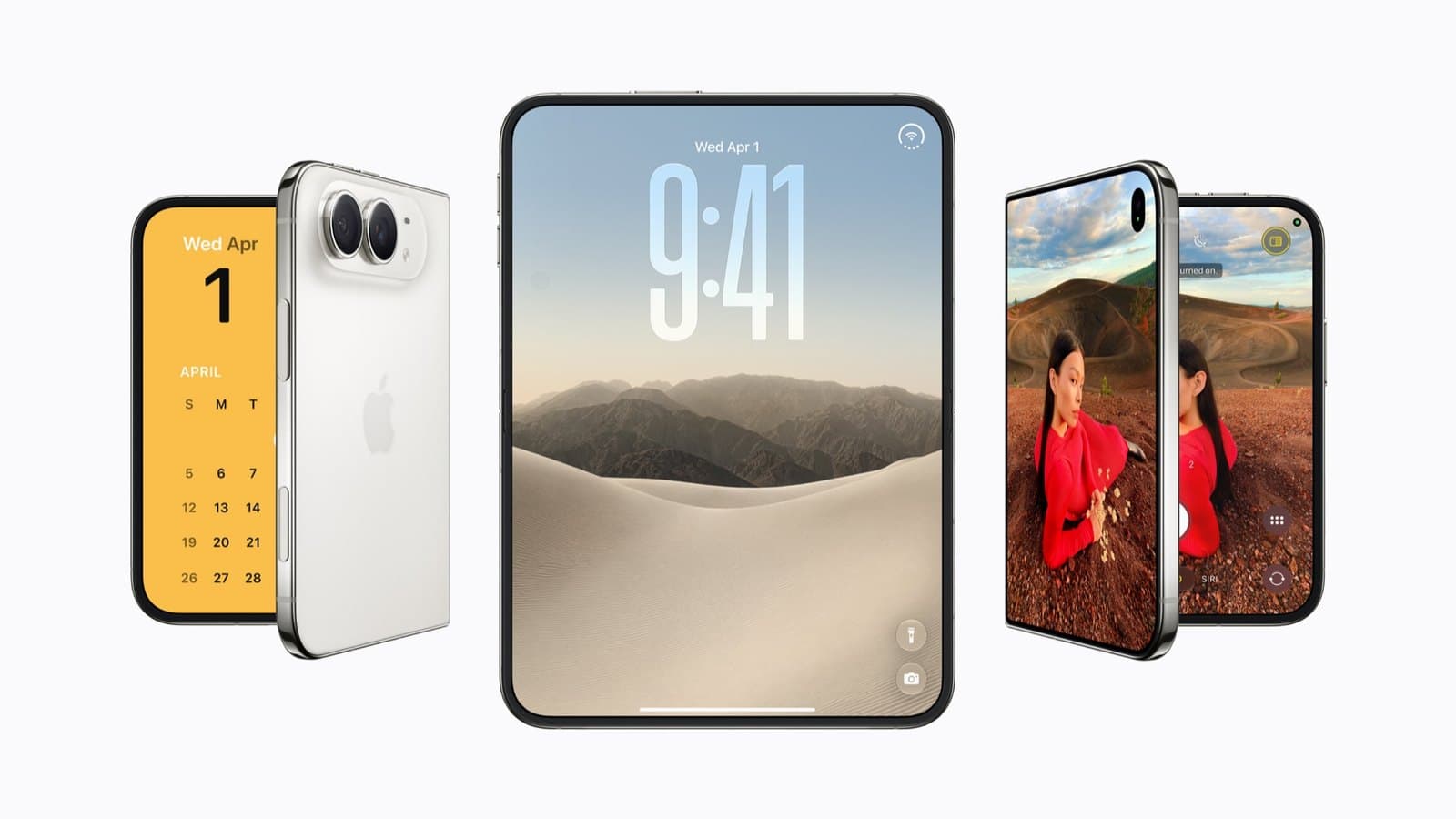
Apple Finally Folds: iPhone Duo and iPhone 18 Pro Arrive in a Split Launch
Apple's first foldable is the iPhone Duo, not the iPhone Ultra. It headlines a September event that also brought the 2nm iPhone 18 Pro and a price hike.

On this page
Apple's "Surprise and Shine" event on September 9 was always going to be a turning point: the first keynote under new CEO John Ternus, and the moment Apple finally entered the foldable market it had spent years watching from the sidelines. What arrived was both the expected and the surprising, a foldable, yes, but not under the name everyone had been using.
Related reading: Nvidia's RTX Spark N1X Lands in October: the Local-AI PC War Is On · Desktop GPUs Are Back in a Big Way.
The iPhone Duo, not the iPhone Ultra
For most of 2026, the rumor mill called Apple's foldable the "iPhone Ultra." Apple went with iPhone Duo instead. It is a book-style device with two screens and a foldable inner display, and Apple's pitch leans on continuity: the two halves share the same aspect ratio, so the transition between closed and open is meant to feel like one fluid motion rather than a mode switch.
Apple says it is the thinnest iPhone ever made when open. It carries an IP68 dust-tight rating, a pointed contrast with Samsung's Galaxy Z Fold8, which Apple's marketing quietly implied is not. Notably, the Duo does not have an Action Button, and it works with the $79 USB-C Apple Pencil rather than the more capable Apple Pencil Pro. It ships with iOS 27.1 out of the box.
Pricing and timing are the sharp edges. Pre-orders open October 16, with a launch on October 23, later than the rest of the lineup, and widely expected to be Apple's most expensive iPhone yet.
iPhone 18 Pro: the 2nm milestone
The more conventional half of the event was the iPhone 18 Pro and iPhone 18 Pro Max, and they carry the single most consequential component Apple has shipped in years: the A20 Pro, the company's first 2nm smartphone chip.
The rest of the upgrades are refinements rather than reinventions:
- Variable aperture on both Pro models, a camera feature long rumored and finally delivered.
- Manual aperture and shutter-speed controls for photographers who want them.
- A redesigned vapor chamber that Apple says triples cooling surface area.
- Apple's in-house C2 modem (with different modem configurations between the two sizes).
- An "Apple Reference Image" feature meant to help verify that a photo is authentic, a quiet acknowledgment of how generative AI has muddied photographic trust.
- Four colors, with glacier and burgundy drawing the most attention.
The Pro Max now claims the longest battery life in an iPhone, at up to 45 hours. It is heavier than its predecessor, but not thicker.
Pre-orders for the Pro models open September 12, with devices in stores September 18.
The price is the story
Apple raised the Pro price by $100, but the increase is closer to $300 if you want 1TB of storage. It is the clearest sign yet that Apple is pushing its flagship buyers upmarket even as the base lineup gets pushed to next spring.
A deliberately split lineup
This year, Apple did not launch a standard iPhone 18. Instead it split its annual cadence: the fall event focused on premium hardware, while the base iPhone 18, iPhone 18e, and a new iPhone Air are expected in spring 2027. For anyone waiting to upgrade to a mid-range iPhone, the message is patience.
The rest of the hardware slate filled in the gaps:
- Apple Watch Series 12 with the S11 chip, upgraded health sensors, and ceramic case options.
- Apple Watch Ultra 4 with two-day battery life and expanded health tracking.
- AirPods 5, with active noise cancellation now standard and wireless charging moved behind the pricier tier.
- iOS 27 arriving for all users on September 14, alongside macOS Golden Gate and the other platform updates.
Apple also discontinued the iPhone 17 Pro and Pro Max outright and raised prices on several older models, a reminder that the "budget" iPhone is increasingly a historical artifact.
The Siri asterisk
Buried in the fine print is the detail most likely to annoy long-term customers: Apple's upgraded Siri AI will carry daily usage limits, with "expanded access" available for a fee. Apple spent much of the past two years promising that its AI features were a reason to buy its hardware. Charging for the good version of them is a different bargain.
The takeaway
Apple's foldable finally exists, but it is not the main story. The main story is a company stretching its lineup (and its prices) in both directions at once: a $2,000-plus foldable at the top, and a longer wait for anything affordable at the bottom.
Tags

TPW Editorial
Editorial Team
TechPastWeek's editorial team reports and edits every story we publish. We research each piece against primary and credible secondary sources, and a human editor reviews and signs off before it goes live.