Toyota Plans 400,000 Humanoid Robots for Its Factories and a ¥1 Trillion-a-Year Rebuild
Toyota will field roughly 400,000 in-house robots across its plants, group companies and suppliers from 2028, funded by about ¥1 trillion a year in factory renewal.

On this page
Key takeaways
- The Toyota group plans to introduce about 400,000 robots across its production sites, split between 150,000 at Toyota and group companies and 250,000 at suppliers, according to Nikkei and Toyota executives.
- Toyota will spend roughly ¥1 trillion (about $6.8 billion) a year from 2028 to renew 60 factories worldwide and the robots inside them.
- The robot in the plan is ELEY, a 50-kilogram wheeled humanoid with two fingers per hand, developed in-house by Toyota's Frontier Research Center.
- ELEY runs on Large Behavior Models from the Toyota Research Institute and learns tasks by imitating workers; it folded a T-shirt after about 1,500 practice runs over two weeks.
- Toyota says it has not presented plans for how the robot rollout affects jobs; executive Hiroki Nakajima said robots are meant to coexist with people, not replace them.
TOKYO: The Toyota group intends to put roughly 400,000 robots into its production sites, a fleet that will arrive alongside a rebuild of the company's aging factories and marks one of the largest commitments to humanoid robots by any manufacturer. Nikkei reported the plan on September 18, and Toyota executives detailed the numbers at an investor event held by its European arm.
Related reading: Agility's Digit 5 Wants to Work Beside People, With No Safety Cage in Between · Apple Finally Folds: iPhone Duo and iPhone 18 Pro Arrive in a Split Launch.
The split is 150,000 robots inside Toyota and its group companies and 250,000 at suppliers, according to Car Watch, which covered the Toyota Motor Europe briefing. The robot at the center of the plan is ELEY, a machine developed in-house by Toyota's Frontier Research Center rather than bought from an outside vendor.
What Toyota actually announced
The headline number is easy to misread. Toyota is not saying that 400,000 humanoids will start work next year. The company is setting up a multi-year program in which factory renovations and robot replacements are funded together, with the rollout beginning from 2028. Toyota executive vice president and chief technology officer Hiroki Nakajima said the group will spend about ¥1 trillion, roughly $6.8 billion, a year from 2028 on renewing both the 60 factories Toyota operates worldwide and the robots inside them.
The robot fleet will run on Large Behavior Models, the generative AI developed by the Toyota Research Institute, the company's research arm. Toyota describes the goal as Factory Automation 3.0: connecting robots and plants end to end so that what one line learns can be pushed to others. That data-sharing idea is central to the plan. Toyota wants work data collected at one factory to be transmitted to ELEY units deployed elsewhere, so a task learned in Japan can be replicated in another country without retraining each machine from scratch.
ELEY: a wheeled humanoid that learns by imitation
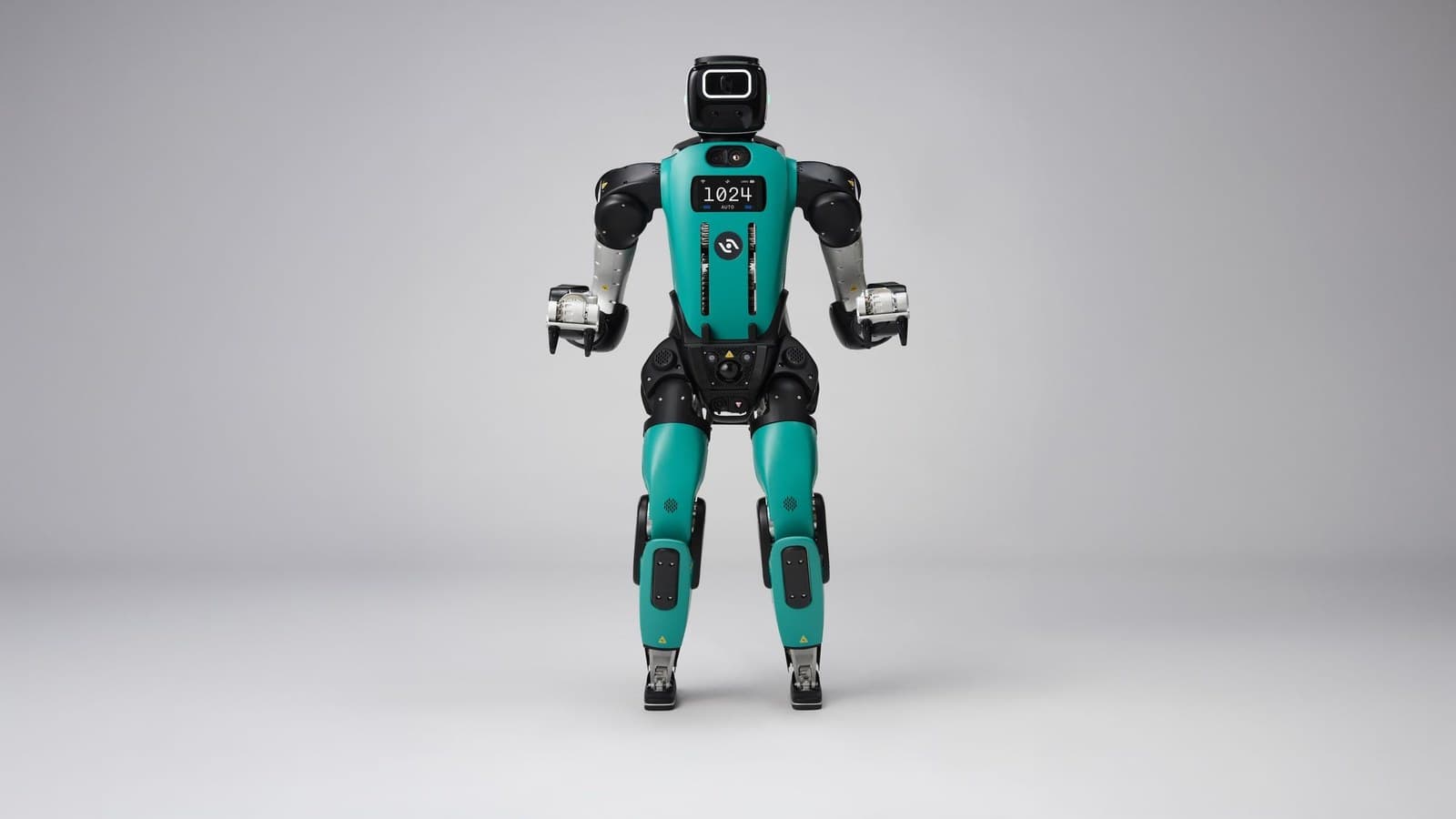
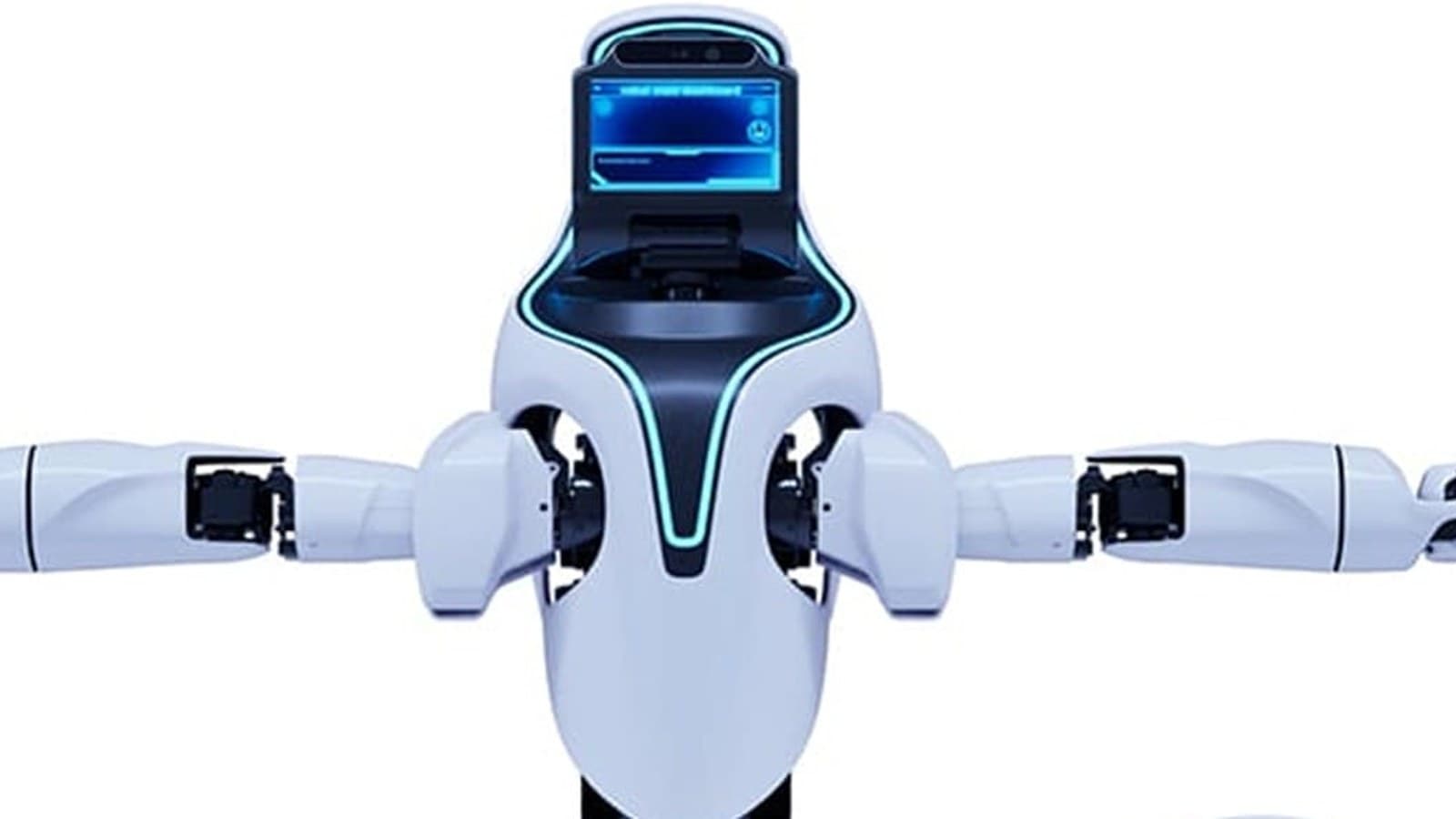
ELEY, which Toyota says stands for Embodied Learning robot for Enhanced Yield, is not a bipedal android. Nikkei describes it as a 50-kilogram robot that moves on wheels, carries two fingers on each hand and runs on batteries or a power cord. That combination is a deliberate design choice rather than a limitation. Wheels are simpler, cheaper and more stable than legs on a flat factory floor, and the moving parts go where the value is: the arms and hands.
Toyota has published a detailed account of ELEY's engineering from the Frontier Research Center. The robot uses quasi-direct-drive actuators at every joint, a low-gear-ratio design that makes the arms easy to push and therefore safer around people. It has a scapular axis, an extra shoulder joint that mirrors how humans use their shoulder blades for two-handed work, and a direct-drive mechanism that avoids the wires and belts that hurt positioning accuracy. Toyota sized the joints and arm thickness to an average adult Japanese male.
The learning method is the other half. Workers wear devices modeled on ELEY's fingers while performing their normal tasks, and the robot observes and imitates the motion. At the investor briefing, Toyota demonstrated ELEY folding a T-shirt, according to Asia Business Daily, which reported that after about 1,500 repetitions over two weeks the robot could fold nearly perfectly. T-shirt folding has been a Toyota robotics demonstration for years because it demands the kind of gentle, adaptive contact that traditional industrial arms handle badly.
Toyota is candid that ELEY is not finished. The Frontier Research Center lists three gaps it has not closed: reliability during long shifts, repeatability so the arm returns to the same position precisely every time, and the data infrastructure needed to train the robots at scale. The 400,000-unit plan is the mechanism for closing them, by putting the machines into near-production conditions and turning both successes and failures into training data.
The ¥1 trillion factory bet
The robot program is inseparable from Toyota's factory strategy. Many of Toyota's plants are decades old, and the company frames the spending as modernization rather than pure automation. Nakajima said the annual figure covers the plants as well as the robots, and Car Watch reported that Toyota sees the factories themselves as connected assets rather than standalone buildings, which implies a digital layer for tracking production across sites.
Pairing robots with plant renewal solves a practical problem. Retrofitting humanoid robots into existing lines is difficult, and most successful deployments so far have involved new or reconfigured cells. If Toyota is rebuilding a plant anyway, it can design the layout for machines that move on wheels among people from the start.
The 18,000 skilled workers Toyota calls Takumi are part of the plan, not an obstacle to it. The company says it wants to capture the expertise of these veteran craftspeople in ELEY's training data, using the Toyota Production System as the reference. The stated hope is that ELEY, once trained on the movements of skilled workers, could eventually help train new human employees.
Not starting from zero
Toyota has been running humanoid and robotics programs for years, and it already has commercial deployments of other companies' machines. In February 2026, Toyota Motor Manufacturing Canada signed a robots-as-a-service agreement with Agility Robotics and later put seven wheeled Digit robots to work moving parts at its Woodstock, Ontario plant, following a year-long pilot. That made it one of the first commercial humanoid deployments in automotive manufacturing.
Toyota is also an investor in the humanoid supply chain. Walden Robotics, a spin-out of the Toyota Research Institute, emerged from stealth in July with about $300 million in funding, a $1.1 billion valuation and a design philosophy strikingly close to Toyota's: wheeled robots, no legs, doing real work in a Toyota plant since February. The existence of both Walden and ELEY suggests Toyota is hedging, keeping an in-house platform while backing an independent supplier.
The ELEY plan is bigger than any of those efforts. It is also the first time Toyota has put a four-hundred-thousand-unit number on its own humanoid ambitions, which is what makes the announcement notable. A pilot of seven robots is an experiment. A plan to renew a global fleet is a procurement strategy.
The wider humanoid race
Toyota is joining an industry moving quickly from demonstrations to deployments. Hyundai, which owns Boston Dynamics, has said it will scale Atlas production toward 30,000 units a year by 2028, with early deployments at its Georgia plant. Figure robots have worked at BMW's Spartanburg site, Mercedes-Benz has tested Apptronik's Apollo, and Tesla continues to develop Optimus for internal factory use.
The cost curve is dropping, but it remains the central obstacle. Analyst estimates put a humanoid robot in a Western factory at tens of thousands of dollars per unit, before the integration and maintenance costs that can exceed the hardware itself. Toyota's robots-as-a-service approach with Agility avoided that capital outlay by renting the machines, and its decision to build ELEY in-house is a bet that owning the platform will lower the long-run cost.
The bullish case rests on labor shortages and on tasks that are repetitive but too variable for fixed automation. The skeptics are not hard to find. Investor Mark Cuban has argued the current humanoid push could fade within five to ten years, and even Agility's chief technology officer has said deployment costs can far exceed the price of the robot.
The jobs question
Toyota has not published how the rollout affects employment. Nikkei and Asia Business Daily both noted that the company presented no workforce redeployment or hiring strategy alongside the robot numbers, which is the gap that will draw the most scrutiny from unions and governments.
Nakajima's framing was careful. He told Nikkei that "robots are not intended to replace humans, but to create a world where they coexist with people." That is the same message Toyota's research leadership has used for years, and it echoes the company's long-standing position that automation should augment workers rather than displace them. The scale of the plan is what makes the promise testable. Replacing four hundred thousand robot units, and possibly displacing some of the tasks humans now do, is a different order of magnitude from a pilot line.
What to watch
Three signals will show whether the plan is real. The first is whether Toyota publishes a factory-by-factory schedule and an actual unit count per year, since a 2028 start can cover a lot of ground. The second is whether ELEY's three acknowledged weaknesses, reliability, repeatability and data infrastructure, show measurable progress in the company's next research disclosures. The third is the labor question. If Toyota attaches a worker retraining or redeployment program to the rollout, it will have addressed the most predictable objection before it hardens.
For the broader robotics market, Toyota's number matters because it is the largest single demand signal a major automaker has given for humanoid-class machines. If the company follows through, it becomes the reference customer that suppliers and startups have been waiting for. If the timeline slips, it joins the long list of grand automation plans that took longer than promised.
Cover: Toyota's ELEY partner robot. Image: Toyota Motor Corporation (company-distributed press asset).
Tags
Frequently asked questions
- How many humanoid robots is Toyota deploying?
- The Toyota group plans to field or renew about 400,000 robots: 150,000 within Toyota and its group companies and 250,000 at suppliers, according to Nikkei and comments by Toyota executive Hiroki Nakajima.
- What is Toyota's ELEY robot?
- ELEY stands for Embodied Learning robot for Enhanced Yield. It is a 50-kilogram robot with a wheeled base and two human-like arms with two fingers per hand, built by Toyota's Frontier Research Center to work alongside people in factories.
- When will Toyota's humanoid robots start work?
- Toyota says the large-scale rollout begins from 2028 onward, alongside a factory renewal program. ELEY is already learning tasks on some production lines, and a handful of third-party humanoid robots have been running at Toyota facilities since early 2026.

TPW Editorial
Editorial Team
TechPastWeek's editorial team reports and edits every story we publish. We research each piece against primary and credible secondary sources, and a human editor reviews and signs off before it goes live.