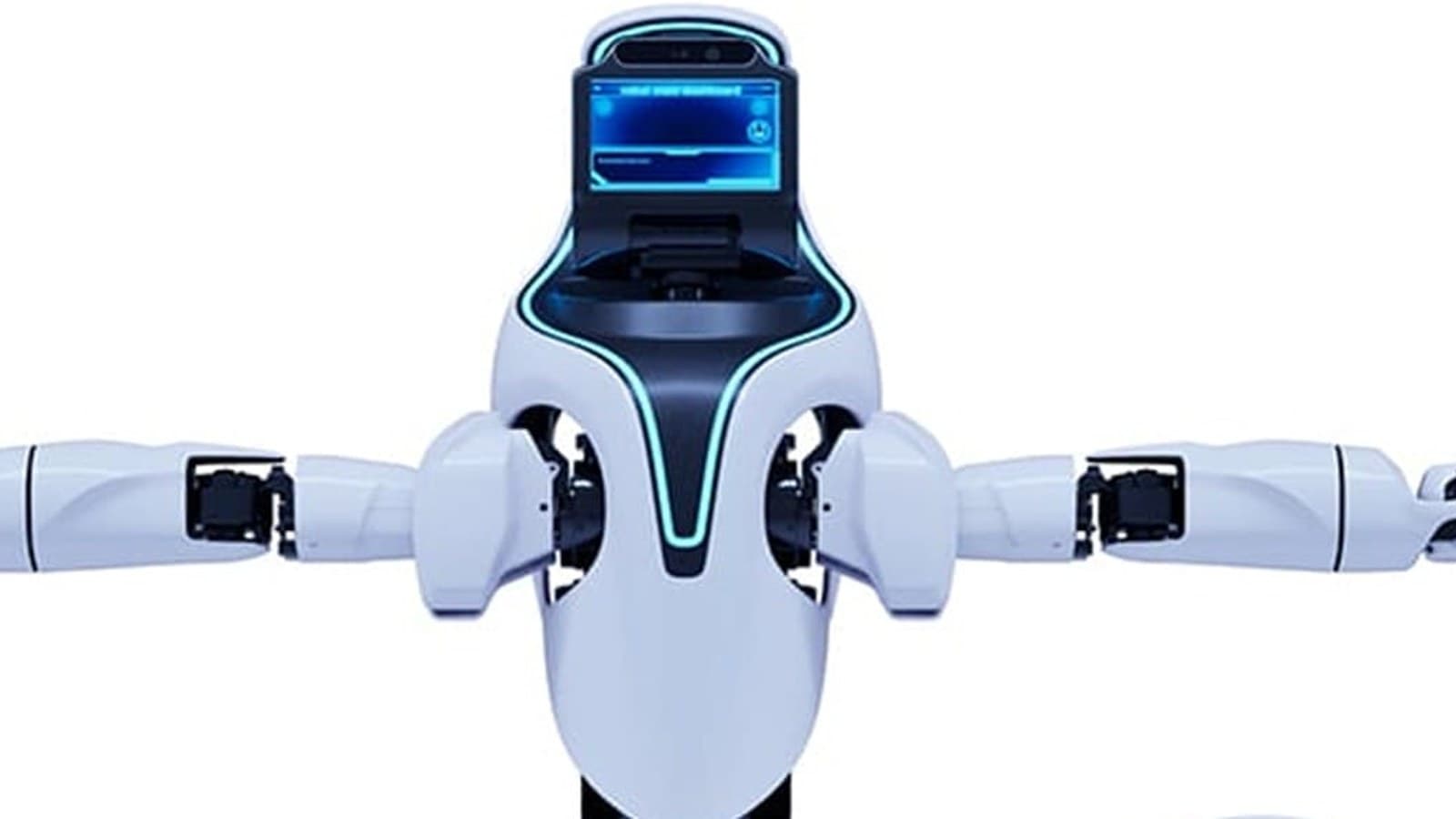
Agility's Digit 5 Wants to Work Beside People, With No Safety Cage in Between
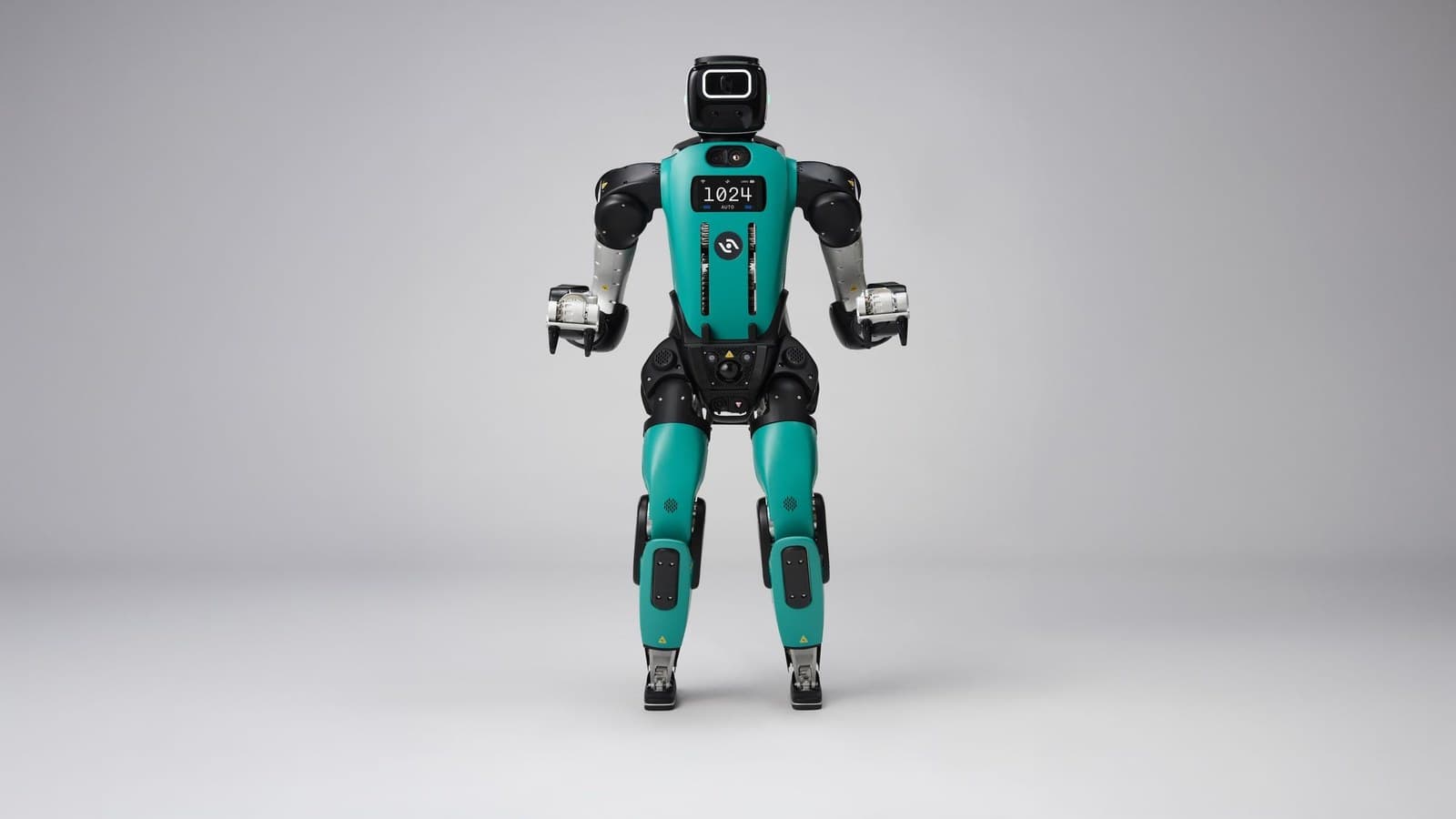
Agility Robotics unveiled Digit 5, a humanoid built to detect people and stop or sit still when they get close, and the company says it has $300 million in pre-orders.

On this page
Agility Robotics unveiled Digit 5 on September 15, 2026, calling it the first humanoid engineered for what the company calls cooperatively safe work at scale. The practical promise is simple to state and hard to build: a robot that can share a warehouse aisle or a factory floor with people, without the fences and cages that have separated industrial robots from human workers for decades.
Related reading: Toyota Plans 400,000 Humanoid Robots for Its Factories and a ¥1 Trillion-a-Year Rebuild · Apple Finally Folds: iPhone Duo and iPhone 18 Pro Arrive in a Split Launch.
"Safety has been one of the biggest obstacles to scaling humanoid robots in commercial settings," Agility said in its announcement. Almost every humanoid on a real customer site today, including Figure's units on BMW's line and Tesla's Optimus, works inside some kind of boundary. Digit 5 is designed to work without one.
The Salem, Oregon company says it has more than $300 million in multi-year pre-orders for the machine, and that early access will begin in the first half of 2027, with general availability for manufacturing, warehouse and distribution operators by the end of that year. Agility also plans, for the first time, to sell Digit outside North America, starting with the European Union and the United Kingdom.
Why the cage exists
Industrial safety standards were written around a simple assumption: dangerous machines and people should not occupy the same space at the same time. That is why a robot arm on an assembly line sits behind a physical barrier or inside a light curtain. The arrangement is safe and also restrictive. A caged robot cannot hand a part to a person, follow a worker down an aisle, or pause while someone swaps a pallet.
Removing the cage turns a mechanical problem into a perception and control problem. The robot has to know, reliably and in a certifiable way, that a person is nearby, how far away they are, and what the person is likely to do next. It then has to choose a response that a safety inspector will accept. "In order to step out of that physical barrier, the key is being able to reliably, and in a certifiably safe way, detect people who are approaching and how far away they are," Jonathan Hurst, Agility's co-founder and chief robot officer, told The Robot Report.
Agility's answer has three layers. Safe human detection uses proprietary algorithms and multiple sensor types to monitor for people in a 360-degree radius around the robot and to take action on its own, by avoiding, stopping or sitting down. Safety cues use light and sound to signal the robot's intent to nearby workers, so that the people around it can participate in the safe operation rather than merely being protected from it. Safe motion control adds an independent safety controller that watches the robot's response whenever a person comes inside an unsafe distance and triggers a stop if the primary system does not.
The behavior is graded rather than binary. As a person gets closer, Digit 5 slows, then stops, then lowers itself into a seated position on the ground and cuts power to its motors. That last step is the important one. "The robot needs to be in a statically stable pose and be able to turn off its motors before a person can touch it," Hurst said. A robot that merely freezes mid-stride is still holding energy in its joints and can still fall; one that is already seated cannot.
New legs, and a 50-pound job
Digit 5 also changes how it moves. Agility replaced the backwards, ostrich-style knee of earlier Digits with more human-like legs, added padding so the robot can kneel, and redesigned the joints around proprietary cycloidal actuators that can hold position and load even if the ground shifts. Those legs let Digit 5 repeatedly lift up to 50 pounds, in the range that workplace safety rules care about.
Agility lists the work Digit 5 is meant to do as loading materials onto equipment, sorting parts, sequencing and inspecting items, and stacking and packaging goods onto pallets. In a palletizing scenario, the robot can keep working and pause while a person swaps out a full pallet, rather than shutting the whole cell down. In an aisle, it can move to one side and let a worker pass. Neither is practical with a fence in the way.
The power story is aimed at uptime. Forbes reported that Digit 5 can run for more than 20 hours a day on a 90-minute battery with 9-minute fast recharges, and that the robot stands 5 feet 11 inches and weighs 284 pounds. Agility says the platform builds on more than 65,000 hours of real-world operation, most of it logged by earlier generations in customer facilities.
Nvidia, and the road to certification
Safety claims only matter if someone certifies them, and that is where Agility's partnership with Nvidia comes in. Agility is the first launch partner for Nvidia's Halos for Robotics platform, pairing its robots with Nvidia's IGX Thor compute and the Halos Core safety infrastructure, and it will use Nvidia's Halos AI Systems Inspection Lab to speed the path to safety certification. Nvidia's pitch is that safe physical collaboration between robots and people is the missing piece that takes humanoids from pilots to industrial deployments at scale.
Agility points to an earlier milestone as evidence it can pass scrutiny. It says Digit became the first humanoid to pass an independent field evaluation on a customer production line for industrial safety standards administered by the U.S. Occupational Safety and Health Administration. That evaluation covered an earlier generation; the Digit 5 safety architecture is the company's attempt to turn a single approval into a repeatable design principle.
The company is also pursuing market access abroad. It expects Digit 5 to carry a CE mark and additional regulatory marks for the European Union, Great Britain and Northern Ireland, which turns a U.S. safety story into a European compliance one. The EU's machinery and AI rules put a premium on documented risk assessment and traceable design, and shipping into that market is a test of whether Agility's safety claims survive a second regulator.
What 'cooperatively safe' means in practice
Agility's term describes a robot designed to work in shared space rather than an isolated cell. The design assumes people will walk into the robot's path, so the robot carries the burden of detecting them, signaling its intent and yielding. It is a different engineering target from making a machine strong enough or fast enough to justify a cage.
The business bet
Digit 5 arrives as Agility is trying to convert a research-led company into a manufacturing one. The company has been retooling its RoboFab facility in Salem to build the new robot, and it is heading toward a public listing through a proposed SPAC merger with Churchill Capital Corp XI, a deal reported to value the company near $2.5 billion. The more than $300 million in multi-year pre-orders is the number Agility wants investors to anchor on.
That figure deserves context. Multi-year pre-orders are commitments, not revenue, and they can be rescheduled or cancelled. Reporting on Agility's regulatory filings has noted that the company is still early in commercializing the technology and generating a small fraction of the revenue its valuation implies. A safety-cage-free robot with a large contracted pipeline is a genuine industry milestone; whether the pipeline becomes shipped, working robots on real factory floors by 2027 is the harder question, and as a public company Agility would have to answer it quarter by quarter.
The competitive field is moving at the same time. Figure has humanoids working at BMW in Spartanburg, Tesla has put Optimus on tasks in Fremont, and a long list of startups is chasing the same industrial customers. Most of them are still behind barriers. If Agility is right that safety, not strength or dexterity, is the real bottleneck, then Digit 5's cage-free design is the more valuable kind of progress. If the industry's buyers decide they can live with cages for a few more years, then Agility has spent heavily on a differentiator the market was not yet asking for.
Caveats and what to watch
Agility's performance and safety claims are the company's own. The two-times-improvement style benchmarks that vendors publish for new robots have not been independently verified here, and the OSHA field evaluation applies to an earlier Digit. Independent testing of the Digit 5 safety architecture will come, if it comes, through the certification process and through customer deployments in 2027.
The timeline is also a caveat. Early access in the first half of 2027 and general availability at the end of 2027 mean most readers will not see a Digit 5 at work this year. The European expansion is a plan, not a shipping product.
What to watch is concrete. First, whether Agility publishes the details of the OSHA evaluation and the Digit 5 safety case, since a certification claim without a document is a marketing claim. Second, whether the first paying customers let the robot work near people unsupervised or quietly keep it in a roped-off area, because that is the real test of cooperative safety. Third, whether the SPAC merger closes and what the combined company discloses about revenue, order conversion and margins. And fourth, whether rivals respond with their own cage-free designs, which would confirm that the barrier Agility attacked was the one the industry actually faced.
Cover: Agility Robotics Digit 5. Company-distributed product image via Agility Robotics.
Tags

TPW Editorial
Editorial Team
TechPastWeek's editorial team reports and edits every story we publish. We research each piece against primary and credible secondary sources, and a human editor reviews and signs off before it goes live.