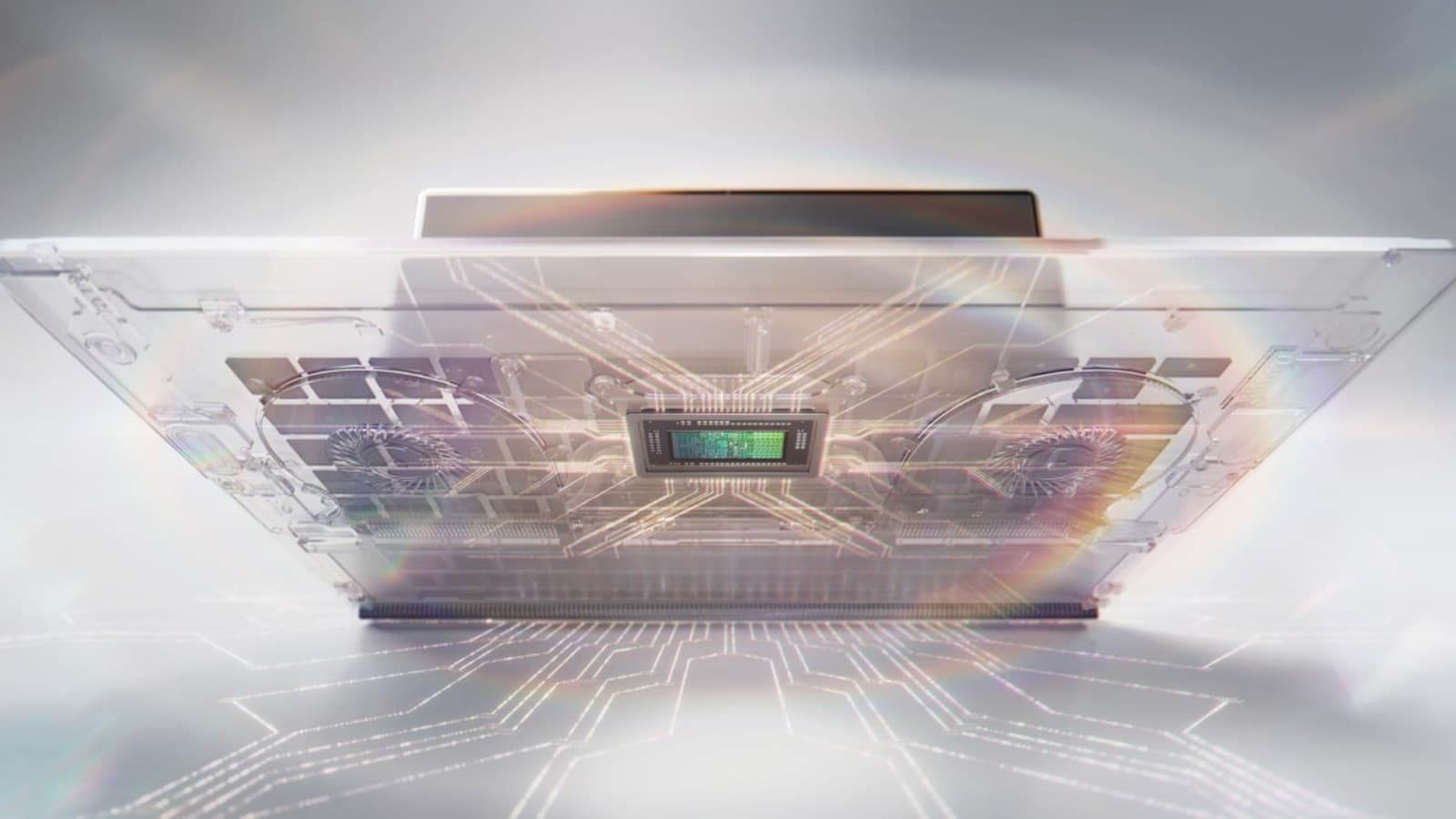
Nvidia's RTX Spark N1X Lands in October: the Local-AI PC War Is On
Nvidia confirmed its Arm-based N1X superchip ships in laptops and mini-desktops next month with up to 128GB of unified memory. AMD answered days later with a 'personal supercomputer' of its own.

On this page
The most interesting computer of 2026 might not live in a data center. At IFA Berlin this week, Nvidia finally put a date on its end of the local-AI bet: the first Windows PCs built on the RTX Spark N1X superchip launch in October, in both laptops and compact desktops. Days later, AMD unveiled a rival machine it calls a "personal supercomputer." After years of AI happening exclusively in someone else's cloud, the industry's biggest chipmakers are suddenly racing to put frontier-class inference on your desk.
Related reading: Apple Finally Folds: iPhone Duo and iPhone 18 Pro Arrive in a Split Launch · Desktop GPUs Are Back in a Big Way.
What the N1X actually is
The N1X fuses three things into one package: a 20-core Grace ARM CPU (co-designed with MediaTek), a Blackwell GPU with 6,144 CUDA cores and fifth-gen Tensor Cores with FP4 precision, and up to 128GB of unified memory, all linked by Nvidia's NVLink-C2C interconnect, delivering a claimed 1 petaflop of AI performance in machines with all-day battery life.
It ships in two configurations:
| Full N1X | Cut-down N1X | |
|---|---|---|
| CPU | 20-core Grace | 18-core Grace |
| GPU | 6,144 CUDA cores | 5,120 CUDA cores |
| Unified memory | 24–128GB | 24–32GB |
| Form factors | Laptops + mini desktops | Laptops only |
Lenovo's Yoga 9n 2-in-1 and Acer's small-form-factor RTX Spark desktop are the first announced systems, with ASUS, Dell, HP, MSI, and Microsoft Surface models expected. Neither launch pricing nor the full October device list has been confirmed, expect both to trickle out over the coming weeks.
Why unified memory is the whole story
The N1X's pitch is simple: memory capacity, not raw FLOPS, is what determines which AI models you can run locally. A 128GB unified pool can hold very large open-weight models entirely in fast memory, the same architectural bet Apple made with the M-series (now up to the M6 and M5 Ultra) and AMD made with Strix Halo.
It also breaks Qualcomm's exclusivity on Windows on Arm, bringing a heavyweight second silicon vendor into the ecosystem, and with it, leverage to pull application developers toward native Arm builds. The open question is software: everyday experience will depend on how complete the Windows-on-Arm app story is by October, and whether Microsoft's Agent Framework for background OS-level agents is ready in time.
The software caveat
Nvidia can ship the silicon, but the N1X runs Windows on Arm, an ecosystem still filling gaps in app compatibility and driver coverage. Early adopters should expect the usual first-generation translation-layer rough edges.
AMD's answer: a desk-side monster
AMD chose the same week to unveil the Threadripper Halo Station at IFA: up to 96 Threadripper Pro cores, up to 2TB of system memory plus 576GB of HBM3E, and two MI350P data-center accelerators under liquid cooling. It is aimed squarely at Nvidia's DGX Spark station, and on paper it dominates on memory, with more than 3x the capacity, enough to run trillion-parameter models locally.
The differences are philosophical. Nvidia is selling a smooth on-ramp: build locally, scale the same CUDA stack to the cloud. AMD is selling raw local capacity for corporate and institutional budgets, pricing is unannounced, but expectations start above €100,000, and it doesn't ship until early next year. Nvidia's machines are here in weeks.
The bigger picture
Add it up and the pattern is unmistakable:
- Nvidia wants the AI PC to be a CUDA endpoint, local inference today, cloud burst tomorrow, agents running natively on Windows.
- AMD wants to own the high-memory local workstation for labs and enterprises that can't or won't send data to the cloud.
- Apple already proved consumers will buy unified-memory AI machines, and keeps pushing the M-series upward.
- Intel, meanwhile, used Hot Chips to detail its Crescent Island inference GPU (built around cheap LPDDR5X instead of HBM) but with commercial launch reportedly slipping toward 2027.
Inference is fragmenting by where it runs, not only how fast. Cloud for training and scale, desk-side iron for private or latency-sensitive work, laptops for everyday agents. October is when we find out whether buyers agree, and whether the software is ready for the silicon.
What we'd wait for
Independent benchmarks of real agentic workloads (not only token throughput), Windows-on-Arm compatibility reports for your specific apps, and street pricing. First-generation AI PCs deserve a show-me attitude, check back for our hands-on verdict.
Tags

TPW Editorial
Editorial Team
TechPastWeek's editorial team reports and edits every story we publish. We research each piece against primary and credible secondary sources, and a human editor reviews and signs off before it goes live.