Warsh Says the AI Investment Boom Is Adding to Inflation
Fed Chair Kevin Warsh said on 16 October 2026 that AI investment is one force behind higher inflation, days after the Fed's first rate hike in three years.

On this page
Key takeaways
- Fed Chair Kevin Warsh said in Bangkok on 16 October 2026 that the surge in AI-driven investment is one of the factors behind higher inflation.
- The Fed raised its key rate by a quarter point to about 3.9% in September 2026, its first increase in three years, and minutes showed most officials expected another hike this year.
- A hot US inflation report on 14 October 2026 triggered a fresh rout in AI stocks as investors weighed higher borrowing costs for capital-intensive companies.
- Chicago Fed President Austan Goolsbee said on 13 October that AI-induced inflation is 'jumping out of its lane' and feels like 'aggregate overheating'.
- The Fed's task force on AI-related issues meets on 16 November 2026; it is a working group, not a policy meeting, and Warsh said he would not prejudge the October and December rate decisions.
Federal Reserve Chair Kevin Warsh used a fireside chat in Bangkok on Friday 16 October 2026 to name the artificial intelligence build-out as one of the forces behind higher inflation. Speaking with IMF Managing Director Kristalina Georgieva at a meeting of financial leaders, he put the investment surge among the pressures keeping prices up, AP reported via Scripps News. He also said the Fed's task force on AI-related issues will meet on 16 November.
Related reading: Meta Ordered to Pay $25 Billion in New Mexico Privacy Case · UK Says Its AI Security Institute Is Testing Unreleased Gemini 4 Argon Before Launch.
The remark landed days after the Fed raised its key rate by a quarter point to about 3.9%, its first increase in three years. Minutes from that September meeting showed most officials expected another increase before the end of 2026. A chair who believes an investment boom is feeding prices has a reason to keep policy tight. He also inherits an argument that is hard to win, because the main tool he has is a blunt one.
What Warsh actually said, and what he did not
The chair was careful. Asked about the path of rates, he declined to commit to anything. "I don't prejudge meetings. I don't believe in saying now what I might do at the meetings that we have in the balance of this year," he said, according to AP.
He was less guarded about the technology itself. Warsh called AI "probably the most consequential change to the U.S. and the global economy in my lifetime to this point," and said he expects it to deliver "huge benefit" to the world economy in time. That combination is the tension in the remark. The same force the Fed expects to deliver large gains later is, by the chair's own account, pushing prices up now.
Warsh described AI investment as one factor among several. He did not say it was the main cause of inflation, and he did not put a number on its contribution. Nothing in the remark supports a claim that AI is driving most of the price pressure.
The policy calendar
The Fed raised its key rate to about 3.9% in September 2026. Policymakers meet again in October and December, and minutes show most officials expect another increase this year. The Fed's AI task force, a working group rather than a rate-setting body, meets on 16 November.
A rate rise aimed at a boom the Fed cannot target
The awkward part is mechanical. Data-centre construction consumes power, land, transformers, cooling equipment and skilled labour. When several of the largest companies in the world try to build at the same time, they bid up those inputs. That shows up in prices and in the cost of capital, and it is the channel through which a technology boom becomes a macroeconomic problem.
The Fed cannot aim at that channel. It sets a single policy rate that applies to everyone. Raising it to cool AI-driven demand also makes mortgages, car loans and business credit more expensive for people and companies that have nothing to do with graphics processors or server halls. Reuters framed the trade-off bluntly on 19 October: the AI boom is adding to the Fed's inflation headache, and the medicine may be paid for by everyone except the big AI spenders.
The hyperscalers funding the build-out are among the few borrowers who can absorb higher rates. The four largest hyperscalers, Microsoft, Alphabet, Amazon and Meta, were on track to spend more than $650 billion on AI investments in 2026, according to company guidance compiled by Yahoo Finance. A quarter-point move barely registers against budgets of that size. A small manufacturer financing a new line, or a household renewing a mortgage, feels it immediately.
So the Fed ends up leaning on the parts of the economy that are sensitive to credit while the least sensitive part keeps spending. Tightening still works, in the sense that it reduces demand somewhere. It just does not work where the inflation pressure is coming from.
The market got the message on 14 October
Two days before Warsh spoke, a hot US inflation report set off a fresh rout in AI stocks, with major names slumping as investors weighed higher borrowing costs for the capital-intensive sector, Reuters reported.
The reaction inverts the usual story about AI and rates. Much of the case for the boom has rested on falling costs and future productivity. The 14 October session pointed at a nearer problem: if AI spending is a persistent source of inflation, then rates stay higher for longer, and the valuations of the companies doing the spending come under pressure. The companies creating the price pressure are also the ones most exposed to the policy response. A central bank that tightens to contain AI-driven prices is also tightening into the sector whose earnings expectations rest on cheap money.
Officials do not agree on the diagnosis
Warsh is not the only official pointing at AI. Two others have gone further.
Chicago Fed President Austan Goolsbee said on 13 October that AI-induced inflation is "jumping out of its lane" and feels like "aggregate overheating" driven by spillovers from the AI build-out, according to Reuters, which cited Semafor. Fed Governor Lisa Cook said on 1 October that the build-out is potentially creating inflationary pressures that may not resolve quickly, and called it a top risk for 2027.
Neither comment settles the question. Other officials and economists put more weight on energy prices, tariffs and war-related shocks. None of the public comments settles which account is right. Goolsbee's phrase is not a measurement. Cook's warning is about a risk, not an observed outcome.
The political layer sits on top of all of it. The September hike defied President Donald Trump's repeated calls for lower rates, and AP reported that Trump still expressed support for Warsh, whom he appointed earlier in 2026. A chair appointed by a president who wants cuts, presiding over a committee that just raised rates and may do so again, has limited room to sound uncertain in public. The refusal to prejudge is probably necessity as much as caution.
Caveats on the diagnosis and the task force
The sceptics have a reasonable argument. Faster software and automation are supposed to lower costs, and over time they usually do. A one-off construction boom is not the same thing as sustained inflation, and central banks normally look through investment-driven price pressure rather than fight it. If the build-out peaks next year, the Fed will have tightened into a supply bottleneck that was already clearing.
There is also a measurement problem. The CPI does not contain a line item for data-centre capex. The pressure shows up indirectly, through power prices, construction costs, equipment and wages, and separating those from everything else is difficult. Any claim that AI contributed a specific share of inflation would need a model, and no published estimate appears in the reporting cited here.
Warsh's own framing leaves room for that scepticism. He called AI one factor, not the factor. The honest reading is that the Fed has identified a plausible new source of price pressure and does not yet know how large it is.
The 16 November meeting is easy to overread. The AI task force is a working group. It does not set rates, and the reporting around Warsh's remark does not describe what it will do or suggest it will produce a policy decision. A working group can pool what the Fed knows about how AI spending feeds into measured prices, where the data is thin, and whether the banks funding the build-out are carrying risks supervisors should watch.
That is still worth doing. If the AI channel is real, the Fed needs a better account of it than anecdotes about electricity costs. If it is overstated, a task force that says so would be equally valuable. The risk is that the group's existence gets treated as evidence that the Fed has a plan for a problem it cannot actually target.
"I don't prejudge meetings. I don't believe in saying now what I might do at the meetings that we have in the balance of this year." — Kevin Warsh, Fed chair, speaking in Bangkok, 16 October 2026
What to watch
Three signals will clarify the picture. The first is the October and December meetings. The minutes already point to another hike; the question is whether the committee follows through, and whether the vote is close enough to suggest doubt. The second is the 16 November task force meeting, not for a decision but for whether the Fed publishes anything substantive about how it measures the AI channel.
The third is corporate guidance. The $650 billion figure for 2026 comes from company plans, and the 2027 numbers will show whether the build-out is still accelerating, plateauing, or being financed more heavily with debt. A capex cycle that keeps climbing into next year gives the inflation argument more weight. One that flattens gives the Fed room to stop.
For now, the policy problem has no clean lever. The Fed can raise rates and hope the slowdown lands on the right parts of the economy. It can hold and accept that inflation may stay above target for longer. What it cannot do is target one industry's spending without raising costs for everyone else.
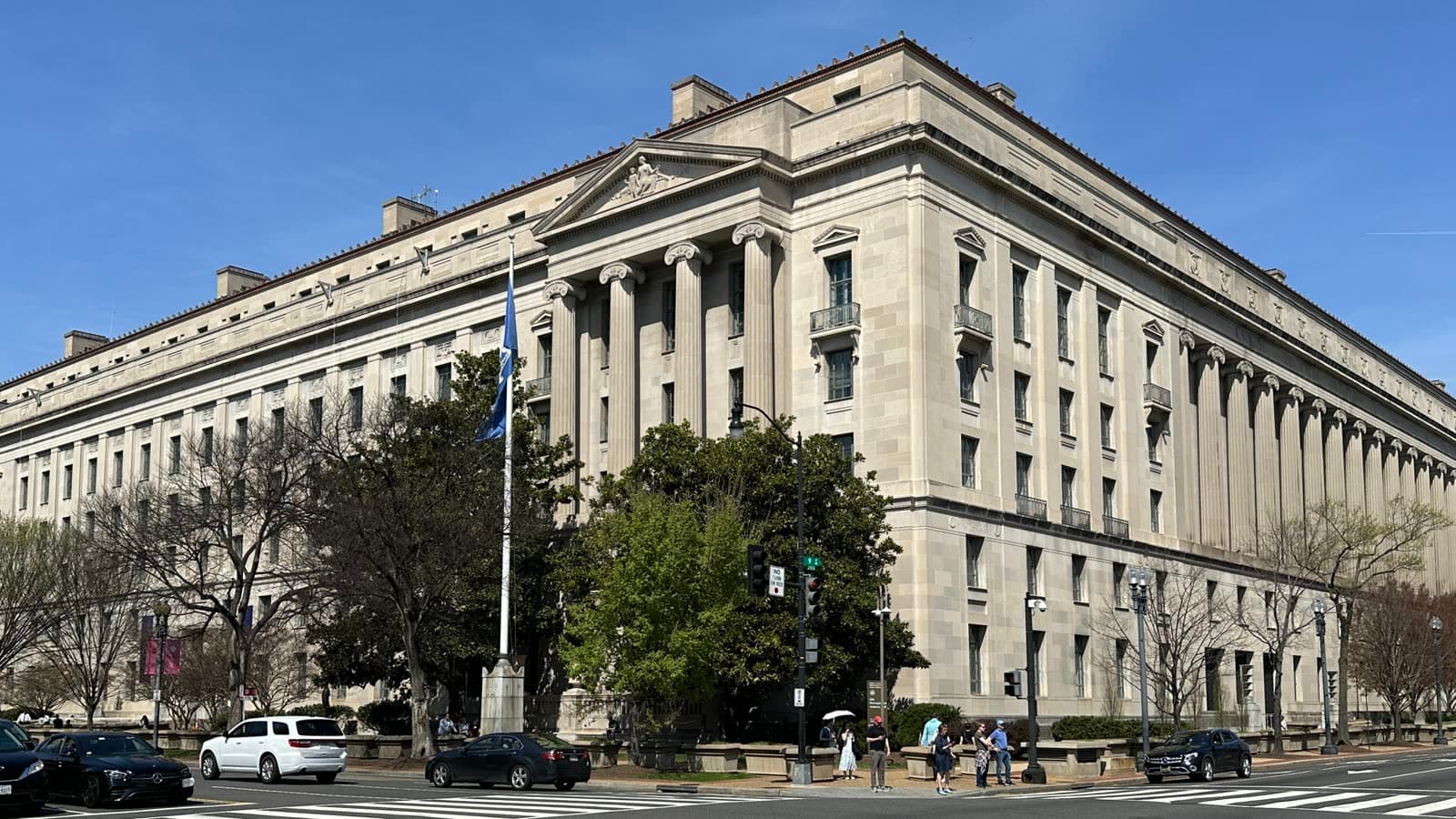
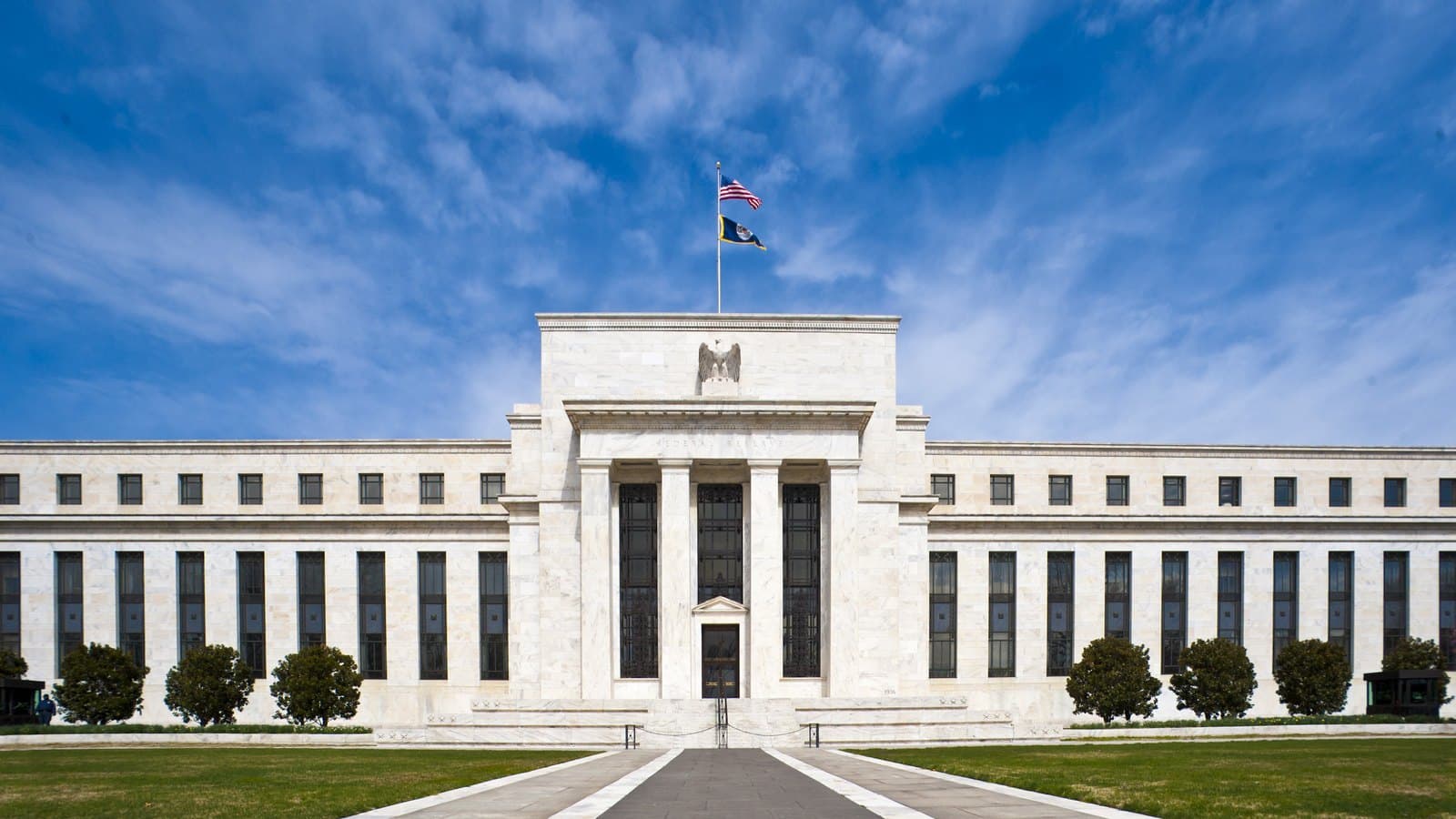
Cover image: the Eccles Building in Washington, D.C., by the Federal Reserve, public domain, via Wikimedia Commons.
Tags
Frequently asked questions
- What did Kevin Warsh say about AI and inflation?
- Warsh said on 16 October 2026 that the surge in investment driven by AI is one of the factors behind higher inflation. He did not commit to a rate move at the Fed's remaining meetings this year.
- Did the Federal Reserve raise interest rates in 2026?
- Yes. The Fed raised its key rate by a quarter point to about 3.9% in September 2026, its first increase in three years. Minutes from the meeting showed most officials expected another increase before the end of the year.
- Why did AI stocks fall on 14 October 2026?
- A hot US inflation report prompted a fresh selloff in major AI stocks, as investors weighed the effect of higher borrowing costs on companies funding expensive data-centre build-outs.
- When does the Fed's AI task force meet?
- Warsh said the Fed's task force on AI-related issues will meet on 16 November 2026. It is a working group rather than a policy meeting and will not set interest rates.

TPW Editorial
Editorial Team
TechPastWeek's editorial team reports and edits every story we publish. We research each piece against primary and credible secondary sources, and a human editor reviews and signs off before it goes live.