Nasdaq Bets $100 Million on Kraken Parent Payward to Put Voting Stock Onchain
Nasdaq Ventures is investing $100 million in Payward, Kraken’s parent, at a $21 billion valuation to build tokenized Nasdaq Equity Tokens with voting rights.

On this page
Nasdaq will invest $100 million in Payward, the parent company of crypto exchange Kraken, the exchange operator said on September 10, deepening a partnership the two firms now describe as the foundation of a regulated market for tokenized equities. The investment, made through Nasdaq Ventures, values Payward at $21 billion, according to Bloomberg, which first reported the valuation; Nasdaq’s own announcement confirmed the $100 million but not the figure.
Related reading: Binance Pauses Withdrawals as Up to $5.6 Billion Leaves Its Wallets · S&P Global Leads a $110 Million Extension of Kaiko's Series B.
The companies said they will keep building toward Nasdaq Equity Tokens (NETs), tokenized versions of Nasdaq-listed stocks that they expect to launch in the second quarter of 2027 through Payward’s xStocks platform, as Reuters reported. Crucially, Nasdaq says the tokens are designed to carry the same material rights as the shares they represent (including voting), rather than acting as a synthetic wrapper that merely tracks a price. As part of the expanded agreement, Payward will also adopt Nasdaq’s market-surveillance technology across its trading venues, spanning crypto, equities, tokenized equities, futures and options.
The deal is small in dollar terms against Payward’s $21 billion valuation, but it is a clear signal about where the world’s established exchanges think the market is going. Nasdaq is not only licensing technology to a crypto company; it is taking an equity stake in one of the largest crypto-native platforms, at a moment when that platform is trying to become a multi-asset broker and the exchange operator is trying to put stocks on 24-hour blockchain rails.
What the two companies actually agreed
- The investment. Nasdaq Ventures, the exchange’s strategic investment arm, will put $100 million into Payward. The $21 billion valuation comes from people familiar with the matter, via Bloomberg; Nasdaq did not confirm it.
- The product. Nasdaq Equity Tokens (NETs), tokenized representations of Nasdaq-listed equities, with an expected launch in the second quarter of 2027.
- The distribution. NETs are to be distributed through Payward’s xStocks, the tokenized-equity framework that Kraken already offers to eligible customers outside the United States.
- The rights. Nasdaq frames NETs as rights-bearing tokens that preserve shareholder rights, including voting, rather than price-tracking derivatives.
- The safeguards. Payward will deploy Nasdaq’s market-surveillance technology across its venue portfolio to monitor for manipulation.
- The history. The deal extends a partnership announced in March 2026, when Nasdaq unveiled an equity-token design and said it would work with Payward on tokenization infrastructure.
“The next era of market evolution will be defined by how efficiently and seamlessly capital and assets move across the financial system with durable liquidity,” Nasdaq president Tal Cohen said in the announcement. “Expanding our relationship with Payward reflects our conviction that the company can play an important role in building the infrastructure that supports this evolution.” Arjun Sethi, Payward’s co-CEO, framed the next phase as moving NETs “onto rails that do not close, with shareholder rights intact.”
Why an exchange is buying into a crypto exchange
The logic runs in both directions. For Nasdaq, Payward offers distribution and infrastructure it cannot easily build alone: a global retail and institutional user base, an existing tokenized-equity product, and blockchain rails that operate outside stock-market hours. Payward says xStocks has passed $35 billion in cumulative transaction volume and roughly 200,000 holders, with more than 500 listed equities and ETFs, in a first-anniversary update. For Payward, Nasdaq brings regulated market infrastructure, a blue-chip brand and surveillance know-how, useful assets for a company that has spent 2026 expanding from spot crypto into derivatives, equities and payments.
The two are also responding to the same competitive pressure. Reuters noted that established exchange operators are building tokenized securities infrastructure both to capture investor interest in blockchain-based assets and to compete with crypto-native platforms that are moving into stocks and perpetual futures. Nasdaq has been assembling the pieces all year: it filed a rule proposal with the SEC in September 2025 to let listed stocks trade and settle in token form, and in August 2026 it moved to buy LeveL Markets to push beyond conventional market hours.
The pitch to users is straightforward: a share that settles like a token can trade on weekends, settle faster than the current T+1 cycle, and reach investors in markets where a traditional brokerage account is impractical. The pitch to Nasdaq is that it stays the listing venue and infrastructure provider even as the trading venue changes.
The other side of the trade: NYSE, ICE and OKX
Nasdaq is not first to this idea, and its main rival is pursuing it with a different structure. In March 2026, Intercontinental Exchange (the parent of the New York Stock Exchange) made a strategic investment in OKX of roughly $200 million at a $25 billion valuation, with a board seat, as Fortune reported. In June, the two firms went further, announcing a 50-50 joint venture called OKXICE, co-chaired by former New York governor Andrew Cuomo and ICE executive Trabue Bland, that would seek to register as a U.S. broker-dealer and futures commission merchant. The goal, subject to approvals, is to give OKX’s roughly 120 million users access to ICE futures and NYSE tokenized equities, CoinDesk reported.
The contrast is instructive. ICE built a joint venture that must win new licenses before it can operate; Nasdaq made a venture investment and a commercial agreement that can lean on existing infrastructure. Both are racing toward the same end state, a Wall Street-sanctioned way to hold and trade U.S. equities around the clock, and both are betting that the winner will be the venue that combines crypto distribution with regulated settlement and surveillance.
The rules exist, up to a point
The regulatory groundwork is further along than many readers may realize. On March 18, 2026, the U.S. Securities and Exchange Commission approved Nasdaq’s proposal to let certain securities trade and settle in tokenized form, a first for a major American exchange. Under the approved framework, eligible tokens are restricted to Russell 1000 stocks and ETFs that track benchmarks such as the S&P 500 and the Nasdaq-100, must share the same ticker, CUSIP and material rights as their traditional counterparts, and settle through the Depository Trust Company’s tokenization pilot. Importantly, the rules apply only when the tokenized and traditional shares are fungible and carry the same rights, tokenization does not change what a security legally is. Nasdaq’s legal chief, John Zecca, has put it bluntly: a security remains a security regardless of the technology used to represent it.
That March approval covers trading and settlement on Nasdaq’s own market. Distributing tokenized Nasdaq equities to retail users of a crypto exchange, in dozens of countries, through an offshore issuance structure, is a different perimeter, and one where the legal questions are far less settled.
The market is still small. The Block’s dashboard put tokenized stocks at a combined $13.4 billion on September 1, 2026, up from about $2.5 billion at the start of the year, according to reporting that drew on the data. That is a rounding error next to the roughly $30 trillion U.S. equity market, but it is growing fast enough that both Nasdaq and ICE now treat it as strategic.
The real risk: issuer control versus synthetic exposure
The fight over what a “tokenized stock” actually is has already turned ugly. Days before the Nasdaq–Payward announcement, AMC Entertainment chief executive Adam Aron publicly attacked Robinhood for listing tokens tied to AMC shares, calling the products an unauthorized “synthetic” market that gave holders no voting rights and threatening to escalate to the SEC, CoinDesk reported. Robinhood’s tokens are debt instruments backed 1:1 by shares held as collateral, issued offshore and not registered under U.S. securities law or sold to U.S. persons. CEO Vlad Tenev argued that once a company is public it cannot control every product built on top of its shares, and declined to commit on how voting would work.
That dispute is the clearest available illustration of the fault line Nasdaq is trying to land on the right side of. There are broadly two models:
- Synthetic exposure. A third party holds the underlying shares and issues a separate token that tracks the price. The holder gets economic exposure, and, in Robinhood’s case, no vote and no place on the company’s shareholder register.
- Issuer-sponsored ownership. The token itself is the legal share, fungible with the traditional instrument, with corporate actions and voting administered through the existing market system. This is the model Nasdaq has said it wants.
The question to ask about any tokenized stock
Does the token put you on the company’s shareholder register with voting and other rights, or does it only track the share price? Nasdaq is selling the first model and calling out the second. If a platform will not answer clearly, treat the product as a derivative, not a share.
For Nasdaq, the issuer-centric approach is also a defensive move. Its March design explicitly puts public companies “at the center” of tokenization, letting issuers control how their shares are tokenized, how votes are administered and how corporate actions are handled. That reassures the issuers Nasdaq depends on for listings, and it is exactly what AMC’s Aron was demanding. The unresolved questions are practical: whether NETs can genuinely deliver voting rights to holders on a crypto exchange’s offshore platform, how those votes would be passed through, and whether regulators will accept the structure.
There are other caveats. xStocks are not available to U.S. persons and are restricted in several markets, so this is initially a non-U.S. product distributed to a global retail base. Payward’s xStocks are issued through a Jersey entity and offered to eligible Kraken customers through a Payward subsidiary, a structure that regulators scrutinize closely. And the whole proposition depends on approvals and issuer adoption that have not yet been secured.
What to watch
Three things will determine whether the Nasdaq–Payward bet looks far-sighted or premature.
First, the Q2 2027 launch, and whether NETs ship with real, pass-through voting rights or a compromise that leaves holders with exposure but no vote. That distinction is the entire product.
Second, the regulatory perimeter. Nasdaq has SEC approval for tokenized trading on its own market; it does not yet have a settled framework for distributing rights-bearing Nasdaq tokens through an offshore crypto exchange. Watch how the SEC treats synthetic tokens versus issuer-sponsored ones, and whether the AMC–Robinhood fight produces guidance or enforcement.
Third, issuer adoption. Nasdaq’s model only works if public companies opt in. If issuers stay on the sidelines, the volume will keep flowing to synthetic products, and the “rights-bearing” pitch loses its selling point.
There is a company-specific wildcard, too: Payward confidentially filed for an IPO in late 2025 and has reportedly pushed its listing timeline toward 2027. A successful public offering would give it more capital and scrutiny; a delay would leave it leaning on strategic investors like Nasdaq.
For now, the $100 million says less about Payward’s balance sheet than about Nasdaq’s conviction that the next phase of market structure is a contest over who controls the rails, and who gets to define what owning a share onchain actually means.
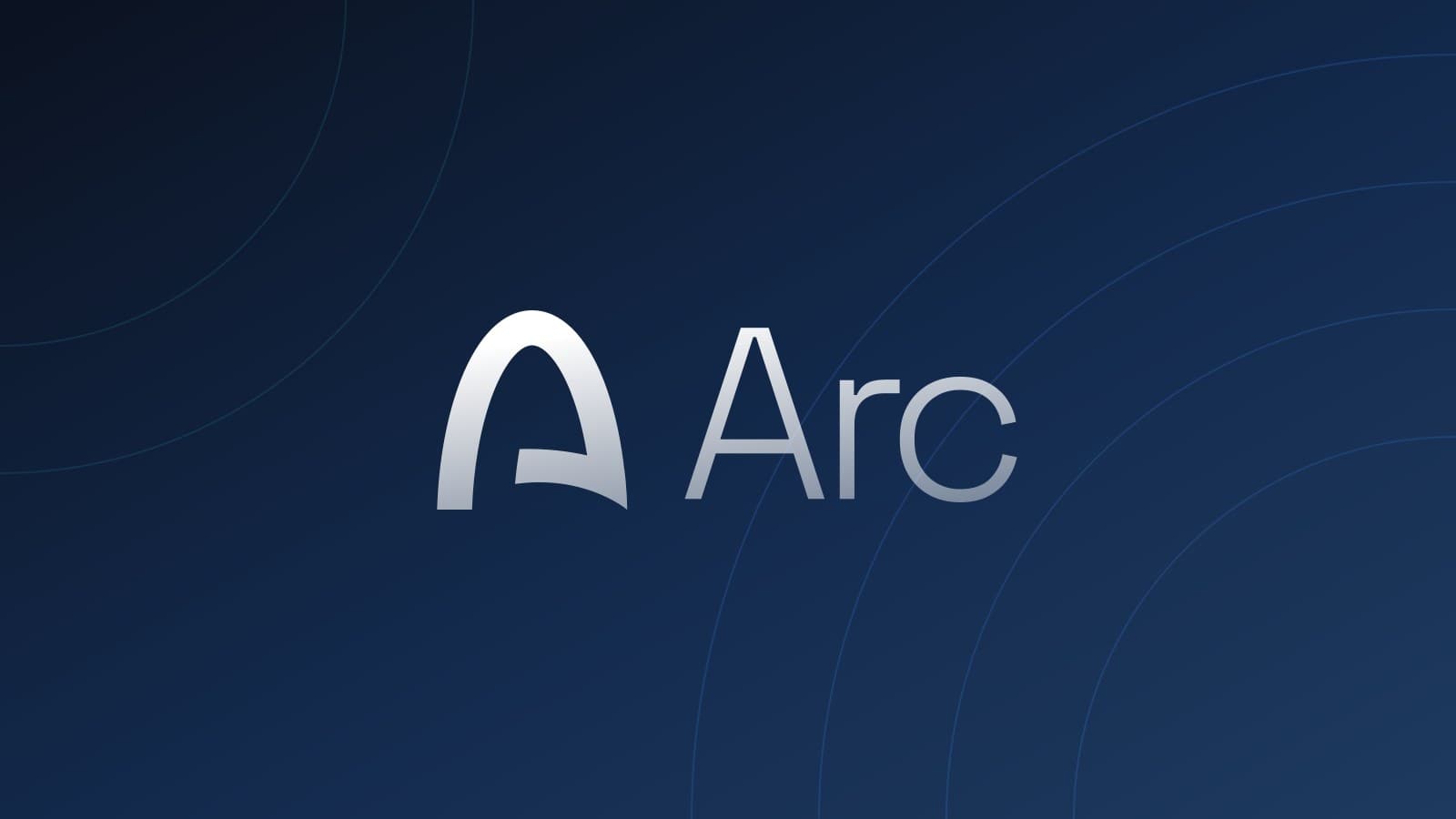
Cover image: the Nasdaq MarketSite tower in Times Square, photographed by Nielsoncaetanosalmeron (Wikimedia Commons), licensed under CC BY 4.0; cropped to 16:9.
Tags

TPW Editorial
Editorial Team
TechPastWeek's editorial team reports and edits every story we publish. We research each piece against primary and credible secondary sources, and a human editor reviews and signs off before it goes live.