S&P Global Leads a $110 Million Extension of Kaiko's Series B
S&P Global led a strategic investment that extends Kaiko's Series B to $110 million, with BNP Paribas, Nasdaq Ventures and Coinbase Ventures among the backers.

On this page
Key takeaways
- Kaiko announced on September 14, 2026 that S&P Global led a strategic investment extending the company's Series B to $110 million.
- Eleven new strategic investors joined the round, including BNP Paribas, Bpifrance, Broadridge, Coinbase Ventures, Nasdaq Ventures, Royal Bank of Canada, Stellar and Susquehanna; existing backers Anthemis, Point Nine and Revaia also participated.
- Kaiko's data covers more than 150 exchanges and blockchain protocols, and the company was founded in France in 2014 and is headquartered in New York.
- Participating investors joined a Strategic Industry Working Group chaired by Kaiko to shape the data infrastructure for tokenized markets.
- Kaiko holds SOC 1 and SOC 2 Type 2 attestations, and its indices unit is an EU Benchmark Regulation administrator listed in the ESMA register.
Crypto data provider Kaiko has extended its Series B to $110 million in a strategic round led by S&P Global, the company announced on September 14, 2026. Reuters and CoinDesk reported the round the same day, with CoinDesk noting that it extends a Series B first raised four years earlier.
Related reading: Binance Pauses Withdrawals as Up to $5.6 Billion Leaves Its Wallets · SEC Opens the Door to Tokenized Stocks With a Five-Year Exemption.
The headline number is the money. The more telling detail is who is on the list. The investors behind the extension include banks, exchange operators, a payments and clearing firm, a national investment bank and several venture funds. For a company that sells market data on digital assets, that mix is close to a map of the institutions now building tokenized market infrastructure.
Who put money in
S&P Global led the investment. The additional strategic investors, according to Kaiko's announcement, are Alura Capital, BNP Paribas, Bpifrance, Broadridge, Canton, Coinbase Ventures, DRW Venture Capital, Nasdaq Ventures, Royal Bank of Canada, Stellar and Susquehanna Private Equity Investments.
Existing shareholders Anthemis, Point Nine and Revaia also participated in the extension. A Business Wire release carried the same list.
That is an unusual roster for a single round. Nasdaq Ventures and Coinbase Ventures sit at two ends of the exchange business. BNP Paribas and Royal Bank of Canada are large balance-sheet lenders. Broadridge handles investor communications and post-trade processing. Bpifrance is a French state investment bank, which matters given Kaiko's origins. Canton and Stellar are blockchain networks.
What Kaiko does, and why the buyers are now strategic
Kaiko was founded in France in 2014 and is now headquartered in New York. It sells institutional-grade market data, analytics and indices for digital assets, and has expanded into what it calls data infrastructure for onchain markets: delivering market data to smart contracts, converting onchain financial activity into standardized offchain data, and enabling valuation and analytics.
The company says its data covers more than 150 exchanges and blockchain protocols. Clients include banks, asset managers and exchanges. Its product lines run from data feeds and reference data through analytics tools for execution benchmarks, fair-value pricing, portfolio risk and derivatives indicators, to monitoring software used for market surveillance and anti-money-laundering checks.
The funding will strengthen both the core data business and the newer infrastructure offering. As tokenization extends to assets such as Treasury bills, money market funds, equities and bonds, market data becomes a precondition for doing business rather than a nice-to-have. A tokenized fund needs a reference price, a valuation method and a benchmark that a regulated institution can defend to an auditor. That is the gap Kaiko is selling into, and it is why the buyers of its data are increasingly the same institutions that are now buying its equity.
Kaiko chief executive Ambre Soubiran described the round as backing two things at once. The investors, she said, are backing "both the company Kaiko has built, a regulated institutional-grade data provider covering over 150 exchanges and protocols, and our vision to provide the data infrastructure layer for onchain capital markets." She added: "Together we will define how institutional money moves onchain."
Cathy Clay, chief executive of S&P Dow Jones Indices, tied the investment to her firm's own strategy. "As digital assets accelerate, S&P Global is investing for the future," she said, describing Kaiko as turning complex trading and onchain activity into "reliable, decision-ready intelligence." BNP Paribas also weighed in. Joe Bonnaud, head of global markets EMEA, said he looked forward to "engaging in the industry dialogues led by Kaiko and supporting the continued evolution of this ecosystem."
The working group is the part to watch
Alongside the money, the participating institutions joined a new Strategic Industry Working Group chaired by Kaiko. Kaiko said the group gives those investors a direct role in shaping the data and infrastructure used to bring tokenized products into production.
This is where the round differs from a standard venture deal. A strategic investor usually gets capital and a relationship. Here, the same institutions get a seat in a forum that is meant to set conventions for how tokenized markets source and publish data. Standards work is slow and unglamorous, but it is also how a vendor becomes infrastructure. If the working group's output is adopted, Kaiko's position stops depending on any single product.
There is a distinction to draw between what the working group is and what it is not. Kaiko described it as focused on data infrastructure for tokenized markets. The announcement did not name the group's membership in full, did not give it a charter or a timeline, and did not say whether its output would be public. Those details will decide how much influence it actually carries.
Industry standards bodies of this kind have a mixed record in crypto. They can settle terminology, data formats and reference-rate methodology, but adoption depends on whether the largest market participants use the output. Having Nasdaq, Coinbase and the Royal Bank of Canada inside a Kaiko-chaired group signals intent. It does not guarantee that the group's conventions become the industry default.
A regulated data business
Regulation is central to the pitch. Kaiko holds SOC 1 and SOC 2 Type 2 attestations from a Big Four audit firm. Its indices unit, Kaiko Indices, is authorized as a benchmark administrator under the EU Benchmark Regulation, also known as EU-BMR, and is listed in the European Securities and Markets Authority register of benchmark administrators. Kaiko also follows the IOSCO Principles for Financial Benchmarks.
Those credentials carry different weight. SOC 1 and SOC 2 Type 2 cover controls over financial reporting and over security, and the Type 2 form reports on how those controls performed over a period. Large financial institutions routinely require them from data vendors, which makes them close to table stakes for selling into banks. The EU-BMR registration is harder to obtain: it places Kaiko Indices under supervision as a benchmark administrator, which is what allows a reference rate to be used in regulated financial products. A crypto price that only exists on a website is not enough for a fund that has to mark its book.
The MiCA piece comes through an acquisition. Cometh, which Kaiko bought, is authorized by the French market regulator, the AMF, as a crypto-asset service provider under the EU's Markets in Crypto-Assets Regulation.
Kaiko has been consolidating. It acquired Cometh and, separately, Amberdata, which it described as its former largest U.S. competitor. The Amberdata deal expanded its U.S. footprint, while Cometh added regulated DeFi infrastructure and the MiCA authorization. Kaiko also launched the S&P Kaiko Digital Asset Indices suite with S&P Dow Jones Indices and has a data collaboration with Bloomberg on onchain data access for tokenized markets.
The S&P relationship, in other words, predates the investment. S&P Dow Jones Indices was already distributing indices built with Kaiko data before S&P Global led this round, which makes the investment less a first contact than an escalation of an existing commercial partnership into an ownership stake. Reuters framed the deal the same way, as a strategic investment rather than a conventional venture round.
What the round does not settle
The announcement did not disclose Kaiko's valuation. It did not break out how much of the $110 million is new money versus the original Series B, and it did not name the round's pricing. Those gaps are normal in private funding news, but they limit how much can be read into the figure. Valuation is the most conspicuous omission. Strategic investors often receive terms that differ from a traditional venture investor's, and without a disclosed valuation it is not possible to compare this extension with Kaiko's last priced round.
The sequence also needs care. The $110 million is the total size of the Series B after the extension, not a fresh $110 million on top of it. Reporting the number as a new raise would overstate it.
The competitive picture is mixed. Kaiko's rivals include established index and data providers that are also moving into digital assets, and the same institutions on Kaiko's cap table have their own data operations. Being the vendor to a working group is not the same as being the standard. The investment gives Kaiko both capital and proximity to the institutions whose data needs it is trying to define. Whether that proximity converts into durable market share is the open question, and the working group is the clearest place to watch for an answer.
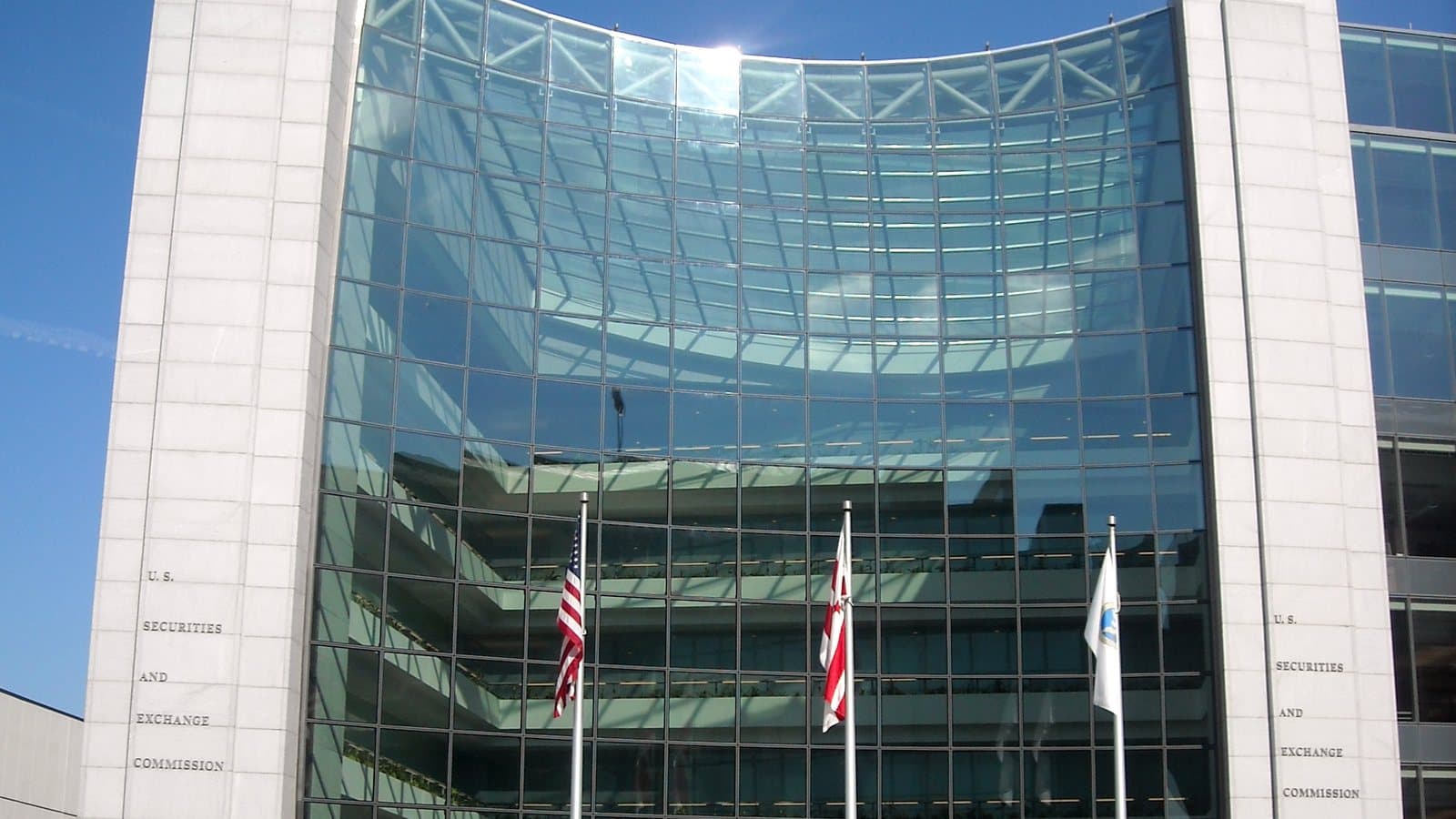
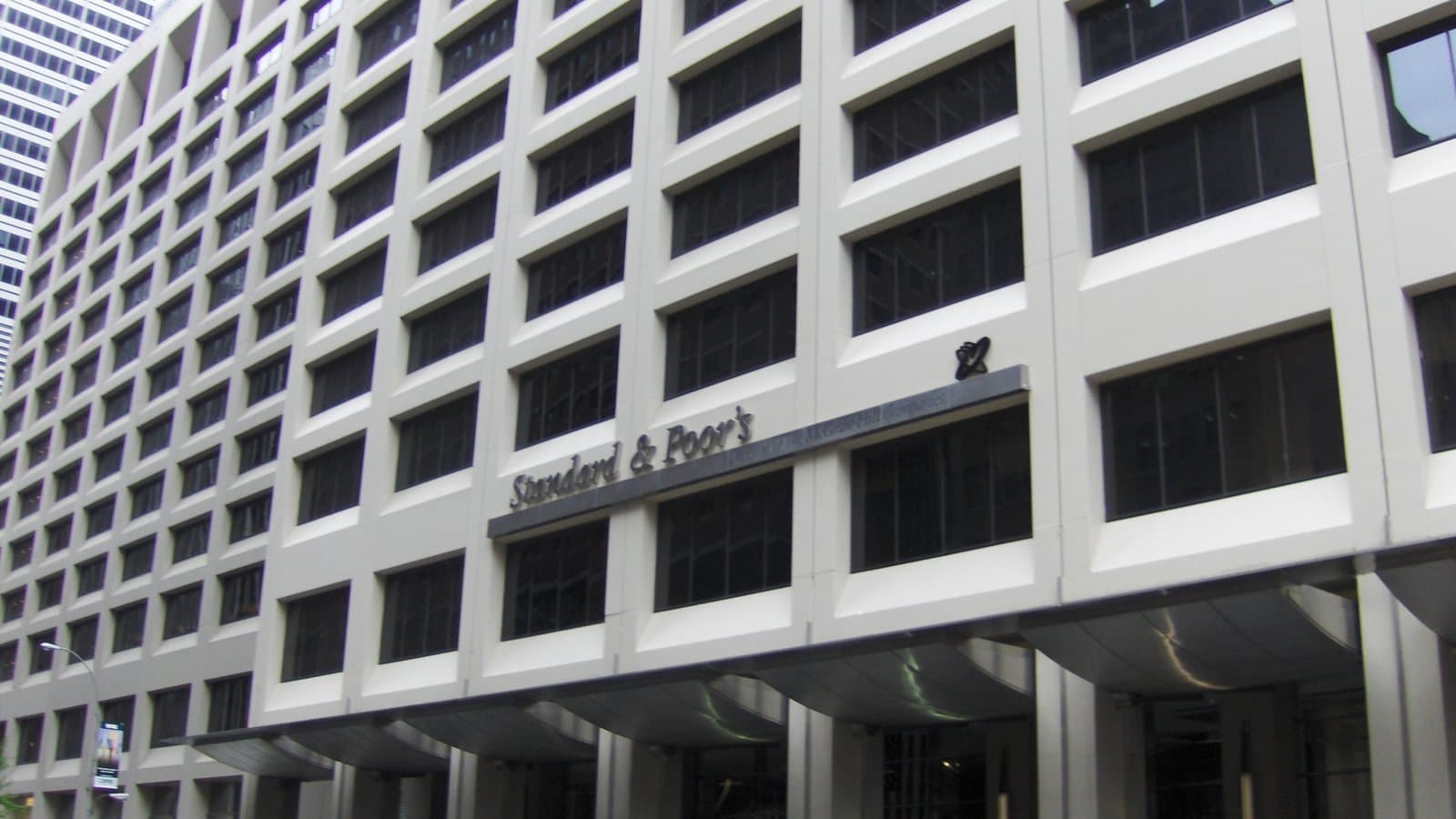
Cover image: "Standard & Poor's Headquarters" by B64, CC BY 3.0, via Wikimedia Commons.
Tags
Frequently asked questions
- How much did Kaiko raise and who led the round?
- Kaiko announced on September 14, 2026 that S&P Global led a strategic investment extending the company's Series B to $110 million. The round extends the Series B the crypto data firm first raised in 2022.
- Who invested in Kaiko's Series B extension?
- Alongside S&P Global, the strategic investors were Alura Capital, BNP Paribas, Bpifrance, Broadridge, Canton, Coinbase Ventures, DRW Venture Capital, Nasdaq Ventures, Royal Bank of Canada, Stellar and Susquehanna Private Equity Investments. Anthemis, Point Nine and Revaia also participated.
- What will Kaiko do with the $110 million?
- Kaiko said the funding will strengthen its core data business and expand its data infrastructure offering, which delivers market data to smart contracts and turns onchain activity into standardized offchain data.
- Is Kaiko a regulated company?
- Kaiko holds SOC 1 and SOC 2 Type 2 attestations from a Big Four audit firm, its indices unit is an EU Benchmark Regulation administrator listed in the ESMA register, and its Cometh subsidiary is authorized by the AMF as a crypto-asset service provider under MiCA.

TPW Editorial
Editorial Team
TechPastWeek's editorial team reports and edits every story we publish. We research each piece against primary and credible secondary sources, and a human editor reviews and signs off before it goes live.