Ocarina of Time Remake Launches on Switch 2 With a 96 on Metacritic
Nintendo's Ocarina of Time remake launched on Switch 2 on 5 November 2026 with a 96 Metacritic score from 84 reviews and 100% on OpenCritic from 45 critics.

On this page
Key takeaways
- Nintendo released The Legend of Zelda: Ocarina of Time on the Nintendo Switch 2 on 5 November 2026, exclusive to the console.
- Metacritic showed 96 out of 100 from 84 reviews on 4 and 5 November 2026, and OpenCritic showed 100% from 45 critics.
- The remake is built from the ground up and adds fully voiced cutscenes, a dedicated jump button, full camera control and an explorable Hyrule Castle Town.
- The game has no Master Quest mode, unlike the GameCube and 3DS releases, a change Kotaku reported and Nintendo confirmed.
- Nintendo published no sales, player or engagement figures for the launch, and no Majora's Mask remake has been announced.
The Legend of Zelda: Ocarina of Time launched on the Nintendo Switch 2 on 5 November 2026, one day after reviews settled at 96 out of 100 on Metacritic from 84 critics and 100% on OpenCritic from 45. Both figures are snapshots taken on 4 and 5 November, and both put a remake of a 1998 Nintendo 64 game among the best-reviewed releases of the year.
Related reading: Zelda: Ocarina of Time Remake Opens Pre-Orders Ahead of Its 5 November Switch 2 Launch · Nintendo's September Direct: Metroid Ravenous, Kirby's Open World, and Zelda at 40.
Nintendo is selling it as a remake, not a remaster. The game was rebuilt for the Switch 2 by Nintendo EPD with additional work from Monolith Soft, SRD, 1-Up Studio, Nintendo Pictures, Nintendo Studios Singapore and Bandai Namco Studios, and it is exclusive to the new console. Eiji Aonuma and Hidemaro Fujibayashi produced it, with HokWai Ng as director, and Nintendo has framed the release as the centrepiece of the series' 40th anniversary.
The scores, outlet by outlet
Metacritic's label for the score is "universal acclaim", and every outlet below scored the game at 9/10 or higher. The Guardian gave 5/5, Eurogamer gave 5/5, and GamesRadar+ and VGC also gave 5/5. 4Players gave 10/10. IGN and GameSpot scored 9/10, Game Informer 9.25/10 and Nintendo Life 9/10.
That is a high floor for any release, and an unusual one for a remake carrying 28 years of expectation and the structure of its source.
The two most useful reviews for anyone weighing a purchase are the ones that qualify their praise. Nintendo Life's headline read "A Stunning Remake, But Not Quite Definitive", and Game Informer called the game "Exceptionally Familiar". Both describe the same product from different sides: a version faithful enough that its familiarity becomes the subject of the review.
The Guardian's Keza MacDonald wrote:
"Nintendo's modern Zelda team have turned one of the best games of the 1990s into one of the best games of the 2020s." Keza MacDonald, The Guardian, 4 November 2026
What the remake changed
Most of the changes sit in the interface, the camera and the presentation. Nintendo did not rebuild the dungeon order, the item progression or the story beats, and anyone who knows the 1998 game will recognise the route through it. What is new:
- Fully voiced cutscenes, a first for this story.
- A dedicated jump button in place of automatic jumping, plus a sprint, faster swimming, full camera control and motion-control aiming.
- Item scrolling in the style of later Zelda games.
- Hyrule Castle Town as a fully explorable area, instead of a pre-rendered backdrop seen through a fixed camera.
- Time passing continuously in towns and interiors, where the original paused it.
- A "Threads of Time" log for story summaries and objective tracking.
- Ocarina songs played through the Switch 2 microphone.
- A Hall of Defeated Foes, with statues and information about enemies and a way to replay boss fights.
- "Zelda Notes" features in the Nintendo Switch App: an interactive map, progress tracking, an ocarina and a quiz.
The list is longer than a remaster's would be and shorter than a reimagining's. The controls are the part most likely to feel dated to a 2026 player, and the remake meets that directly with a jump button, a sprint, faster swimming and a camera the player controls. The town and the clock are presentation changes with mechanical consequences: a castle town the player can walk through and a day that keeps running while the player is indoors both make Hyrule feel less like a set of rooms.
Some loading screens remain, deliberately, to preserve the original's pacing. A remake that keeps its loading screens is protecting the shape of the original instead of hiding it, and that choice says more about the project than any single new feature.
Why a 1998 design can still score 96
Breath of the Wild and Tears of the Kingdom rebuilt the series around open terrain, emergent systems and goals the player sets. The Ocarina of Time remake goes the other way. It keeps a linear, dungeon-led structure and spends its changes on how that structure looks, sounds and handles. The reviews suggest the bet worked, and the reason is worth separating from nostalgia.
A faithful remake removes two common failure modes at once. A new structure can break what worked in the original, and a thin new structure can compare badly with the source it replaced. By keeping the pacing and the dungeons, Nintendo anchored the remake's quality to a design that critics already rate highly, then asked to be judged on execution, not on invention. The changes are the sort a reviewer can test in an hour: does the camera hold, does the jump feel right, does the town reward a walk through it.
That is a different commercial proposition from a new Zelda. A new entry has to sell a direction. A remake has to sell a memory and then survive a comparison with it. "Exceptionally Familiar" reads as both praise and warning: the game has not damaged the original, and it has not replaced it either.
The result also tests a price question Nintendo has been circling for years. The 96 says critics will accept full price for a 28-year-old design when the execution is strong. It does not say how many people will pay it. Critics are not the buyers, and the aggregate measures enthusiasm, not willingness to spend.
The art style argument the reviews did not settle
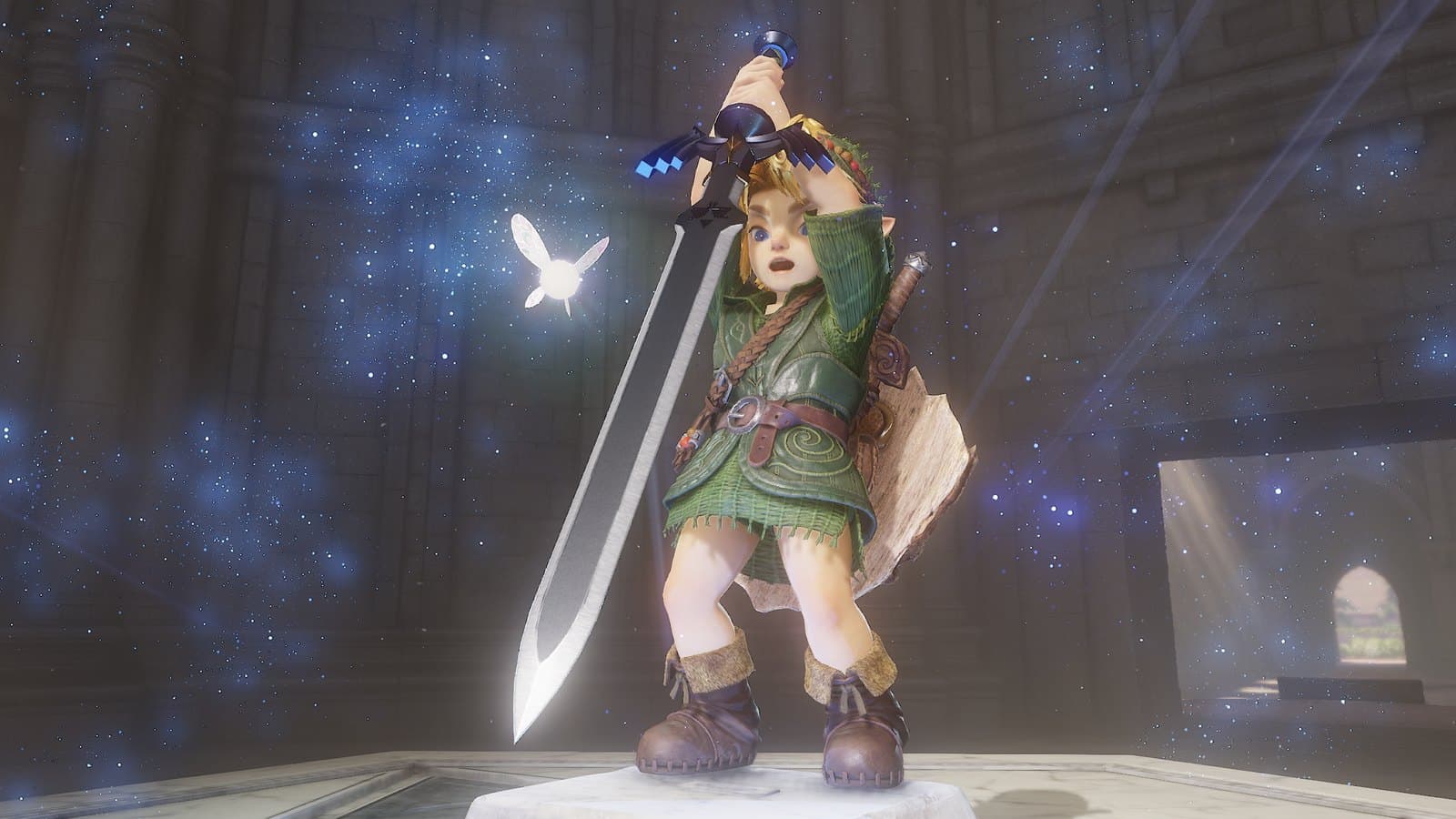
Game Informer described the art direction as "stylized realism", and Nintendo's Ask the Developer interviews confirmed a puppet-show influence. When the first trailer appeared, it divided fans. Some compared the look to Unreal Engine fan remakes or to DLSS output; others praised the environments. That argument is about taste and rendering, and a review score does not end it.
The Verge interviewed Aonuma and Fujibayashi on 5 November about the project, and the interest in that conversation is a sign of how much of the audience treats the look as part of the product. A 96 says critics think the game plays and presents well. It does not say the people who disliked the trailer have changed their minds.
The two questions are separate, and the coverage has sometimes merged them. A review score is a judgment about a finished game. The art-style controversy is a reaction to a trailer, which is a marketing asset. Neither settles the other.
No Master Quest, and other absences
Kotaku reported on 4 November that the remake has no Master Quest mode, and Nintendo confirmed the omission. The GameCube and 3DS releases included it; this one does not. For a veteran planning a second run, the mode is gone, and it is the clearest place where the remake is smaller than an older version of the same game, not larger.
The omission sits alongside the deliberate loading screens as evidence about the project's priorities. Nintendo spent its changes on the first playthrough, on the controls, the camera, the voice work and the town, and did not add a Master Quest mode for people who had already finished them. Whether that is the right trade depends on the buyer. A first-time player loses nothing. A returning player who wanted a new challenge has one fewer reason to buy.
Nintendo has not announced a Majora's Mask remake, and nothing in the Ocarina release confirms one is in production. The 40th anniversary is a reason to revisit the 1998 game, not a commitment to remake the one that followed it.
A system-seller test in the Switch 2's first holiday
A 96 makes this one of the best-reviewed games of 2026 and a system-seller pitch for the Switch 2 in its first holiday season. The console is new, the audience is still forming, and a Zelda remake with this reception is the kind of software a platform needs in the quarter that matters most.
Nintendo has published no sales, player or engagement figures for the launch. That means the size of the opening is unknown, and the early coverage cannot say whether the reviews turned into consoles sold. The company may report numbers later, or it may not. Until it does, the opening stays a question.
The 40th anniversary framing gives Nintendo a bridge between the movie, the museum and merchandise push and the games. The remake is the centrepiece of that push, and its launch is the moment the anniversary stops being a marketing calendar and becomes a product people can buy. A strong review score helps that story. It does not complete it.
The caveats that come with a 96
Aggregates move. The 96 from 84 reviews and the 100% from 45 critics are snapshots from 4 and 5 November 2026, and both will change as more outlets publish. "Universal acclaim" is Metacritic's label for a score band, not a critical consensus beyond the reviews it sampled. Reviewers played a review build, and some outlets reported a day-one patch, so performance on retail hardware may differ from the version that was scored.
What the score does not cover
The 96 and the 100% are snapshots from 4 and 5 November 2026 and will move. "Universal acclaim" is Metacritic's label, not a consensus beyond the sampled reviews. Reviewers played a review build, and some outlets reported a day-one patch. Nintendo released no sales, player or engagement figures at launch. The Master Quest omission is confirmed, and the pre-release art-style argument is a fan and press reaction, not a review score.
The Master Quest omission is the one place where the remake is smaller than an earlier release, not larger. The art-style argument is separate from the score. Neither changes the quality of what shipped, and both change what a particular buyer should expect. Our 18 October pre-order report covered the editions, prices and anniversary hardware; the launch adds the reception those announcements could not supply.
What to watch
The first number to watch is sales, whenever Nintendo publishes them. The company has not said when it will report launch figures, and it may not report them at all. The second is whether the art-style debate survives the reviews. A 96 may quiet it. It may also leave the people who disliked the trailer exactly where they were, because a review score was never the thing they were arguing about.
The third is whether a Majora's Mask remake follows. No such project has been announced, and the Ocarina release is not evidence that one exists. A 96 on a faithful remake makes the case easier to imagine, and Nintendo has not made it.
For now the game is on sale, the reviews are in, and the only number missing is the one Nintendo has not released.
Cover image: The Legend of Zelda: Ocarina of Time, courtesy of Nintendo, via The Verge.
Tags
Frequently asked questions
- What score did the Ocarina of Time remake get on Metacritic?
- Metacritic showed 96 out of 100 from 84 reviews on 4 and 5 November 2026, carrying its "universal acclaim" label. OpenCritic showed 100% from 45 critics over the same period. Both aggregates were snapshots and can move as more reviews are added.
- Is the Ocarina of Time remake a remaster or a full remake?
- It is a full remake built from the ground up for the Nintendo Switch 2, not a remaster of the 1998 Nintendo 64 game. It adds fully voiced cutscenes, a dedicated jump button, sprinting, full camera control and an explorable Hyrule Castle Town.
- Does the Ocarina of Time remake include Master Quest?
- No. The remake has no Master Quest mode, unlike the GameCube and 3DS releases. Kotaku reported the omission on 4 November 2026, and Nintendo confirmed it.
- Which platforms can play the Ocarina of Time remake?
- The Legend of Zelda: Ocarina of Time remake is exclusive to the Nintendo Switch 2. Nintendo has not announced a version for the original Switch or any other platform.

TPW Editorial
Editorial Team
TechPastWeek's editorial team reports and edits every story we publish. We research each piece against primary and credible secondary sources, and a human editor reviews and signs off before it goes live.