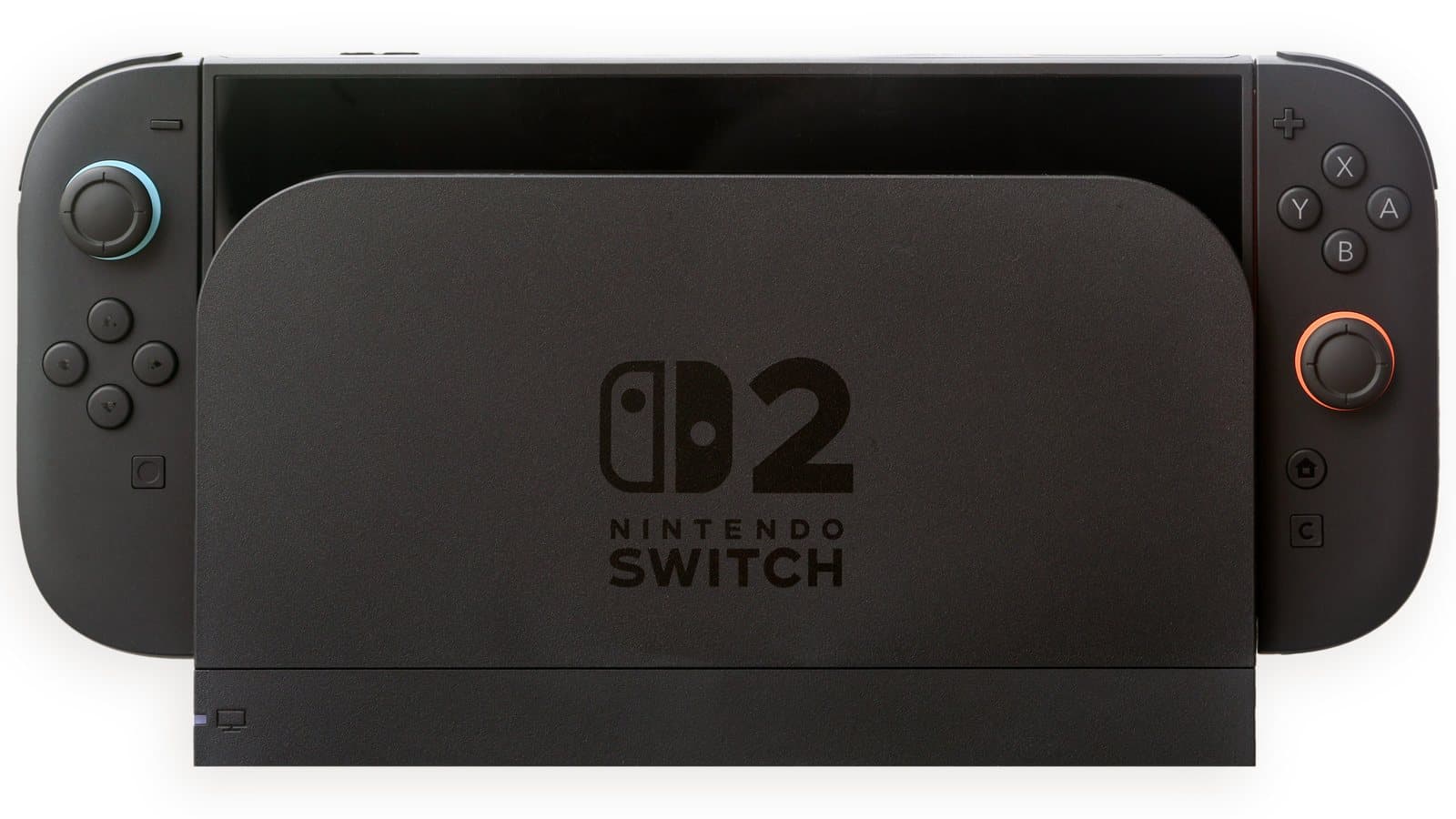
Nintendo's September Direct: Metroid Ravenous, Kirby's Open World, and Zelda at 40
Nintendo's two September 2026 Directs leaned on Zelda, Metroid, Kirby and Pokemon for the Switch 2's second year, with big first-party games pushed to 2027.

On this page
Nintendo spent the week of September 8 doing something it does not often do: looking backward and forward at the same time. Over two days and two separate presentations, the company marked the 40th anniversary of The Legend of Zelda and then laid out the near future of the Switch 2. The contrast between those two exercises said more about Nintendo's strategy than either show managed on its own.
Related reading: Zelda: Ocarina of Time Remake Opens Pre-Orders Ahead of Its 5 November Switch 2 Launch · Nintendo Wins a $4.5 Million Default Judgment Against a Switch Piracy Moderator.
The first event, on Tuesday, September 8, was a roughly 30-minute Direct devoted to Zelda's 40th anniversary. The headline was expected and enormous: the first gameplay footage of the Switch 2 remake of The Legend of Zelda: Ocarina of Time, now dated for November 5. The second, a general Nintendo Direct on Wednesday, September 9, ran about 45 minutes, focused on Switch 2 games "launching this winter" and beyond, and was followed by a Nintendo Treehouse: Live session. Its biggest reveals were two new first-party games (Metroid Ravenous and Kirby and the World Beyond) that both arrive in 2027.
Taken together, the two shows describe a company that is comfortable leaning on its oldest and most valuable franchises to carry a console into its second year, and equally comfortable asking players to wait for them.
A 40-year-old franchise leads the fall
Nintendo has spent 2026 celebrating The Legend of Zelda, and the anniversary Direct was the clearest statement yet of what that means commercially. The Ocarina of Time remake got its release date and its most detailed look so far: a rebuilt version of the landmark original, made for Switch 2. November 5 places it squarely in the holiday run-up.
The anniversary presentation was not only about one game. Nintendo also used it to cover other 40th-anniversary items, including a live-action Zelda film now scheduled for April 30, 2027. That mix is a useful window into how Nintendo treats its most storied properties: the game is the anchor, but the celebration is a broader brand exercise spanning film and merchandise as well as software.
Why the Zelda date matters
Ocarina of Time on November 5 gives the Switch 2 a marquee first-party title for the holidays, a slot that, on this fall's evidence, the console otherwise lacks. It also tests whether a faithful remake of a classic can still move hardware at a $499.99 console price.
The two games Nintendo is betting 2027 on
The general Direct's headline reveals were both new entries in long-running series, and both targeted 2027.
Metroid Ravenous is a brand-new 2D Metroid action-adventure and a Switch 2 exclusive, launching January 28, 2027. Samus Aran returns, and Nintendo's own framing is blunt: "eat or be eaten." The game will come with a Metroid Ravenous amiibo collection and a Special Edition that bundles the physical game, a SteelBook case and a Samus Metroid Suit amiibo. For a series that has moved between 2D and 3D over the decades, a new side-scrolling adventure is a notable vote of confidence in the format.
Kirby and the World Beyond is the other pillar: a new open, sandbox-style 3D Kirby game, Switch 2 exclusive, due in 2027 (spring 2027, per The Verge). It lands around the character's 35th anniversary, and it takes the pink puffball in a direction the series has only flirted with, expansive environments, copy abilities used for traversal and discovery, and a looser structure than the tightly designed mainline Kirby games.
Both announcements fit a pattern. Nintendo is not inventing new franchises to sell the Switch 2; it is reviving and expanding the ones it already owns, and giving them the kind of budget and marketing weight normally reserved for new hardware.
Metroid Ravenous and Kirby and the World Beyond are the two genuinely new Nintendo games announced this week, and neither arrives before 2027.
A holiday calendar carried by ports and third parties
Between the Ocarina remake and the 2027 first-party slate, the fall release calendar looks lighter for original Nintendo software than a typical holiday season, and the company appears to be filling it with ports, remakes and third-party partnerships.
The most substantial of those is Monster Hunter Wilds, which arrives on Switch 2 on December 4, 2026. Capcom's Ascendance expansion follows to the platform in 2027, and the Switch 2 version supports local co-op for up to four players in handheld mode. Capcom also confirmed that Resident Evil 2 (Deluxe Edition), Resident Evil 3 and Resident Evil 4 Gold Edition are coming to Switch 2, rebuilt with the company's RE ENGINE; the digital versions launch October 16, 2026, with pre-orders opening September 9 and a limited-time early-adopter discount running through November 7, 2026.
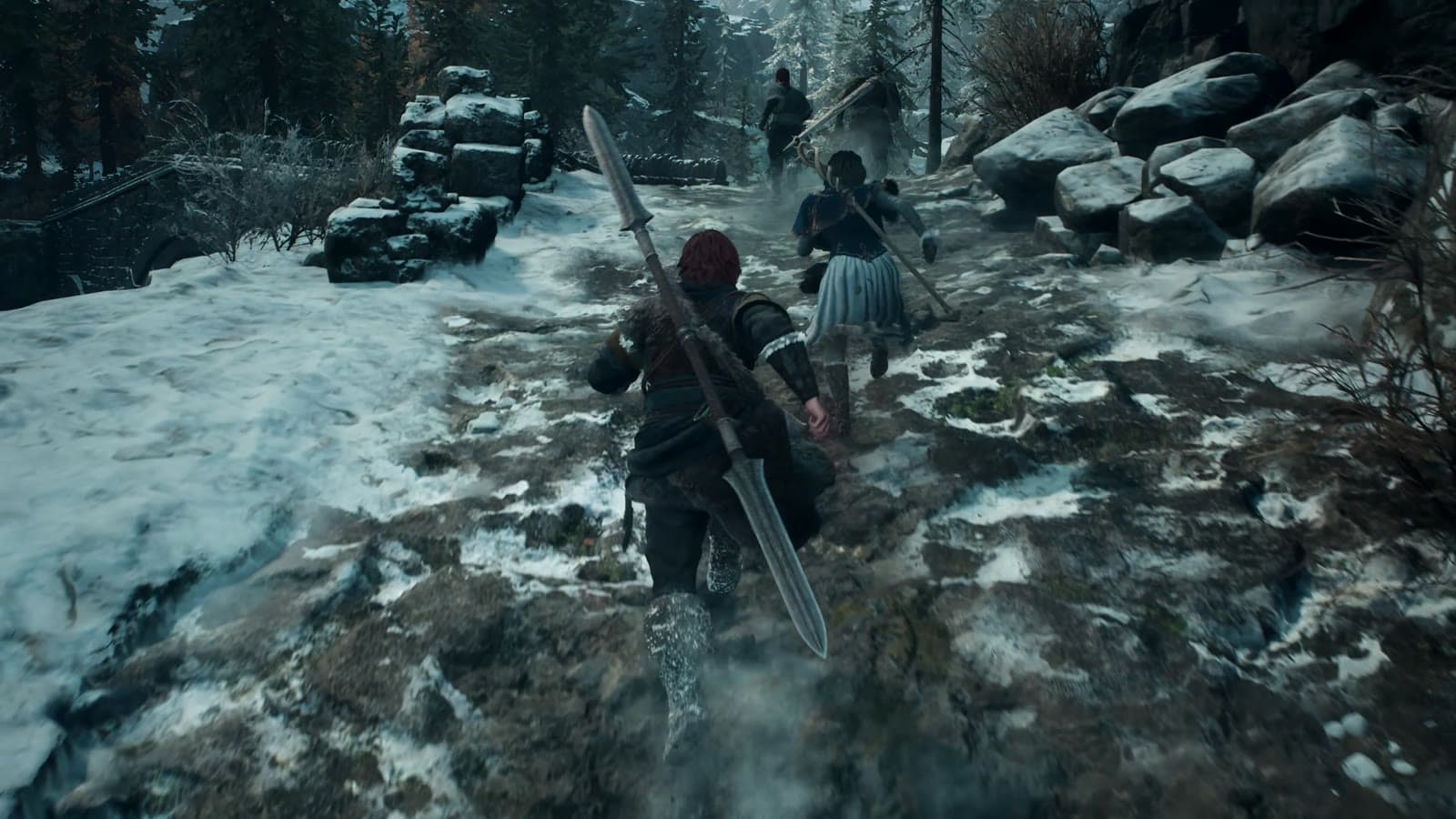
Elsewhere in the third-party pile: Final Fantasy VII: Revelation, the final part of the remake trilogy, is coming to Switch 2 at launch on April 7; Crisis Core: Final Fantasy VII Reunion was made available on September 9. LEGO Batman: Legacy of the Dark Knight lands September 18, 2026. Kingdom Come: Deliverance 2 is coming to Switch 2 next year. Stage Fright, a coming-of-age mystery from the Overcooked team, is also due next year. And TAG FORCE GX, a Yu-Gi-Oh! tie-in, launches February 16, 2027, with 007 First Light set for Switch 2 in 2026.
On the first-party side, the fall is thinner. Pikmin 4 gets a Nintendo Switch 2 Edition in November 2026. A free Star Fox remake update arrives September 29, 2026, adding three new stages and four-player local co-op, while Star Fox Adventures joined Nintendo Classics for Switch Online + Expansion Pack subscribers. The second part of the paid Pokemon Pokopia expansion arrives later in 2026. It is a full calendar, but it leans heavily on reissues and expansions rather than new headline software.
The takeaway for Switch 2 owners
If you bought a Switch 2 expecting a steady drumbeat of new first-party games, the next few months look more like a curated library than a flood. The genuinely new Nintendo titles announced this week (Metroid Ravenous and Kirby and the World Beyond) are 2027 stories.
The strangest reveal in the room
The Direct's most unusual announcement was Onyx: The Dark Grip, a surprise 2.5D horror exclusive from Bloober Team, the studio behind the Silent Hill 2 remake and Chronos: The New Dawn. The hook is not the genre; it is the hardware. The game is playable only in handheld mode, using touch-screen controls, with a protagonist named Holden.
That is a striking design decision. Switch 2 exclusives are usually about raw capability (more power, better visuals), not about restricting how the console can be used. A game that refuses to run in docked mode is effectively a bet that the handheld form factor is itself a creative medium, not only a convenience. Whether players embrace that bet is one of the more interesting open questions of the coming year.
Why Nintendo is leaning on nostalgia
There is a coherent logic underneath all of this, and it is not simply that Nintendo is out of ideas.
First, the economics of the Switch 2 have changed. The console's U.S. price rose from $449.99 to $499.99 on September 1, 2026, a widely reported $50 permanent increase that Nintendo attributed to market conditions, with reporting tying it to rising memory and component costs. A more expensive console raises the stakes on every software release: Nintendo needs recognizable, high-attachment franchises to justify the purchase, and Zelda, Metroid, Kirby, Pokemon and Star Fox are about as recognizable as the medium gets.
Second, the installed base is now large enough that reviving dormant series is cheaper than building new ones. A new Metroid or Kirby carries decades of built-in awareness; the marketing writes part of itself. That is especially valuable in a second year, when the early-adopter audience has already converted and the company must reach more cautious buyers.
Third, the anniversary framing does double duty. Zelda's 40th and Kirby's 35th are not only celebrations; they are permission structures that let Nintendo revisit its back catalogue and its most beloved designs (a remake here, a reissue there) without the risk of an entirely new property.
The risk is that the strategy reads as backward-looking. A holiday slate anchored by ports and a faithful remake, followed by two marquee games that are still a year out, asks a lot of patience from players who just paid more for the hardware. Nintendo's answer, evidently, is that familiarity is the point.
Metroid's return to 2D is the tell
Of all the announcements, Metroid Ravenous may be the most revealing about Nintendo's creative instincts.
The Metroid series has oscillated between 2D and 3D for decades, and the side-scrolling entries have been the more consistently acclaimed in recent years. Returning to a 2D structure with a 2027 release suggests Nintendo sees the format as a durable pillar rather than a nostalgia exercise. The "eat or be eaten" tagline and the Metroid Suit framing also hint at a mechanical twist, though Nintendo has not detailed how the new abilities work.
There is a broader lesson here about how Nintendo manages its catalogue: it treats gameplay formats as assets to be maintained, not as eras to move past. A series can be 2D, 3D, open-world or handheld-only depending on what serves the design, a flexibility that few publishers of comparable size can match.
What to watch
Three things will show whether this strategy is working.
First, the Ocarina of Time remake's reception. A November 5 launch will tell us whether a faithful, high-fidelity remake can carry a holiday quarter at the new $499.99 price, and whether the anniversary framing converts into sales long after the initial trailer excitement fades.
Second, the pipeline beyond 2027's two headliners. Metroid Ravenous and Kirby and the World Beyond are strong anchors, but a second year needs more than two. Watch for whether Nintendo fills the calendar with Switch 2 Editions and remasters, or announces genuinely new titles.
Third, the third-party bet. Monster Hunter Wilds and the Resident Evil remakes are meaningful tests of whether big publishers now treat Switch 2 as a first-class platform rather than an afterthought, and whether features like local handheld co-op and handheld-only horror find an audience.
The bottom line
Nintendo's September presentations were, in the end, a single message delivered in two parts: the Switch 2's second year will be built on the company's oldest franchises, and the most important of them are still to come. Between a 40-year-old Zelda, a returning 2D Metroid and an open-world Kirby, the company is betting that the safest way to sell a new console is to remind players why they loved the old games in the first place.
That bet has worked before. The question this time is whether it can work at a higher price, against tougher competition, and with a holiday lineup that leans more on ports than on surprises.
Tags

TPW Editorial
Editorial Team
TechPastWeek's editorial team reports and edits every story we publish. We research each piece against primary and credible secondary sources, and a human editor reviews and signs off before it goes live.