Valve's Cancelled Portal Prequel F-Stop Surfaces as a Playable Build
Leakers and the Valve Cut Content community built an unofficial playable version of F-Stop, Valve's cancelled 2007 Portal prequel, from three separate leaks.

On this page
Key takeaways
- On 1 November 2026, Kotaku and The Verge reported that a playable build of Valve's cancelled Portal prequel F-Stop had been assembled by leakers and the Valve Cut Content community.
- Valve made F-Stop during the three-month Directed Design Experiments in 2007, when the studio split into five teams and F-Stop was the fifth experiment.
- The build combines three leaks: most assets from the roughly 13TB Steam2 leak in August 2026, plus source code and mapsrc data that reached the Valve Cut Content Discord in the 48 hours before 1 November.
- The Verge reports that the full campaign runs under an hour, and players describe the build as essentially 99 percent complete, with some assets and dialogue lines missing.
- F-Stop was never officially released, Valve has not commented on the leak, and downloading the build may infringe Valve's copyright.
On 1 November, Kotaku and The Verge reported that F-Stop, the Portal prequel Valve cancelled in 2007, is playable. The build did not come from a single archive. Leakers and the Valve Cut Content community assembled it from three separate leaks, the last of which supplied the source code and map data the project had been missing.
Related reading: World of Warcraft: Forever Had the Biggest Beta in Blizzard's History · Modern Warfare 4 Campaign Draws 90% Positive Steam Reviews in Early Access.
The result is short. The Verge reports that videos of the full campaign run under an hour. Players who have tried it describe the build as essentially 99 percent complete, with a few assets and dialogue lines absent. That fits what F-Stop was: a three-month experiment, not a game that was ever meant to ship.
The build is also unofficial. Valve has not released F-Stop, has not commented on the leak, and nothing reported so far suggests the company approved or authorized it. Anyone who downloads it is copying proprietary code and assets, which may infringe Valve's copyright.
A cancelled Valve project becoming playable is rare enough to explain the attention. The company's unfinished work tends to survive as a screenshot, a wiki page or a story from someone who was there. This time the room is open, or close to it.
A camera instead of a portal gun
F-Stop began in 2007, during a stretch Valve called the Directed Design Experiments. The company split into five teams for three months, and each team designed and partly built an experiment. F-Stop was the fifth.
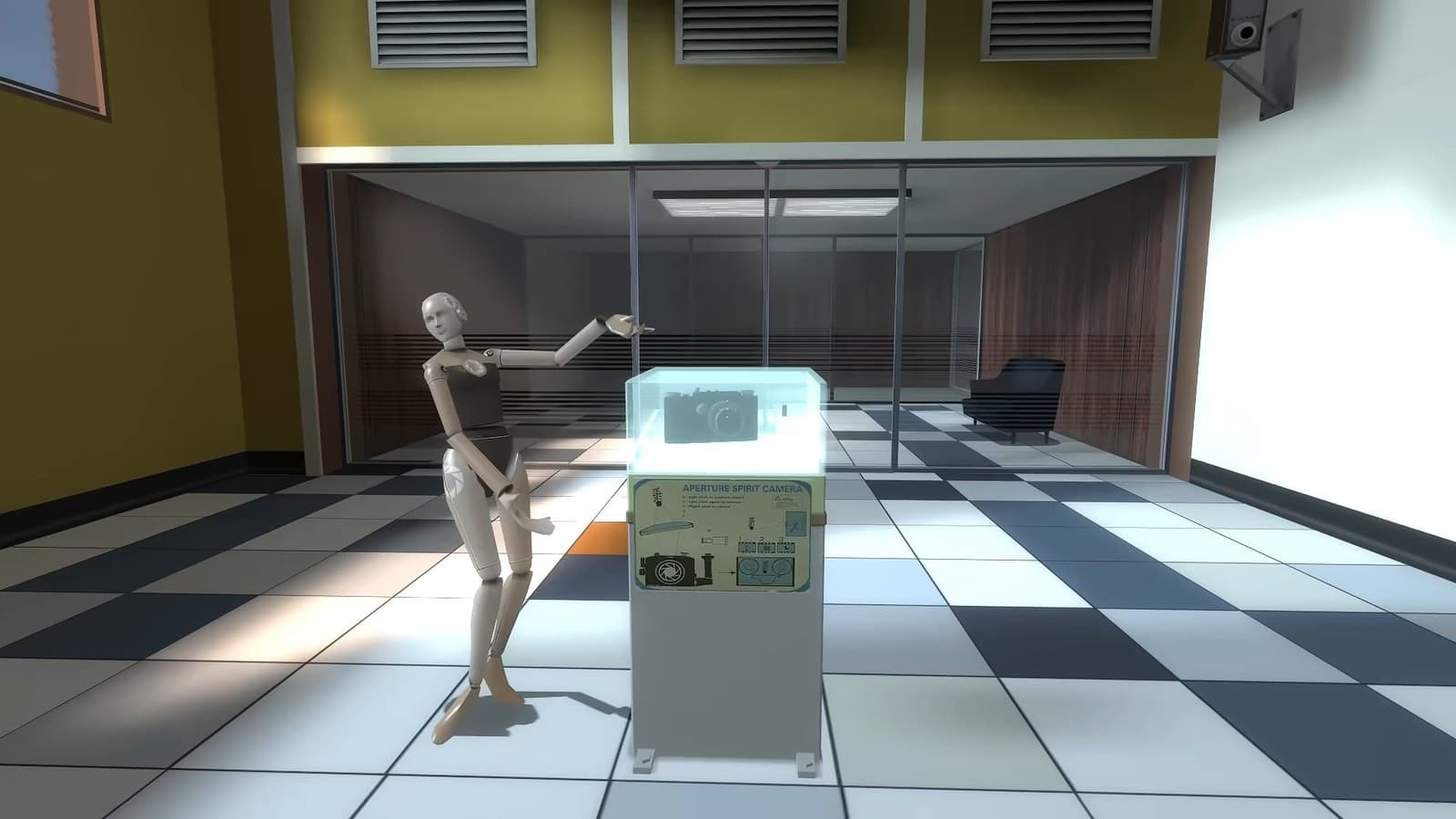
Its hook was a camera. The player used an experimental Aperture Science device to photograph an object, then place that object somewhere else using the resulting Polaroid-like photo. The Verge compared the effect to Viewfinder. The camera makes the object the thing that travels, which changes how a player reads a room: a crate on a ledge is also a crate you can carry in your pocket, provided you have already taken its picture.
It invites hoarding and staging. The interesting question becomes whether you thought to photograph something earlier, when you had a clear view of it. A player who walks into a test chamber without planning may find the useful object out of reach and the photo already wasted. The camera also puts a limit on attention: you have to decide what is worth keeping before you know why you need it.
Gabe Newell was taken with the project. Playtesters were less enthusiastic, according to Kotaku, and F-Stop was scrapped. Some of its dialogue, characters and mechanics were later reworked into Portal 2. That afterlife is part of why the leak matters. A cancelled prototype usually survives as an anecdote. Here, the ideas that made it into a finished game can be compared with the version that did not.
Gabe Newell himself was very taken with the project, but playtesters were less thrilled.
Three leaks, one build
The road to a runnable build ran through the Steam2 leak. In August 2026, roughly 13 terabytes of Steam depot data from 2003 to 2013 appeared online, as Kotaku reported at the time. The Verge puts the figure at 12TB. The archive held most of F-Stop's assets, but not its source code or its mapsrc, the map source data Valve uses.
That gap explains why the August leak did not produce a playable game on its own. Assets are the visible part: models, textures, sounds. Source code is what makes them respond to input, and mapsrc holds a level's layout in an editable form. Without the last two, the archive was a warehouse, not a game.
Those final pieces arrived through the Valve Cut Content Discord in the roughly 48 hours before 1 November. According to moderators cited by Kotaku, the person who leaked the mapsrc first asked for $1,000, then gave the files away for free. The Valve Cut Content team verified that the map files were authentic.
With assets, code and maps in hand, the community combined the three leaks into a build. Players report a few missing assets and dialogue lines. The "99 percent complete" figure is their description, not a measurement, and it should be read that way.
F-Stop was a short experiment, and the leaked version is a community restoration of an unfinished one. Nothing in the reporting suggests it has been polished or patched. The build runs. That is the claim, and it is narrower than a remaster.
The $1,000 detail says something about how leaks move. Someone had the map data and tried to sell it. The files ended up free. Whatever the motive, the result is the same archive that now sits in a community build, and the people who verified it are the ones who decided it was genuine.
Why a 2007 prototype still draws a crowd
Lost media has a particular pull when the company that lost it is Valve. The studio's unfinished projects carry outsized weight because so little of its internal process has been public. A playable F-Stop turns a summary into something a player can hold. The audience for it is smaller than the audience for a new Portal game. The build is a historical curiosity, not a mass-market release.
The build also documents the road not taken. Portal 2 carries pieces of F-Stop, and the leak lets players see which pieces. A character, a line of dialogue, a puzzle idea: these are the small transfers that design history usually flattens into a sentence. Seeing them in place is different from reading about them.
A design document can record that a mechanic was tried and dropped. A running build shows the timing, the camera placement, how a room introduces an idea before asking you to use it. Those choices are hard to capture in prose and easy to feel in a build, even an incomplete one.
There is a limit to that value. An unfinished 2007 prototype is a document, not a game to judge by modern standards. Historical value and play value are separate questions, and a prototype can be worth studying while being thin as a game. The missing dialogue and assets are part of the object, not a defect to be patched out. The community can complete a build; it cannot recover the version Valve would have shipped, because that version never existed.
That gap is where the "fully playable" framing needs care. The outlets are describing what the build does, and by their account it runs from start to finish. Players are describing how complete it feels. Neither claim tells you whether the puzzles hold up, whether the camera mechanic ever found its best version, or whether the missing lines leave holes in the story. Those are questions for people who play it, and their answers will be uneven.
The copyright question
This is leaked, not released
F-Stop was never officially released. The playable build is a community restoration made from leaked proprietary source code and assets. Downloading or distributing it may infringe Valve's copyright. Valve has not commented on the leak, and nothing here should be read as the company's approval.
That warning is not a reason to ignore the story. It is a reason to be precise about what happened. Journalists can report on the leak and describe the build without hosting it. Readers who want to try it are making a choice about copyright that the reporting cannot make for them.
None of that makes the leak less newsworthy. A lost prototype entering the historical record is a real event, and readers can understand it without touching the files. The reporting can describe the camera mechanic, the scrapped design and the Portal 2 inheritance while leaving the download decision to someone else.
The authenticity question is separate. The Valve Cut Content team verified the map files, and the assets trace to the Steam2 archive. Those checks support the claim that the material is genuine Valve work. They do not make the build official, stable or legal to copy. Ownership of the code and assets stays with Valve either way. Verification answers whether the files are real, not who may copy them.
Preservation and distribution are not the same act, though they often use the same files. An archive that keeps a copy for study is doing something different from a public download link. The boundary is not clear, and lost-media projects run into it.
The absence of a reported comment leaves the practical position unresolved. A company can tolerate a fan restoration without endorsing it, and it can also send a takedown notice without saying anything publicly. Neither has been reported. For now, the build sits between preservation and infringement.
What to watch
No Valve comment has been reported. A response could take several forms: silence, a takedown request, or a statement distancing the company from the release. Silence is the most likely short-term outcome, and it would leave the build's status exactly where it is now.
The preservation question is more interesting. A community build can disappear if the links do. Archives and researchers may try to document what was recovered, and the decisions they make about hosting will shape whether F-Stop remains playable in a few years or becomes lost media again. That is the same problem that made the leak newsworthy in the first place.
The build's own claims will also face a slower test. A community can call a project 99 percent complete and still discover, over weeks of play, that a late level breaks or a line of dialogue never triggers. Early reports are provisional.
For players, the practical question is simpler. The campaign is under an hour, some pieces are missing, and the build is unofficial. Treat it as a look at a 2007 experiment, not as a lost Valve game restored to retail quality. What it shows about how Portal 2 came together survives even if the build never gets another patch.
The rest is for Valve to say, and no comment has been reported.
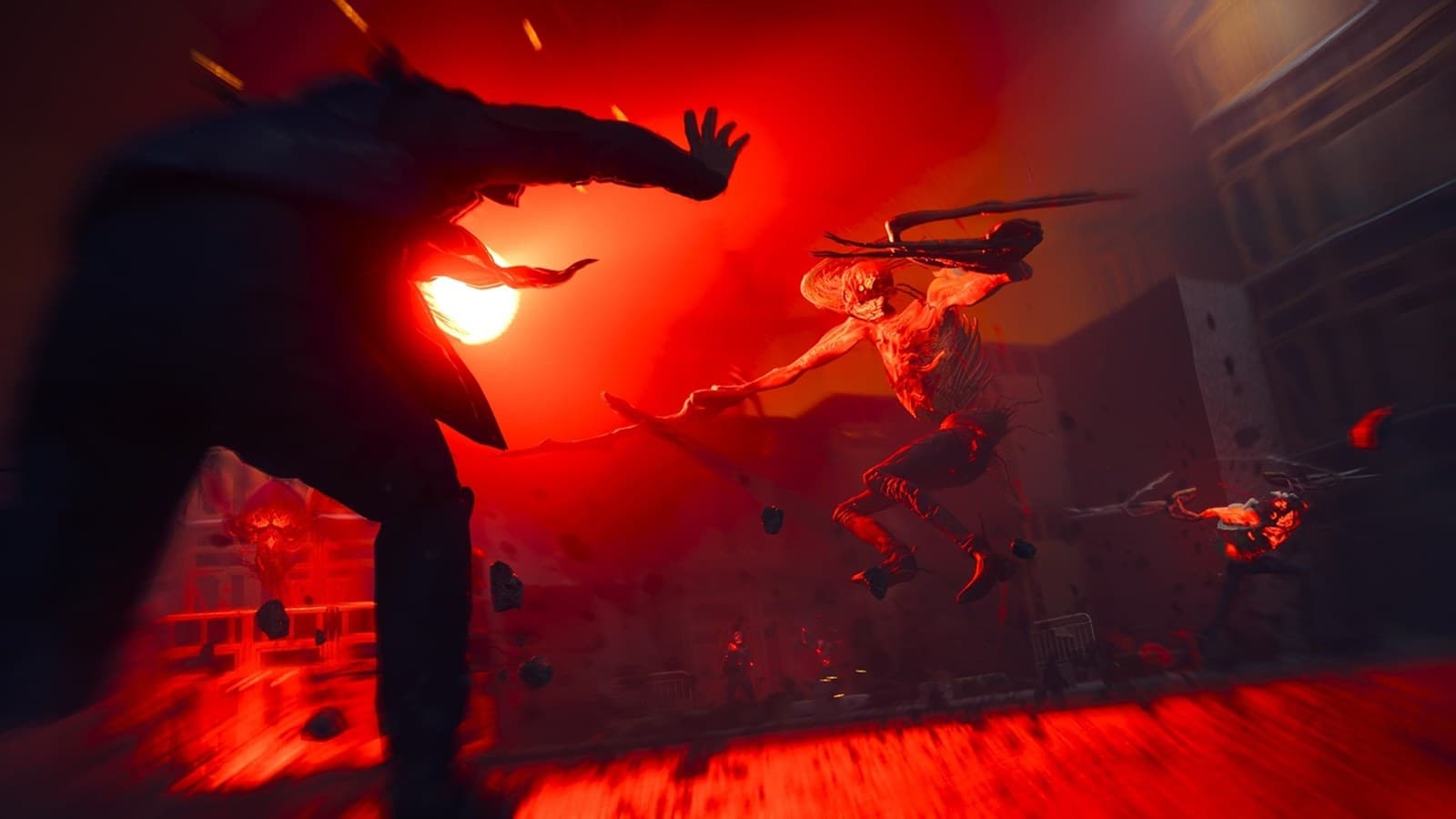
Cover: F-Stop gameplay screenshot, © Valve, via Kotaku (image from ToothpasteVixen's video), cropped 16:9.
Tags
Frequently asked questions
- What is F-Stop?
- F-Stop is a cancelled Portal prequel that Valve built in 2007 as one of five experiments in its Directed Design Experiments. Its main mechanic used an Aperture Science camera to photograph an object and place it somewhere else through the resulting Polaroid-like photo.
- Is the leaked F-Stop build an official Valve release?
- No. It is a community restoration assembled from leaked source code, map data and assets. Valve has not released F-Stop and has not commented on the leak.
- How long is F-Stop?
- The Verge reports that videos of the full campaign run under an hour. F-Stop was a short experiment rather than a full game.
- Is it legal to download the F-Stop leak?
- The build contains leaked proprietary source code and assets, so downloading or sharing it may infringe Valve's copyright. Reporting on the leak is separate from distributing the files.

TPW Editorial
Editorial Team
TechPastWeek's editorial team reports and edits every story we publish. We research each piece against primary and credible secondary sources, and a human editor reviews and signs off before it goes live.