France Opens a Criminal Probe Into Smart Glasses as Privacy Backlash Grows
Paris prosecutors opened a criminal probe into smart glasses used to film women without consent, as France's CNIL faces a backlash over the market Meta leads.

On this page
Key takeaways
- Paris prosecutors have opened at least one criminal investigation into suspected sexual harassment involving smart glasses, Reuters reported on September 18, 2026.
- Prosecutors did not name the brand of the devices, did not say how many complaints they received, and did not say whether any suspect had been identified.
- France's Penal Code Article 226-1 carries up to one year in prison and a EUR 45,000 fine for recording a person without consent, but it applies to private places, not public streets.
- France's data-protection authority, the CNIL, said it has received fewer than 10 complaints about smart glasses used in the workplace and is increasingly asked whether employers can ban them.
- Meta's glasses, made with EssilorLuxottica, hold roughly 76 percent of the global smart-glasses market and sold about 7 million units last year, according to Reuters.
Paris prosecutors have opened at least one criminal investigation into suspected sexual harassment involving smart glasses, adding a criminal track to a privacy debate that until now has run mostly through regulators and civil complaints.
Related reading: Apple Puts Touch on the Mac at $2,899, Reversing a Long Resistance · Apple's New iPad Mini Starts at $699, $200 Above the Model It Replaces.
Reuters reported on September 18, 2026, that the Paris prosecutor's office opened the probe after receiving sexual harassment complaints tied to a social-media trend. In that trend, people use camera-equipped glasses to film women on the street without their consent and then post the footage online, often on TikTok.
The office did not name the brand of the devices involved. It also did not say how many complaints it had received, whether any perpetrator had been identified, or what stage the investigation has reached. Prosecutors told Reuters that the cybercrime unit had tested the devices about two weeks earlier to understand what crimes they could enable.
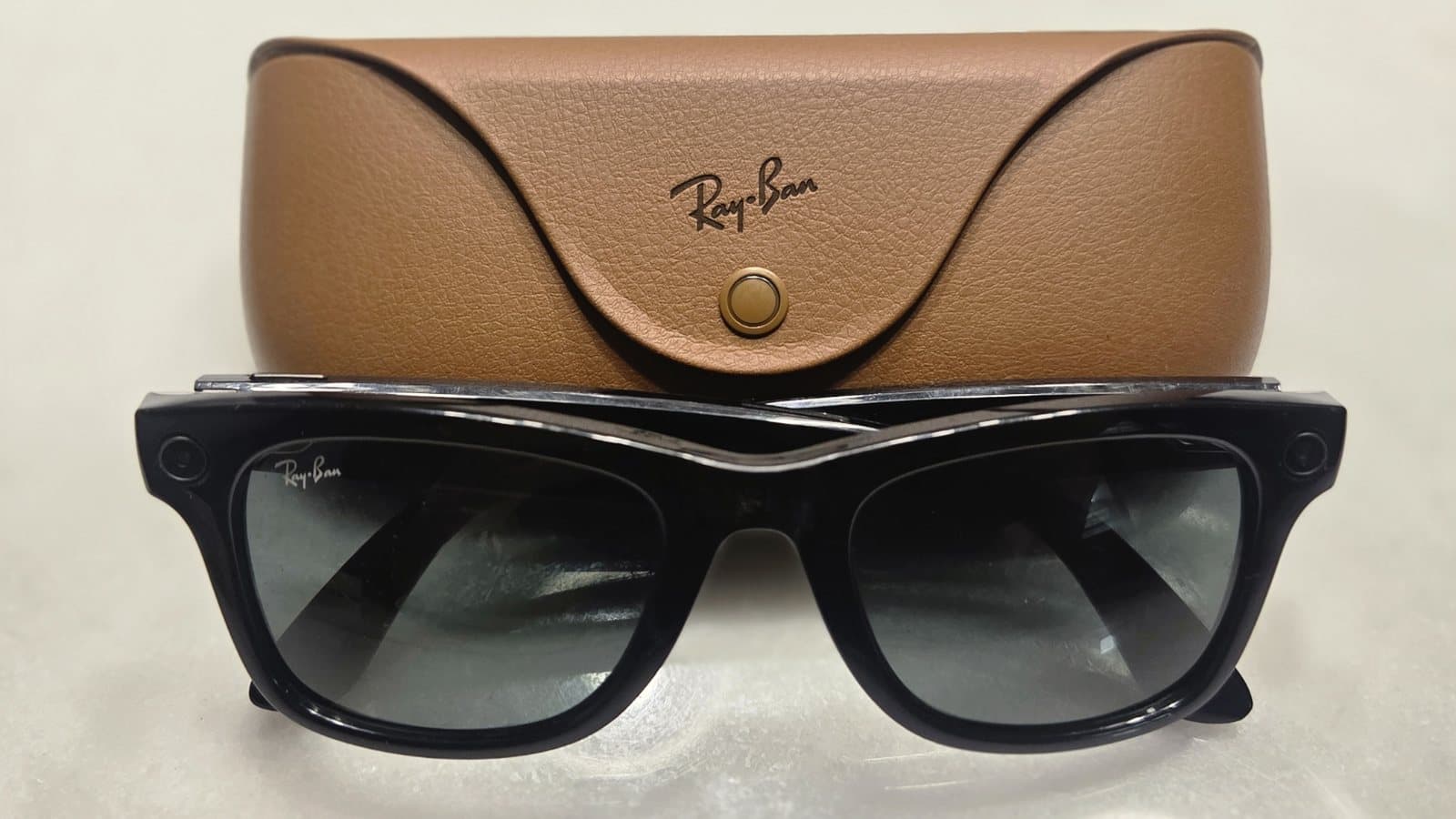
Those omissions shape how the case should be read. The investigation concerns the use of smart glasses as a category, and the product at the center of the public debate is the market-leading Ray-Ban Meta line that Meta builds with the eyewear company EssilorLuxottica. The opening of a probe is not a finding that Meta is the target, and French authorities have not said that it is.
France's criminal probe has not named a manufacturer, and prosecutors have not described their evidence or the number of complaints. Treat the case as an inquiry into how the glasses were used, not as a verdict on a company.
A recording light that puts the burden on the person filmed
Most camera-equipped glasses signal recording with a small light built into the frame. Rights groups argue that indicator shifts responsibility onto the person being filmed, who is expected to notice a faint LED and act on it in time.
"Seeing a light come on doesn't mean that you consent to being filmed, nor to have your image distributed to thousands of people afterwards," Ines Legendre, a legal expert at the internet-safety organisation e-Enfance, told Reuters.
The complaint is not that the light fails to work, but that a visible cue is treated as if it settled the question of consent. Consent to be recorded is a separate matter from knowing that a recording is happening, and consent to appear in a clip is separate again from consent to have that clip posted to an audience of millions.
Part of what makes the trend hard to police is that the footage is the point. The videos are shot to be posted, and the street is treated as a set rather than a place where people have a reasonable expectation of going unrecorded. A woman who never agreed to appear can become the incidental subject of a clip that is engineered for reach, which is a different situation from a private recording that stays private. The harm does not end when the camera is switched off, because the clip keeps circulating and can be re-edited, re-captioned or spliced into other posts.
French law stops at the private doorstep
France has a specific criminal provision for covert recording, and its limits are central to why prosecutors are proceeding carefully. Article 226-1 of the Penal Code provides up to one year in prison and a EUR 45,000 fine for recording a person's image without consent. The provision applies to private places. A public street is not one of them.
That distinction is the enforcement problem in miniature. The trend at issue happens in public, then moves online, where a clip can be copied and reshared faster than a complaint can be investigated. The CNIL notes that Article 9 of the Civil Code guarantees a right to privacy in all places, public and private, and that a violation may be punished. The civil route is broader than the criminal one. It is also slower, and it puts the person whose image was taken in the position of pursuing a remedy while the footage keeps circulating.
The CNIL sees complaints and awkward questions
France's data-protection authority, the Commission Nationale de l'Informatique et des Libertés, has been fielding questions of its own. It said it has received fewer than 10 complaints about smart glasses used in the workplace, and that it did not disclose which brands were involved. It also said employers are increasingly asking whether they can ban the devices at work.
The agency warned in June 2026 that cameras and microphones built into ordinary-looking glasses can capture people without their knowledge. Because the frames are hard to distinguish from conventional glasses, bystanders often cannot tell whether they are being recorded, and technical alerts such as an activation light have a limited range. Nacera Bekhat, the CNIL's head of economic affairs, told Reuters the glasses pose "real challenges" when it comes to alerting people that they are being recorded and obtaining their consent.
The workplace angle is easy to miss but consequential. An employer that wants to forbid the glasses has to decide whether a ban is a safety measure, a privacy measure, or both, and how to enforce it without turning every meeting into a search. The CNIL's published advice for wearers is modest: tell people nearby, switch the glasses off when asked, avoid places where people do not expect a camera, and get consent before posting images of others.
The market at the center of the argument
The debate over the technology is inseparable from how quickly it is selling. Meta's glasses, made in partnership with EssilorLuxottica, are the market leader with roughly 76 percent of global share and sold about 7 million units last year, according to Reuters. EssilorLuxottica's latest sales figures point to what the company describes as exponential growth in 2026.
Meta rejects the premise that the devices are designed to evade consent. A company spokesperson told Reuters that Meta "built privacy into our AI glasses from the ground up" and "will keep strengthening our protections as our glasses become even more capable." EssilorLuxottica declined to comment.
The company has also moved on the specific complaint about the recording indicator. After rights groups documented users covering or disabling the light, Meta released software updates that stop the camera from recording when the indicator is blocked. That addresses the most obvious workaround. It does not resolve the underlying question of whether a light is an adequate substitute for consent in a crowded street.
The pressure is not confined to France
France is one of several jurisdictions moving at once. A German consumer-advocacy group, HateAid, filed a criminal complaint last month against Meta, Ray-Ban, Oakley and several retailers. Australia's finance minister, Katy Gallagher, asked the public service commission on Thursday for advice on whether the glasses should be banned in Commonwealth workplaces. Britain's Information Commissioner's Office opened an investigation into smart glasses in March, and some UK cinemas have restricted them. The European Data Protection Board is preparing to review the issue with national authorities, according to the same Reuters report.
The pattern is a familiar one for consumer hardware: a product category grows faster than the rules written for the devices it replaces. Data-protection law was built around cameras that are visible, stationary, or held out in the open. Glasses are worn, always on, and socially invisible, which makes the existing categories awkward to apply.
Why the enforcement gap matters
There are two ways to read the French probe. The narrow reading is procedural: prosecutors are testing whether a public street recording can be pulled into a criminal framework that was written for private spaces. The broader reading is that regulators are signaling they will not leave street filming to platform moderation and civil suits alone.
Both readings point at the same weakness. A rule that depends on the person being filmed to notice a light, identify the wearer, preserve the evidence and pursue a complaint is a rule that scales poorly against a viral trend. When the footage is already online, the harm compounds with distribution, and takedowns do not reach copies.
Data-protection law adds another layer of friction. Footage of an identifiable person is personal data, and the CNIL says the use of smart glasses is in principle subject to the GDPR and French data-protection law. But the rules bind controllers and processors, and a person filming strangers for a social-media post may claim the household exemption or simply sit outside the reach of a regulator in another country. That gap between where the video is captured, where it is hosted and where the harm lands is exactly the kind of problem national authorities struggle to solve alone, which is why the European Data Protection Board's review matters more than it might appear.
For buyers, the practical questions are more mundane than the legal ones. Does the device make recording noticeable to the people around you? Can the indicator be bypassed? What happens to the video after it is captured, and who can see it? Those are the questions the CNIL's guidance tries to answer, and they are the ones regulators are now pressing manufacturers to answer with design rather than instructions.
What to watch
Three things will clarify where this goes. The first is whether the Paris investigation produces charges, and whether prosecutors eventually name the devices used. The second is whether the European Data Protection Board agrees on a common approach or leaves enforcement to national authorities with different laws. The third is the product cycle itself: Meta Connect, the company's hardware event, is set for September 23, where the next generation of smart glasses is expected.
The French case is small on its face, at least one investigation with an undisclosed number of complaints. Its significance is that it treats covert filming with smart glasses as a matter for prosecutors rather than only for privacy regulators. That is the shift the industry will be watching, because it changes the cost of getting consent wrong.
Ray-Ban Meta smart glasses. Photo: CCadio / Wikimedia Commons (CC BY 4.0).
Tags
Frequently asked questions
- Which smart-glasses brand is under investigation in France?
- Paris prosecutors did not name the brand of the devices used. The probe concerns how camera-equipped glasses were used, while the product at the center of the wider debate is Meta's Ray-Ban line made with EssilorLuxottica.
- Does French law ban filming people in public?
- Article 226-1 of the Penal Code punishes recording a person's image without consent with up to one year in prison and a EUR 45,000 fine, but it covers private places. Public filming is not captured by that provision, which limits enforcement when footage spreads online.
- Are smart glasses illegal in France?
- No. The CNIL has not banned them. It issued good-practice guidance in June 2026 telling wearers to inform people nearby, switch the glasses off when asked, and obtain consent before sharing images of others.
- What has Meta said about the privacy complaints?
- A Meta spokesperson told Reuters the company 'built privacy into our AI glasses from the ground up' and 'will keep strengthening our protections as our glasses become even more capable.' EssilorLuxottica declined to comment.

TPW Editorial
Editorial Team
TechPastWeek's editorial team reports and edits every story we publish. We research each piece against primary and credible secondary sources, and a human editor reviews and signs off before it goes live.